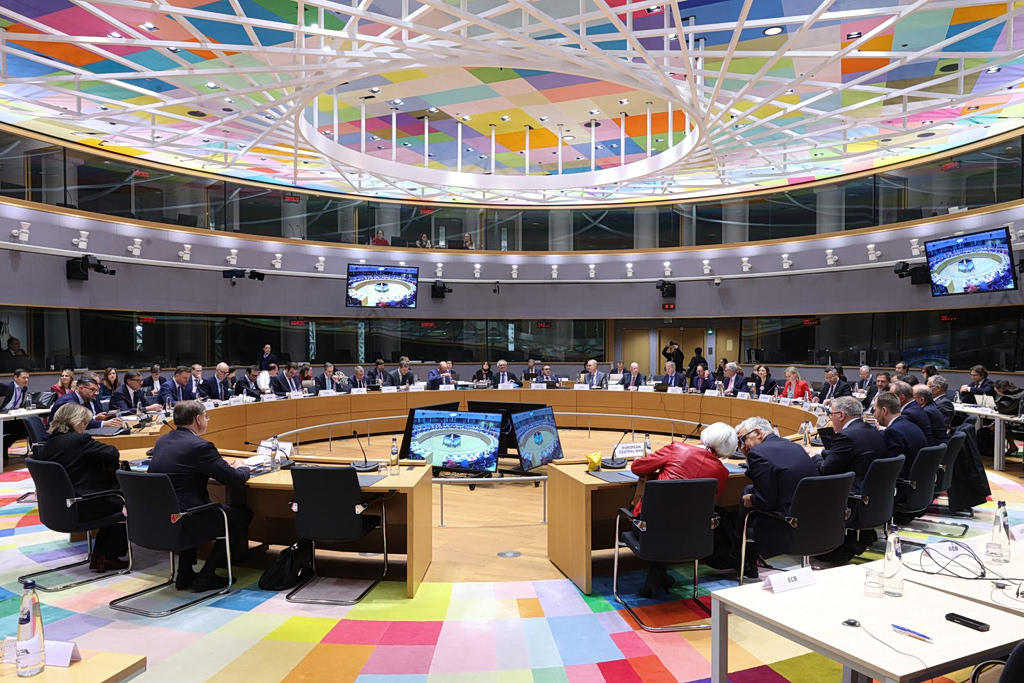
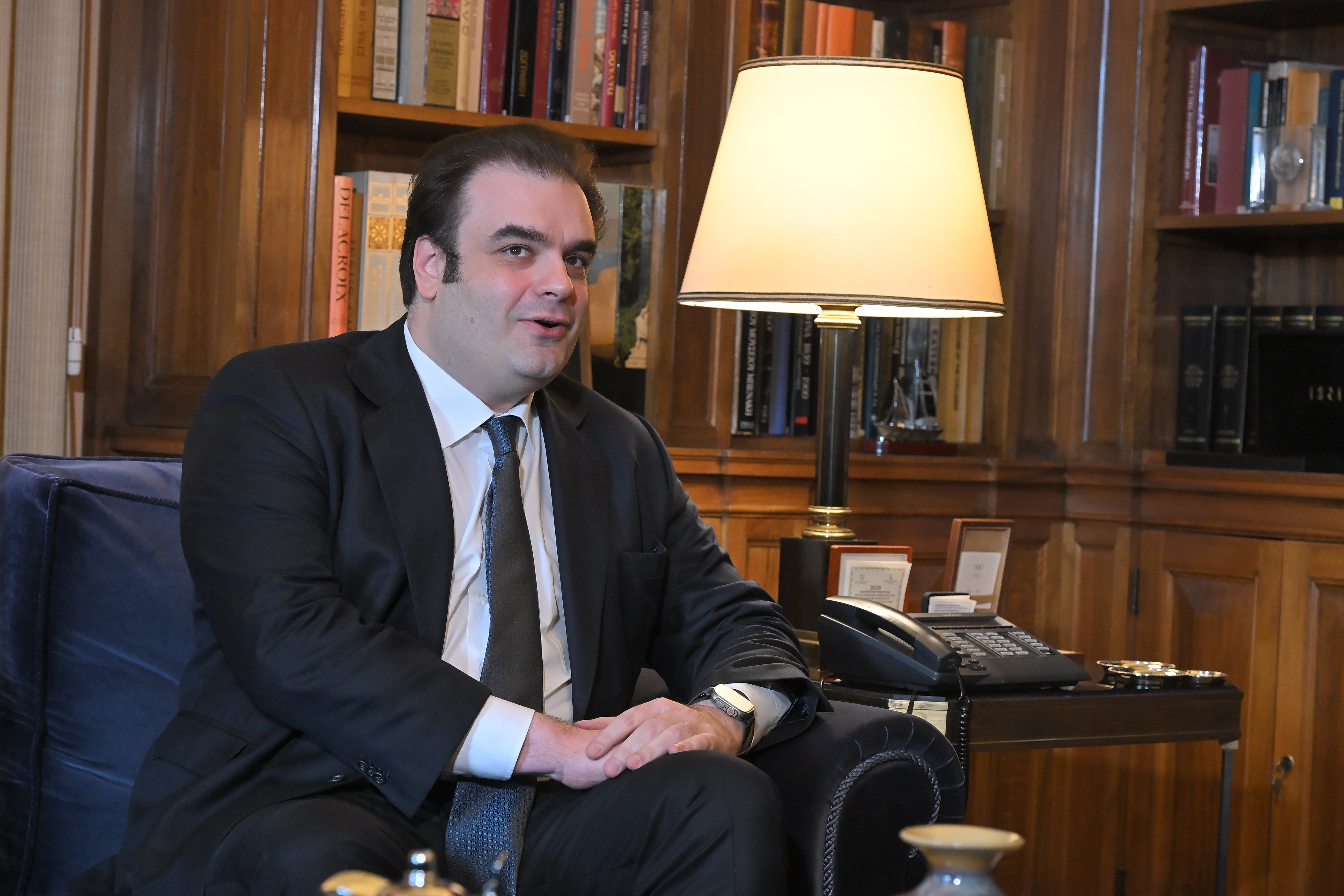
On Monday, Jan. 19, 2026, the Greek Minister of National Economy and Finance Kyriakos Pierrakakis will take center stage and preside over his first meeting as president of the Eurogroup.
Pierrakakis’ term as Eurogroup president will last two and a half years. During this period, Greece will be represented at Eurogroup meetings by the country’s alternate minister of national economy and finance, reflecting the institutional separation between the presidency and national representation.
The upcoming meeting is notable not only for Greece’s new leadership role but also for its expanded membership. For the first time, the eurozone will include Bulgaria, which officially became the bloc’s 21st member on Jan. 1, 2026. As a result, Bulgaria’s finance minister will take part in the discussions.
Bulgaria’s Entry Into the Eurozone
Eurozone enlargement will be at the heart of the agenda, with a formal acknowledgment of Bulgaria’s accession to the single currency. Bulgaria’s finance minister, alongside the European Commission and the European Central Bank, will present updates on the country’s transition to the euro.
The changeover includes a dual-circulation period, during which both the euro and the Bulgarian lev are accepted, at a fixed exchange rate of 1.956 lev to 1 euro. This period runs through Jan. 31, 2026. Dual price displays in both currencies will remain in place until June 2026, a measure designed to help consumers and businesses adjust smoothly.
Choosing the Next ECB Vice President
One of the most closely watched items on the agenda is the process to select the next vice president of the European Central Bank, who will succeed Spain’s Luis de Guindos, whose term ends in late May 2026.
Six candidates have formally submitted their applications: Mario Centeno of Portugal, Martins Kazaks of Latvia, Madis Muller of Estonia, Olli Rehn of Finland, Rimantas Sadzius of Lithuania and Boris Vujcic of Croatia.
To secure the position, the successful candidate will need the backing of at least 16 of the 21 eurozone countries, representing a minimum of 65% of the euro area’s population. The Eurogroup will discuss the candidacies with a view to issuing a recommendation to the EU Council.
The ECB and the European Parliament will then be consulted, but neither institution holds veto power. The final decision will be taken by EU leaders at their March summit.
According to Reuters, choosing the next vice president will “kick off a two-year process to renew most of the central bank’s executive board, including the replacement of ECB President Christine Lagarde, whose term is due to expire in 2027.
Eurozone Policy Priorities for 2026
The eurozone’s finance ministers will also discuss broader economic strategy. The meeting will include discussions on policy priorities for the 2026 Eurozone Recommendations, based on a draft presented by the European Commission within the framework of the European Semester.
The recommendations focus on safeguarding fiscal sustainability, creating room for investment in defense and competitiveness, strengthening labor markets and advancing a European Savings and Investment Union. Ministers are expected to exchange views on these priorities and their implications for the eurozone’s medium-term outlook.
G7 Briefing and Global Challenges
Ministers will also be briefed on recent developments within the G7. As Eurogroup president, Pierrakakis represents the eurozone in G7 finance meetings. The update will be delivered by Roland Lescure, France’s finance minister, as France currently holds the G7 presidency.
Lescure is expected to outline the priorities of the French presidency, including discussions held on Jan. 12 in Washington, where G7 finance ministers examined ways to reduce dependence on China for critical minerals and rare earths. These issues will feed into the broader Eurogroup conversation.
The meeting takes place against a backdrop of mounting global challenges. Trade tariffs, geopolitical tensions, energy security, critical raw material supply chains and the stability of the global financial system are all pressing concerns, underscoring the significance of the agenda facing the eurozone under its new Greek presidency.
Source: ot.gr