 Μake us preferred on Google
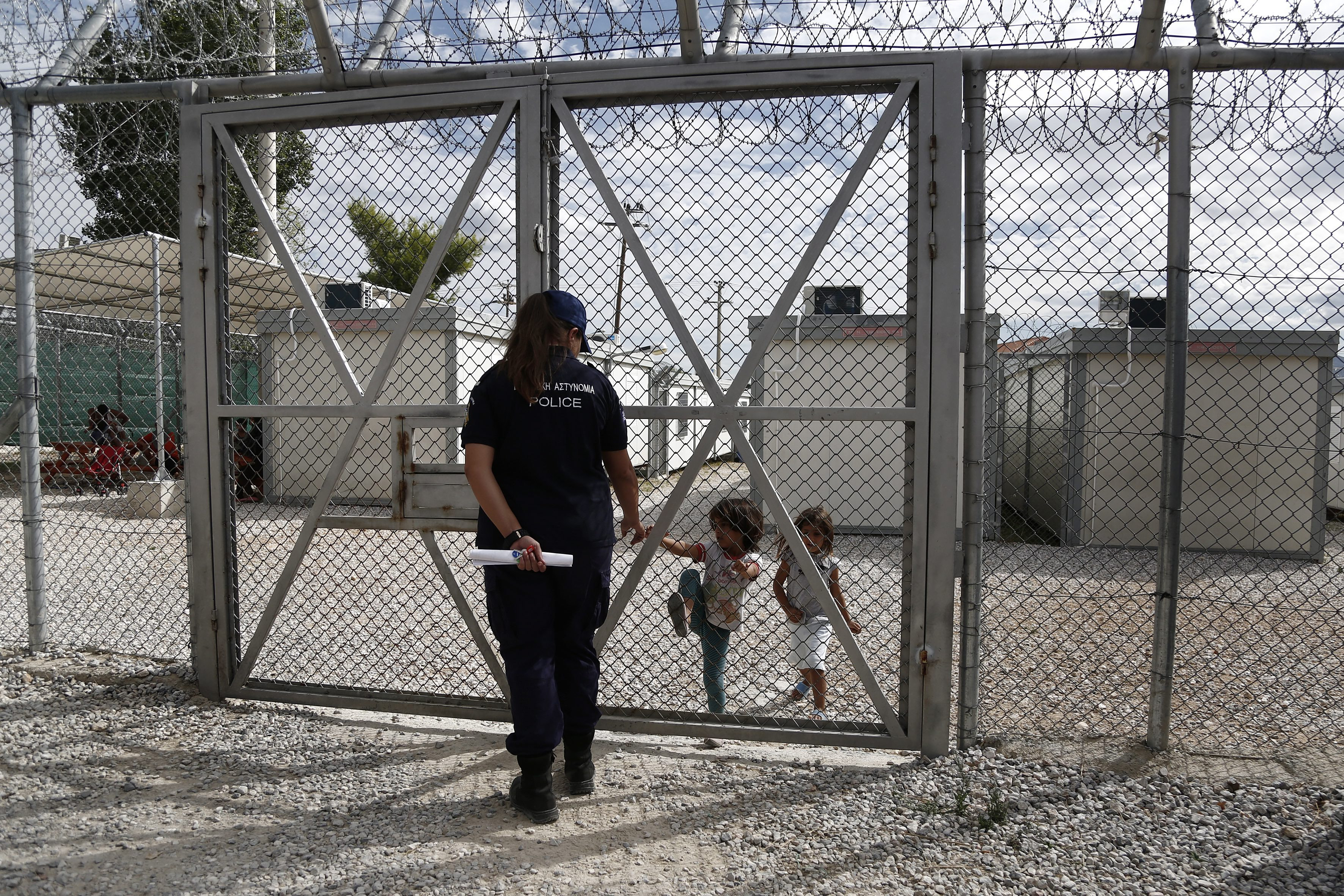
At least 112 foreign nationals have died in Greek police custody and immigration detention facilities since 2000, including 44 suspected or confirmed suicides, according to new research that raises serious concerns about conditions in detention and access to medical care. The findings, published by Detention Landscapes, a collaborative research project that includes a University of Oxford-based research network, document 84 deaths in police stations and 27 in pre-removal detention centers. They also identify 34 deaths that do not appear in the official statistics provided by Greek police.
The research draws on police records, international monitoring reports, news archives and testimony from former detainees. Its authors caution that the death toll is not necessarily complete, citing inconsistencies in official statistics, limited access to detention facilities and difficulties tracing older cases. The findings add to longstanding concerns about Greece’s immigration detention system, which has faced repeated criticism over overcrowding, poor living conditions, inadequate medical care and allegations of abuse by security personnel.
Deaths and Suicides in Police Custody
The largest number of documented deaths occurred in police stations, where there is generally no designated medical staff, unlike pre-removal detention centers, which have formal health care arrangements. Of particular concern are the 44 recorded suicides, which the research examines against a background of inadequate mental health support and shortcomings in detainee supervision.
The findings follow warnings from the European Committee for the Prevention of Torture, or CPT, a Council of Europe monitoring body, which concluded in its 2025 report on Greece that many deaths and suicides in police custody could have been prevented if appropriate safeguards had been in place. The committee identified serious shortcomings in medical screening, detainee supervision and suicide prevention measures. It also reiterated the Greek authorities’ responsibility to conduct effective and transparent investigations into every death in custody.
The Detention Landscapes database covers deaths between 2000 and 2026 involving foreign nationals held in police or immigration detention, whether on immigration or criminal grounds. It includes people who died inside detention facilities, during transfers by police or in hospitals while still under police custody. Deaths in prisons, open refugee camps or after release are excluded.
Medical Care Often Delayed or Inaccessible
Access to health care is among the most serious problems identified by the research. Although medical services are formally provided at pre-removal detention centers, former detainees describe substantial delays in receiving treatment, sometimes lasting several days. Police officers frequently act as intermediaries between detainees and medical personnel, effectively determining whether and when requests for assistance reach health care professionals.
The situation at Amygdaleza, a major immigration detention center near Athens, illustrates the pressures on medical services. In April 2026, the facility had just seven health professionals, including two doctors and two nurses, for 666 detainees. Health care at Greece’s pre-removal detention centers is officially provided through AEMY, a publicly owned health services company, with European Union funding. At Amygdaleza, a separate EU-funded program, AMIF 018, finances the salaries of 97 temporary border guards whose responsibilities include facilitating medical examinations and transfers to hospitals. Despite these arrangements, former detainees have described substantial obstacles to obtaining treatment. “At Amygdaleza, there are doctors, but there is no care,” said one former detainee who spent approximately a year at the facility, according to testimony published by Detention Landscapes.
The research also draws on accounts from detainees, rights monitors and activists alleging physical violence, neglect, humiliating treatment and a lack of basic services. Detainees also face difficulties obtaining legal assistance and interpretation services, leaving many without a clear understanding of their rights or the procedures governing their detention.
A Detention System Extending Beyond Official Centers
Immigration detention has been a central part of Greek border enforcement since the early 1990s, but the precise number of people held across the country remains difficult to establish. Greece currently operates seven pre-removal detention centers, six on the mainland, at Amygdaleza, Petrou Ralli, Corinth, Xanthi, Paranesti and Fylakio, and one on the island of Kos. According to government figures, their combined capacity stood at 3,836 places in mid-2024.
But these facilities account for only part of the detention system. Foreign nationals are also held in closed controlled facilities on the Aegean islands, police stations, border guard posts and other police buildings. In 2023, Greek police issued 24,174 detention orders. At the end of that year, 2,564 third-country nationals were being held in police stations or other detention facilities nationwide. The available figures also show that 504 unaccompanied minors were placed in administrative detention in police stations and pre-removal centers during 2022.
Beyond the officially designated facilities, researchers have documented informal detention sites in the northeastern Evros region, along Greece’s land border with Turkey. These include former grain warehouses, fenced yards, portable cabins, garages and even animal enclosures.
Researchers have also documented the use of a detention facility near the village of Poros in Evros, close to the Turkish border, where migrants have reportedly been held before being forcibly returned to Turkey in pushback operations. Pushbacks involve forcibly returning people across a border without giving them an opportunity to seek asylum or have their individual circumstances assessed. According to the research, detention at these informal sites is not officially registered, making it particularly difficult to establish how many people have been held there or what happened to them.
Dozens of Deaths Missing From Police Records
Beyond the conditions in detention, the investigation found substantial discrepancies in the official records of deaths in custody. The researchers identified 34 deaths documented by journalists, nongovernmental organizations and monitoring bodies that were absent from the statistics supplied by the Hellenic Police.
Police data obtained through freedom of information requests in October 2025 was frequently provided only in aggregate form, identifying deaths by year and police directorate rather than by the specific facility or date. This made it difficult to cross-check individual cases against independent reporting.
The researchers also identified inconsistencies between police datasets, including 11 deaths recorded in the Piraeus police directorate in 2003 for which they could find no corroborating evidence. According to the project’s published methodology, police did not respond to follow-up requests to clarify discrepancies. Following an intervention by the Greek Ombudsman, authorities also declined to provide a more detailed breakdown of the figures, arguing that doing so would impose an excessive administrative burden.
The research team stresses that its findings should not be treated as a complete record of deaths in custody. Older cases may be missing because newspaper archives were never digitized, while restricted access to detention facilities and uneven independent monitoring make it difficult to establish the circumstances surrounding individual deaths.
Mary Bosworth, a professor of criminology at the University of Oxford, said the research demonstrated both the importance of recording every death in custody and the dangers associated with detention. “The careful scholarly work that went into producing this important archive reminds us not only that every death in detention matters and must be recorded, but also how dangerous and inhumane these places remain,” she said.
The findings were compiled by researchers Andriani Fili, Stergios Magkriotis and Alice Troy-Donovan as part of the Wellcome Trust-funded Medicalising Immigration Detention research program. Detention Landscapes is an ongoing collaboration between Border Criminologies, based at Oxford’s Centre for Criminology, the Greece-based Mobile Info Team and the Border Violence Monitoring Network.
Source: TO BHMA, Detention Landscapes