 Μake us preferred on Google
A series of cyberattacks targeting supermarket refrigeration systems and a blood bank, along with bomb threats that forced aircraft to divert across Europe, has raised concerns about the vulnerability of critical infrastructure across Europe. Two Aegean Airlines flights were among those targeted, as confirmed by the airline and a government minister who was aboard one of the affected aircrafts.
For businesses, the risks increasingly extend beyond stolen data or disrupted online services. Hackers are gaining access to systems that control physical equipment, with the potential to damage goods, interrupt essential services and endanger lives. A refrigeration system can be manipulated remotely, for example, causing food or medical supplies to spoil. Unlike conventional cyberattacks involving data theft or ransom demands, the objective may simply be to cause damage.
Nikitas Kladakis, general manager of cybersecurity company Adacom, told TO BHMA that the attacks reflect a shift in hackers’ targets, with implications for industries ranging from food distribution to energy and transportation.
The incidents have raised questions about how well organizations are protecting the systems that underpin essential services, including electricity generation and distribution, water supplies, banking, transportation, telecommunications, defense and food supply chains.
Refrigerators Turned Up to 50 Degrees Celsius
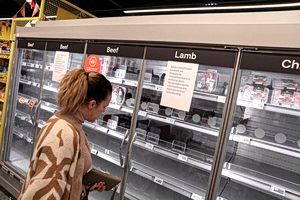
The first major incident occurred overnight on Oct. 11 and 12, when unidentified hackers gained remote access to refrigeration controllers at approximately 700 stores in France. The attackers changed temperature settings, in some cases raising them to 50 degrees Celsius (122 Fahrenheit). Food spoiled, and there were also reports of fires. A second wave followed overnight on Nov. 1 and 2, with more than 100 stores across Europe reporting problems with refrigerators and freezers.
Authorities began investigating attacks that differed from the more familiar breaches of corporate computer networks and that seemed more fitting for a Black Mirror episode. Rather than stealing company records or locking employees out of their systems, hackers were interfering directly with refrigeration equipment.
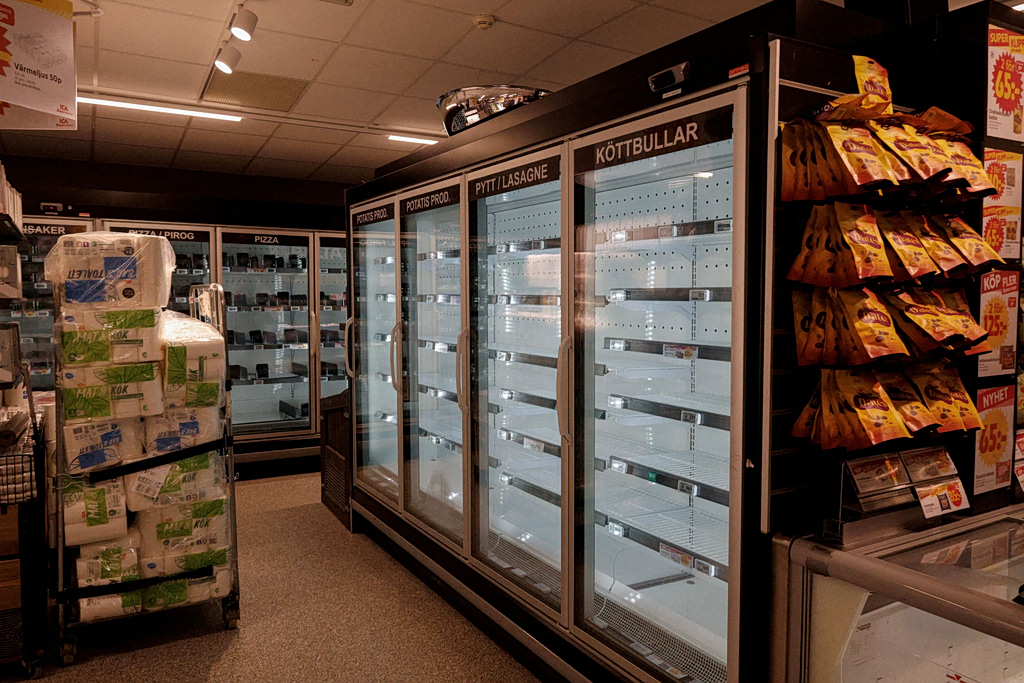
FILE PHOTO: Empty freezers in a store where a cyberattack has taken down several of its freezers in Stockholm, Sweden, November 2, 2026. REUTERS/Marie Mannes
Similar incidents have been reported in Greece. At a butcher shop in Kifisia, a northern suburb of Athens, hackers allegedly changed refrigeration settings to 150 degrees Celsius (302 Fahrenheit). Media reports have also described incidents involving frozen food and logistics businesses in Arta, in northwestern Greece, and on the island of Crete. However, Ioannis Masoutis, president of the Greek Supermarket Association, told financial news outlet OT.gr that no attacks had been detected at the country’s major supermarket chains. Greece’s National Cybersecurity Authority has identified more than 300 exposed commercial refrigeration systems, highlighting the potential scale of the vulnerability.
How Hackers Gain Control of Physical Equipment
The attacks illustrate the growing security challenges created by connecting industrial equipment to conventional computer networks.
Refrigeration controllers, machinery and other industrial systems increasingly rely on remote connectivity, allowing operators and technicians to monitor and adjust equipment without being physically present. But those connections can also provide an entry point for hackers.
The distinction is between information technology, or IT, which manages data and computer networks, and operational technology, or OT, which controls physical equipment and industrial processes. As the two become more closely integrated, a breach of a computer network can potentially give an attacker access to equipment responsible for essential operations. A hacker who gains control of an industrial controller may be able to alter its instructions, damaging equipment or the products it handles.
Kladakis said the traditional separation between IT and OT has effectively disappeared. Both environments, he argued, need coordinated systems for monitoring threats, detecting intrusions and responding to attacks. The consequences can extend well beyond financial losses. Tampering with refrigeration equipment used to store food or blood could destroy supplies and put people at risk. Similar interference with energy networks, water systems or transportation infrastructure could disrupt essential economic activity.
Artificial Intelligence Adds to the Threat
Artificial intelligence is also changing the nature of cyberattacks. According to Kladakis, five attacks involving AI have been recorded since 2025. Its use is changing both the tools available to attackers and the scale of potential threats.
Because connected systems operate across national borders, neither geography nor the size of a business necessarily offers protection. The growing risks also demand a different approach to recovery, Kladakis said. Restoring computers and networks may not be enough when an attack has damaged physical equipment, destroyed products or disrupted services on which people depend.
For businesses operating refrigeration facilities, manufacturing plants or other industrial equipment, preparation must begin before an attack occurs. Companies need procedures for maintaining operations during a cyberattack, particularly when outside technicians have access to their systems. Staff must also know who is responsible for assessing potential damage and determining when equipment can safely be restarted.
Why Some Cyberattacks Go Unreported
Despite the risks, many businesses are reluctant to disclose cyberattacks. Kladakis said companies often avoid publicizing incidents because they fear reputational damage or lost revenue. Concerns about the consequences of failing to comply with cybersecurity requirements may also discourage reporting. Pressure to restore operations quickly can sometimes lead businesses to pay attackers.
But the financial cost of an incident is not limited to repairing computer systems or recovering lost sales. When hackers can spoil blood supplies, damage food stocks or interrupt essential services, the consequences may be far more serious.