 Μake us preferred on Google
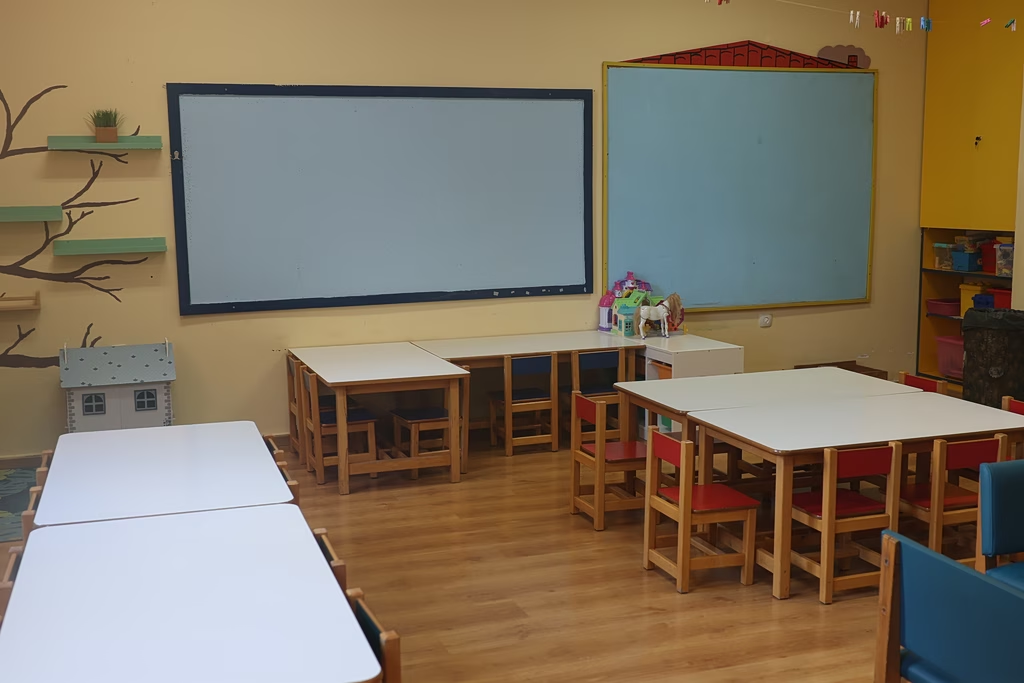
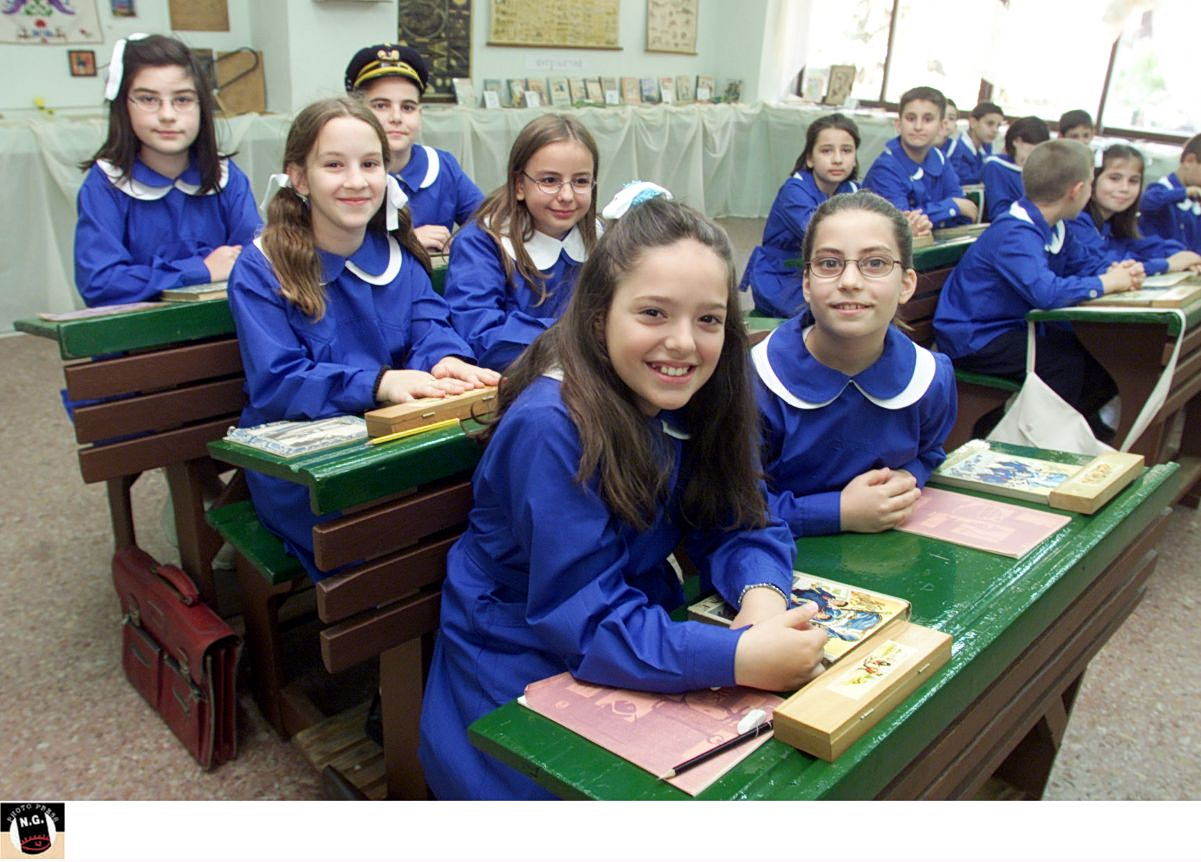
At the old school in Angelokastro, in Aetolia-Acarnania, there is still a classroom where maps hang on the walls. Anthologies and spelling notebooks still sit on the wooden desks, and at the back the blackboard has the same smell and the same chalky haze it always had. It’s a classroom anyone might have walked into in the 1960s. Only this one isn’t waiting for its pupils to return. It’s part of a museum that is trying to preserve what decades of school life left behind.
The former primary school, built in 1930 and renovated in 2008, now houses the Museum of Educational History of Aetolia-Acarnania. Theodoros Tsilikas, a former teacher who now runs the museum, began collecting old school objects after his visits to schools across the prefecture showed him how much material was at risk of being lost.
“Desks, maps, books, documents and notebooks were left forgotten in storerooms, where over time they were in danger of being destroyed,” he tells To Vima. “We started collecting material from schools in our prefecture, both operating and closed, that was no longer used in teaching. With the help of the education directors and the teachers, we managed to rescue it, organize it and catalog it,” Tsilikas explains.
A 1960s Classroom
The project began as an idea in 2012, and in 2015 the museum welcomed its first visitors. Along with the recreated 1960s classroom, it now has a library and a room of teaching aids and maps. Objects once dismissed as outdated and useless have found a place again, this time in museum galleries rather than in students’ hands. “We feel a sense of satisfaction, because we fought to save whatever had been left lying around in our schools, discarded and forgotten with the passing of time,” Tsilikas continues. It was a fight to keep the record of education from fading into oblivion.
But what happens to schools when they close? The severe demographic crisis now facing many countries is already leaving behind empty classrooms and buildings in search of a new identity. In Greece, many old schools are being turned into museums, cultural and community centers, premises for local associations, and even guesthouses. Abroad, by contrast, their reuse is often part of broader policies for repurposing vacant buildings, with solutions shaped by the needs of each area.
The State Is Still Searching
In Greece, however, the Ministry of Education makes clear that there is still no central plan on the issue. What happens to these buildings depends entirely on the municipalities, and the state has not set out a unified framework for their future.
Farther north, in mountainous Paramythia, in Thesprotia, stands the imposing two-story stone Voulgaris School. It was built in 1937 with a donation from Sotirios Voulgaris, the Epirus-born founder of the world-famous Bvlgari jewelry house, and closed for good in 2009. For more than seven decades its classrooms were home to generation after generation of pupils. For Athanasios Natsios, mayor of Souli and a former student of the school, the building’s recent conversion into a state-of-the-art digital cultural center is a personal mission. “You walk in and you’re flooded with nostalgia,” he says. “You feel deeply satisfied that a place where you grew up and lived through so much didn’t end up a ruin.”
The stonework, the distinctive architecture and the historic building’s original features have been preserved. Now “visitors can explore a multipurpose space for art, history and education, with one floor dedicated to the Voulgaris family, linking local tradition with tourism,” Natsios says.
Arcadia’s “Old School”
In Tyros, in Arcadia, the return of an old school carries even more emotional weight. The primary school, known to locals as “Old School” (Palie Skolie), closed in the 1985–86 school year. For about four decades it stood shut, a silent landmark for everyone who had once passed through its classrooms. “The children of sailors, fishermen and merchants once sat at its desks. Many of them traveled long distances to reach the school, often in difficult conditions. Their stories came back to life at the opening of the renovated building, through the recollections of former students and teachers,” Eirini Kemerli, deputy mayor for Social Protection, Education and Culture of the Municipality of Kynouria, tells To Vima.
On October 23, 2026, the school opened its doors again, this time as an Exhibition of Maritime Tradition and Space for Contemporary Culture. The choice was no accident. The sea, fishing and maritime trade are an integral part of Tyros’s history and of its residents’ identity. Photographs, historical documents and objects tell that story to younger generations, and despite its new use, the building remains connected to its past.
For the local authorities, restoring the school was not simply a technical project. It was an effort to bring new life to a public building bound up with the community’s collective memory.
What’s Happening in Europe
School reuse is a global trend, not just a Greek one. In Europe, the focus is mostly on housing and culture. In the United Kingdom and the Netherlands, Victorian and industrial-era schools are being turned into loft apartments or co-working spaces for young artists, often keeping the old blackboards and lockers.
In China, They Become Nursing Homes
China is dealing with falling birth rates and a rapidly aging population, and its response is practical. Hundreds of empty schools are being rebuilt as elder-care facilities. Where teachers once looked after the country’s future, society now cares for those who built its past.
These schools will never again be full of pupils, but their doors haven’t stayed shut. As museums, cultural venues or community spaces, they’ve found a new purpose without losing their link to the people who once filled their classrooms.