 Μake us preferred on Google
What goes up must come down. It’s a law of nature, but also one that applies to virtually every aspect of human life and activity. And now, the vegan food market is following the same pattern. Until just a few years ago, it was booming.
Supermarket refrigerators and shelves were suddenly overflowing with plant-based options. Before long, it became almost impossible not to be tempted to try them. It felt like an all-out marketing offensive. Seemingly overnight, plant-based alternatives appeared for practically every animal product imaginable. And they were everywhere—not just in the trendy organic grocery stores in city centers.
For several years now, vegan products have been available virtually everywhere, even at traditional Greek souvlaki shops, where they are served wrapped in the same oily pita bread as their meat-filled counterparts.
Yes, all of this represents an undeniable achievement in a country of meat lovers like Greece. But the phenomenon is far from uniquely Greek. In fact, trends from abroad usually reach us with a delay, and sometimes all we get are their aftershocks.
Perhaps, then, the Greek market has yet to experience the crisis currently affecting the equivalent markets in the United States and major European countries. After all, the markets aren’t even comparable in size.
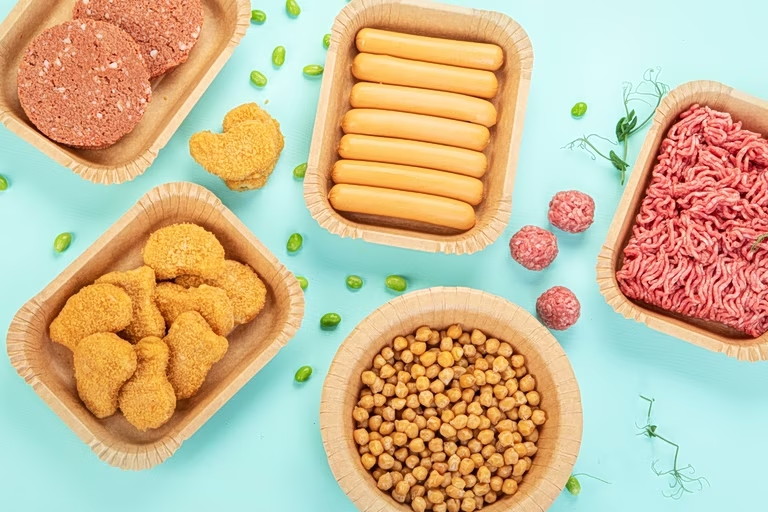
Plant-based burgers, sausages, and chicken nuggets designed to replace real meat. Photo: Shutterstock
A Major International Crisis
The latest figures from the United States focus on meat alternatives and confirm a sharp decline in sales at some of the industry’s leading companies. These are businesses that export their products around the world, supplying the refrigerators of major supermarket chains with plant-based burgers, chicken nuggets, and cheese croquettes.
In the early 2020s, these products were presented as the future of healthier, more ethical eating. But their performance over the past few years has failed to live up to those expectations.
Sales are plunging. Companies are being forced to scale back their operations, with the inevitable consequence of widespread layoffs. And the crisis is deepening.
The decisive factor—the finger that tips over the first domino—is price.
Meat alternatives are significantly more expensive than actual meat, even though the price of conventional meat has soared over the past year.
Adding insult to injury is the growing skepticism about just how healthy these products really are, fueled by information that has come to light. Even the most committed supporters of veganism will acknowledge that these products are, in reality, highly processed foods, packed with chemical additives, flavor enhancers, salt, and preservatives.
In short, they are light-years away from the philosophy they supposedly represent, while costing consumers considerably more money.
We Already Know Better
When you consider our own food culture—the Mediterranean diet and a culinary tradition that has always relied heavily on legumes and vegetables—the picture becomes even clearer.
What might seem like a revelation to Americans and other Europeans is almost second nature to us: if you want to eat plant-based, you can do so entirely naturally, without resorting to frozen packaged foods, ready-made croquettes, and processed substitutes.
A study conducted by Kantar on behalf of HellasVeg and the European Vegetarian Union found that 85% of Greeks eat legumes, while only 18% regularly choose industrially produced meat and dairy alternatives on a weekly basis.
We could sum it up with a familiar saying: We stick with what we know, and we trust what we know.
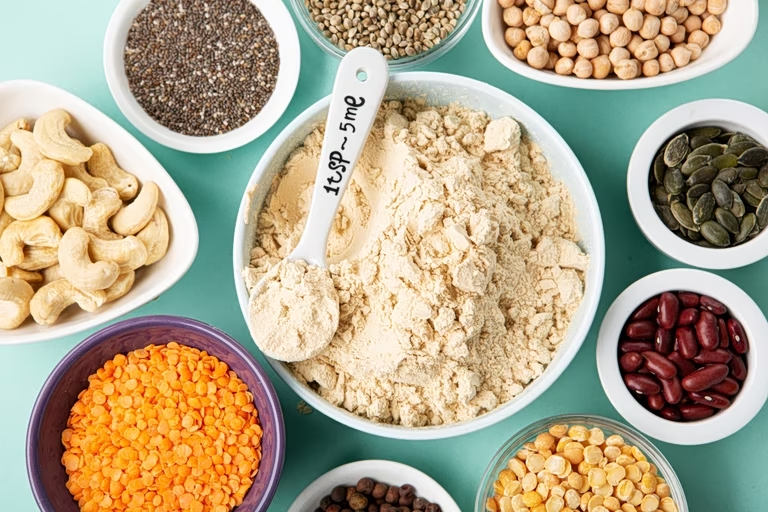
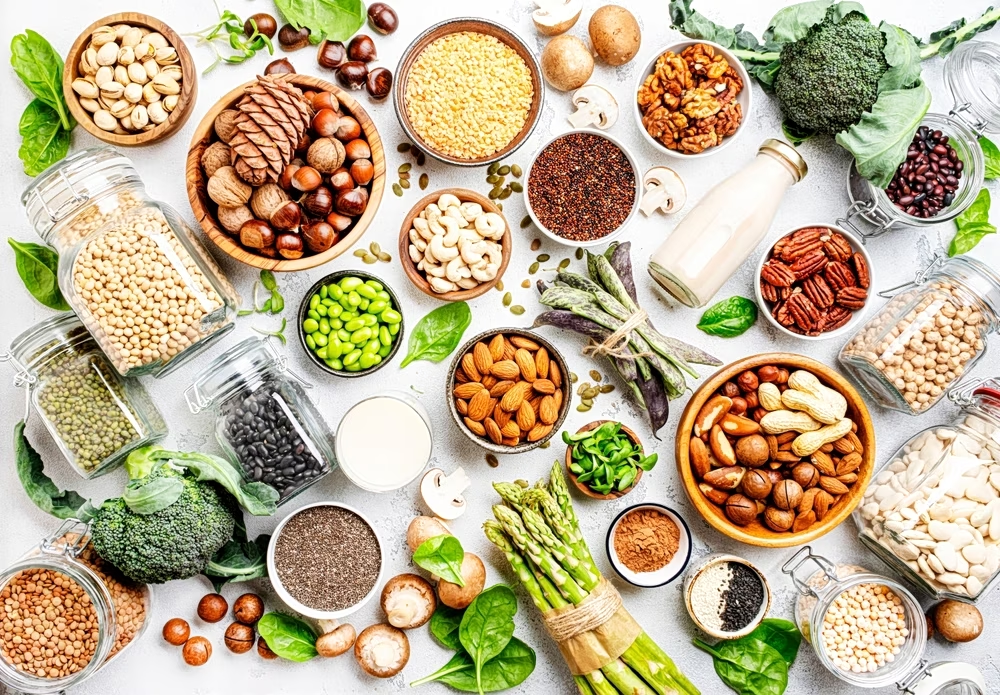
Legumes, seeds, and grains form the foundation of the Mediterranean diet. They are proving more popular with consumers than processed meat and seafood alternatives or dietary supplements. Photo: Shutterstock
Our religious fasting traditions have taught us how to eat plant-based since childhood. As we grow older, our grandmothers’ recipes become part of our culinary DNA.
And now that most of us are trying, for one reason or another—some for ethical reasons, others for health reasons—not necessarily to eliminate meat altogether but certainly to reduce our consumption, these are the recipes we’ll return to.
Think legume stews and boiled vegetable salads, ladera dishes and so-called “orphan” recipes. These are dishes that have always been, and continue to be, among the foundations of Greek cuisine.
Ladera refers to a broad category of traditional Greek vegetable dishes cooked generously in olive oil, often with tomatoes and herbs. “Orphan” dishes, meanwhile, are traditional recipes prepared without meat or fish. They are particularly common during periods of religious fasting.
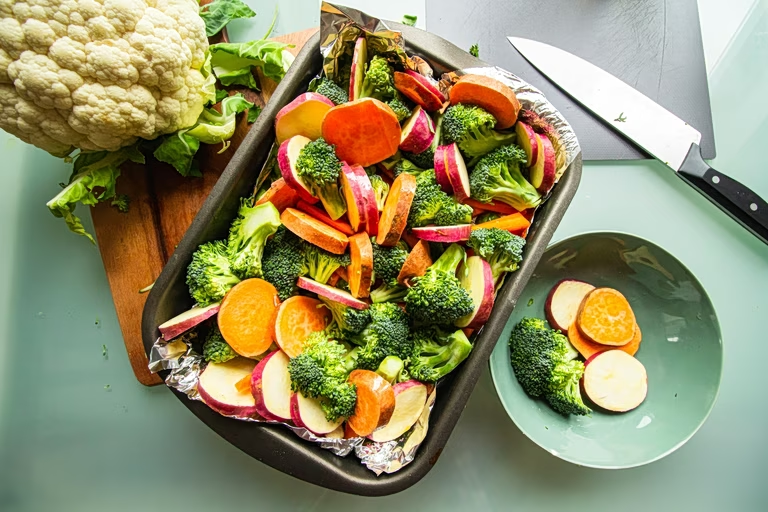
Winter vegetables, the building blocks of some of the tastiest and healthiest plant-based meals. Photo: Shutterstock
In Europe, where there is no comparable culinary tradition, research conducted by Circana in 2026 reaches much the same conclusion.
Although sales of plant-based food and beverages across Europe’s six largest markets have increased slightly, by 5.1%, their share of the overall consumer goods market has fallen to just 2.4%.
Of that market, meat and seafood alternatives account for a mere 4% of sales. Nuts and seeds, by contrast, represent 45%, while plant-based dairy products—which have achieved considerably greater penetration in households—account for 21%.
Consumers are turning toward genuinely plant-based foods rather than processed substitutes. And this appears to be a global shift that, by all indications, is here to stay.
After all, there’s a reason for it: legumes, vegetables, and grains are far more nutritious and delicious.
Certainly more delicious than any ready-made plant-based burger you buy frozen and simply toss into an air fryer.
Convenience has its place in our lives—no one is disputing that. But everyday eating cannot be built around ready-made meals and processed croquettes that, on top of everything else, cost a fortune.
Now that we’ve realized this, it’s time to get inspired and rediscover how to make simple meals and snacks using real, natural plant-based ingredients that are good for both our bodies and our wallets.
Real food with real substance, courtesy of food blogger Anna Chalkia.
Chickpea Salad with Tahini
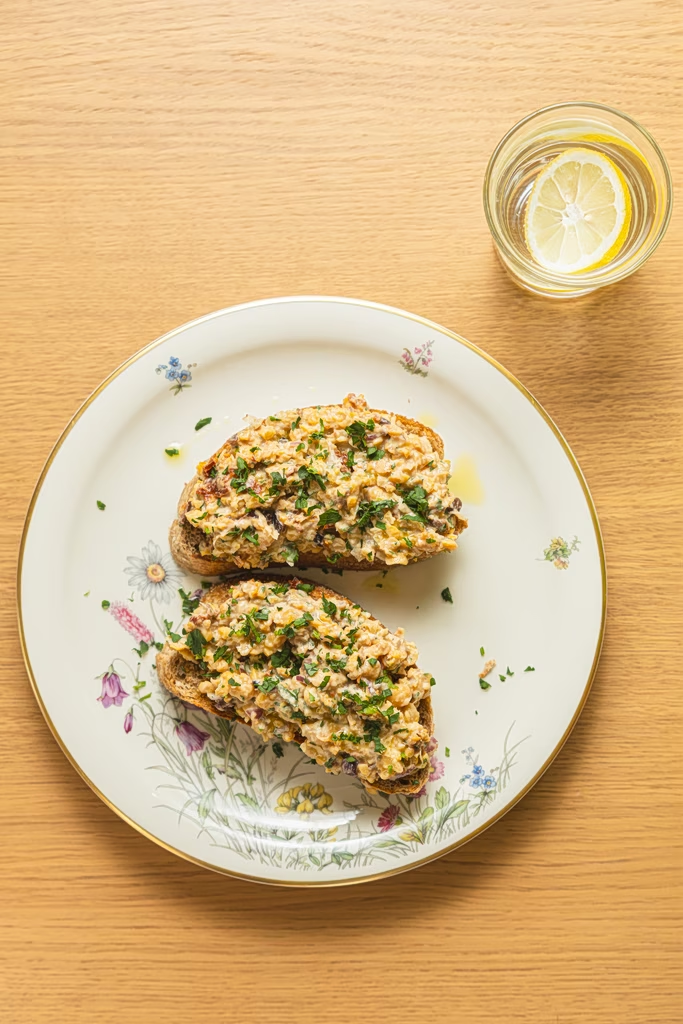
Photo: Vasilis Polychronakis
- Preparation time: 10 minutes
- Difficulty: Easy (*)
- Servings: 2
Ingredients
- 300 g cooked chickpeas, chilled or at room temperature
- 60 g tahini
- A little lemon zest
- 40 g lemon juice
- 1–3 tbsp water
- 1½ level tsp maple or agave syrup, or runny wildflower honey
- 1 garlic clove, grated
- ¼ small onion, finely chopped
- 3–4 olives, finely chopped
- 4–5 sun-dried tomatoes, finely chopped
- 2 tbsp fresh parsley, finely chopped
- Salt
- Freshly ground black pepper
Method
Place the chickpeas in a food processor and pulse for a few seconds at a time. The goal is to break them up slightly while retaining some texture.
In a bowl, whisk together the tahini, water, syrup (or whichever sweetener you’re using), lemon zest, and lemon juice until smooth and fully combined.
Add the garlic, salt, and pepper, and mix well. Taste and adjust the seasoning to your liking, adding more salt, pepper, sweetener, or lemon juice as needed.
Add the chickpeas, onion, olives, sun-dried tomatoes, and parsley to the bowl and stir to combine.
Refrigerate the chickpea salad until ready to serve. It will keep for up to three days.
Serve it on toasted bread, alongside toasted pita bread, or wrapped in a tortilla.
Tip: For convenience, use precooked chickpeas from a vacuum-sealed package or can. Frozen chickpeas work, too, and don’t require soaking.
Roasted Vegetables with Avocado Cream
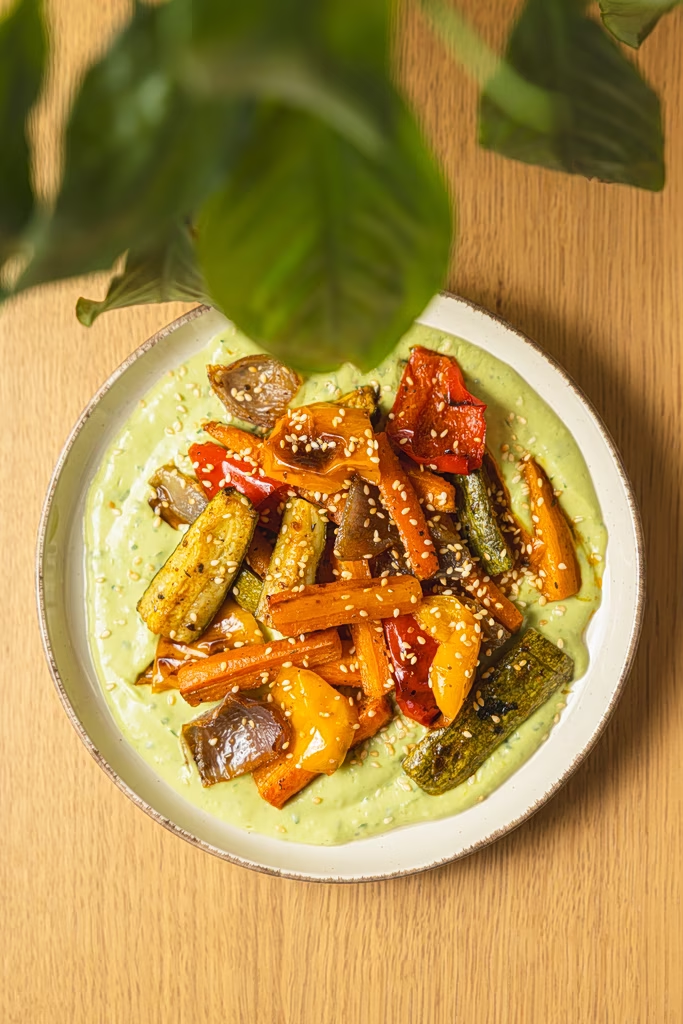
Photo: Vasilis Polychronakis
- Preparation time: 15 minutes
- Cooking time: 40 minutes
- Difficulty: Easy (*)
- Servings: 4
Ingredients
For the vegetables:
- 400 g carrots, weighed unpeeled
- 400–500 g zucchini, weighed with stems attached
- 3 bell peppers, any color
- 1 onion
- 60 g extra-virgin olive oil
- ½ tsp garlic powder
- ½ tsp dried oregano
- ½ tsp dried thyme
- ½ tsp sweet paprika
- Salt
- Freshly ground black pepper
- Toasted sesame seeds, for serving (optional)
For the avocado cream:
- 1 ripe avocado
- 200 g unsweetened coconut-based plant yogurt (or another variety of your choice)
- 1 garlic clove
- ⅓ tsp salt
- Freshly ground black pepper
- ⅓ tsp ground cumin
- Juice and zest of ½ small lemon
- Leaves from ⅕ bunch of fresh parsley
- 30–60 g water
Method
Preheat the oven to 375°F (190°C), using conventional top-and-bottom heat.
Peel the carrots and cut them into short, medium-thickness sticks. Trim the ends off the zucchini and cut them into similar-sized pieces. Remove the seeds and cores from the bell peppers and cut them into medium-sized pieces. Chop the onion in the same way.
In a bowl, combine the olive oil with the garlic powder, oregano, thyme, paprika, a little salt, and freshly ground black pepper.
Add the vegetables and toss gently until evenly coated in the mixture.
Arrange the vegetables in a single layer on a baking sheet lined with parchment paper. Roast for approximately 40 minutes, until nicely browned, carefully tossing them halfway through the cooking time.
Meanwhile, place all the avocado cream ingredients except the water in a food processor and blend until smooth.
Gradually add the water while continuing to blend until you achieve the desired consistency.
Serve the roasted vegetables warm, lukewarm, or at room temperature, accompanied by the avocado cream and a sprinkling of sesame seeds.
They make a great appetizer, side dish, or light meal.
The avocado cream can be stored in the refrigerator for up to two days, although it will probably darken by the following day because of the avocado. The roasted vegetables will keep in the refrigerator for up to three days.
Whole-Wheat Blondies with Dates and Banana
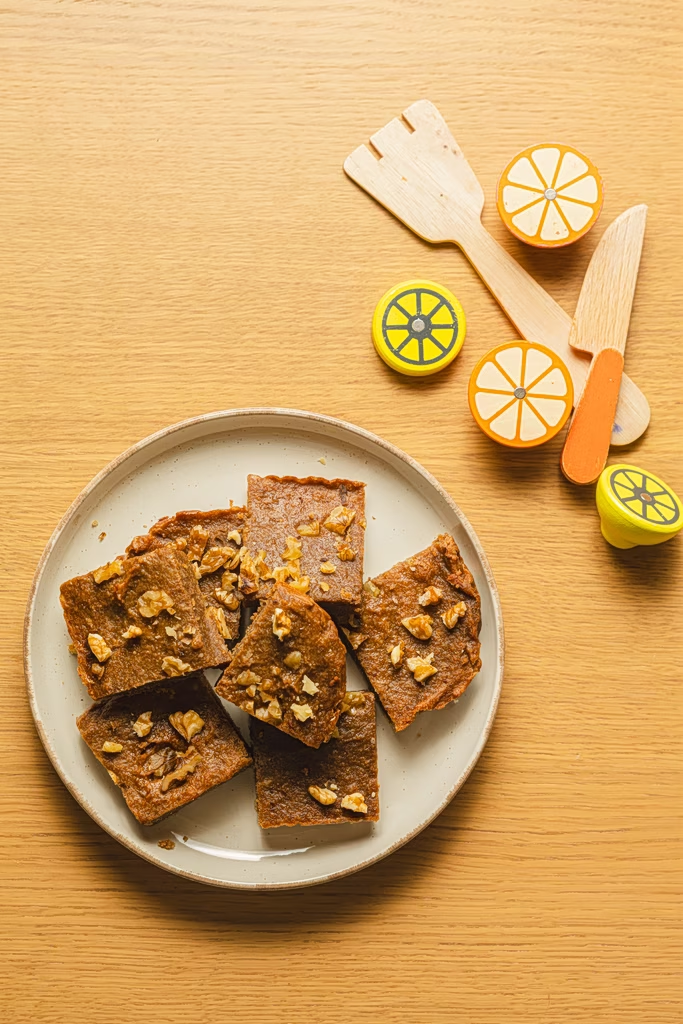
Photo: Vasilis Polychronakis
- Preparation time: 20 minutes
- Baking time: 20 minutes
- Difficulty: Easy (*)
- Yield: 12–16 pieces
Ingredients
- 220 g pitted dates
- 220 ml boiling water
- 170 g whole-wheat flour
- ½ tsp baking powder
- ¼ tsp salt
- 1 tsp cinnamon
- 1 medium ripe banana
- 30 g extra-virgin olive oil or sunflower oil
- 2 tsp vanilla extract
- 70 g plant-based milk or another milk of your choice
- 2 tbsp raw walnuts, coarsely chopped (optional)
Method
Place the dates in a bowl, cover them with the boiling water, and let them soak for 10 minutes.
Transfer them to a food processor and gradually blend until smooth, stopping occasionally to scrape down the sides of the bowl with a silicone spatula and ensure the mixture is processed evenly.
In a separate bowl, mash the banana with a fork. Add the blended dates, walnuts (if using), oil, vanilla extract, and milk. Whisk to combine.
In another bowl, mix the whole-wheat flour with the baking powder, cinnamon, and salt.
Add the dry ingredients to the banana mixture and gently stir until everything is fully incorporated.
Spread the batter in a 10-by-10-inch (25 x 25 cm) baking pan lined with parchment paper.
Bake in a preheated oven at 350°F (180°C), using the convection setting, for approximately 20 minutes.
Allow the blondies to cool to room temperature. Then, using the parchment paper to lift them out of the pan, transfer them to a cutting board and slice into individual pieces.
Store the blondies covered in the refrigerator for up to five days.