
 Μake us preferred on Google
Massive internet-related outages over the past few weeks—from Microsoft to the nation’s air-traffic control systems—have put cybersecurity and our collective digital vulnerability front and center.
That susceptibility isn’t new: For decades, we’ve suffered an onslaught of scams and hacks coming via email, text messages, malicious software and more. Alongside the threats has come a barrage of advice: choose a unique password, use multifactor authentication, keep your software regularly updated.
Even so, many people are still making basic cybersecurity mistakes that experts have been warning about for years—and the risks of those mistakes only rise in our AI age. A 2026 survey by the National Cybersecurity Alliance (NCA) and CybSafe found that 73% of people know how to create a strong password, but 46% still use plain dictionary words, and 60% reuse or slightly modify an existing password when time is short. Being young and tech-savvy is no defense: 64% of Gen Z respondents said they had been victims of cybercrime, compared with 33% of baby boomers.
Paradoxically, as people become more aware of security advice, they don’t necessarily put it into action. An earlier report by the same groups found that in 2022, 94% of people who had heard of multifactor authentication used it regularly, but by 2025, it was just 53%. That percentage increased slightly to 57% in 2026. Many people in the earlier survey said they felt overwhelmed by the amount of security information out there, and about one-third believed that it was pointless even to try to keep their data safe with so much of it already online.
We asked experts to list the most common cybersecurity mistakes that people are somehow still making in 2026. Here are the top 10.
1. Weak passwords
Even today, many people base their passwords on regular words and reuse the same password on multiple accounts, with slight but ineffective modifications like adding a number or an exclamation mark.
“I would like people to stop using the same password over and over again, and instead to have unique passwords for every account,” says Lorrie Cranor , director of the CyLab Security and Privacy Institute at Carnegie Mellon University. “I don’t expect people to remember all these unique passwords, so the best way is to have a password manager randomly choose them for you and store them for you.”
In fact, many experts recommend password managers, which store data in encrypted form, as the safest solution. But they acknowledge that people often hate the idea of putting all their passwords in one place. The NCA/CybSafe survey found that only 11% of people use a password manager, easily beaten by a much older technology: pen and paper (28%).
“It can feel very counterintuitive to keep all the keys to the kingdom in one place,” says Eva Galperin , director of cybersecurity at the Electronic Frontier Foundation. “But the single most common way that people end up having their accounts breached is through the reuse of passwords.”
And if you want to keep your passwords easier to remember, she says, you can use a long phrase consisting of five or six random words instead of a string of characters.
2. Skipping multifactor measures
Many people also say “no” to adding an extra layer of security to their accounts with multifactor authentication: typing in verification codes from a text message, email or authenticator app when they log in.
When Cranor’s university first mandated two-factor authentication in 2018, she and colleagues studied the impact and found that people expected it to be very inconvenient but discovered it was quite easy and improved their security. The title of their academic paper is a quote from a study participant: “It’s not actually that horrible.”
3. Ignoring updates
Software updates can be annoying, so people often skip them. In doing so, they are leaving their devices and data vulnerable to attack.
“It’s extremely common for people’s browsers, operating systems, phones, iPads and watches to be out of date,” says Rachel Tobac , chief executive of SocialProof Security in San Francisco. “It is really important to keep your operating system and all your software up-to-date, because if you don’t, you have known vulnerabilities that can be used in an exploit.”
Galperin says that falling behind on software updates is particularly dangerous this year because AI tools are finding more holes in software, creating what she calls a “vulnerability apocalypse.” Hackers start to exploit these vulnerabilities very quickly, yet people leave themselves exposed for days, weeks or months. Most systems aren’t breached using newly discovered vulnerabilities, she says. “They’re breached using vulnerabilities that are known, that have been reported, and you just haven’t patched them yet.”
4. Social-media oversharing
Many people ignore the privacy settings on social-media sites and routinely share personal details publicly that could be used for identity theft or phishing attacks.
“On social media, people can often get your date of birth, which they can use to contribute to identity theft,” Cranor says. “The personal details that you have posted publicly can make it easier for an attacker to target you.”
She and other experts recommend that people set their privacy settings to share with friends and not with the general public, and to be wary of whom they add to their friend list.
5. Moving too fast
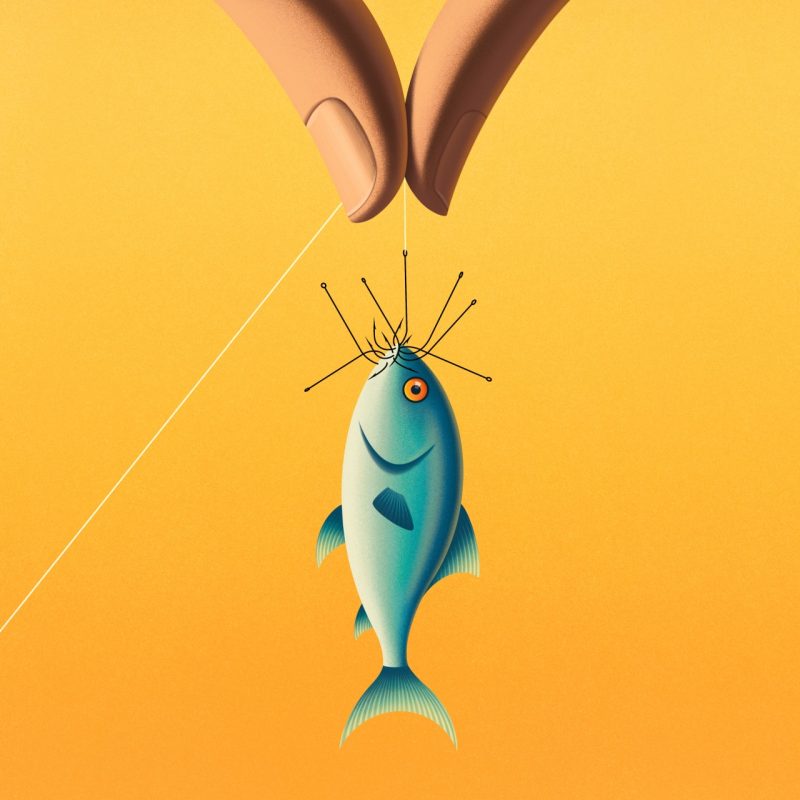
Longstanding scams like email phishing and phony phone calls still work in 2026. People are still clicking on those links and giving their bank details to cold callers.
The reason, says Brian Cute , CEO of the Global Cyber Alliance, is that scammers create a false sense of panic, rushing people into decisions they later regret. “If you’re feeling urgency or fear, that is a red flag,” he says. “Step back. Take your time, and look at it very carefully. If you have any concerns, independently verify the message using a different communication method.”
The experts also recommend setting up passwords or safe words with loved ones to combat the emerging trend of scammers using AI to clone people’s voices and appearances. If a family member calls asking for money, people can then ask for the agreed password or a detail that nobody else would know.
6. Dangerous downloads
Another longstanding tactic that people still fall for: offers that are too good to be true. Tobac says that people often go to an unknown website to download software that claims to be a free version of Photoshop, for example, but turns out to be malware that takes over their device and steals their passwords.
“A lot of times people make choices that end up really harming them and their financial prospects with just a simple fake Photoshop download,” she says. Browser extensions from unknown developers can also contain malware, she says.
7. Insecure home networks
Internet routers often come with a default admin password of “admin” or “password.” Too often, people leave it that way, meaning that anyone who guesses the password can see their internet traffic and potentially gain access to their account, Tobac says.
The growth of smart devices, from pet feeders to baby monitors, multiplies the risks, and the experts say that few people pay attention to the security of hackable home appliances. Although devices with cameras and microphones create the main security risk, even seemingly harmless things like ovens and light switches can be targeted.
8. Being careless in public
The good news is that public Wi-Fi isn’t as dangerous as it used to be. Since the move to encrypted “HTTPS” websites instead of the old “HTTP,” it is not as easy for someone on the same network to intercept another user’s internet traffic.
However, people still make mistakes when they are using their phones or laptops in public. They log in to their bank accounts without paying attention to who might be looking over their shoulder, or they click on random QR codes without checking which URL it takes them to.
Another public Wi-Fi mistake people make, Tobac says, is using the wrong hot spot and instead going to one set up by a scammer. People might see a phony login screen asking them to enter their login details for Google or another account. “If you see a pop-up asking for a password to your Google account to be able to use this Wi-Fi, that is someone attempting to steal your password.”
9. Leaving ‘digital exhaust’
People often have old accounts strewn across the web from decades of internet activity. It might seem harmless to leave that 1999 chat-room login out there on a poorly maintained website, but it all contributes to what Lisa Plaggemier , executive director at the National Cybersecurity Alliance, calls our “digital exhaust.” Scammers can put all of the data together and create a complete picture that helps them craft personalized attacks.
She also says that old accounts can put your friends at risk. She has seen scammers take over an old Facebook account and use it to convince its owner’s friends to invest in a cryptocurrency scam.
Cranor points out that a trail of old accounts is even more dangerous for people who reuse their passwords. “Even if you don’t get rid of all the old accounts, make sure that you’re not using that password in any of your current accounts,” she says.
10. Relying on old info
As technology evolves, the security risks change. People who can confidently recognize a fake Nigerian prince in their email inbox may still fall for a newer scam like a convincing AI deepfake video. Not staying up-to-date with the latest cybersecurity developments remains a common mistake.
For example, as people increasingly use AI agents to manage their email or even their finances, they hand over credentials with no guarantee that the agents will keep them secure.
“We don’t want to give an AI tool our entire keys to the castle,” Tobac says. “I would not give it access to all your passwords and your Gmail, which could be used to reset all of your other passwords. I wouldn’t give it access to your multifactor authentication.”
Meanwhile, AI-powered scams are becoming much more effective, and old detection techniques like relying on typos or unconvincing graphics no longer work.
“There’s a tsunami of increasingly effective generative AI and deepfake-enabled scam and phishing attacks coming at all of us,” Cute says. “It’s coming to us at speed, and we’re not prepared for it.”
Write to reports@wsj.com .