 Μake us preferred on Google
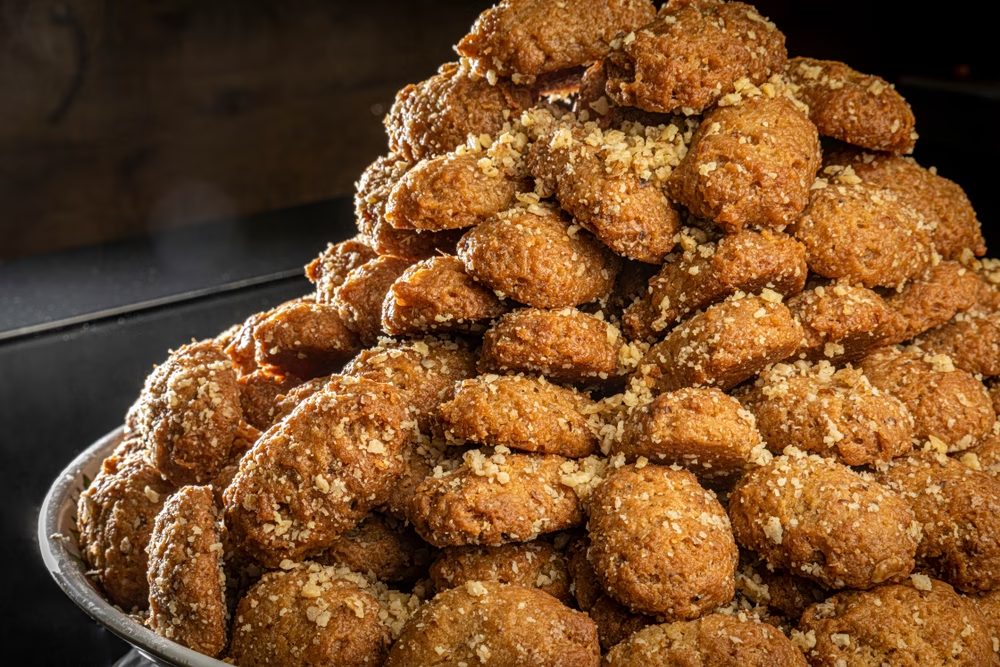
There are Christmas sweets, and then there are melomakarona. Few Greek holiday treats inspire such devotion. For many people, waiting until Christmas to enjoy them is practically impossible, while others find themselves craving these honey-soaked delights even in the middle of summer.
And it’s easy to understand why. Melomakarona are difficult to fit into any familiar category of pastry. They’re not quite cookies, but they’re not traditional syrup-soaked pastries either. With their distinctive combination of olive oil-based dough, honey, nuts and fragrant spices, they occupy a category all their own.
Their origins are just as intriguing as their flavor. Tracing their history takes us back to ancient Greece, although it’s unlikely that melomakarona existed in the form we know today. Some theories link their name to the ancient Greek word makaria, a type of bread served at funeral meals, and the later term makaronia, which was also associated with funeral customs. According to this interpretation, honey was added over time to sweeten the preparation and make it more appealing, gradually giving rise to the modern dessert.
Others focus on the word’s etymology. Modern dictionaries connect melomakarono to the Greek words for honey (meli) and macaroni (makaroni), possibly because of the sweet’s elongated shape.
Whatever the true origin of the name, honey-soaked pastries made with dough, nuts and aromatic ingredients have a long history throughout Greece and the eastern Mediterranean.
They hold a particularly important place in the culinary traditions of Asia Minor and Constantinople (modern-day Istanbul), where similar sweets were passed down through generations, preserving family recipes and local customs. Following the 1922 population exchange and the arrival of Greek refugees from Asia Minor, these communities brought their own versions of the sweets to Greece, further enriching the country’s pastry-making traditions.
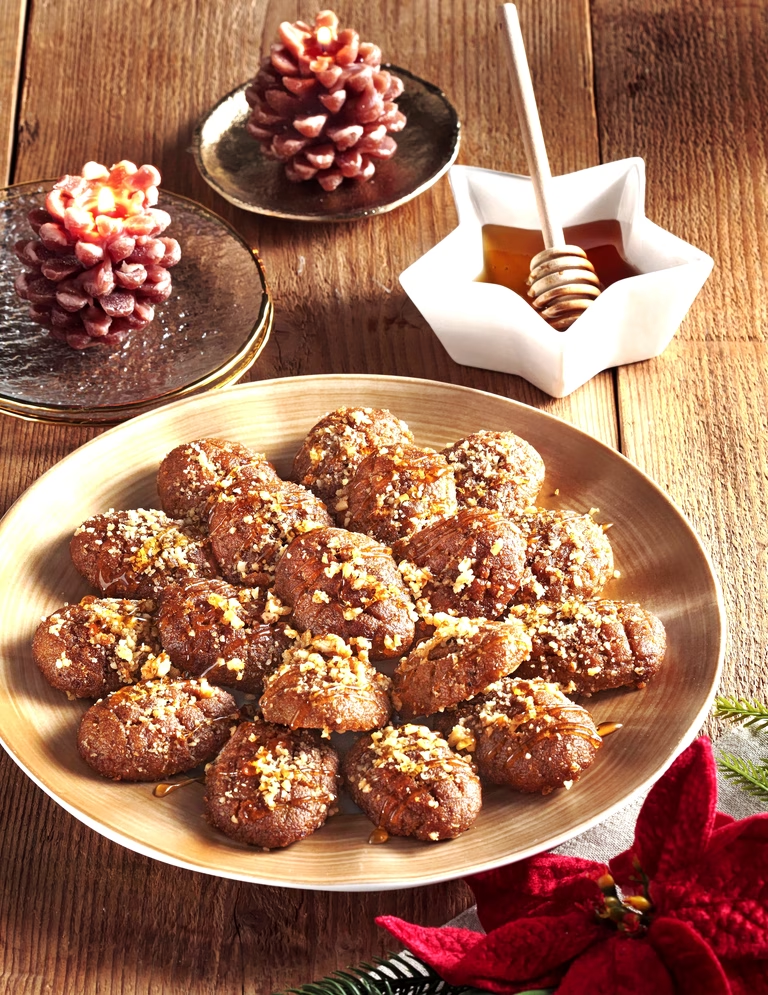
Photo: Giorgos Drakopoulos Food styling: Olivia Artemis Webb
Melomakarona, finikia, isli and finikota: Meet the family
The classic melomakarono, with its characteristic oval shape, olive oil-based dough, honey syrup and grated walnuts, is now found throughout Greece. It’s also the version most Greeks traditionally make at home.
But it has three close relatives worth discovering.
Finikia have deep roots in the culinary traditions of Asia Minor and Constantinople. They closely resemble melomakarona, although older recipes often feature larger, more elongated pastries, frequently filled with walnuts and cinnamon. Some versions are soaked in syrup, while others are served plain. Their name is thought to derive from dates, the fruit of the palm tree, whose shape they resemble. Different versions of finikia can also be found elsewhere in Greece, including Crete.
Isli, also known as itsli, are another Asia Minor specialty, particularly associated with Pontus and Cappadocia. These small, filled pastries contain walnuts and cinnamon and are immediately recognizable by the intricate patterns decorating their surfaces. The designs are created using a special pair of tweezers. Their dough is generally more buttery and crumbly than that of melomakarona. Trabzon, a city on the Black Sea coast of modern-day Turkey, is often cited as their place of origin, although their exact birthplace remains uncertain.
Finikota, from Cyprus, offer another interesting variation. These traditional Christmas sweets are filled with dates and walnuts and can be found either soaked in syrup or dusted with sugar.
Of course, knowing their history is one thing; tasting them is quite another. With melomakarona already appearing in pastry-shop windows across Athens, we’ve rounded up some favorite addresses where you can find them. Make a note of the names and get ready to hit the streets.
Petek
Tel.: 210 8223955
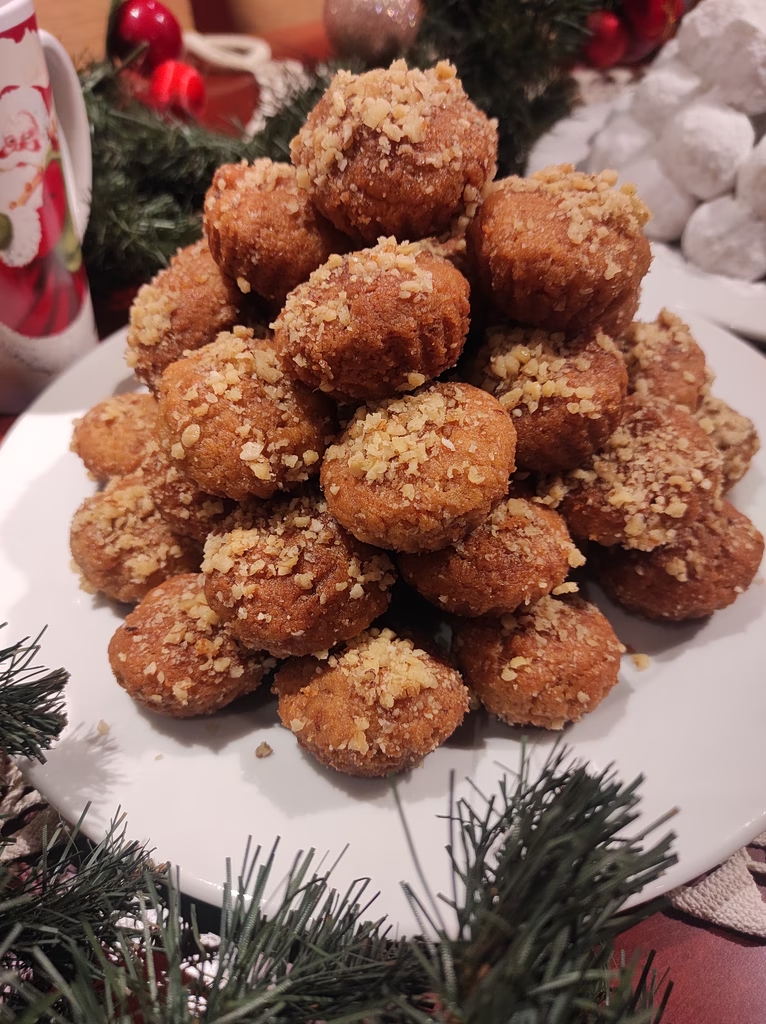
At Petek, a pastry shop specializing in Constantinopolitan sweets, melomakarona are made using a family recipe that traces its roots to Cappadocia and is associated with the family’s grandmother, Serafina.
Konstantinos Maglaras and his wife, Dimitra, carry on the tradition with two different versions. The first is the classic melomakarono: crisp on the outside, generously soaked in honey syrup and topped with walnuts. They use honey from Karpenisi, a mountain town in central Greece, and freshly squeezed orange juice.
The second version consists of small, round bites filled with half a walnut and baked in specially designed molds.
Fresh
Tel.: 210 3642948
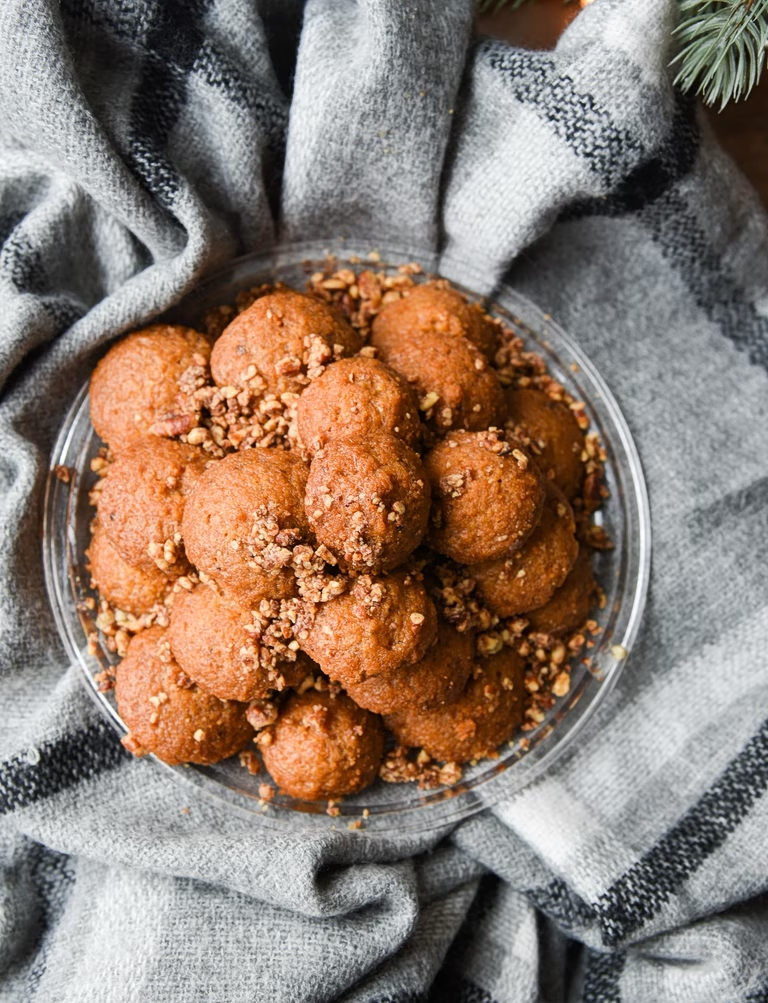
Photo: Instagram / freshpatisserie
At Fresh, the melomakarona are small, round and particularly crunchy. Their recipe combines semolina, pecans and organic honey from Crete, giving them a rich flavor and aroma. Orange adds a fresh note, while generous honey syrup keeps the centers moist and juicy.
Asimakopoulos Brothers
Tel.: 210 3610092
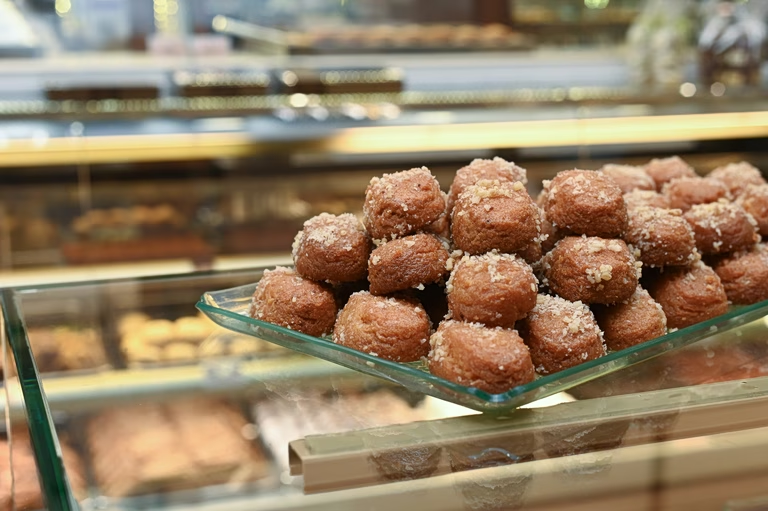
Photo: Giorgos Kapranos
This historic Athens pastry shop prepares two different Christmas specialties: classic melomakarona and traditional Asia Minor isli.
The melomakarona are moist and generously soaked in syrup, with rich aromas of orange and spices. The isli are filled with ground walnuts and topped with pistachios. Both recipes use thyme honey from the Ionian island of Kefalonia.
Désiré
Tel.: 210 3632333
View this post on Instagram
Désiré takes its melomakarona seriously, offering four different versions. Alongside the classic recipe, the pastry shop makes small oval bites, melomakarona coated in dark chocolate and round versions filled with walnuts and dates.
The ingredients include semolina, walnuts, flower honey, thyme honey from Crete, cinnamon, cloves, orange juice and orange zest.
The classic version is soft inside, with just the right amount of honey syrup to bring out the flavor of the honey itself. And because melomakarona aren’t strictly a Christmas affair here, they remain on display almost all year, with the exception of July and August.
Mitropolitikon
Tel.: 210 3240654
View this post on Instagram
The historic Mitropolitikon is one of the few pastry shops in Athens where you can enjoy melomakarona almost throughout the year. The shop uses exclusively Greek honey, and its signature touch is a generous soaking in syrup that makes the sweets particularly moist and juicy.
Stani
Tel.: 210 5233637
Stani, the historic dairy shop in Athens’ Omonia district, has been operating since 1931. Its melomakarona follow an old house recipe and are relatively small, soft and exceptionally moist, with plenty of honey syrup.
One of their secrets lies in the way the dough is prepared. The ingredients are mixed with as few movements as possible, just until they come together. This avoids excessive kneading, which could make the finished pastries tough.
Pastry Family
Tel.: 210 7210987
View this post on Instagram
At Pastry Family, melomakarona come in small, compact bites, with restrained sweetness and a carefully balanced amount of honey syrup.
The recipe uses flour exclusively, without semolina, and thyme honey from the Greek island of Kythera. Greek walnuts are sprinkled over the top, while orange adds a subtle finishing note.
Dimitra Gounaridi
Tel.: 210 2712548
Operating in Nea Ionia, a northern Athens suburb, since 1945, Dimitra Gounaridi’s family workshop is renowned for its handmade pies and traditional Asia Minor sweets.
Its melomakarona are tiny, crisp on the outside and soft and honey-soaked inside. They have rich aromas of spices and orange, with both juice and zest from oranges grown in the Laconia region of southern Greece.
For the syrup, the workshop uses either pine honey or orange blossom honey from Greek beekeepers, depending on availability.
Traditional isli also hold a special place in its selection. Made according to an Asia Minor recipe, they feature a crumbly dough prepared with milk butter and a generous filling of Greek walnuts.
Each pastry is shaped and decorated by hand using the characteristic special tweezers before being soaked in syrup.
Pnyka
Tel.: 210 3245162
View this post on Instagram
Pnyka was founded in 1981, when Dimitris Kot¬saris opened his first workshop with a strong emphasis on quality ingredients and handmade products.
Alongside its renowned bread, the bakery prepares classic melomakarona every year. These are plump, fluffy and particularly moist, with generous honey syrup and plenty of finely ground walnuts on top.
They are baked fresh every day and, according to an earlier food feature, often sell out before they even have time to cool.
Artopoieion 1907
Tel.: 210 3214035
View this post on Instagram
One of Athens’ oldest bakeries, with a history dating back to 1907, Artopoieion Veneti has remained in the same family’s hands since 1946. Today, it continues its tradition of handmade breads and sweets while preserving the character of a traditional neighborhood bakery.
Its melomakarona come in two sizes: medium and small, bite-sized versions. Both are generously soaked in honey syrup, with a noticeable honey flavor inside and a delicate hint of orange in the aftertaste.
Lakafosis
Tel.: 210 6229276
View this post on Instagram
At Lakafosis pastry shop, particular attention goes into the quality of the ingredients. Its melomakarona are made with honey supplied by the Mourikis family from Dervenochoria, an area in central Greece.
They are small and dark in color, with a crumbly texture that never feels dry. The honey syrup is carefully balanced, while cinnamon and cloves provide their characteristic aroma. A subtle flavor of toasted dough completes the experience.
Thymisi
Tel.: 210 7244034
View this post on Instagram
Thymisi, a small creamery and pastry shop that opened in Athens’ Pangrati neighborhood in 2025, is run by Nikos Zamanis and his father, Dimitris, who continue a family tradition of pastry-making.
The pair place particular emphasis on quality ingredients and handmade preparations. Their open kitchen turns out galaktoboureko, a traditional Greek custard-filled phyllo pastry, galatopita, a milk-based pie, and other traditional desserts every day. Melomakarona are also part of the selection and have become a neighborhood favorite, attracting customers from beyond the immediate area.
More melomakarona arriving in the coming days
The following pastry shops are also preparing to bring their melomakarona to their displays in the coming days.
Stavropoulos
Tel.: 210 3847006
View this post on Instagram
At Stavropoulos, a bakery specializing in Constantinopolitan recipes, the classic melomakarona are particularly fluffy and soft, with an intense aroma of orange.
Their defining characteristic is the exceptionally generous honey syrup, which gives them an incredibly tender texture. These are the kind of melomakarona that practically melt in your mouth.
Tillas
Tel.: 210 2514077
View this post on Instagram
Tillas is a Constantinopolitan pastry shop specializing in Middle
Eastern sweets. Its melomakarona come in two versions.
The classic ones are deeply baked, crisp on the outside and very moist inside, thanks to generous syrup soaking. The second version consists of small, walnut-filled bites.
Kora
Tel.: 210 3627855
View this post on Instagram
Kora follows the classic melomakarona recipe, combining orange, cinnamon and cloves, but adds a small twist that gives its version a distinctive character.
Instead of the traditional walnut topping, the pastries are sprinkled with pecans, which bring a different flavor and texture.
The sweetness is well balanced, with subtle aromas of spices.
Sweet Alchemy
Tel.: 210 7240205
View this post on Instagram
Pastry chef Stelios Parliaros remains faithful to the traditional melomakarona recipe while adding a few personal touches.
His dough combines flour, without semolina, extra virgin olive oil, thyme honey, cinnamon, cloves and orange. He also adds a little butter for extra aroma and incorporates ground walnuts directly into the dough.
The resulting melomakarona are medium-sized, crisp on the outside and generously soaked in honey syrup inside. They are also available in gift packaging labeled Gâteaux de voyage (travel cakes).
Mama Psomi
Tel.: 210 9227686
At Mama Psomi, melomakarona are made according to a family recipe passed down through generations.
They are crisp yet tender, without excessive syrup, and stand out for their aromas of orange and spices. The ingredients include honey from Laconia, fresh walnuts from Feneos, orange juice and zest, cinnamon and cloves. The dough combines different types of flour and contains no semolina.
The pastries are medium-sized and generously topped with grated walnuts.