 Μake us preferred on Google
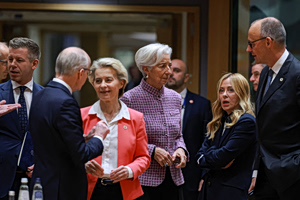
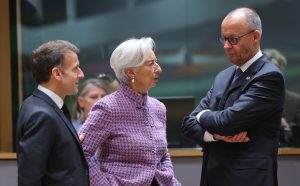
The special European Council meeting in late November concluded without agreement on the EU’s next long-term budget, also known as the Multiannual Financial Framework (MFF), with negotiations set to continue in December. This deadlock reflects a persistent difficulty in European decision-making. Governments agree on the need for stronger defence, greater competitiveness, and a more effective international presence, yet struggle to agree on the resources required to pursue these objectives. The disagreement goes beyond expenditure. It raises questions about Europe’s political direction and the capacity of its institutions to reconcile national interests.
António Costa’s latest proposal sets the budget for 2028-2034 at EUR 1.582 trillion in 2025 prices, 10.2% below the Commission’s initial proposal. Defence and competitiveness spending would still rise compared with the current framework. Nevertheless, the difference between the proposed resources and the Union’s expanding responsibilities deserves attention. Repayments of NextGenerationEU borrowing would account for 8.9% of the proposed budget, compared with 2.1% under the current framework. Under Costa’s proposal, average national contributions would rise only marginally, from 0.80% to 0.82% of member states’ gross national income, provided the proposed new revenue sources are agreed. Even so, a smaller financial framework could become the graveyard of European ambition if successive commitments are not matched by credible financing.
This matters for the EU’s place in the world. Reducing excessive dependence on the United States for security and certain technologies, and on China for critical raw materials and supply chains, requires sustained European investment and stronger industrial capabilities. Without these, Europe risks remaining dependent on decisions taken elsewhere, even as it seeks a greater role in international affairs.
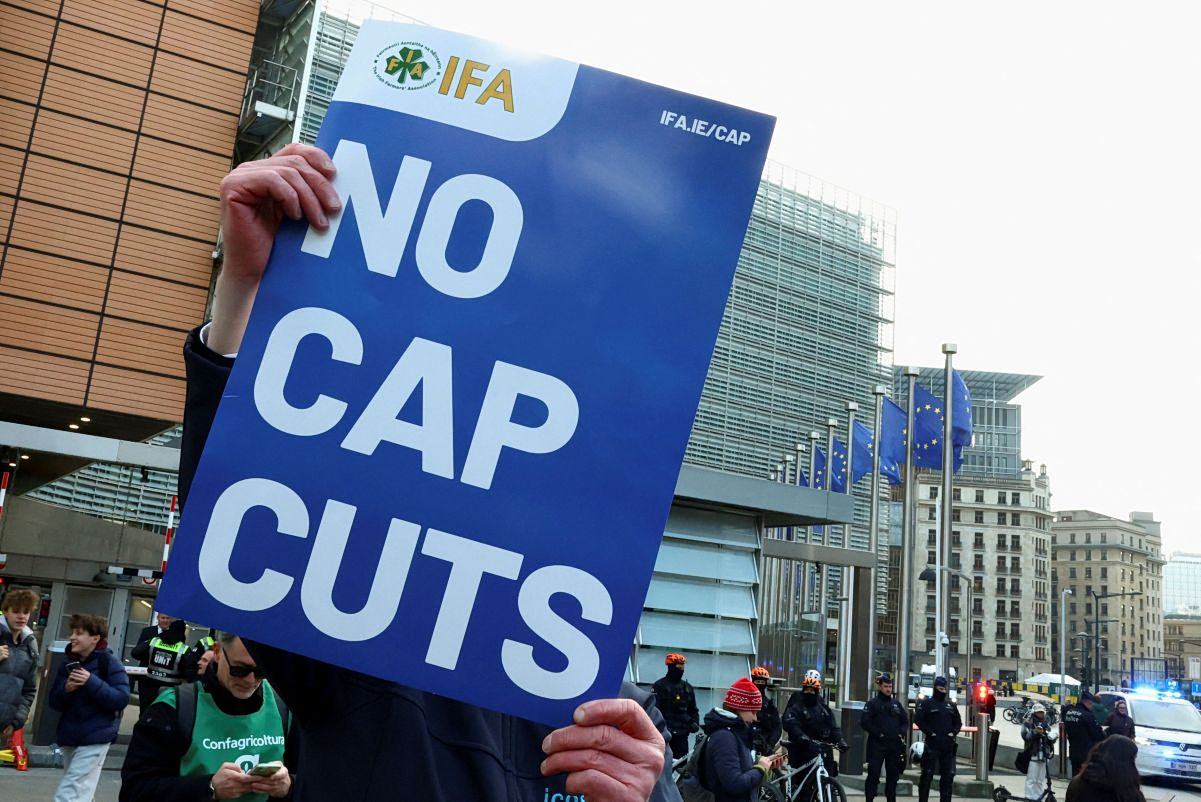
The Common Agricultural Policy (CAP) and cohesion policy belong at the centre of this discussion. Cohesion funding enables less prosperous regions to improve infrastructure, skills and productive capacity. The CAP helps sustain food production, farming livelihoods and rural communities facing volatile markets and climate pressures. Their objectives are recognised in primary EU law. They are also among the most tangible ways in which European integration reaches citizens beyond major industrial and financial centres. Reform can improve the distribution and effectiveness of both policies. Reducing their importance to make room for new priorities could, however, weaken the economic convergence and public confidence on which those priorities depend.
National governments face legitimate fiscal and political pressures of their own, including public debt, domestic spending priorities and electoral accountability. Elections in several member states during 2027, particularly the French presidential contest, could complicate an already difficult negotiation. Emmanuel Macron has grounds to warn against prolonged talks. But the demand for agreement before January should not turn the calendar into a substitute for judgement.
History offers perspective. EU leaders reached political agreement on the 2014-2020 MFF in February 2013 and on the 2021-2027 MFF in July 2020. Both were formally adopted in December immediately before taking effect. An agreement at the end of 2026 would come earlier than those precedents. The present negotiations for the next MFF are difficult, but have not yet exceeded the historical timetable.
There is nonetheless a reason to seek an earlier outcome. The proposed restructuring of EU programmes requires legislation and administrative preparation throughout 2027. Delay could disrupt planning for 2028. The EU Treaties provide for the extension of the final year’s budget ceilings if a new framework is not adopted on time, but that safeguard cannot replace an orderly transition. There are good reasons to act quickly, but speed should not determine the substance of the agreement.
Most governments opposed further cuts at the November summit, with a large majority seeking to protect agriculture and cohesion. The traditional divide between net contributors and net recipients is central to the negotiations, although national interests in individual spending programmes do not always follow the same dividing line. France, the EU’s second-largest net contributor and a major recipient of CAP funding, strongly defended agricultural support at the November summit. The impasse also raises uncomfortable questions about the quality of political leadership, in Brussels and national capitals alike. European leaders have been more convincing in articulating common ambitions than in securing the agreement needed to finance them.
A durable agreement requires credible new own resources, responsible spending and a realistic approach to recovery-debt repayments. But fiscal discipline should not become an argument for permanently limiting Europe’s capacity to act. At a time of growing security concerns, economic uncertainty and strategic dependence on third countries, the case for a stronger EU budget is difficult to dismiss. European leaders must recognise the pressures facing their citizens and make the case for financing common priorities. Europe cannot continue to raise its ambitions without committing the resources needed to fulfil them.
Dr. Apostolos Samaras holds a Ph.D. in European Law from the Law School of the National and Kapodistrian University of Athens. He is a Research Fellow at the Hellenic Foundation for European and Foreign Policy (ELIAMEP).