 Μake us preferred on Google
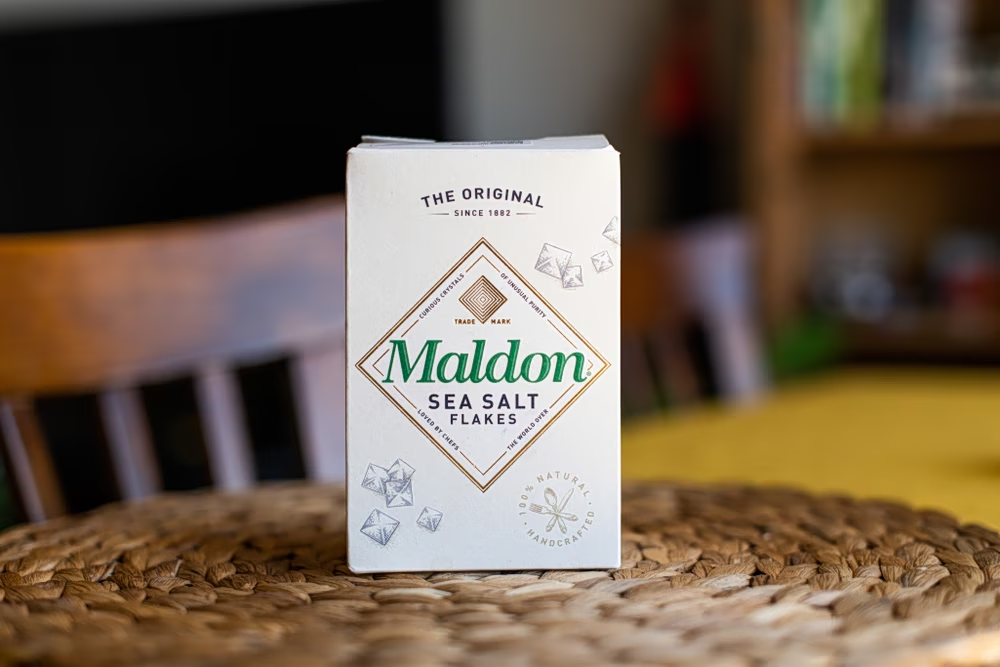
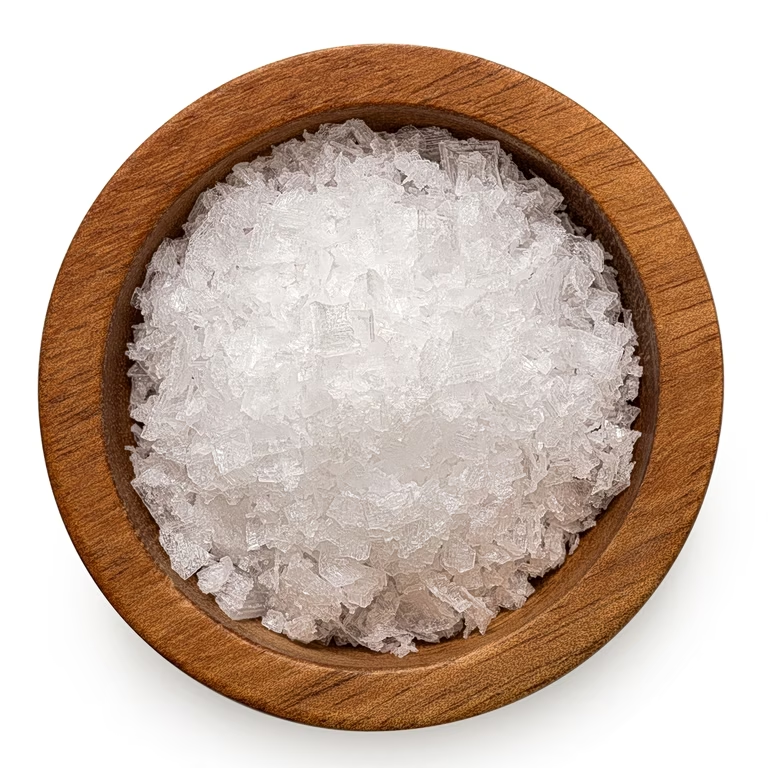
Few salts have achieved the reputation and international recognition of Maldon in the world of gastronomy. Its distinctive pyramid-shaped crystals have become a staple in professional kitchens, prized as the perfect finishing touch for a dish. Whether sprinkled over a perfectly seared steak, a simple tomato salad, or a chocolate tart, just a few flakes are enough to enhance the flavor and add the distinctive crunch that made it famous.
Some of the biggest names in international gastronomy have helped propel Maldon to worldwide fame. Ruth Rogers, co-founder of London’s Michelin-starred River Café, was already expressing her preference for this particular salt back in the 1990s. It was also in the kitchen of that same restaurant that Jamie Oliver first encountered it. He subsequently introduced it to a much wider audience through his television shows and cookbooks.
Nigella Lawson, one of the best-known personalities in television cooking, once told Epicurious that she couldn’t cook without Maldon. She even revealed that she carries a small container of it in her handbag.
View this post on Instagram
Thomas Keller, the American chef behind the three-Michelin-starred restaurants The French Laundry and Per Se, is particularly fond of the texture of its crystals. Gordon Ramsay, meanwhile, describes it as an excellent choice in his book Gordon Ramsay’s Ultimate Cookery Course. Alton Brown, creator of the popular American television show Good Eats and known for his scientific approach to cooking, also uses it as a finishing salt for both savory and sweet dishes.
And so Maldon amassed devoted fans around the world, becoming virtually synonymous with premium sea salt.
A History Dating Back to 1882
The Maldon Salt Company was founded in 1882 in the town of Maldon, in Essex, southeastern England. It is a family-owned business whose history is closely tied to the region’s salt-making tradition, particularly the waters of the Blackwater Estuary.
For more than 140 years, the company has championed its traditional production methods and the hand-harvesting of its salt crystals. Its distinctive pyramid-shaped flakes are the product’s defining feature, helping it stand out in a market where salt had long been regarded as little more than an everyday commodity.
View this post on Instagram
Maldon is also available in Greece, where it can be found in delicatessens, specialty grocery stores, and online retailers selling gourmet products. It is particularly popular among professional chefs, while home cooks also reach for it to put the finishing touch on their dishes.
Its higher price compared with ordinary table salt is justified, in the eyes of consumers, not only by its distinctive texture and flavor but also by the story behind it: a traditional production process rooted in a specific place.
There is just one problem. That story has turned out to be somewhat different from what everyone thought they knew.
The Scandal That Turned Maldon’s Story Upside Down
On November 15, 2026, British newspaper The Observer exposed a previously unknown aspect of Maldon’s production process, revealing that the company uses substantial quantities of rock salt imported from Germany.
As part of its investigation, the newspaper documented four trucks delivering salt from German company K+S to Maldon’s production facilities near Goldhanger, Essex. Each truck was carrying approximately 12 metric tons. Based on these findings, the newspaper estimated that the company’s weekly deliveries of rock salt could amount to around 50 metric tons.
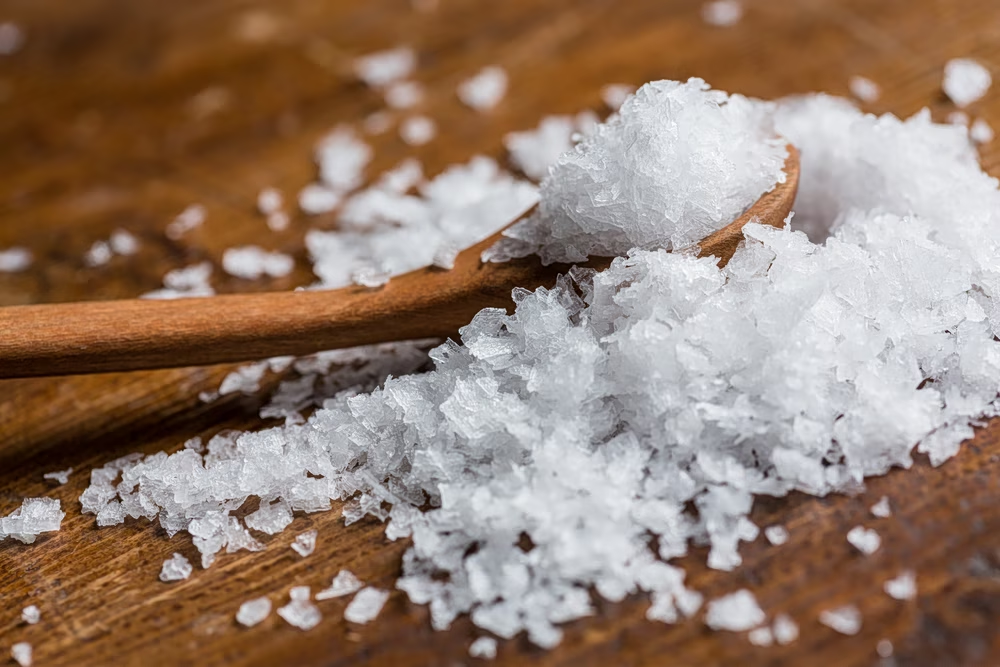
The revelations sparked controversy because the product’s packaging carries the claim “100% Sea Salt Flakes,” with no mention whatsoever of the use of rock salt.
The investigation revealed—and the company subsequently confirmed—that rock salt is added to seawater to increase the concentration of the brine. The mixture is then heated in specialized pans. As the water evaporates, the distinctive Maldon crystals begin to form.
According to the company, this technique, known as the “salt-on-salt” method, has been used since its founding in 1882. What has changed over the years is the source of the raw material. Whereas Maldon once sourced its rock salt from Cheshire, England, it now imports it from Germany.
One important question, however, has remained unanswered: What is the actual proportion of each of the two raw materials in the finished product?
Maldon’s Apology
Following the revelations, Maldon was forced to explain itself.
In an official statement published on its website, the company acknowledged that it had not communicated its production process with sufficient clarity and apologized for the confusion this had caused.
View this post on Instagram
It confirmed that it uses German rock salt, which it says it selects for its purity and mineral composition. At the same time, it defended the “100% sea salt” claim, arguing that the rock salt itself is of geological origin from ancient seas.
The company also insisted that its product is still made in Maldon using locally sourced seawater and traditional production methods. It pledged, moreover, to review its packaging.
It is worth noting that British authorities had already examined the production process in 2019–2020 but decided not to take further action.
British legislation does not clearly distinguish between sea salt and rock salt for the purposes of this particular labeling claim, and no food safety violations have been identified.
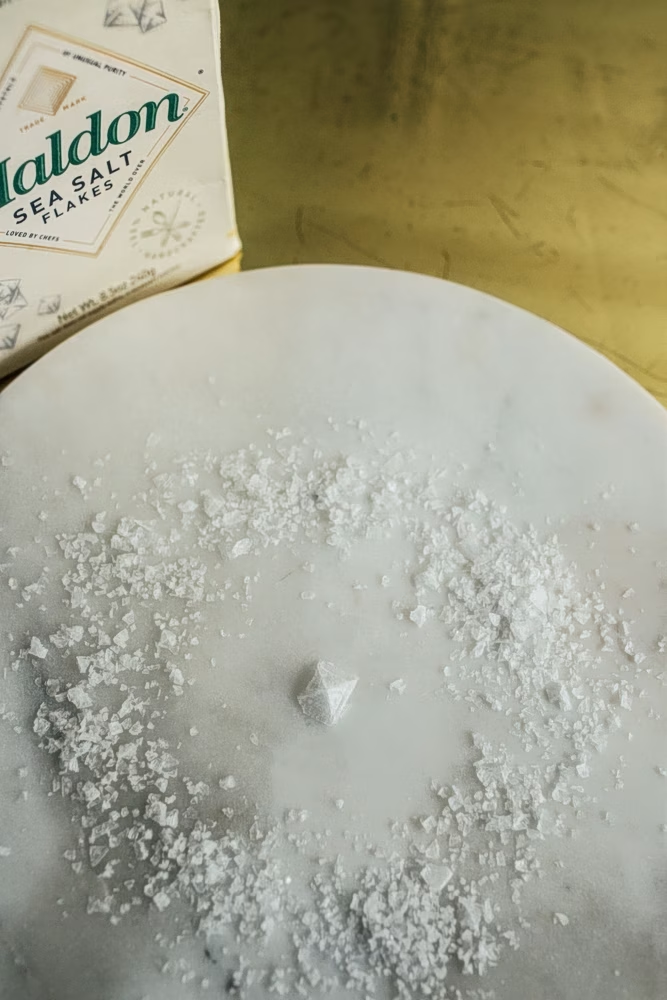
After all, both types of salt consist primarily of sodium chloride, and their different origins do not necessarily mean there is any difference in quality or nutritional value. Nor do the revelations suggest that Maldon’s flavor or distinctive texture has changed.
The real issue, however, lies elsewhere.
When a product is marketed as premium, traditional, and intrinsically linked to a particular place, consumers are paying for more than its taste. They are also paying for its authenticity, provenance, and the story behind it.
And they have every right to know how closely that story reflects reality.
Perhaps It’s Time to Take a Closer Look at Greek Salt?
The Maldon controversy gives us a good reason to turn our attention to Greece’s own salt production.
In a country with thousands of miles of coastline, natural salt pans, and a centuries-old tradition of harvesting sea salt, there are products that deserve far greater recognition.
Perhaps the best-known example is Afrina from Messolonghi, a premium fleur de sel—the delicate layer of salt crystals that forms on the surface of brine and is harvested by hand at the Aspri Alyki saltworks.
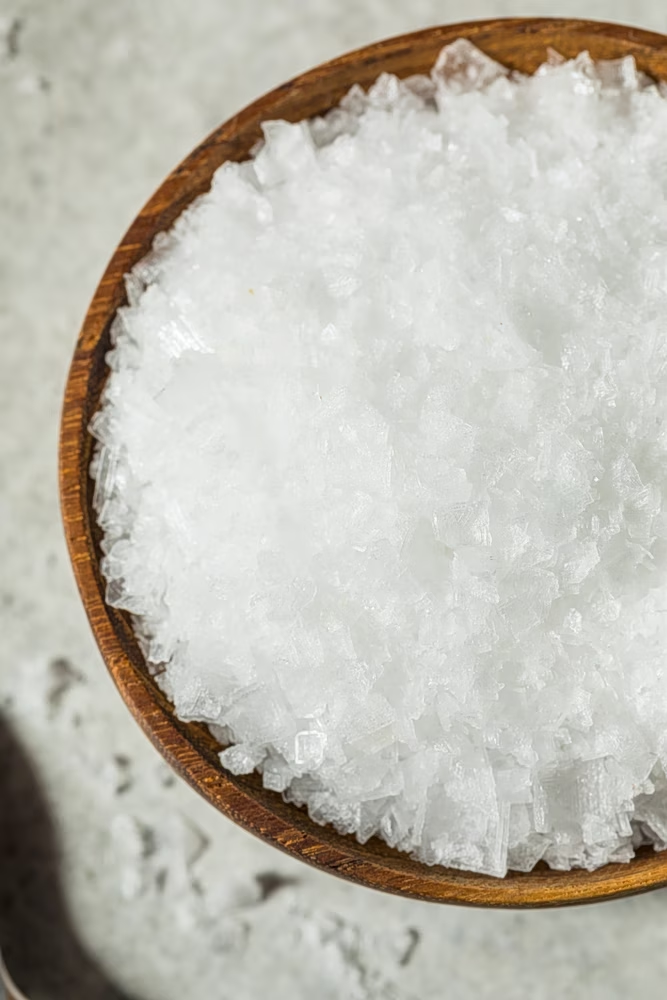
Its fine, delicate, easily crumbled crystals have a distinctive texture and are used primarily as a finishing salt, whether over a simple tomato salad or a piece of grilled fish.
Afrina is inextricably linked to the Messolonghi lagoon, the area’s unique climatic conditions, and a production process that demands experience and careful attention. An application has been submitted to register the name as a Protected Geographical Indication (PGI), an EU designation that recognizes products whose qualities or reputation are closely associated with a particular geographical area.
The Small Cyclades, a group of islands in the Aegean Sea, have their own salt-harvesting traditions, too. Schinoussa, in particular, produces its own sea salt flakes. This lesser-known local product is closely connected to the sea and the island’s simple, distinctive culinary identity.
It is an interesting example, especially when we consider how many small-scale local products remain virtually unknown beyond the places where they are made.
An even more distinctive case can be found on the island of Kythira, where harvesting salt from natural cavities in coastal rocks has been a tradition for centuries.
Local salt harvesters collect the crystals that form as seawater evaporates under the sun. It is demanding work, carried out during the summer months on rocks exposed to intense heat and strong winds.
The island’s famous “rock salt” has gained recognition beyond Greece, while the special management arrangements governing its natural salt pans are, in themselves, a fascinating story.
In the Mani region of southern Greece’s Peloponnese, the harvesting of sea salt from natural rocky salt pans also survives as a traditional activity. Small-scale producers gather the crystals by hand, taking advantage of the area’s natural conditions.
A similar tradition can be found in Crete, particularly along the island’s rocky western coastline, where salt is collected from natural depressions in the rocks that fill with seawater.
Beyond these distinctive specialty products, Greece also has a substantial salt industry based on organized saltworks, stretching from Messolonghi to Lesbos, Pieria, and northern Greece.
This production has its own considerable economic and historical significance, yet it often goes unnoticed, despite salt being one of the most commonplace ingredients in our kitchens.
Can We Really Trust Food Labels?
The Maldon affair has once again made us question just how much we can trust food labels—and how heavily our purchasing decisions are influenced by a product’s reputation.
All too often, the power of advertising, international recognition, and endorsements from leading figures in gastronomy lead us to take a product’s superiority for granted, without even bothering to compare it with the alternatives.
Perhaps, then, we need to be a little more careful about what we buy, more demanding when it comes to the information provided to us, and less easily dazzled by a famous name.
And perhaps, in our constant pursuit of heavily marketed products from abroad, we are overlooking products from our own country that could hold their own against the very best international competition.
It is worth remembering that genuine quality is not always found where the spotlight shines.