 Μake us preferred on Google
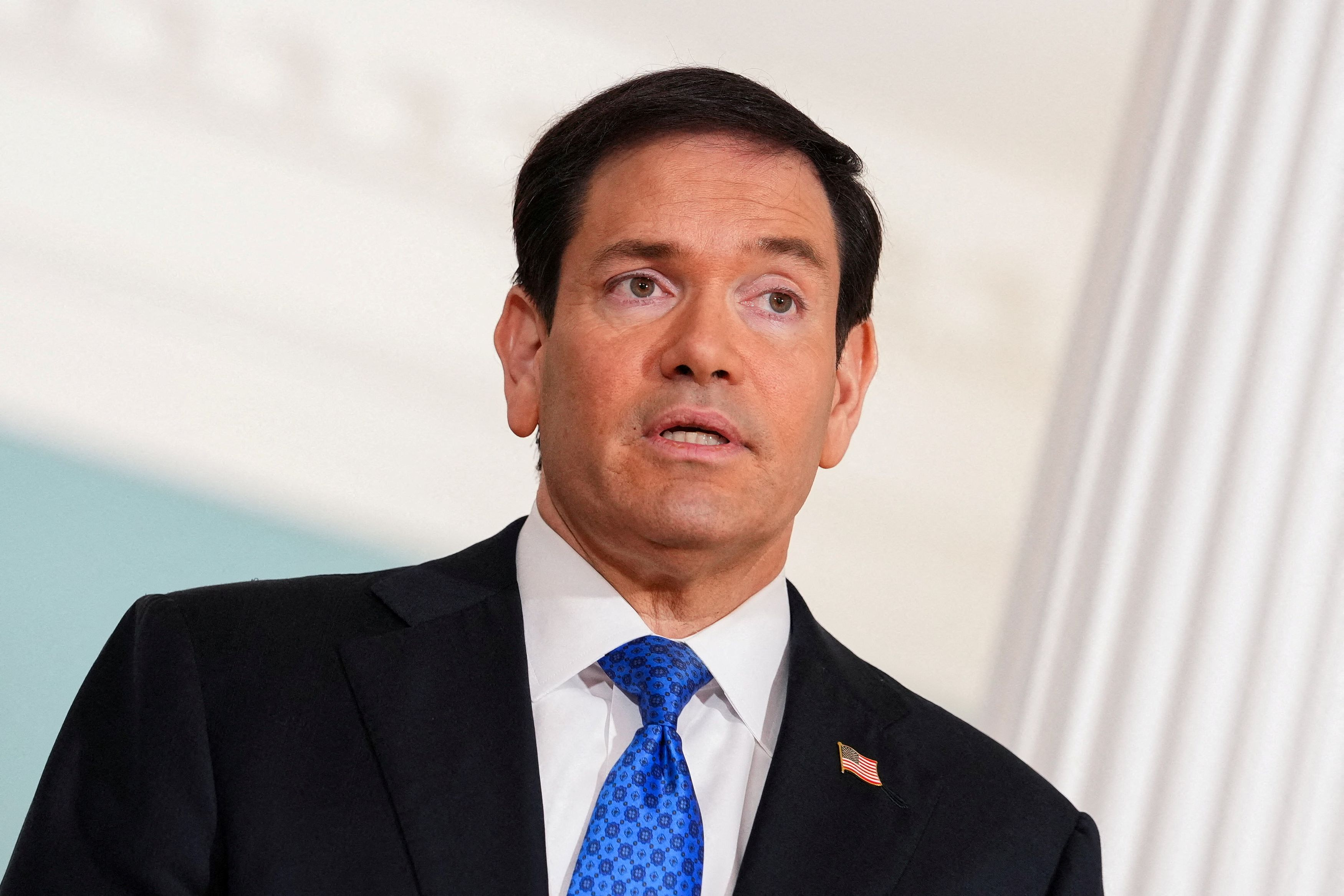
Secretary of State Marco Rubio sought to reassure Greece that Kimberly Guilfoyle’s departure would not diminish its importance to Washington, promising a successor with access to President Trump and his full confidence.
“Greece deserves a strong and good ambassador that has access to and the confidence of the president,” Mr. Rubio told Matthew Boyle of Breitbart News.
The White House asked Ms. Guilfoyle, a former fiancée of Donald Trump Jr., to resign on Oct. 13 after reports alleging that she sought personal benefits in exchange for access to administration officials. She has denied wrongdoing.
Mr. Rubio emphasized the interests binding Washington to Athens: energy supplies, regional stability and Greece’s role in NATO. He explicitly rejected the suggestion that the change represented a downgrading of the relationship and said its importance would guide the selection of a new envoy.
At the time of the interview, the search was still in its early stages. Mr. Rubio offered no name or timetable, saying the administration needed to identify the right candidate and complete the confirmation process. Washington would maintain a capable team at the embassy during the transition, he added.
“We want to give Greece the kind of ambassador they deserve and merit,” he said, “and that rises to the level of the relationship and how important it is.”
Much of his explanation for Greece’s importance rested on energy.
He described a country that could develop its own resources while moving supplies between Europe, Africa and the Middle East. Greece’s openness to exploration, which he said appeared to enjoy public support, gave it a political advantage alongside its geographical one.
“They’ve always been the connector between Europe, Africa, and the Middle East,” he said.
Greece could help transport energy north into Europe and south toward Israel and the broader Middle East, he added. His remarks encompassed oil, natural gas and electricity, though he announced no new agreement or commitment to a specific project.
He contrasted that approach with European policies that, he argued, had neglected domestic production and allowed excessive dependence on Russian energy. High electricity and transportation costs were contributing to economic stagnation, he said.
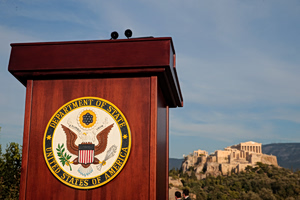
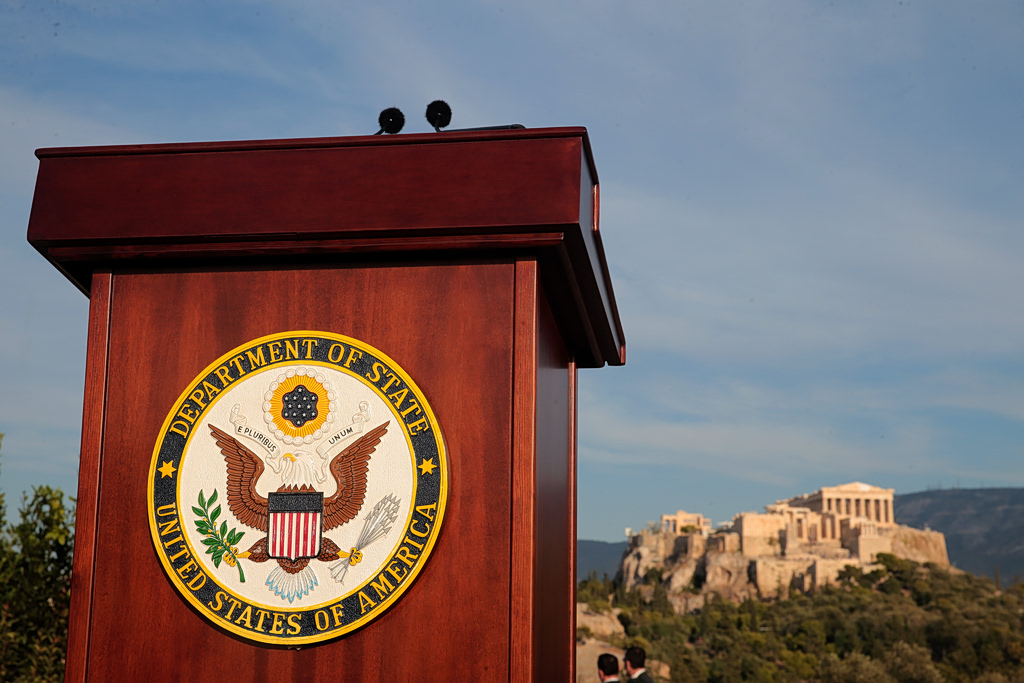
Mr. Rubio also returned to his recent speech at the Pnyx in Athens, delivered with the Acropolis behind him, where he invoked Greece’s place in the political and cultural inheritance of the United States.
“We inherited from Greece and from Rome, and ultimately through Europe, many of the values that today underpin our country,” he said in the interview.
He urged Western countries to take greater pride in that inheritance and said other leaders were increasingly receptive to the message, particularly in private conversations.
Energy diplomacy, however, is also part of the controversy surrounding Ms. Guilfoyle’s tenure.
Representative Gregory W. Meeks, the senior Democrat on the House Foreign Affairs Committee, has sought answers about reports that she promoted the interests of a Greek construction and energy company and brought its lobbyist into official meetings. His inquiry concerns whether she used her public position to advance private commercial interests.
The allegations also include a reported request for $100,000 from a political donor to cover personal debt while she sought intervention by senior administration officials in his tax and legal matters. Mr. Meeks cited those reports in seeking an investigation. Ms. Guilfoyle has rejected the allegations against her as false.
Mr. Rubio did not address those accusations in the interview.
On Oct. 10, Mr. Meeks asked the State Department’s inspector general to investigate her reported dealings with the company and the donor. In a separate letter, he requested that Ms. Guilfoyle appear before committee members to answer questions under oath.