

 Μake us preferred on Google
 The Greek government sought Wednesday to distance itself from the dismissal of U.S. Ambassador to Greece Kimberly Guilfoyle, insisting that the decision was Washington’s alone, as opposition parties accused Prime Minister Kyriakos Mitsotakis of failing to respond to serious allegations involving the American envoy. The response was much the same before and after President Donald Trump asked Guilfoyle to resign Tuesday: Her appointment and removal were internal American matters, and Athens had no role in either.
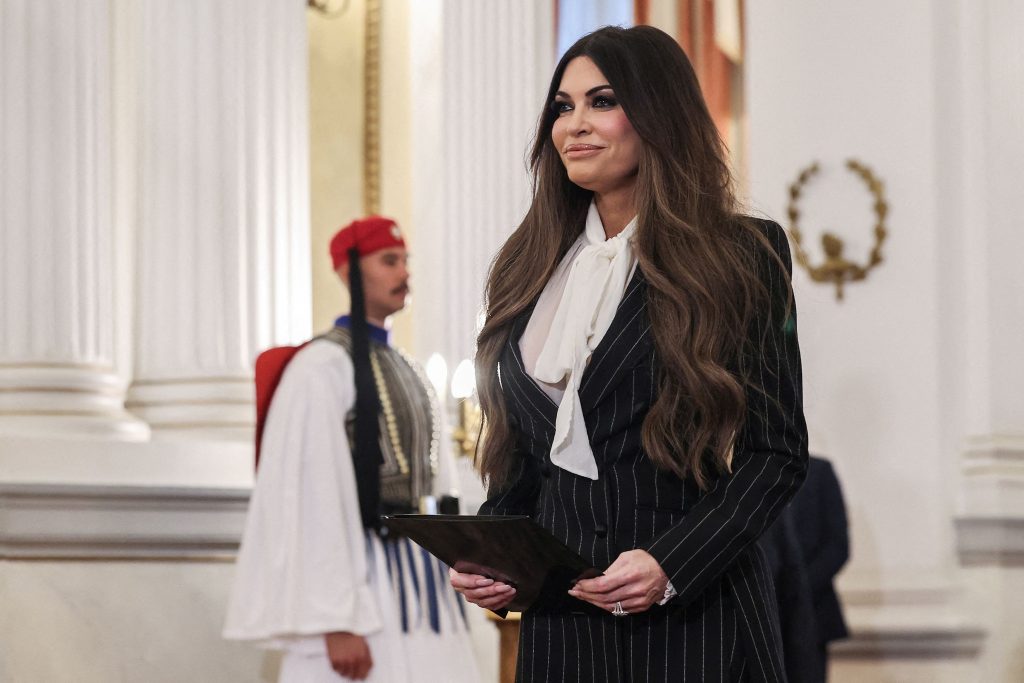
Guilfoyle, who arrived in Athens less than a year ago to an unusually enthusiastic reception, had been warmly welcomed by senior Greek officials and politicians across the political spectrum who wanted to keep communication channels open with the American Ambassador. The former FOX presenter and prosecutor, played a prominent role throughout her tenure in pushing and promoting energy agreements that the government of Kyriakos Mitsotakis presented as major diplomatic achievements.
Opposition parties have seized on the allegations surrounding Guilfoyle’s departure, pressing the government to explain whether Greek officials were aware of her reported activities, how they responded and whose interests were served by the agreements she helped promote.
Government Insists Relations With Washington Remain Strong
Government spokesman Pavlos Marinakis said on Wednesday morning that the Greek administration had nothing to do with Guilfoyle’s dismissal and could neither influence nor comment on the decision.
“This has nothing to do with the Greek government,” Marinakis exclaimed on TV station SKAI, reiterating the fact that the appointment and removal of ambassadors are decisions made by the governments they represent. He also ruled out requesting explanations from Washington, arguing that diplomatic appointments, resignations and replacements fall exclusively within the authority of each country. Marinakis rejected criticism from opposition parties, accusing them of attempting to hold the prime minister responsible for developments beyond his government’s control.
The government’s position had been established even before the White House publicly announced Guilfoyle’s removal. Speaking to newspaper Naftemporiki on Tuesday, Marinakis emphasized that Athens would continue working as closely as possible with the United States, which he described as a strategic ally.
Deputy Prime Minister Kostis Hatzidakis delivered a similar message Wednesday, telling public broadcaster ERT that bilateral relations had made significant progress in recent years and that he expected cooperation to continue.
Hatzidakis pointed to energy projects, including the Vertical Corridor designed to transport natural gas from Greece toward Central Europe, as well as hydrocarbon exploration and a deal involving Greek electricity company PPC and Amazon to develop a data center in Kozani, northern Greece. Both countries, he argued, had every reason to maintain that momentum.
The carefully calibrated government response reflects the political sensitivities surrounding Guilfoyle’s departure. Greek officials have invested heavily in cultivating close relations with the Trump administration, particularly through energy cooperation, while allegations involving American and Greek corporate interests have added another potentially contentious dimension to the controversy.
PASOK Demands Answers Over Energy Deals and Alleged Interference
The main opposition party, center-left PASOK, accused the government of avoiding questions that go beyond the fate of an American diplomatic appointment. In a statement Tuesday, the party said Guilfoyle’s dismissal, following a series of investigations by international news organizations, raised serious concerns about her activities in Greece and the government’s response.
Dimitris Mantzos, PASOK’s parliamentary spokesman and foreign affairs spokesperson, cited in his statement, reporting by The Wall Street Journal describing alleged threats of American interference in Greek political affairs, as well as subsequent accounts suggesting that Guilfoyle had used her position to promote business interests with privileged access, particularly in the energy sector.
Mantzos argued that Washington’s decision to remove her lent credibility to those reports and raised questions about a model of diplomacy driven by commercial transactions rather than established foreign policy principles. He also repeated PASOK’s demand for a detailed accounting of the energy, defense and other agreements reached during the sixth U.S.-Greece Strategic Dialogue, held last week in Athens in the presence of Secretary of State Marco Rubio.
PASOK asked whether the Greek Foreign Ministry had ever summoned Guilfoyle to seek explanations about the allegations and whether Mitsotakis intended to raise the matter with Washington.
Greek Left Alliance and SYRIZA Demand Accountability
The Greek Left Alliance (EL.A.S.) also demanded answers from the Mitsotakis administration, arguing that Guilfoyle’s departure did not resolve questions about her conduct in Athens or the government’s response to it. Haris Tzimitras, the party’s foreign affairs spokesman, described the White House decision as a serious development following a series of allegations that should be investigated by the appropriate American judicial authorities. He said the Greek government had yet to provide a convincing account of whether it had challenged Guilfoyle over her reported remarks about political interference.
Tzimitras also raised broader questions about relations with Washington, arguing that Greece should maintain its strategic partnership with the United States while establishing clear boundaries and ensuring that cooperation served both countries. He cited Secretary of State Marco Rubio’s recent visit to Athens as an example of what he considered an imbalance in bilateral relations, warning against treating Greece as an ally whose support could be taken for granted.
SYRIZA, meanwhile, accused Prime Minister Kyriakos Mitsotakis of failing to defend Greek interests amid allegations that Guilfoyle had pressured officials on behalf of American energy companies and their Greek business partners. It said the government had minimized the allegations and avoided seeking explanations from Washington. SYRIZA also noted in its reaction that Guilfoyle’s removal came only after Trump intervened, rather than through any initiative by Athens. “Foreign policy cannot be conducted as a public relations exercise,” the party said, adding that strategic alliances required equality and mutual respect.
SYRIZA leader Rena Dourou told the government that it had been “measured, weighed and found wanting.” Dourou also accused the government of making critical decisions without informing Parliament and linked its foreign-policy practices to those of the 1950s.
Communist Party Condemns Government’s Ties to Washington
The Communist Party of Greece (KKE) said Guilfoyle’s dismissal had exposed the Mitsotakis administration, which it accused of praising the American envoy before she even assumed her duties and overlooking her subsequent interventions. The party also criticized other political forces supportive of Greece’s Western alliances, arguing that the controversy reflected a broader policy of involving Greece more deeply in American geopolitical ambitions to the benefit of business interests in both countries. Giannis Dellis, MP for KKE, described the dismissal as a “public snub broadcast live” and argued that the issue was not one of “diplomatic aesthetics.” For KKE, which has been staunchly anti-american for decades, the issue extended beyond Guilfoyle herself to the direction of Greek foreign policy, regardless of who succeeds her as U.S. ambassador to Athens.
Greek Solution Links Guilfoyle’s Departure to Alleged Turkish Gains
Kyriakos Velopoulos, leader of the far-right Greek Solution party, offered a more speculative interpretation of Guilfoyle’s dismissal, suggesting that her departure could somehow benefit Turkey in its competition with Greece over regional energy routes. Velopoulos warned that the removal of the American ambassador could strengthen the position of her counterpart in Ankara, Tom Barrack, and lead to the development of a competing energy corridor through Iraq, Syria and Turkey. He offered no evidence linking Guilfoyle’s dismissal to such a project or explaining how her departure would make it more likely.
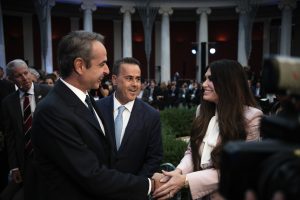
Velopoulos also criticized the Greek politicians, journalists and public figures who had eagerly sought photographs with Guilfoyle during her tenure, accusing them of opportunism now that her political fortunes had collapsed.