Nearly three years after Greece and Turkey signed the Athens Declaration in December 2023 in an effort to open a new chapter in bilateral relations, the two countries are once again heading toward confrontation. In practice, and to a large extent as expected, Ankara has shown no willingness to make even minimal concessions. Instead, it has been methodically advancing its revisionist agenda and claims in the Aegean and Eastern Mediterranean.
Even if Turkey’s recent moves, such as the designation of two marine parks between Lemnos and Samothrace and between Rhodes and Kastellorizo, are seen as a response to corresponding steps by Athens, the disruption of the so-called “calm waters” appeared to be a self-fulfilling prophecy as early as November 2024.
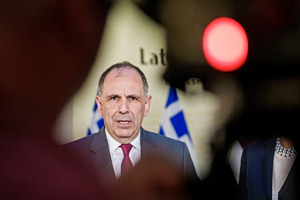
At the time, following a meeting in the Greek capital, the two foreign ministers, Giorgos Gerapetritis and Hakan Fidan, publicly described the reality: there was no common framework for discussing the resolution of the legal and diplomatic issues between Greece and Turkey.
This applies both to the scope of the dispute — with Athens, as is well known, recognizing only the dispute over the delimitation of maritime zones — and to its substance, since Ankara does not accept the basic provisions of the Law of the Sea as a basis for negotiations.
Parallel monologues
This largely predetermined development, which followed the July 2024 incident off Kasos, when Turkey demonstrated on the ground that its primary objective was to confine Greece to a six-nautical-mile limit, rendered the political dialogue largely devoid of substantive content. Since then, talks and contacts have been limited, on the one hand, to managing various incidents that could lead to crises and, on the other, to promoting what is known as a “low-level diplomacy” agenda.
What did not disappear was the reason behind the Greek-Turkish rapprochement until recently: the international environment, with unprecedented turmoil across the wider region due to the two war fronts in Ukraine and the Middle East, in which the United States became deeply involved, dictated that there was no room for new tensions, particularly between two major NATO allies.
But the global crisis has now become the new normal, Turkey feels stronger, and whenever Athens and Ankara publicly set out their established positions, the divide between the two Aegean shores grows wider.
According to one assessment, the move that acted as the trigger was the publication of Greece’s Marine Spatial Planning (MSP), with the government — for the first time in Greek diplomatic history — mapping the outer limits of the Greek continental shelf and Exclusive Economic Zone (EEZ), extending to the median line where bilateral agreements with neighboring states remain pending.
It is worth noting that drawing up the MSP was a European obligation, failure to meet which could have resulted in sanctions from the European Commission. This was followed by the designation of Greek marine parks, the deployment of frigates and F-16 fighter jets to Cyprus, the positioning of Patriot missile systems on Karpathos, and, a few weeks ago, the participation of French investment company Meridiam in the Greece-Cyprus electricity interconnection project.
At the same time, Recep Tayyip Erdogan was strengthening Turkey’s alliances and diplomatic footprint internationally. The focus was on the Middle East and restoring relations with Washington, but nothing suggested that Turkey would concede to Greece control of the game in the Aegean and Eastern Mediterranean.
Its return to the region was simply a matter of time. The latest — and most forceful so far — move on the chessboard was the designation, one day after the August 15 Assumption holiday, of the two marine parks, with Turkey pursuing a two-pronged strategy.
First, it seeks to impose its revisionist positions on the delimitation of maritime zones, creating new facts on the ground in the process. Under these positions, as depicted on maps, Greek islands have no sovereign rights over a continental shelf or EEZ; the Turkish continental shelf extends to the middle of the Aegean because it is calculated on the basis of the mainland coasts of the two countries; and jurisdiction over areas east of the 28th meridian belongs exclusively to Turkey.
Moreover, the geography of the two Turkish marine parks along the Greek-Turkish border encompasses both the first and the latest of Turkey’s claims. Since 1973, Turkey has disputed the continental shelf and sovereign rights of the islands of the northeastern Aegean, while in 2019-2020 it developed the unlawful “Blue Homeland” doctrine through the Turkey-Libya memorandum of understanding, with the aim of establishing dominance in the Eastern Mediterranean.
On the ground
At a second, more critical level, Ankara is signaling to Athens that since the provisions concerning the marine parks have now been incorporated into Turkish domestic law, corresponding protection of those areas should also be expected on the ground.
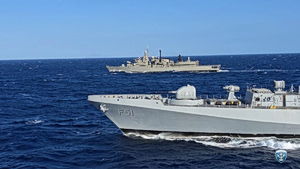
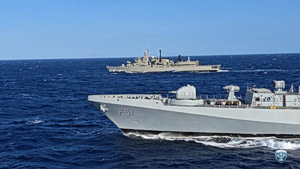
In simple terms, if the Turkish armed forces and coast guard authorities assume oversight of the designated areas, the chances of tensions that could even lead to a military incident will increase rapidly. This would only be avoided if Greece relinquishes the exercise of its sovereign rights or Greek fishermen stop entering the areas in question. Athens, therefore, must confront a rapidly escalating Turkish challenge.
Amid all this, and prompted by the Special Spatial Planning Framework for renewable energy sources, Ankara has brought the issue of “gray zones” back to the forefront — as it had also done following the designation of Greece’s marine park in the southern Cyclades. In both cases, the Greek government responded by describing Turkey’s positions as “illegal,” while reserving the right to take further action at the European and international levels.
Athens is also awaiting the introduction of Turkey’s “Blue Homeland” bill, with Erdogan seeking to give the country’s claims the force of domestic law, thereby binding future governments to implement the familiar revisionist agenda.
It is clear that the Athens Declaration — despite the useful period of calm during which Greece strengthened its diplomatic position and further bolstered its armed forces, and despite the unrealistic expectations initially cultivated about potentially taking the dispute to the International Court of Justice — now resembles a dead letter. From this point forward, the challenge is no longer to make progress, but to prevent an uncontrolled escalation between Greece and Turkey.
The communication channels will be tested on this front as well. Until now, they have operated primarily between the two foreign ministers, as well as between Kyriakos Mitsotakis and Recep Tayyip Erdogan. It remains unknown whether the two leaders will seek to meet on the sidelines of the United Nations General Assembly in New York in September. Over the medium term, however, Greek strategic thinking will have to address a series of questions, chief among them how Greece will respond to Turkey’s multidimensional rise — particularly at a turning point in what is arguably the most fluid period since World War II.