 Μake us preferred on Google
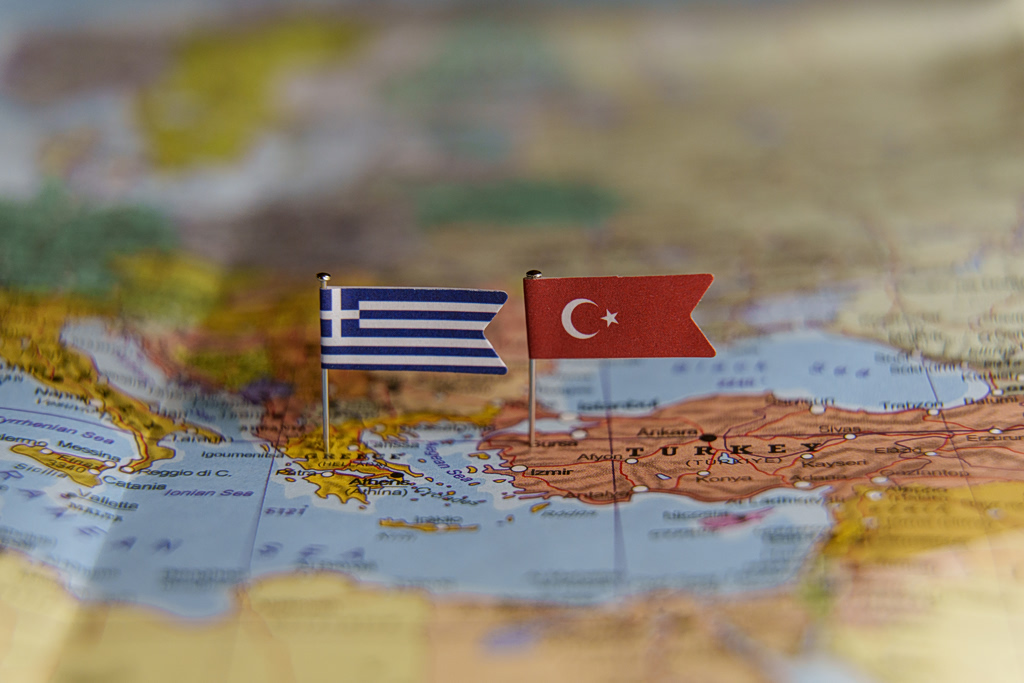
 Greece is preparing the largest equipment procurement program in the history of its Coast Guard, according to Ta Nea’s Saturday edition, which reported that the force would be the first to respond to any Turkish provocation in the Aegean, planned or accidental. The report ties the program to Turkey’s continued insistence on its “Blue Homeland” doctrine, a revisionist claim to expanded jurisdiction across the Aegean and Eastern Mediterranean that Ankara has at times framed around environmental arguments.
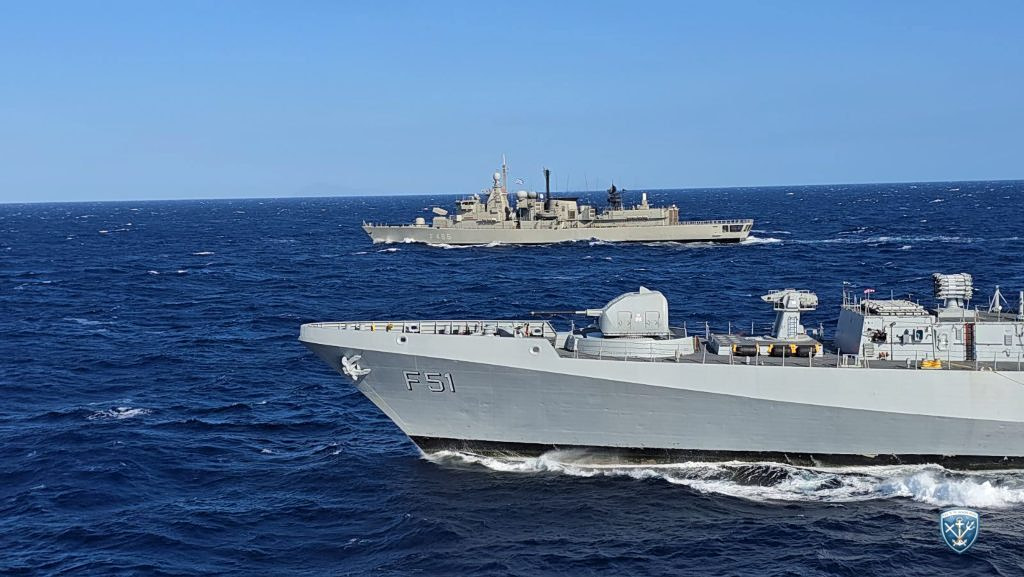
The Coast Guard currently operates 230 vessels, already more than its Turkish counterpart. Ta Nea reported that officials see the main task now as renewing the fleet and upgrading its technology so that numerical superiority becomes technological superiority as well.
In the air, the Coast Guard flies three unarmed, twin engine Reims-Cessna F406 Caravan II aircraft, fitted with surface radar and thermal cameras, and six AS365 N3 Dauphin helicopters used for search and rescue and policing. Ta Nea reported that this is currently where the qualitative and quantitative difference is most apparent.
The Fleet
The Coast Guard’s open sea fleet currently consists of one Dutch built Damen Stan Patrol 5509 and three Israeli built Sa’ar class ships of 58 meters. Under Aegis 2, it plans to acquire 2+2 new offshore patrol vessels, each longer than 80 meters, at a combined cost of 360 million euros. The new ships are expected to carry 30 or 40 millimeter guns and a helicopter deck.
Coastal patrol is also set to expand. Four Italian built Cantiere Navale Vittoria vessels are currently in service, and Ta Nea reported that a tender is planned for six new coastal patrol boats over 30 meters.
The Coast Guard’s fast boat fleet, vessels between 15 and 25 meters, already numbers more than 60 in service. Five Finnish built Watercat 2000 Patrol boats are operating now, and seven more under contract are due to arrive between October and next summer, bringing that class to 12 vessels. Aegis 2 also includes 14 new boats over 18 meters capable of exceeding 50 knots, and 10 interceptor vessels capable of exceeding 60 knots, according to Ta Nea.
A tender is already in technical dialogue for four new boarding vessels for special operations and one specialized diving support vessel. Ta Nea reported that these acquisitions would upgrade the capabilities of the Coast Guard’s Underwater Missions Unit for high risk operations, and noted that Turkey’s coast guard relies mainly on dozens of smaller SAGET class boats.
Drones and Unmanned Systems
A tender worth 20 million euros is expected to be completed soon for a new network of drones covering several types built for different operational needs, Ta Nea reported.
Two VTOL systems, four aircraft in total, would take off and land vertically from islands or ships without a runway, with more than 10 hours of endurance, sensors and radar built to detect fast boats and small craft. Twenty tactical drones weighing up to 25 kilograms would be portable systems for rapid deployment, with more than 40 minutes of flight time and high resolution cameras for tracking targets. Three heavier multicopter systems, weighing more than 100 kilograms and able to carry 40 to 50 kilograms of sensors or radar, are planned for extended range missions, and five automated drones with their own charging stations would carry out repeated missions from fixed points.
A separate tender worth 30 million euros covers four more fixed wing VTOL drones for long range, long duration missions. A further 50 million euros is planned for two unmanned surface vessels and three underwater vehicles, intended for continuous maritime surveillance and protection of port infrastructure at lower operating cost. Ta Nea reported that these systems are intended to cover the North and South Aegean, Crete, the Ionian Sea and maritime corridors used for military mobility, in both peacetime and crisis condi
Kikilias Comments to TA NEA
Vasilis Kikilias, minister of Maritime Affairs and Insular Policy, told Ta Nea that Greece, as a maritime nation with thousands of kilometers of coastline and hundreds of inhabited islands, has increased surveillance and security needs in the Aegean and Southeastern Mediterranean, and an obligation to maintain a strong, modern and effective Coast Guard. He described Aegis 2 as a comprehensive upgrade of the force’s operational capabilities, covering new open sea vessels, coastal patrol boats, fast boats, interceptors and modern surveillance technology, including drones.
Kikilias said the goal is for the existing fleet of 230 vessels to become newer, faster and technologically stronger, with planning for the next decade based on the real needs of the field. He said the program covers policing of maritime borders and marine parks, combating organized crime and illegal networks, search and rescue, protection of the marine environment and, above all, protection of human life at sea.
Source: TA NEA