 Μake us preferred on Google
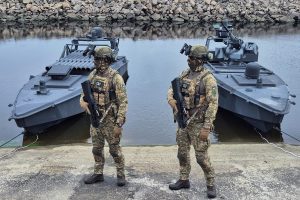
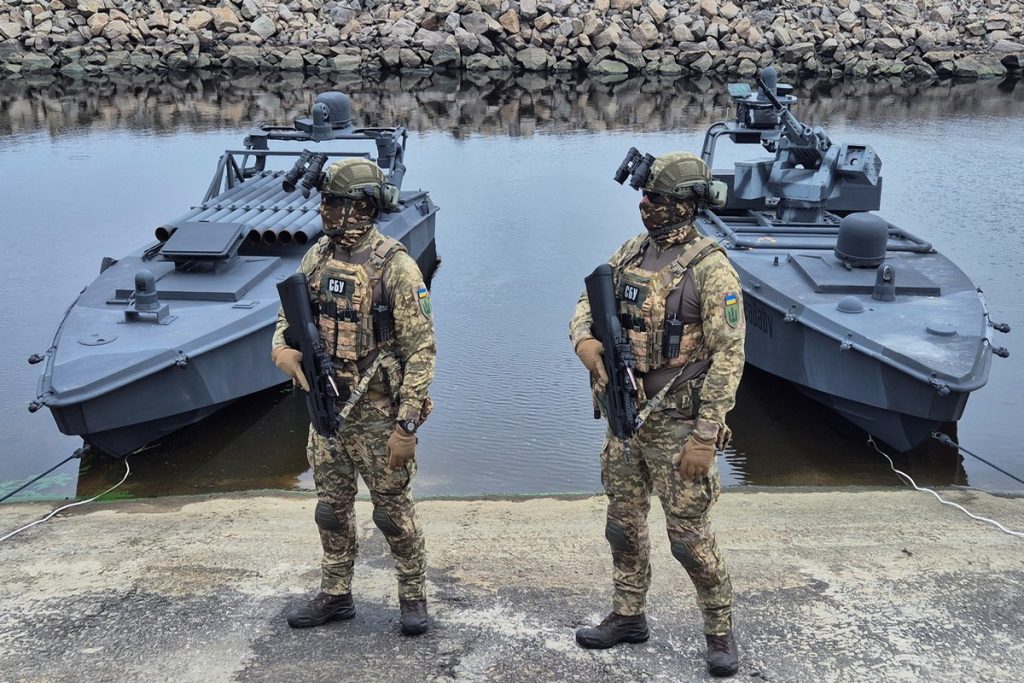
 Nikos Dendias recently returned from the United States, where he held high-level contacts both in Los Angeles and Austin, Texas, aiming at the procurement as well as domestic production of all types of unmanned vehicles—land, air, and surface.
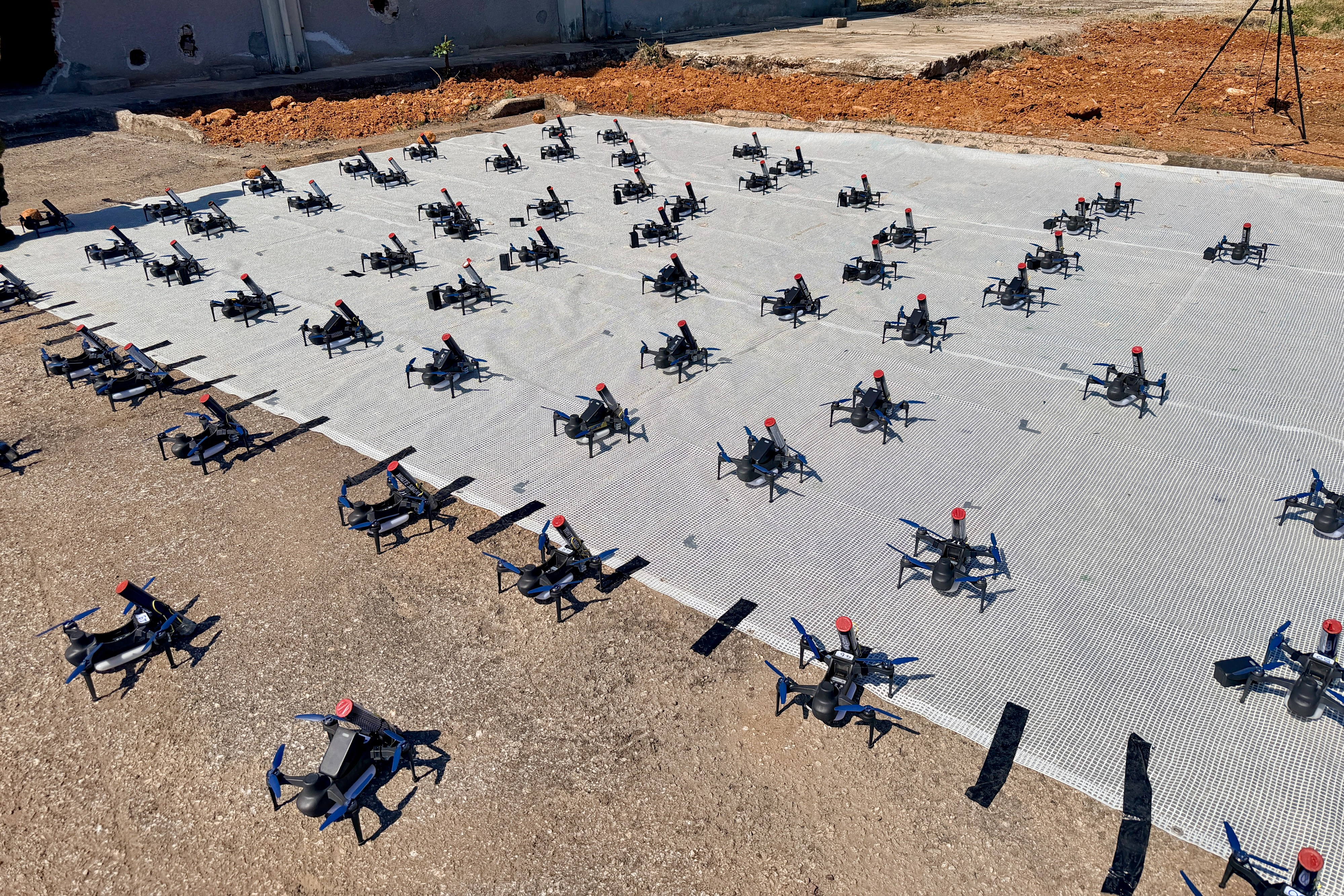
The visit took place just one week after the Minister of National Defense laid the foundation stone in Malakasa for the third and by far largest drone production facility for the Armed Forces, the 309th Unmanned Systems Manufacturing Plant, whose construction is set to begin immediately. Two other factories are already operating: the 306th Base Factory in Menidi and its counterpart in Xanthi.
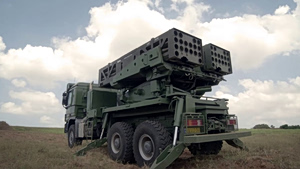
The new facilities will host advanced production lines, research and development areas, laboratories, and testing centers. At the same time, production lines will be developed for Class I and II drones, research and development capabilities for Class III drones, capabilities for Unmanned Ground Vehicles, Unmanned Surface Vessels, Unmanned Underwater Systems, and finally the production of anti-drone systems.
Increase in production
The goal of the Malakasa factory is to increase annual production of Class I drones to at least 10,000, from 4,000 today. At the same time, it will be able to support annual production of at least 300 Class II drones, 300 ground vehicles, and 300 anti-drone systems, as well as research and development capabilities for surface and underwater vessels.
The Minister of National Defense also noted that “with the addition of six mobile units, production capability gains dispersion, flexibility, operational depth, and the ability of formation commanders to decide exactly what they need and to adapt software to operational requirements in a very short time, without requiring the extensive process of authorization, orders, and analysis by the General Staffs or the political leadership.”
By early July, the first drone pilot training school for Class II and III drones will be inaugurated in Tripoli, along with the building of the Autonomous Systems Directorate in the Hellenic Navy, as well as a fully vertically integrated electronic warfare structure. The Greek defense industry is gradually entering the era of new technologies; however, it will need to make significant leaps in order to become competitive, as the pace of innovation renders systems obsolete within months of development. In other words, there is a risk that by the time a prototype is delivered, it may already be outdated due to the integration of Artificial Intelligence.
This is well understood by the leadership of the ministry, and Mr. Dendias expressed a desire for cross-party consensus in this field, because “developments are moving faster than one would expect.”
The Hellenic Navy
At the same time, the Ministry of National Defense and the General Staffs are also advancing planning for traditional weapons systems. For example, the Hellenic Navy General Staff is currently evaluating proposals for the Navy’s next submarine, specifically from France for the Blacksword Barracuda, from Germany and TKMS for a more advanced Type 214 submarine, from the US/South Korea (Hanwha Ocean with the KSS-III), as well as from Italy and Sweden.
“Το Βήμα” reports that the French side appears open to the possibility of constructing all or three of these submarines in Greece, should the program be awarded to it, but the Navy General Staff is maintaining strict silence until the evaluation is completed. Last week, an agreement was signed between France’s Naval Group and the Dutch government for the supply of F21 torpedoes for the Blacksword Barracuda submarines. Sweden has also ordered four Belharra frigates, a development that has a Greek dimension, as it is expected to reduce the cost of the Greek Belharra vessels, mainly in terms of their long-term support, since increased order volume leads to lower unit costs through economies of scale.
In any case, with Turkey already beginning to receive six new Type 214 submarines from Germany, the need to acquire ideally four newer and more advanced submarines is twofold, according to military sources.
First, to close the numerical disadvantage of the Hellenic Navy compared to its Turkish counterpart, and second—and more importantly—to acquire submarines with superior capabilities compared to the existing fleet.
The submarine proposed by the French has stealth characteristics and uses lithium-ion batteries instead of an AIP (air-independent propulsion) system, offering more usable space for carrying long-range missiles such as McDN.
The Netherlands had received bids from three manufacturers for its new submarines: Saab, ThyssenKrupp Marine Systems (which built Greece’s “Papanikolis” Type 214 submarines and is building Turkey’s equivalent), and Naval Group, before ultimately selecting the French proposal.
“The plan we propose is based on the participation of Greek companies. Already 75 Greek companies are registered on our supply chain platform, enabling potential participation in future programs both for France and for future exports, as well as increased participation of Greek companies in the maintenance of the ships of the Hellenic Navy throughout their lifecycle,” French sources told “Vima.” Similar commitments have been made by some of the other companies competing for the submarine program.
At the ceremony with the Dutch in Normandy, reference was made to the so-called “Greek Industrial Participation Plan” of Naval Group. French sources commented that it “now officially fits; it unofficially began in 2022, aligned with Greece’s objectives.” That is, with the Ministry of Defense’s decision that no defense procurement will take place unless domestic industry has at least 25% participation in production.
This has now become a non-negotiable position in discussions with foreign weapons manufacturers seeking to sell defense equipment to Greece. Other interested companies contacted by “Vima” were not willing to disclose their negotiating goals. Competition for submarines is very intense, which is understandable, as the Hellenic Navy is considered a “front-line” customer, making any prediction about the final outcome highly uncertain.