 Μake us preferred on Google
 In his book ” Greece and the Inter-War Economic Crisis”, Mark Mazower notes that the clashes between political rivals were always far more violent than the confrontations within society itself. He links this observation to the fact that the Greek state was always bloated, so a great deal of revenue passed through it, which meant that political strife was not driven by ideology alone. It also expressed an interest, because the winners gained access to the state and to the income it handed out. That observation still holds true today. The state remains bloated. It keeps feeding networks of vested interests, and it wields strong influence, especially in an era of low wages like the present one, which makes political strife far harsher and more toxic. “What is new is that the Left has now bought into this same logic, after a stint in government that gave it access to the trappings of power. Hence the dogged effort to get back to a system where public office is an easy living, the scramble to jump ship as the vessel takes on water, and the painless switch to a new political home. Its positions and platforms are nothing more than a fresh coat of paint over a crumbling facade.
This is the same political class that cannot move past its own internal crisis or reform itself. Instead it keeps splintering into ever smaller pieces while it waits for society and the ballot box to solve its impasses. And it is the same class that will be called on to steady the country through the crises and challenges it currently faces and will keep facing.
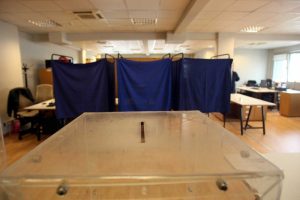
The polling picture of recent months gives no party leader reason for optimism. Barring some dramatic change, the country is faced with mostly negative scenarios. And as this season winds down, New Democracy looks incapable of winning an outright majority for a third time.
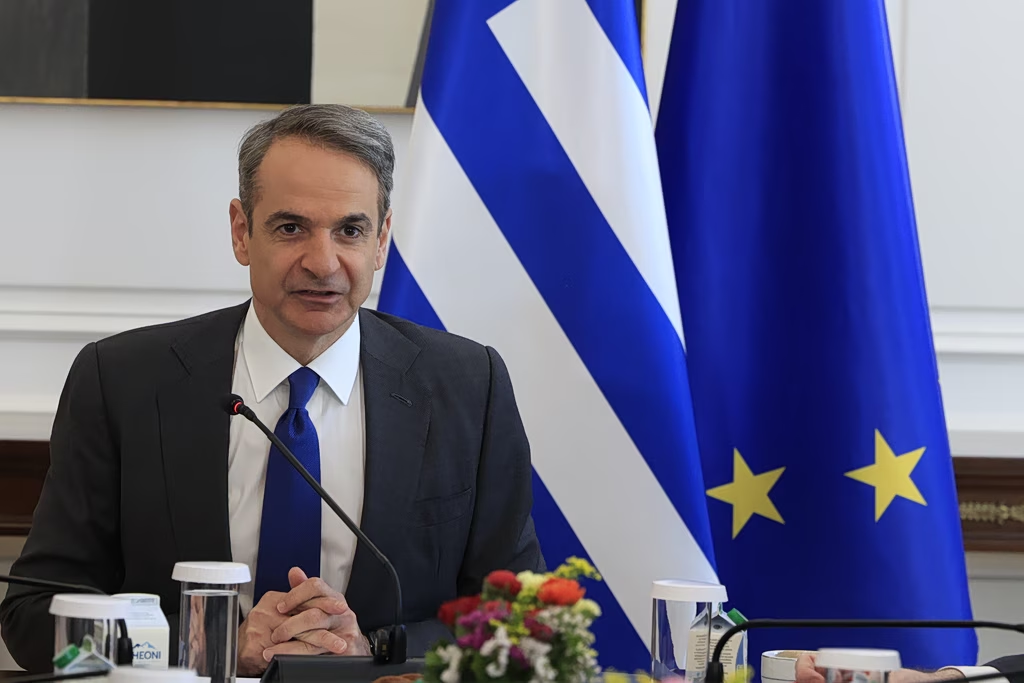
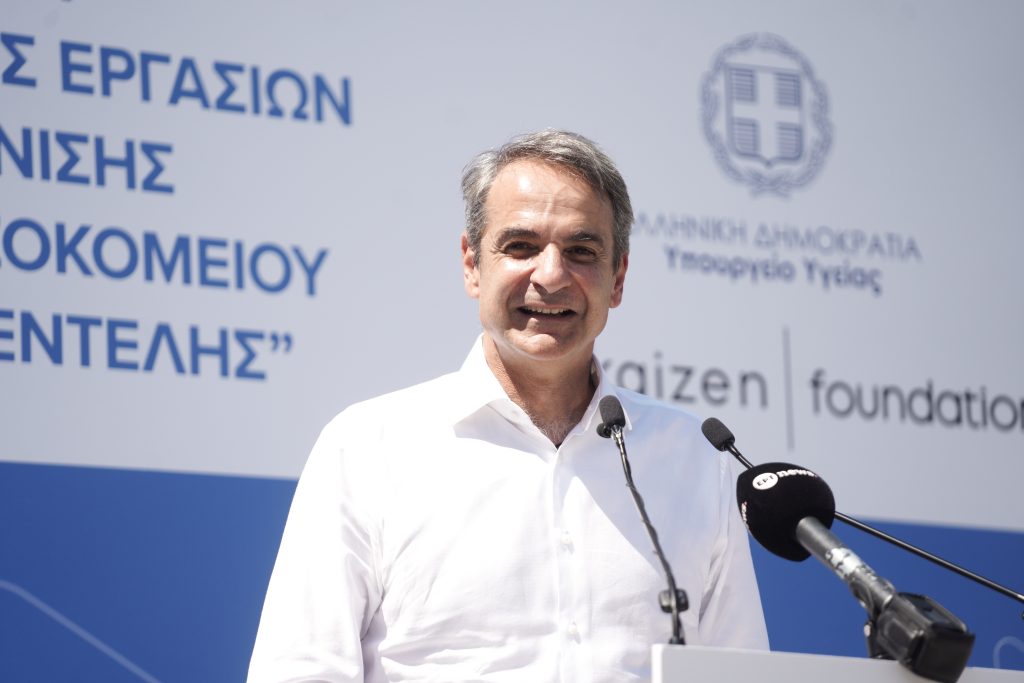
If that happens, Mitsotakis has two options: call a repeat election, or find a coalition partner. He has long ruled out a coalition, arguing that coordinating with another party would slow things down and block quick decisions on urgent matters. Lately he has softened, but his moves suggest he would rather hold out for an outright majority, even if he has to force the issue. That calculation will shape when he calls the vote.
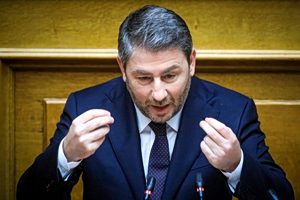
If he is forced into a coalition anyway, who would his partner be? He and various government figures have said publicly that they would prefer PASOK, though privately some admit they would rather break it apart and govern alone again. But PASOK decided unanimously at its congress not to govern with New Democracy again, and certainly not with “the New Democracy of Kyriakos Mitsotakis,” the party of scandals, wiretaps and corruption, its officials say, throwing back the taunt about “the PASOK of Nikos Androulakis.” That sort of thing usually comes back to bite you, and they should have known better at the Maximos Mansion.
There is also the option of teaming up with Kyriakos Velopoulos, which the Prime Minister has ruled out. But no one can guarantee that if he does turn to Elliniki Lysi, the party will have enough MPs, since it is losing ground to Maria Karystianou and possibly to a Samaras party, if one materializes. And what kind of government would that even be, with Mitsotakis abandoning his centrist liberal profile to work with the conspiracy-minded Right? How much stability would such a coalition offer the country?
Another scenario is a multiparty government, so that the burden of governing is spread across more players, or a special-purpose government, with the most likely result being national paralysis.
A fourth version is a three-party government like the one formed in 2012, led by a prime minister who is a politician, though quite possibly a technocrat. Judging by that coalition, the result would be gridlock, with each party trying to keep its own hands clean until one of them pulls out to look after its own interests. In any of these versions of ‘government,’ words like reform, consensus on foreign policy, and real economic change ring hollow.
In every scenario except an outright majority, Mitsotakis is unlikely to be the prime minister that the leaders brokering a deal would accept. He shows no sign of wanting to leave the political stage. On the contrary, he has told his ministers that the only thing he truly cares about is a third term, which is why he is throwing himself into his favorite sport, touring the country. That intensity raises its own questions. How long can he keep it up? Can he, and more to the point can the public, endure a drawn-out campaign of eight or nine months? If he does not hold on until close to the end of his term in 2027 and instead calls a snap election in late September, would that not show he can no longer control events, that he is running from his own decline rather than toward any future for the country? What story, what dilemma, does he put to voters when he cannot guarantee stability himself, when by now not just a scandal but the smallest setback could derail him and his rivals inside the party are sharpening their knives? This is not 2019. New Democracy now has figures of its own who could plausibly be prime minister, and they may well step forward if circumstances allow, especially if doing so helps produce a government. The momentum, for all the cover the polls give him, is not with him. Then again, it is not with his opponents either. Alexis Tsipras, who on current polling could be his main challenger, is far behind and has yet to shake off the toxic dilemmas of the past. Anyone who thinks they see light at the end of the tunnel is probably looking the wrong way.