 Μake us preferred on Google
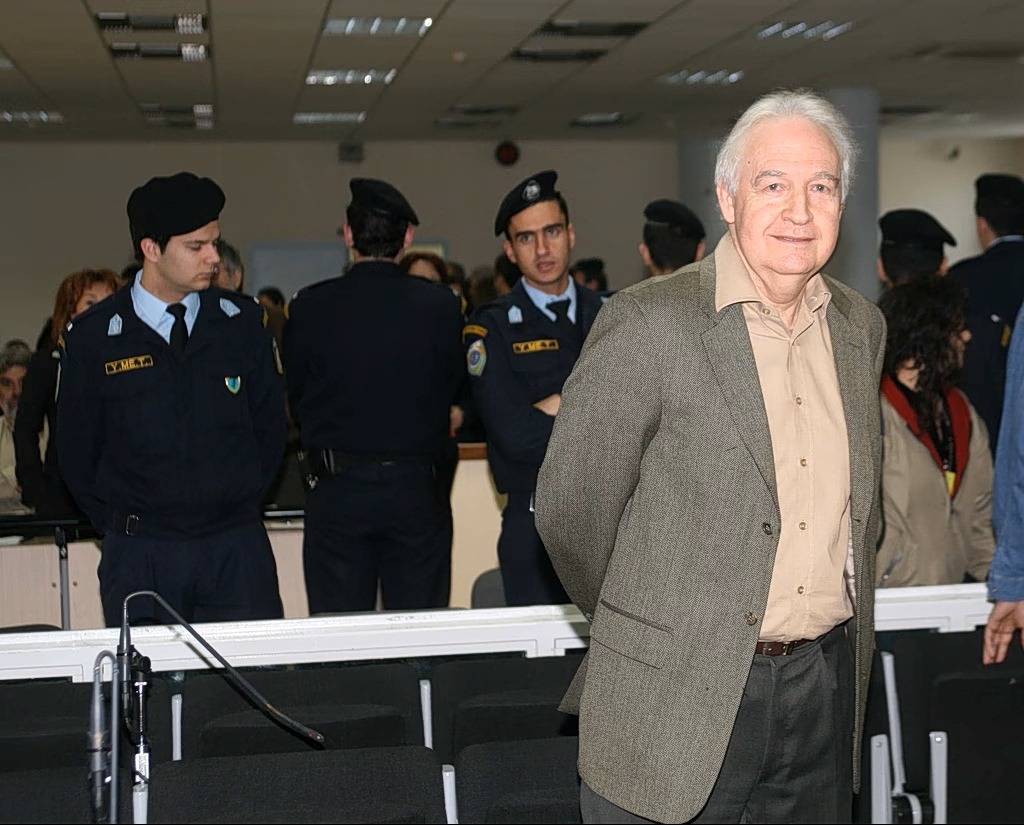
 The release of the leader of the infamous urban terrorist group, “November 17”, Alexandros Giotopoulos, has resulted in the intervention of the prosecutorial office of the Council of State (CoS), Greece’s top administrative Supreme Court.
On the orders of CoS prosecutor Panos Tzavellas, a deputy prosecutor will reportedly lodge an appeal in cassation on a ruling by a relevant judicial council that approved the release of Giotopoulos, who served 24 years in prison.
The leader of the notorious terrorist group was convicted for aiding and abetting in crimes, including the murder of top foreign diplomats, domestic politicians and entrepreneurs.
Giotopoulos, 82, was serving 17 life sentences plus an additional 25 years in prison. His release came after a fifth parole application, as the four previous requests had been rejected.
Giotopoulos was arrested in the summer of 2002 and found guilty of incitement and complicity in 17 cases of murder, bombings, robberies and participating in the N17 terrorist group, all of which he denied during the court proceedings.
Born in Paris in 1944, Alexandros Giotopoulos, the mastermind behind “November 17”, grew up in Athens but returned to Paris in 1962 and studied economics.
A member of several radical leftist revolutionary groups and a founder of “May 29” in Greece, Giotopoulos travelled to Cuba in 1968, where he reportedly trained in urban guerilla warfare.
Alexandros Giotopoulos was arrested by the Greek counter-terrorism service on the island of Lipsi on July 17, 2002. He was charged with complicity in murders, robberies, and bombings, as well as membership in the November 17 organization, based on testimony from co-defendants and police evidence.
From the outset, Giotopoulos denied all charges, claiming he had been falsely implicated by co-defendants seeking favorable treatment. A ruling by the Court of Appeals council committed him to trial on charges of moral authorship for all of the organization’s actions through July 2002, designating him as its leader.
Trial and Imprisonment
At first instance, the three-member criminal appeals court sentenced him to 21 consecutive life terms plus 25 years in prison — a verdict he described as dictated by foreign interests. He was transferred to Korydallos prison, where he had already been held on remand.
The second-instance trial before the five-member criminal appeals court opened in December 2005. During proceedings, Giotopoulos temporarily withdrew, revoking his lawyers’ mandate, before returning to present his defense. The court reappointed the same legal team. The five-member court ultimately sentenced him to 17 life terms for the same offenses. His subsequent appeal to the Supreme Court was rejected, and in 2011 he brought a case before the European Court of Human Rights.
In March 2010, the Greek Ombudsman ruled in Giotopoulos’s favor after prison authorities rejected his request to use a computer for educational purposes.