 Μake us preferred on Google
 The new framework, which has already been circulated by the office of Environment and Energy Minister Stavros Papastavrou to the relevant ministries for signatures, introduces a total ban on trawling and other dragged fishing gear, imposes restrictions on both professional and recreational fishing, and limits large-scale technical projects and infrastructure development within environmentally sensitive areas.
At the core of the Natura-protected zones, areas will remain effectively inaccessible to human intervention, while more moderate land uses are proposed for peripheral zones.
As a result, the so-called Sustainable Natural Resource Management Areas, where the protection framework is more flexible compared to stricter areas, are expected to absorb the majority of permitted activities and development projects.
Within those zones, construction of new homes, tourist accommodations, and infrastructure projects will be allowed, a provision linked to recent legislation that opened the door for urban development on up to 20% of these areas.
NEWSLETTER TABLE TALK
Never miss a story.
Subscribe now.
The most important news & topics every week in your inbox.
The Islands Included in the New Marine Park
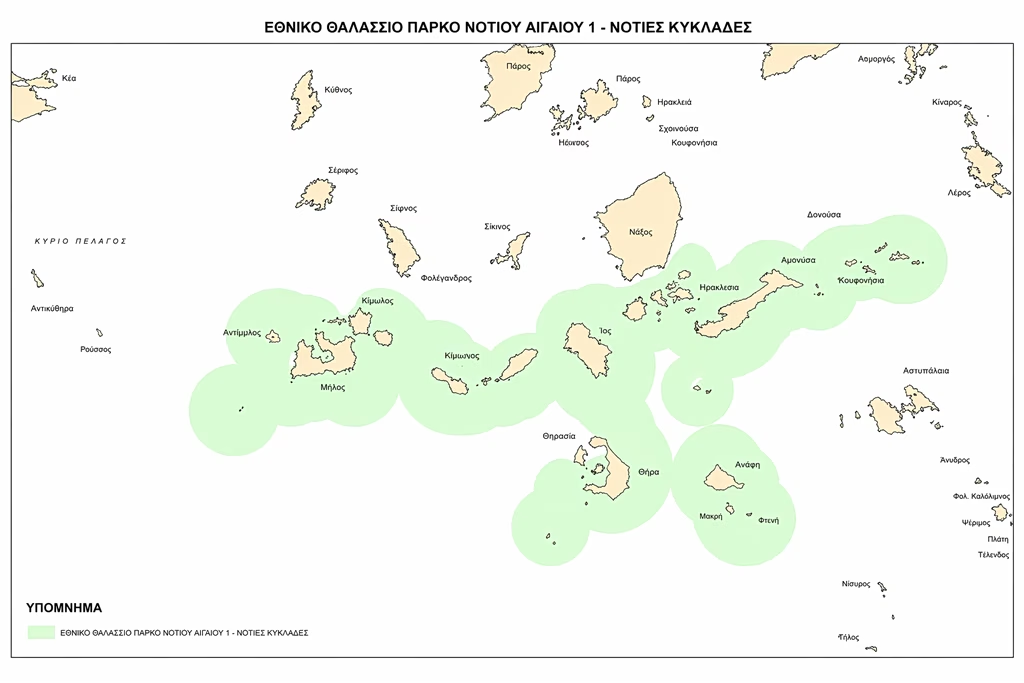
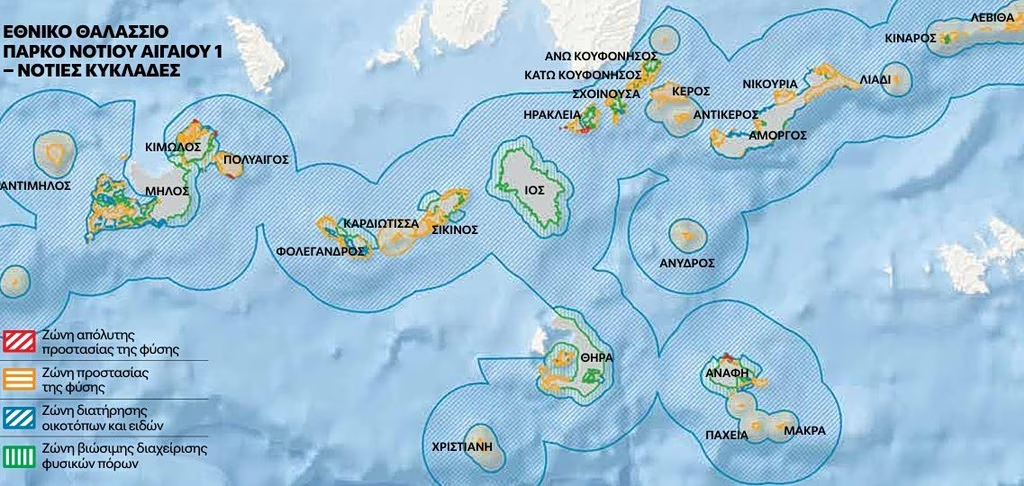
The proposed Aegean marine park includes off-plan island areas across the Southern Cyclades and Natura-protected zones on larger islands such as Milos, Kimolos, Folegandros, Sikinos, Santorini, Anafi, Amorgos, Irakleia, Schinoussa, Koufonisia, Kinaros and Levita, together with their surrounding marine areas.
The draft Presidential Decree defines 196 protection zones, including:
- seven Absolute Nature Protection Zones,
- 103 Nature Protection Zones,
- 18 Habitat and Species Conservation Zones,
- and 68 Sustainable Natural Resource Management Zones.
“The establishment of national marine parks — while work is also progressing on the decree for the Ionian Marine Park — constitutes a substantial reform for the integrated management of maritime space,” Papastavrou told Greek newspaper TO VIMA.
He added that “Greece is becoming Europe’s leading country in marine environmental protection, exercising its sovereign rights in practice while contributing to European and international biodiversity and marine conservation goals.”
The Strictest Protection Core
The rules proposed for the Absolute Nature Protection Zones are exceptionally restrictive.
On the islets of Megas and Mikros Avelas, as well as the steep rocky coasts of Irakleia, no permanent or supporting infrastructure will be permitted.
In other zones — including critical monk seal breeding areas such as the Blue Waters of Polyaigos, the capes of Agios Georgios and Gerakia on Kimolos, and northern Anafi — only facilities related to ecosystem protection, management, and scientific research will be considered compatible.
Similarly, the Nature Protection Zones, which cover broader land and marine areas of high ecological importance, will remain under a strict — though not absolute — protection regime.
In 35 of these zones, including the islets of Palaia and Nea Kameni near Santorini, parts of Kimolos, Milos, and Amorgos, as well as the steep eastern coasts of Folegandros, numerous activities will be prohibited, including cafés, aquaculture facilities, road construction, floating leisure structures, and more.
In another 36 zones, covering Posidonia seagrass meadows around Milos, Anafi, and Amorgos, as well as marine and coastal areas extending up to 50 meters from the shoreline, aquaculture, seaplane bases, desalination units, and even the collection of plants or shells will be banned.
Floating infrastructure and marine leisure facilities will also be prohibited, with the exception of the Posidonia meadows near Santorini’s Akrotiri.
Special Coastal and Marine Management Areas
The Habitat and Species Conservation Zones mainly include coastal and marine areas surrounding the larger islands, areas extending beyond 1.5 nautical miles from the coastlines of smaller islets, and fishing shelters at Palaia and Nea Kameni near Santorini.
In general, sports facilities, mining activities, renewable energy installations, and similar projects will not be permitted there.
At the two fishing shelters, the creation of seaplane infrastructure will also be prohibited.
More broadly, free anchoring will remain allowed within port zones — except where Posidonia meadows or reefs are present.
In parts of western and southern Milos, construction and tourism development will face strict limitations affecting accommodations, restaurants, parking facilities, and mining activity.
Regarding energy infrastructure, photovoltaic systems, geothermal energy, and energy transmission networks will receive approval, while wind farms will be excluded.
Conditional Development in “Flexible” Zones
The Sustainable Natural Resource Management Areas— known as “Zone D” areas — contain the park’s most flexible regulatory framework, where many land uses may be approved under specific conditions and depending on location.
In the southeastern section of Gramvousa (north-western Crete), repairs and maintenance of existing buildings will be permitted, subject to restrictions on exterior lighting.
On sandy beaches such as Nikouria near Amorgos, seasonal beach bars may operate if already licensed, along with umbrellas and sunbeds.
In several peripheral Natura zones — including eastern Folegandros, eastern and western Sikinos, and areas around Ios — aquaculture development may be allowed even at distances shorter than 200 meters from Posidonia seagrass meadows.
At the same time, port infrastructure projects are planned, including the expansion of the port at Katapola on Amorgos and installations at Ambourdechtaki on Milos.
On Amorgos, the framework also allows for the construction of a fishing shelter and traditional boatyard at Kalotaritissa, as well as maintenance work on existing piers.
In agricultural areas and beaches across northern and southern Milos, Kimolos, and Polyaigos within Zone D areas, various commercial installations and mining activities will be prohibited.
However, residential buildings, restaurants, and tourist accommodations will still be permitted.
In other agricultural areas and sandy beaches on Anafi, Sikinos, Folegandros, Irakleia, and Koufonisia, residential and tourism-related uses will either be restricted or entirely banned, except in some already developed areas on Schinoussa, Irakleia, and southern Kato Koufonisi.
Fishing regulations will apply horizontally throughout the entire marine park through both temporal and geographic restrictions.
Authorities are promoting a ban on professional and recreational fishing within a radius of 0.5 nautical miles from coastlines between April 15 and May 31 each year.
During the rest of the year, fishing will be permitted inside Nature Protection Zones with some exceptions, including Akrotiri Santorini, Gramvousa, Nikouria, and Katapola on Amorgos.
Fishing will also remain allowed around the larger islands of the park and beyond 1.5 nautical miles from the coasts of smaller islets.