 Μake us preferred on Google
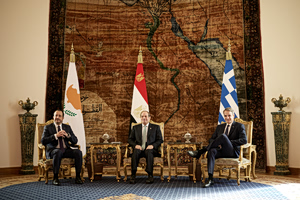
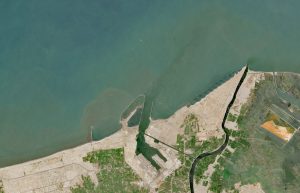
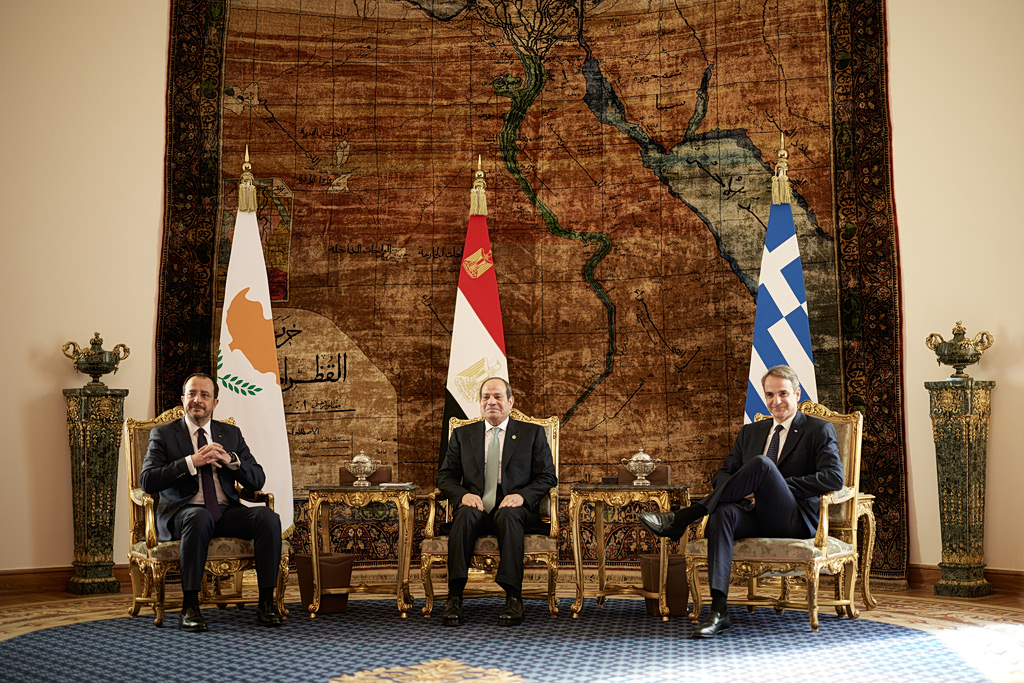
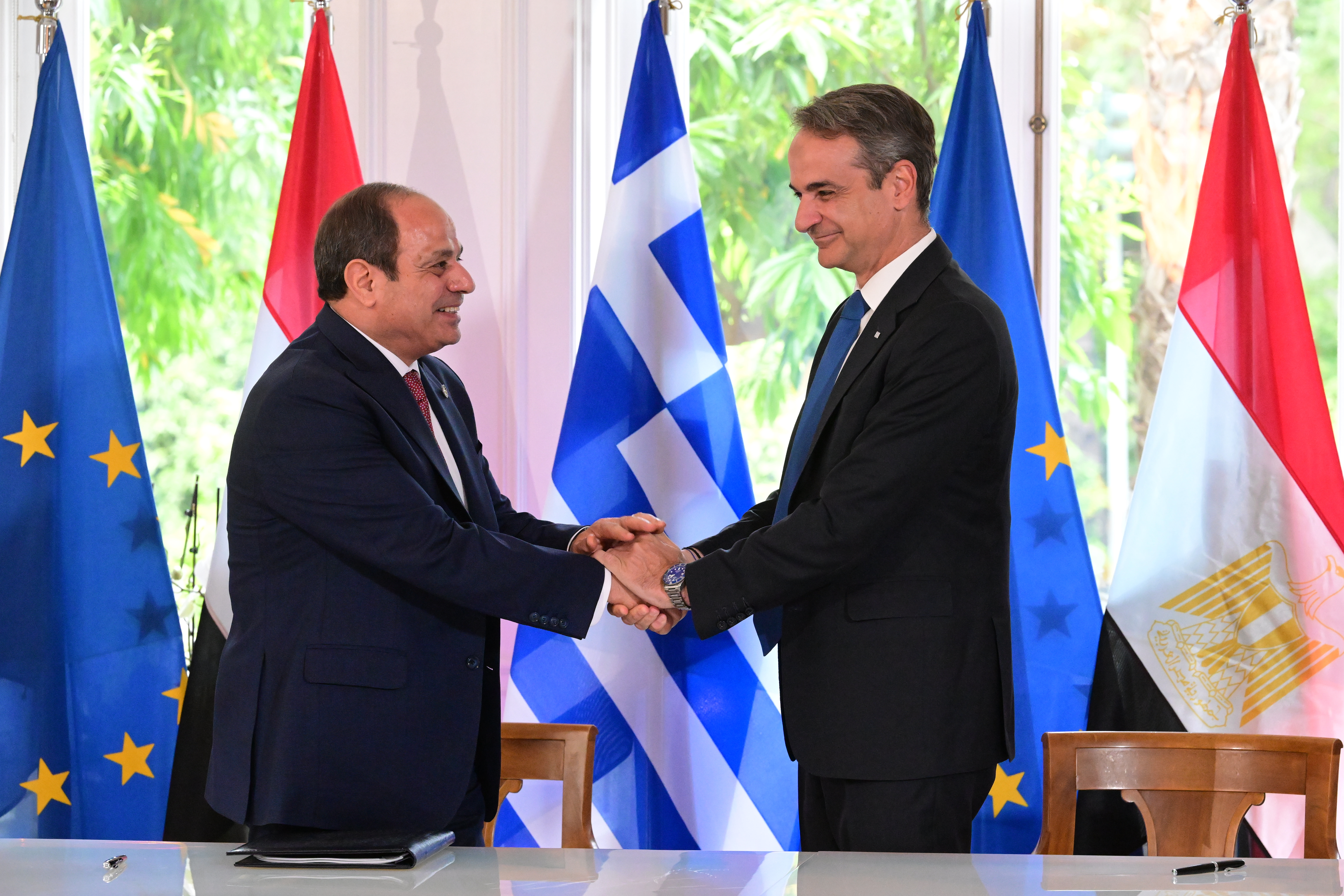
 Two months have passed since Prime Minister Kyriakos Mitsotakis’s trip to Egypt was postponed because of the two leaders’ busy schedules. On Tuesday, the two meet again, with Mitsotakis visiting El Alamein, where he will be hosted by Egyptian President Abdel Fattah el-Sisi.
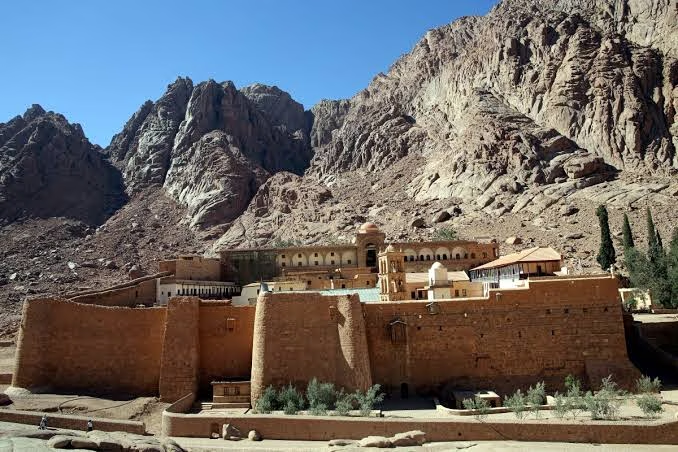
Athens and Cairo have been in regular contact over the past few months in an effort to strengthen bilateral relations and enhance coordination during what has been a turbulent period for the region, despite Turkish overtures toward Cairo and continuing disagreements over the details of an agreement on the ownership status of Saint Catherine’s Monastery in Sinai.
All of this is unfolding against a wider regional realignment, with governments across the Eastern Mediterranean and Middle East seeking new alliances and partnerships as the balance of power shifts.
Egypt and the Mecca Pact
The main development since the original visit was postponed is the signing of the so called Mecca Pact, a defense agreement between Turkey, Saudi Arabia and Pakistan that has been described in some quarters as a Sunni equivalent of NATO. Despite public pressure from Ankara, Egypt chose not to become the pact’s fourth member, though it does take part in the agreement’s diplomatic track, known as R4.
Egypt was described at the time as the pact’s great absentee. Sisi’s reluctance to embrace Turkey’s friendship offensive was received in Athens with relief, since further convergence between Ankara and Cairo could cost Greek diplomacy its second strongest partner in the Eastern Mediterranean, after Israel. Still, officials at the Prime Minister’s office and the foreign ministry say the relationship with Egypt requires constant reaffirmation. Turkey is widely understood in Athens to be pursuing rapprochement with Sisi’s government as part of a broader effort to expand its diplomatic influence across the Middle East, and that outreach has already produced concrete cooperation and agreements with Cairo, particularly in defense, an area where the Turkish arms industry gives it a clear advantage.
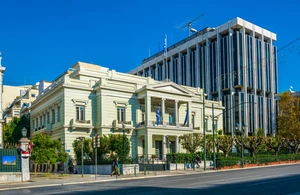
Foreign Minister George Gerapetritis and his Egyptian counterpart, Badr Abdelatty, have spoken by phone nearly every week amid this backdrop, with their most recent call, on Friday, apparently used to set the agenda for Tuesday’s meeting.
The maritime boundary question
With tensions rising again in the Aegean and Eastern Mediterranean, Athens is looking for reassurance and confirmation that Egypt and Greece remain aligned on the question of maritime boundaries, with the discussions centered on a 2020 agreement that partially delineated an exclusive economic zone between the two countries under the Law of the Sea.
Turkey has repeatedly urged Egypt to negotiate a maritime boundary extending east of the 28th meridian, a proposal that would give Egypt a larger sea area than it holds under its 2020 agreement with Greece. Greek foreign ministry officials do not expect that to happen in the near term, though they also do not see Athens and Cairo extending their own shared zone eastward, with Egypt keeping its options open.
The 2020 agreement remains the only concrete challenge to the maritime memorandum Turkey signed with Libya. At El Alamein, Athens is hoping for a new, public statement from Sisi in support of international law.
Energy, Libya and migration
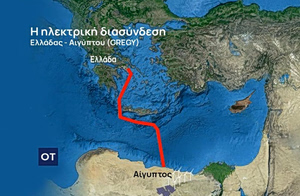
Also of interest is whether the two leaders will specifically address the Greece Egypt electricity interconnector, known as Gregy, part of which will run through the two countries’ shared economic zone. The project has European backing as part of efforts to reduce reliance on Russian gas, a question that carries added weight given the uncertain status of the Greece, Cyprus and Israel interconnector (GSI).
Cypriot President Nikos Christodoulides is also expected to travel to El Alamein for a trilateral summit.
Greek officials are broadly optimistic about the relationship with Cairo, pointing to Greece’s role in securing roughly 9 billion euros in European economic assistance for Egypt, much of it still to be disbursed, meant to help address Egypt’s structural economic problems and support migration management.
Greece and Egypt are also aligned on Libya, maintaining ties with the eastern administration and the Haftar camp, though Athens has faced renewed migrant arrivals on its southern border in recent weeks. Those flows originate on Egyptian territory, which hosts hundreds of thousands of migrants, before continuing through Libya and on to Crete.
Sisi, for his part, values the Greek navy’s leading role in Operation ASPIDES, which protects shipping bound for the Suez Canal, a waterway that generates a significant share of Egypt’s annual state revenue. Sisi has also shown a pattern of engaging with rival groupings, from the Mecca Pact to the trilateral framework with Greece and Cyprus, without fully committing to any one of them, a posture backed by Washington and made possible by Egypt’s status as the most populous Arab country and the one with the strongest military.
The Saint Catherine’s Monastery dispute
One thorny issue that remains unresolved between Athens and Cairo is the status of Saint Catherine’s Monastery in Sinai. The matter has formally been handed to the monastic community, which must sign off on a final agreement, but it remains on the agenda for the Mitsotakis Sisi meeting. Only a few details reportedly remain to finalize the negotiation, but several issues are still unresolved between the two sides, and second thoughts and disagreements have surfaced within the monastic community itself.
The agreement would establish, for the first time, a legal framework defining the monastery’s overall status, but it would also mark the transfer of ownership to the Egyptian state. Athens’s goal throughout the negotiation has been to secure the religious and liturgical character of Saint Catherine’s.