 Μake us preferred on Google
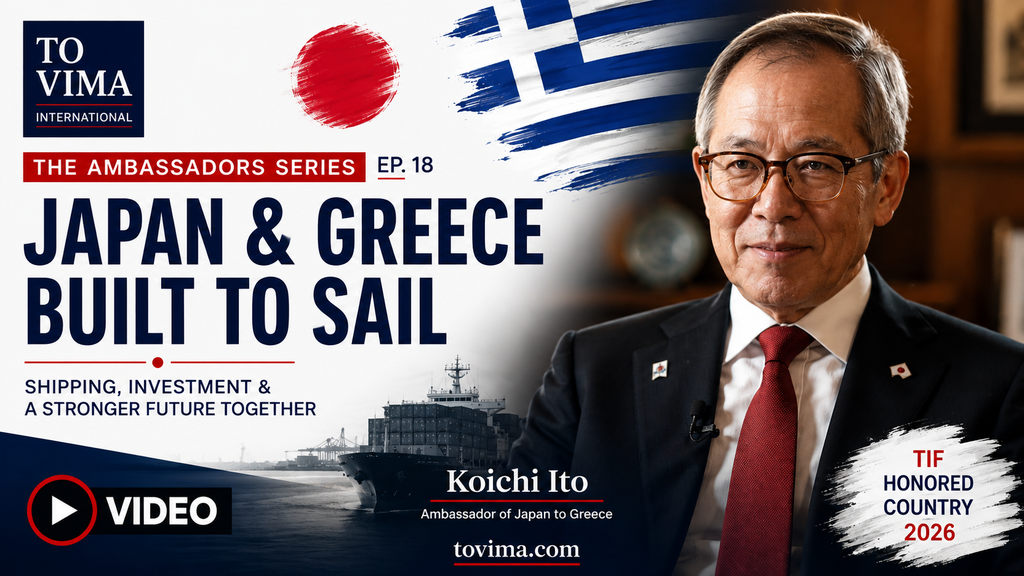
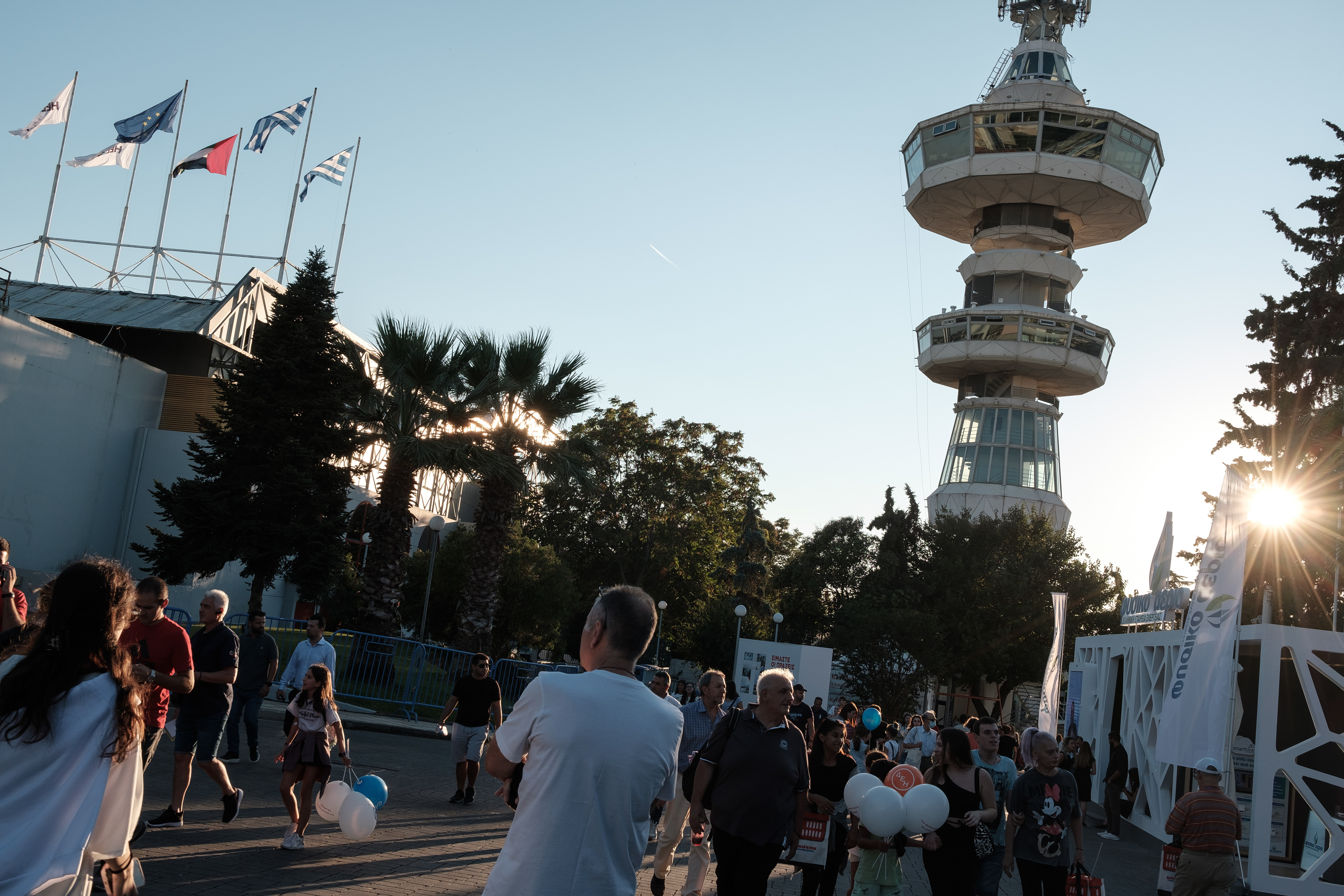
 Every September, as Greece shakes off the torpor of summer, the country’s political class descends on the Thessaloniki International Fair, or TIF (known in Greek as ΔΕΘ). Prime ministers announce their economic plans and promise tax cuts. Opposition leaders counter with rival visions of prosperity and journalists parse every sentence for election signals. The fair, which opens its 90th edition on Sept. 5 and runs through Sept. 13, is marking a centennial this year, a hundred years since the idea that gave birth to it first took institutional form. More than 1,000 exhibitors from 25 countries will participate, with Japan as the honored nation. According to the organizers, demand for tickets has already surpassed expectations.
But TIF was not always a political arena. It began as something far more modest: a commercial exhibition conceived as a way to bring a country desperate to knit itself together.
The vision
The man behind TIF was Nikolaos Germanos (1864–1935), a zoology professor at the University of Thessaloniki and a member of parliament. Germanos envisioned what he called an “international annual trade fair” for a city that, despite its liberation from Ottoman rule in 1912, still felt somewhat disconnected from the rest of Greece. Businesspeople from northern Greece and local institutions backed his proposal with vigor, and in April 1925 the government of Prime Minister Themistoklis Sofoulis approved the fair “for political and military reasons of national significance.”
The first TIF opened Oct. 3, 1926, on the grounds of the Pedion tou Areos, then a military exercise field used by the Third Army Corps. Nine pavilions housed Greek and foreign exhibitors, with about 30 additional temporary structures for individual participants. A refugee pavilion held a prominent place, a reminder that Thessaloniki in the 1920s was absorbing waves of displaced Greeks from Asia Minor. Among the curiosities: Christos Tsingiridis, a Greek of the diaspora who had arrived in Greece only the year before, presented the country’s first radio station. At the Fix brewery stand, a glass of beer cost one drachma.
More than 150,000 people attended, half of the 600 exhibitors came from abroad, and the fair’s success ensured it would become an annual institution.
Growth, war and rebirth
TIF grew quickly. By its second year, official state participants had jumped from two to five, with Poland, Switzerland, Romania and Hungary joining Bulgaria. Loukoumi coffee won its first distinction in 1929. The pasta brand MISKO, the biscuit maker Papadopoulou and the publishing house Eleftheroudakis all became familiar presences. In 1931, the Hellenic Air Transport Company offered twice daily flights from Athens to Thessaloniki for fairgoers, a single ticket costing 667 drachmas.
By the mid-1930s, the original grounds were no longer big enough, and the fair relocated to a much larger site in the center of the city, the same location it occupies today. The first fair at the new grounds opened in the fall of 1940, just days before Italy’s invasion drew Greece into World War II. What followed was devastating. German forces occupied the fairgrounds in April 1941. When they withdrew in October 1944, they detonated their ammunition stores, destroying pavilions along with them. For a decade, the site served as storage for Allied supply corps and later for Greek state vehicles.
TIF reopened in 1951 under Prime Minister Nikolaos Plastiras, and 700,000 people walked through its gates. The fair had risen from its ashes.
The decades that followed brought spectacle alongside commerce. In 1957, a coffee company employee named Dimitris Vakondios, working a booth for the Dritsas company, which represented instant coffee in Greece, improvised a cold coffee using a cocoa shaker and inadvertently invented the frappé, a drink that would become synonymous with Greek summer. In 1958, nearly every major Greek comedian of the era performed at the fair. The OTE Tower, a 65 meter structure with a revolving restaurant at its summit, was inaugurated as a landmark that remains a symbol of the city. Soviet Sputnik rocket replicas were exhibited in 1959. In 1965, American astronauts Gordon Cooper and Charles Conrad visited the fair. The peak year for attendance remains 1967, with an estimated 1.7 million visitors.
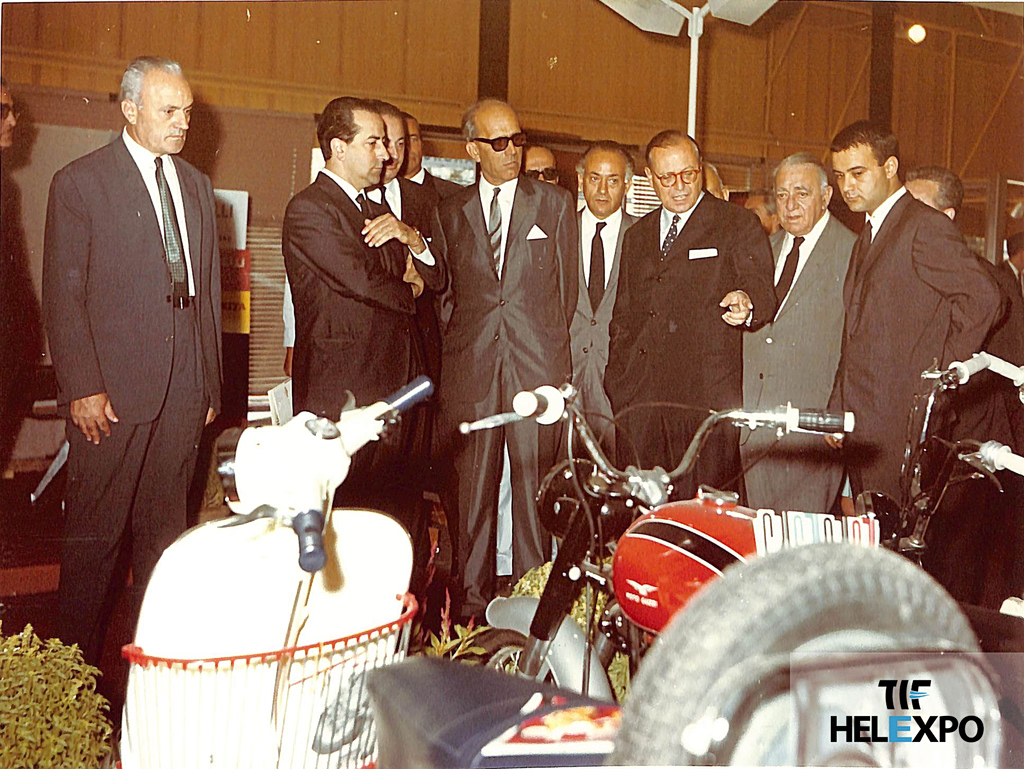
Opening of 31st TIF
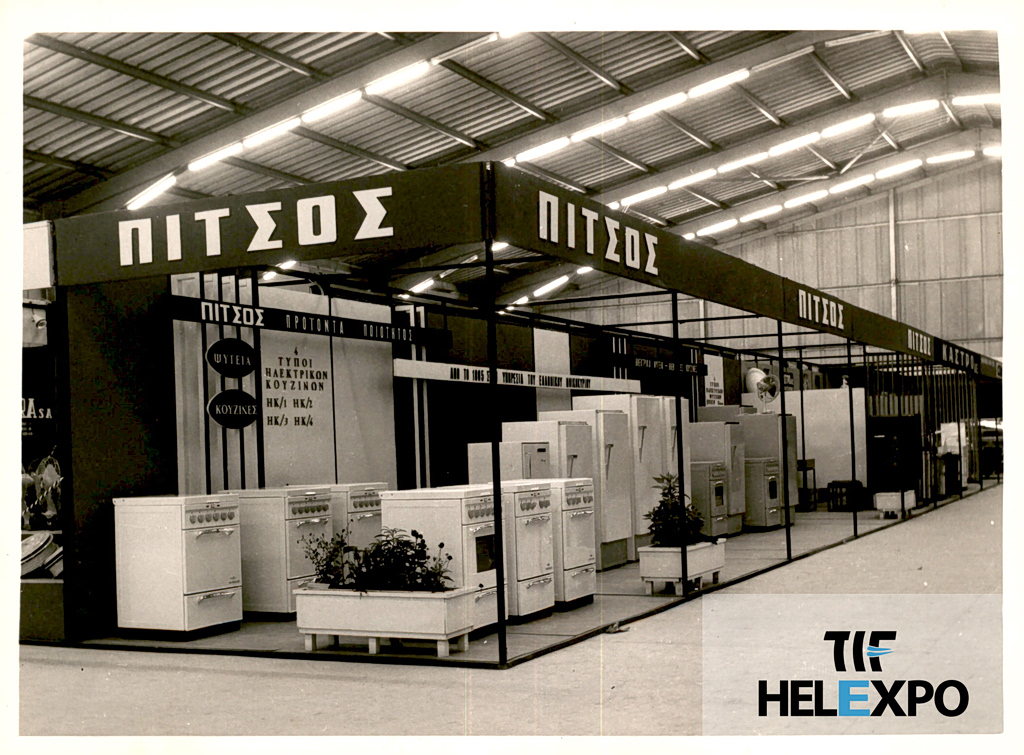
Opening of 31st TIF
The political balcony
TIF’s transformation into a political stage came during the Metapolitefsi, the period of democratic restoration after the fall of the military junta in 1974. That September, Prime Minister Konstantinos Karamanlis addressed a crowd of 300,000 from the Macedonia Palace hotel, an hour and a half before the fair’s official opening. He established a practice that every prime minister has observed since: using TIF as the occasion to outline economic policy priorities for the year ahead.
Karamanlis was importing an idea with French roots. After World War II, French mathematical economists had devised what became known as “indicative planning,” a softer alternative to Soviet central planning that used the public sector’s dominant position to reduce uncertainty for private actors. France’s Commissariat du Plan shaped economic life from 1946 to 2006. The concept crossed the English Channel in 1964 under a Labour government as Britain’s National Plan. Karamanlis, who had spent years of exile in Paris, brought a version of it to Greece. The September speech at TIF would signal economic intentions and preview what the December budget would formalize.
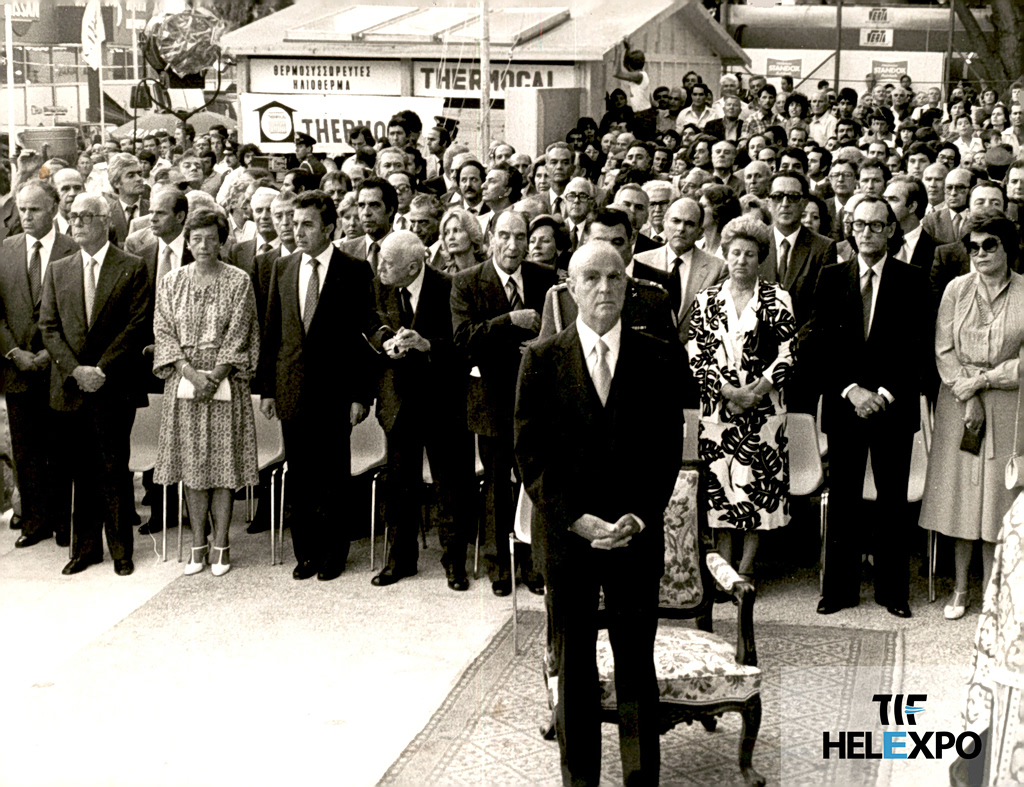
Opening of the 43rd TIF: Prime Minister Konstantinos Karamanlis
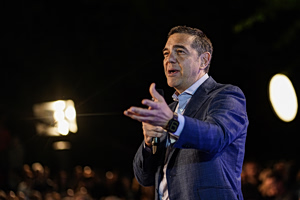
Andreas Papandreou and Konstantinos Mitsotakis carried the tradition forward with even greater intensity. Tax breaks, sweeping policy packages and pivotal social measures were heard for the first time from the fair’s podium. Over time, opposition parties also took the stage, and what began as a forum for clarifying government direction drifted toward competitive populism, with critics describing it as a political bazaar of promises rather than serious policymaking.
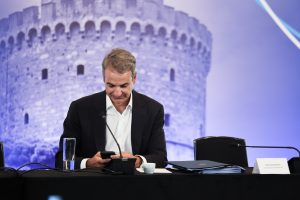
That tension endures. TIF functions simultaneously as a space for accountability, where governments are pressed to deliver results, and as a theater of political spectacle, where pre-election pledges are calibrated for maximum effect. This year’s fair, with its centennial fanfare and its more than 1,000 exhibitors, will be no different, with elections fast approaching.