 Μake us preferred on Google
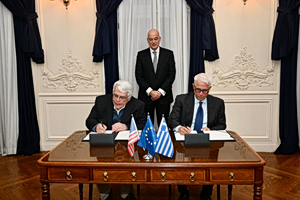
The real test of Greece’s €3.035 billion Achilles’ Shield air defence agreement with Israel begins when the deliveries end.
The deal earmarks approximately €750 million, nearly a quarter, for Greece’s defence and technology ecosystem. It involves 19 Greek companies and provides for a domestic production base with export potential.
But workshare is not control. Greece’s lasting return is the authority its industry retains to produce, maintain, modify and sell beyond the original order.
On 20 October, Defence Minister Nikos Dendias announced plans to legislate a minimum 25% Greek industrial share in every armaments programme and enable Greece to conclude government to government (G2G) defence export contracts as the seller. Neither measure has been enacted. Statutory participation must not become offsets in disguise.
A 25% workshare confined to low value assembly can matter less than a 10% share securing engineering competence, design authority, upgrade responsibility and export work. Percentages measure activity, not power.
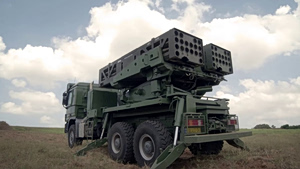
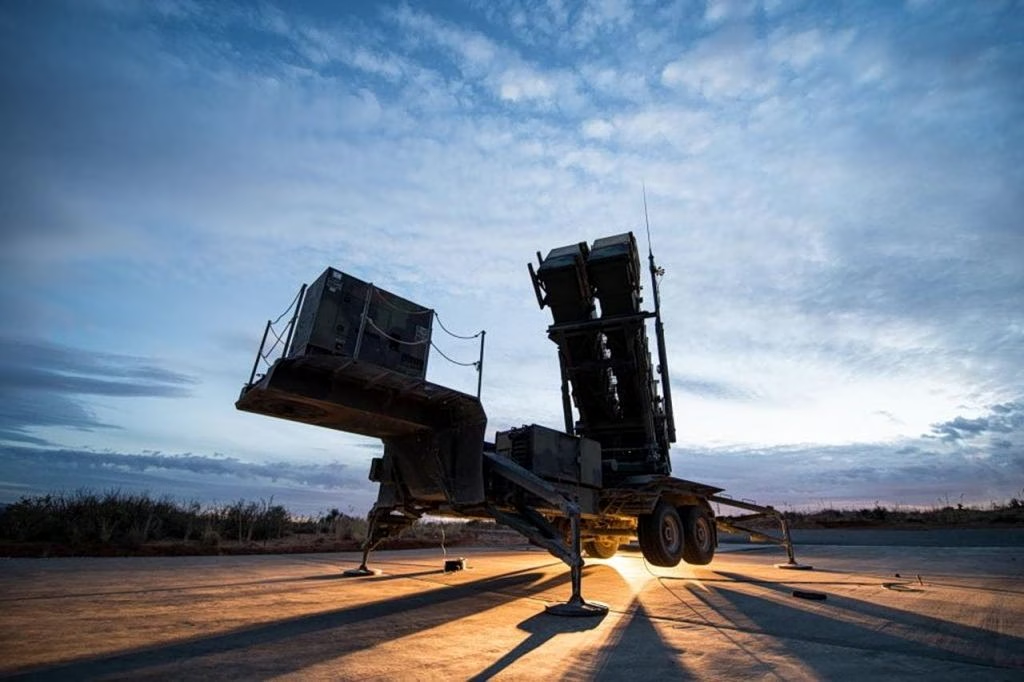
Achilles’ Shield already offers a more substantive test. Its multilayered architecture combines Rafael’s David’s Sling and SPYDER with IAI’s BARAK MX. Under the agreement, Greek companies will develop the central command and control software with Israeli technological support. The resulting Greek source code, including subsequent modifications and additions, will remain under exclusive Greek control. That authority concerns the Greek command system, not the proprietary technology of the Israeli interceptors. Athens must extend this model of defined national control to components, maintenance, upgrades, engineering and export rights wherever existing agreements permit.
Greek industrial participation in the fourth French built FDI frigate was set at 25%, up from roughly 12% in the original programme. Dendias has tied the project to technology transfer, production and Greece’s transition from customer to coproducer. Greece’s ONEX and South Korea’s Hanwha Ocean have agreed on local construction, exports and regional support, potentially turning Greek shipyards into a regional hub.
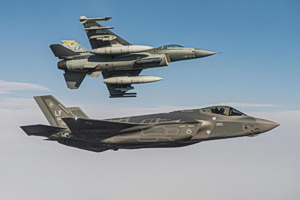
On 14 October, Greek and Indian defence officials discussed joint industrial and technological initiatives, giving Athens scope to negotiate design rights and workshare from the outset. The F-35, by contrast, provides advanced combat capability without Greek design authority or the right to modify and develop the aircraft.
European origin does not confer Greek sovereignty.
A European supplier can leave Greece with little authority over its purchase; under the right terms, a non European supplier can provide engineering responsibility, manufacturing depth, export work and a stake in the next generation.
Unlike France, already within Europe’s industrial base, Israeli, South Korean and Indian companies have an additional reason to value Greece: an EU and NATO industrial hub offering skilled industry, national orders, capital, engineering capacity and access to European markets.
For Israel, Greece offers a further advantage: an existing procurement commitment, agreed industrial participation and established security cooperation with Athens and Nicosia across the Eastern Mediterranean.
The EU’s €150 billion Security Action for Europe (SAFE) loan facility for defence procurement by member states gives these distinctions financial consequences. Eligible products generally require at least 65% of component value to originate in the EU, Ukraine or the European Economic Area’s EFTA countries. In categories including air and missile defence, contractors must also possess authority to develop the product without a third country veto. An EU established company under Israeli control can participate subject to the prescribed safeguards and eligibility conditions.
Beyond Greece’s €787.7 million SAFE allocation lies procurement across the wider European facility. SAFE finances procurement, not unrestricted research and development, but those orders can justify investment in engineering, manufacturing, components, lifecycle support and jointly developed capabilities backed by defined industrial rights. Greece can build what other Europeans will buy with European financing.
Greece can secure design, production and export rights in systems incorporating Israeli technology, while Israel gains European manufacturing capacity and access to SAFE financed procurement across the EU, wherever those systems meet the programme’s requirements.
David’s Sling was jointly developed with the United States, and its sale to Finland required American approval. Arrow 3, developed through extensive US-Israeli cooperation, required the same before its sale to Germany. Both provide exceptional military capability, but expose the constraints created when development, production and legal rights depend on a single partner.
Greece has no reason to reproduce that dependence with Israel. Israel has every reason to understand the objection.
Athens can become a European production and export hub for Israeli air and missile defence, beginning with defined engineering and manufacturing responsibilities in BARAK MX and extending, where existing rights permit, to licensed work on Iron Dome, David’s Sling and Arrow. These systems operate under different intellectual property and export regimes, including American approval requirements where applicable. Production in Greece cannot override those restrictions or confer SAFE eligibility.
The BARAK 8 programme with India combined joint development and production with a major market for IAI. IAI subsequently developed BARAK MX as a separate air defence architecture, financing it independently and retaining greater control over its technology, development and exports. Collaboration on one generation does not require surrendering control of the next.
Israel and Greece can apply that principle to Europe’s next generation of air and missile defence. The new systems must be designed without the American controlled technologies and approval dependencies that constrain some existing weapons. Israel can develop them independently and manufacture European variants in Greece, or develop them jointly with Greek and European industry from the outset. Both routes expand Israel’s European production capacity and market access, combining its technology and operational experience with Greek engineering and manufacturing.
Existing Israeli intellectual property remains Israeli. Rights in European variants and jointly developed systems must be agreed in advance, securing Greek authority over design, development, production, upgrades, lifecycle support and exports while preserving Israel’s freedom to develop and market its own versions. European partners must also hold sufficient design authority to meet SAFE’s requirements where applicable. Designed from inception for European command networks, interoperability and procurement requirements, these systems would become integral to Europe’s defence architecture rather than another category of imports.
Greek stockpiles must serve Greek readiness first. For Israel, Greek production adds wartime capacity that would be uneconomic to maintain at home in peacetime. Contracts must settle reserved output, inventory allocations, surge capacity, export permissions and production priorities if both countries face emergencies. These decisions belong before war, not during it.
The same production base can extend its reach across the Eastern Mediterranean. Cyprus, already an Israeli air defence customer, faces many of the same regional threats and has a €1.18 billion SAFE loan allocation. With separate SAFE allocations, a shared theatre and demand from two EU customers, Greece and Cyprus can provide a regional foundation for Greek industry to supply the wider European market.
The next weapon Greece buys must leave Greek industry with the authority to develop, manufacture, upgrade and export what Europe will need next.
Shay Gal is Founder & Principal of Line of State, an international strategic practice for strategic affairs, government relations and public power. He previously served as Vice President of External Relations at Israel Aerospace Industries (IAI) and as Chief of Staff to its Chairman.