 Μake us preferred on Google
 President Donald Trump is moving toward a defense concession Turkey has sought for years, testing how much resistance remains in Congress to a broader thaw with Ankara and to any future effort to return Turkey to the F-35 fighter jet program.
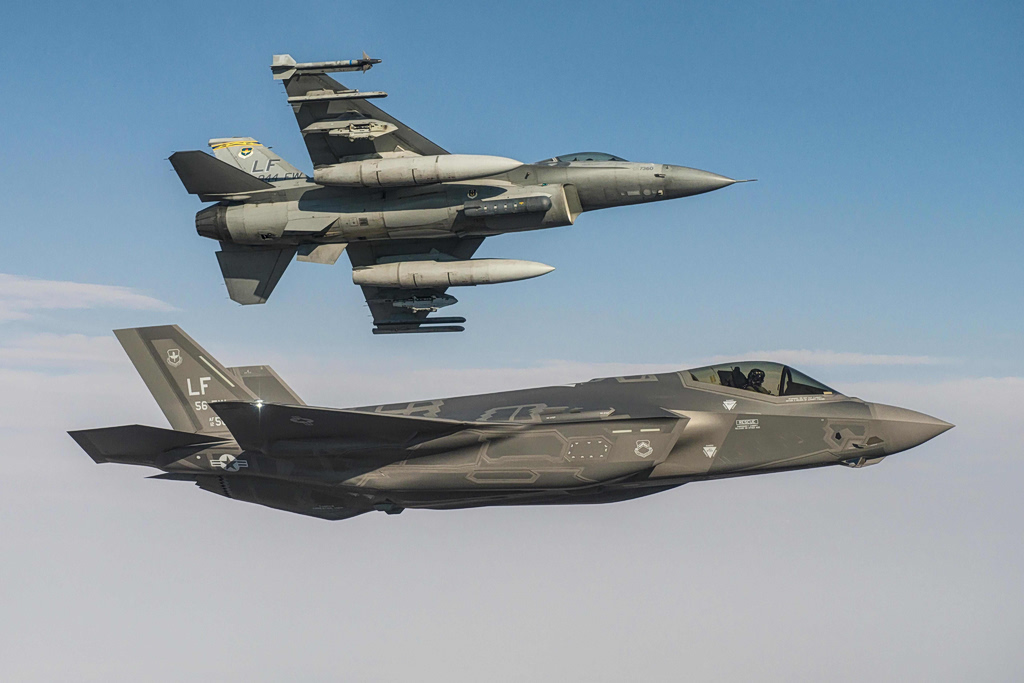
The immediate issue is not the F-35 itself. It is the Trump administration’s formal notification to Congress, dated June 24, of a proposed transfer worth more than $700 million for General Electric F110 engines and related support needed for KAAN, Turkey’s first domestically produced fighter jet.
But in Washington, where Greece, Cyprus, Israel and their allies in Congress have spent years trying to keep Turkey away from the F-35 after Ankara bought Russia’s S-400 air defense system, even a narrower arms transaction is being watched as something larger: an early measure of whether the congressional coalition against Turkey still has the power to slow the White House down.
For years, Turkey was treated in Washington as a difficult NATO ally, often disruptive but too strategically important to abandon. That image is now changing. Ahead of the next NATO summit in Ankara, Turkey is increasingly being presented by American and alliance officials as a country NATO should study, not simply tolerate.
The shift reflects a broader change inside the alliance. At The Hague in June 2025, NATO allies agreed to move toward annual defense investment equal to 5 percent of gross domestic product by 2035. That commitment includes at least 3.5 percent for core defense requirements and up to 1.5 percent for broader defense and security related investments, including infrastructure, resilience, innovation and the defense industrial base.
The Ankara summit will be an early test of whether that pledge becomes more than a spending target and begins to reshape NATO’s defense industrial strategy.
For Washington, the question is no longer only which allies will spend more. It is also which ones can produce more weapons, ammunition, drones, ships and air defense systems, quickly and at scale.
That is where Turkey’s argument has gained force. Ankara has built a defense industry that now includes drones, shipyards, armored vehicles, munitions and fighter jet ambitions.
American officials have taken notice. Matthew Whitaker, the U.S. ambassador to NATO, recently urged allies to become “more like Turkey,” citing Turkey’s shipbuilding and defense production capacity.
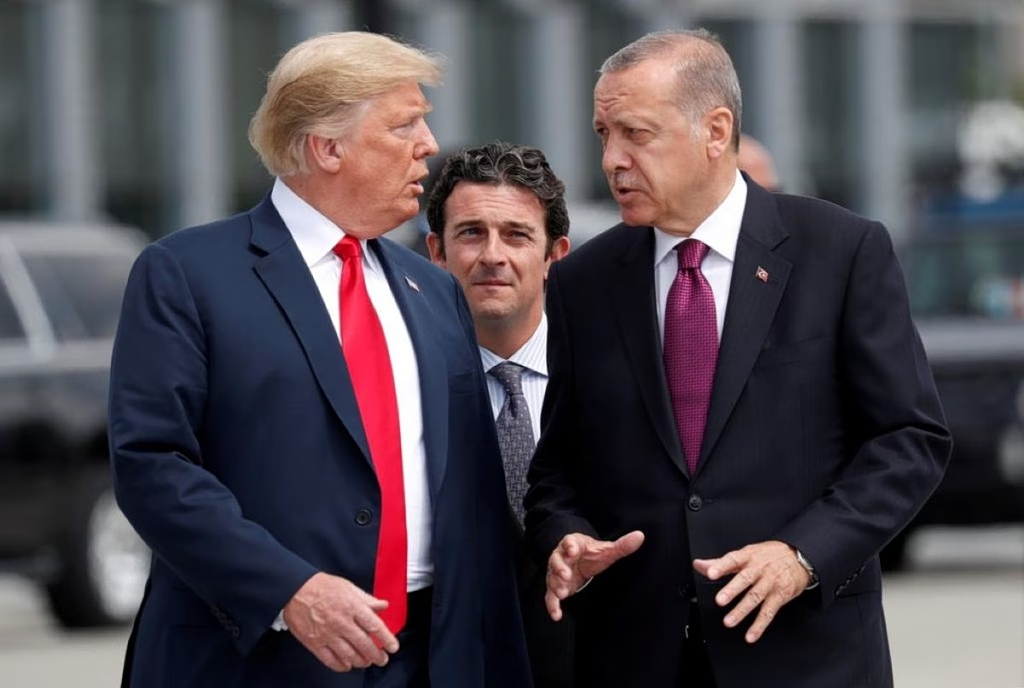
For President Recep Tayyip Erdogan, the moment has opened a political opportunity after years of friction with Washington.
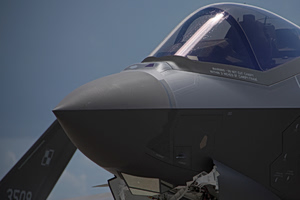
Turkey was removed from the F-35 program over the S-400 purchase, and U.S. law still places significant restrictions on any effort to bring Ankara back. But the political atmosphere around Turkey has changed, and Mr. Trump has made clear that he wants a different relationship with Mr. Erdogan.
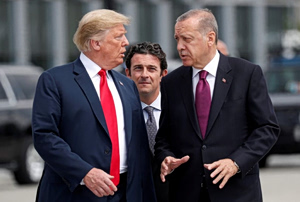
Asked about the jet engines, the F-35 program and the NATO summit, Mr. Trump told reporters that he was “going to probably do something that will make them very happy.” Around the same time, the State Department sent Congress the formal notification on the F110 engines, a request Ankara had long pursued.
For Mr. Erdogan, the engine transfer would mark another Washington obstacle removed. Since Mr. Trump returned to office, several Turkish priorities have moved in Ankara’s direction.
The Kurdish led forces in Syria, which Turkey views as linked to the PKK, have lost some of the American protection they once enjoyed. Syria’s new leadership has been received at the White House, with Turkish Foreign Minister Hakan Fidan involved in subsequent talks in Washington. The United States has eased sanctions on Syria.
And the Justice Department has formally moved to dismiss its criminal case against Halkbank, the Turkish state-run lender accused of helping Iran evade U.S. sanctions.
Under different political conditions, any one of those developments might have triggered a sharper fight in Washington. So far, they have not imposed serious political costs on the White House.
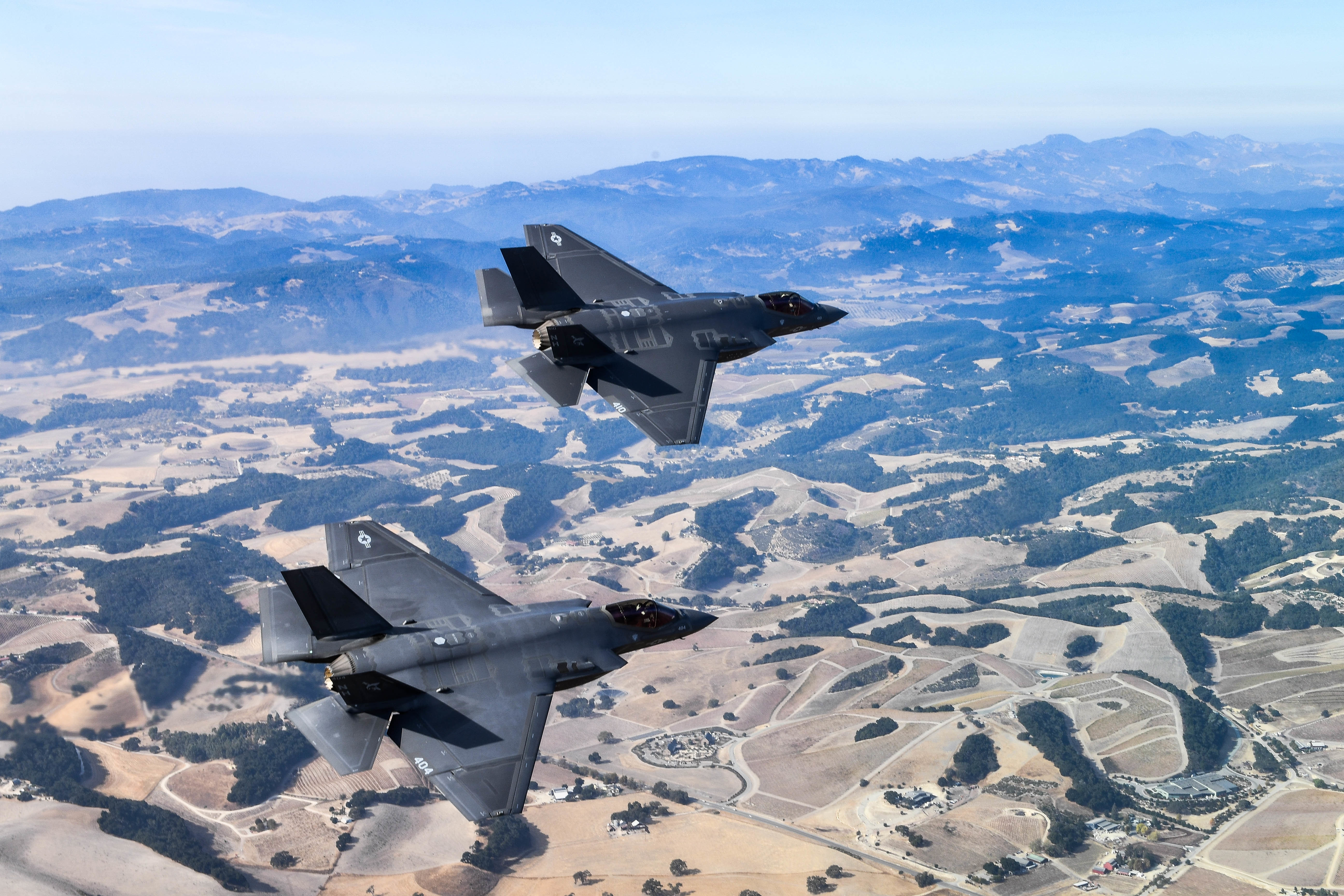
The harder question is the F-35.
The KAAN engine transfer and the F-35 issue are different legally, politically and militarily. The F110 engines are older technology, and the proposed transaction is not governed by the same CAATSA related and National Defense Authorization Act restrictions that followed Turkey’s acquisition of the S-400 system and its removal from the F-35 program.
Nor are the engines widely viewed on Capitol Hill as giving Turkey the kind of qualitative military advantage that F-35s would provide. That is why the engine transfer has not generated the same level of opposition in Congress.
Three of the four senior lawmakers who oversee foreign affairs in the House and Senate have either moved past or set aside earlier concerns: Representative Brian Mast of Florida, the Republican chairman of the House Foreign Affairs Committee; Senator Jim Risch of Idaho, the Republican chairman of the Senate Foreign Relations Committee; and Senator Jeanne Shaheen of New Hampshire, the committee’s top Democrat.
The main holdout has been Representative Gregory Meeks of New York, the top Democrat on the House Foreign Affairs Committee. Mr. Meeks has accused the administration of bypassing congressional review and refusing for months to make a good faith effort to brief him on the implications of the sale for U.S. Turkey relations, Turkey’s continued possession of the S-400 and broader regional security concerns.
For the White House, the engine sale is the easiest concession available. Gonul Tol, a Turkey analyst at the Middle East Institute, described it as “low hanging fruit,” a way for Mr. Trump to offer Mr. Erdogan something tangible without yet crossing the more explosive line of the F-35.
But that is precisely what worries some lawmakers and advocates who follow the issue closely. They see the engine sale as a possible test of congressional reaction before the administration considers a larger move, including a legal workaround that could address the S-400 issue on paper without requiring Turkey to resolve it in substance.
Representative Dina Titus, Democrat of Nevada, moved quickly to draw that line. She first sent a letter to House leaders urging them to be ready to use every available legislative tool if the administration tries to return Turkey to the F-35 program. She then introduced a Joint Resolution of Disapproval seeking to block the engine transaction itself.
The two moves reflect two different legal tracks. The engine package can be challenged through the normal congressional arms sale review process. A future F-35 transfer would be far more complicated because Turkey faces two separate legal barriers: CAATSA sanctions imposed after its purchase of the Russian S-400 system, and restrictions written into the National Defense Authorization Act after Ankara was removed from the F-35 program.
A serious effort to block such a move would likely depend on House leadership, especially Representative Steve Scalise of Louisiana, the Republican majority leader, and Representative Hakeem Jeffries of New York, the Democratic minority leader.
By contrast, any lawmaker can introduce a resolution challenging the engine transaction during the statutory review period. Congress has 15 days from the formal notification to act, though any resolution would need to pass both chambers and survive a likely presidential veto. Ms. Titus used that opening to send a political signal before the F-35 question reaches a more decisive stage.
Her effort has also exposed a tactical split inside what had long appeared to be a unified Greek American front in the House.
Representatives Gus Bilirakis of Florida and Nicole Malliotakis of New York, two Republicans closely identified with Greek American issues, did not join either of Ms. Titus’s initiatives.
Their absence does not mean they support a Turkish return to the F-35 program. Both later signed a separate bipartisan letter, led by Representative Mike Lawler, Republican of New York, and Representative Brad Sherman, Democrat of California, urging Mr. Trump not to sell F-35s to Turkey.
The letter cited Turkey’s S-400 purchase, its occupation of northern Cyprus, its tensions with Greece and its growing anti-Israel rhetoric. It was also signed by Representatives Jeff Hurd, Max Miller, Young Kim, Stephen Lynch, Gabe Amo and Jared Moskowitz.
Still, the choice by Mr. Bilirakis and Ms. Malliotakis to use a Republican led vehicle rather than join Ms. Titus’s initiatives underscored the difficult position of Republican lawmakers who share concerns about Turkey but are reluctant to confront Mr. Trump directly on a foreign policy issue he appears personally interested in advancing.
They also joined a separate statement with Greek American Republicans Mike Haridopolos and Jimmy Patronis of Florida, both of whom had been supported by Mr. Trump in their campaigns. The move gave them a less confrontational way to register concern without aligning themselves directly with a Democratic challenge to the administration.
Yet that split became public when Ms. Titus called on Ms. Malliotakis to support her F-35 efforts not only with statements, but with her signature. It was a rare open dispute among Greek American lawmakers over a core Hellenic issue in Congress.
People familiar with the Republican camp’s thinking say the more effective route is direct communication with Secretary of State Marco Rubio and Defense Secretary Pete Hegseth, rather than a public clash with the president.
That calculation points to a larger problem for Athens and its allies in Washington. In a Trump administration that often runs through personal access and political loyalty, traditional lobbying and congressional pressure may not reach the place where the most important decisions are made.
Turkey appears to have found a powerful channel in Tom Barrack, the U.S. ambassador to Ankara and one of Mr. Trump’s longtime allies. Although Turkey maintains contracts with several lobbying firms in Washington, Mr. Barrack has emerged, in the view of congressional and policy sources, as one of the most effective advocates for Ankara’s priorities inside the American political system.
People on Capitol Hill say Mr. Barrack has cultivated lawmakers in both parties and benefited from the view that he produced results on Syria, one of the region’s most difficult files. Even major pro-Israel organizations have struggled to build Republican opposition to him.
One senior figure in the pro-Israel advocacy world said it was striking how few Republicans were willing to sign a letter critical of Mr. Barrack.
“Everyone knows he is Trump’s favorite ambassador,” the person said, “and everyone fears the reaction.”
Greece has also tried to strengthen its Washington position, retaining BGR Group as an additional political safeguard in a more unpredictable environment.
But on two major priorities for Athens, the firm has not yet appeared to shift the outcome. The next U.S. Greece Strategic Dialogue remains unresolved, and a foreign minister’s level meeting of the 3 plus 1 framework, which includes the United States, Greece, Cyprus and Israel, has not been scheduled.
The EastMed Gateway Act, a key piece of legislation for Greek interests in Washington, has advanced largely outside BGR’s portfolio. According to people familiar with the effort, the firm was not asked to contribute to the bill’s legislative push. Its momentum has come primarily from the Hellenic American Leadership Council, known as HALC.
That does not mean BGR has had no value. People familiar with its work credit the firm with strong knowledge of Washington’s political landscape and with helping maintain ties to Senator Roger Wicker of Mississippi, the Republican chairman of the Senate Armed Services Committee, whose engagement with Greece is viewed in Athens as strategically important.
But longtime figures in Washington lobbying caution that firms rarely produce political victories on their own
The F-35 Question
For now, the F-35 question remains unresolved.
Some in Washington believe the engine sale is the first step in a broader effort by the White House to test congressional resistance. They point to Vice President JD Vance’s statement that the administration has asked the Pentagon to examine how Turkey could technically return to the F-35 program. They also cite a reported briefing this week to Mr. Mast as another sign that the issue is moving.
Others say those concerns are overstated. They note that Mr. Vance also said Congress would have the final say, and that the Pentagon review began early in Mr. Trump’s second term, after his first call with Mr. Erdogan. Despite Mr. Barrack’s public signals, they say, there has been no concrete breakthrough.
Capitol Hill sources involved in the issue say they will not accept a narrow legal workaround that addresses the S-400 only on paper. Turkey, they argue, would need to take real steps on the Russian system before Congress could accept its return to the F-35 program.
When the campaign to keep Turkey out of the F-35 began, the immediate goal was modest: buy time.
The coalition behind that effort was broader than many realize. It included Greek American organizations, lawmakers in Congress, Armenian American and Indian American groups, and parts of the pro-Israel advocacy network, for which the prospect of Turkey operating fifth generation fighters over the Eastern Mediterranean remains a red line.
That coalition has kept the S-400 issue alive in Congress long after Ankara hoped it would fade. It has helped build legal barriers, sustained political pressure and made any Turkish return to the F-35 program more difficult than it would otherwise have been.
But the fight now appears to be entering a different phase. If Mr. Trump decides that restoring Turkey’s place in the F-35 program is a personal priority, the question will no longer be only whether Congress opposes the move.
It will be whether Congress is willing to confront him over it. That is a harder test than the Greek American coalition has faced before.