
 Μake us preferred on Google
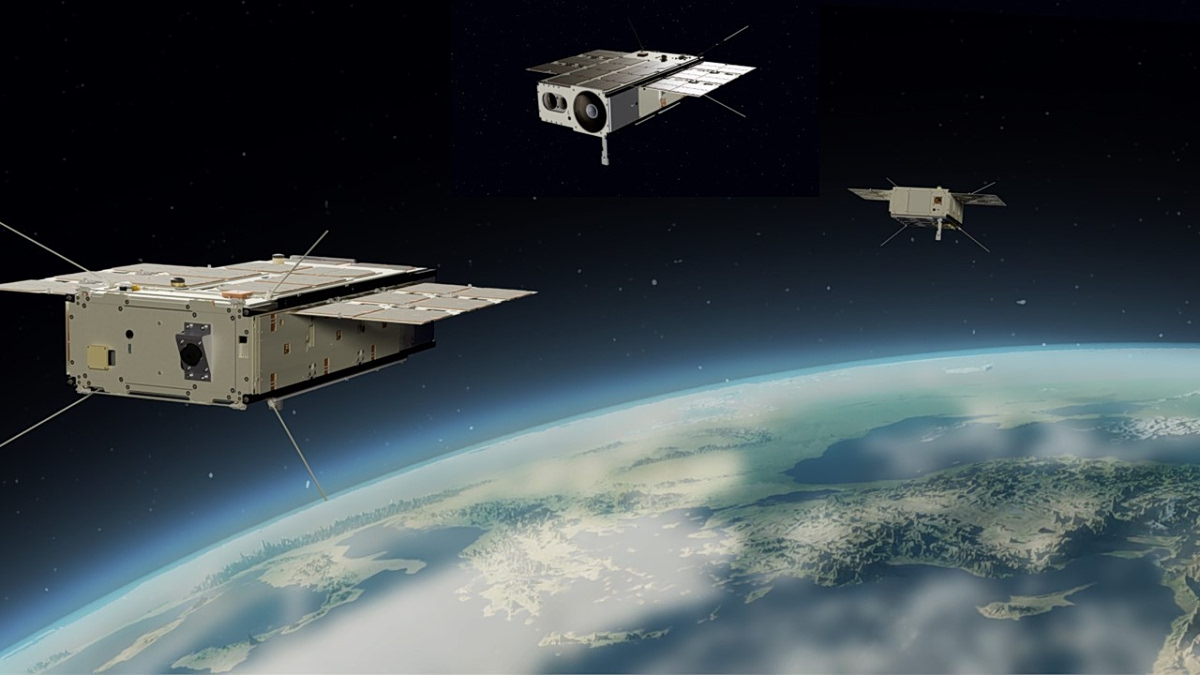
 Three “Made in Greece” nanosatellites, ERMIS 1, 2 and 3, were launched into a 500-kilometer orbit on Monday, March 30, marking a milestone for the country’s nascent space program.
The nanosatellites, built by the Department of Aerospace Science and Technology at the National and Kapodistrian University of Athens (NKUA), will lift off aboard a SpaceX Falcon 9 rocket.
The ERMIS mission — Hellenic Cubesat Demonstration Mission — aims to certify new and innovative space technologies and applications, including 5G communications for the Internet of Things (IoT), laser-based satellite telecommunications and Earth observation using a hyperspectral camera.
ERMIS is the first component of Greece’s National Microsatellite Program, which carries a total budget of €200 million and is financed through the EU Recovery and Resilience Facility under the NextGenerationEU framework.
The project itself has a budget of approximately €4.9 million and is coordinated by the newly established NKUA Aerospace Department, with participation from OQ Hellas, the University of Patras, the University of the Aegean and the National Observatory of Athens.
The three CubeSats built under the ERMIS program represent a significant technological undertaking, each designed to validate a distinct set of innovations developed in Greece.