
 Μake us preferred on Google
 The European Union has adopted a landmark reform of its driving licence rules — the most ambitious road safety overhaul in decades — aiming for “zero road deaths” by 2050.
Under the new legislation, digital driving licenses, cross-border enforcement of traffic penalties, and tougher tests for new drivers will become standard across the EU.
Last year, almost 20,000 people died in road accidents across the Union, according to the European Commission. Despite a 2% drop compared to 2023 and a 12% decrease since 2019, the EU remains far from its goal of halving road fatalities by 2030.
“The reform is essential because the world has changed,” said Jutta Paulus, a German Green MEP who led the report on digital licenses. “We need to go below 20,000 deaths per year — this is part of the package.”
Uneven road safety across Europe
Road safety figures vary widely across the EU. Sweden, Malta and Denmark recorded the lowest fatality rates in 2024, with between 20 and 24 deaths per million inhabitants. Romania and Bulgaria remain the most dangerous, with over 70 deaths per million. Germany, with 33, remains well below the EU average of 45.
Poland reported the biggest improvement, cutting fatalities by 35% since 2019. In contrast, Slovenia saw an 11% rise in serious injuries last year, prompting new national targets to limit road deaths to 50 by 2030.
In Spain, distracted driving — often linked to mobile phone use — caused 30% of all fatal accidents, while Portugal is tightening renewal rules for older drivers, requiring periodic medical checks from age 50.
Key changes for EU drivers
The new rules will make it harder to obtain and renew a licence, with greater emphasis on distraction, blind spots, pedestrian awareness, and assisted-driving technologies. A two-year probation period will apply to new drivers, who will face stricter penalties than experienced motorists.
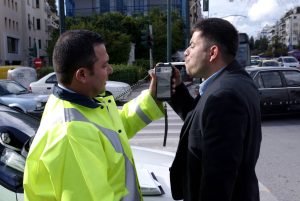
Crucially, serious offences such as drunk driving or speeding will now result in EU-wide driving bans, ending the current loophole that allowed offenders to avoid sanctions outside their home country.
However, minor infractions committed by visitors unaware of local rules will not trigger cross-border penalties.
The EU will also lower the minimum driving age for professional drivers — from 21 to 18 for truck drivers and from 24 to 21 for bus drivers — in an effort to ease labor shortages in the transport sector.
Driving licenses for cars and motorcycles will have a maximum validity of 15 years, which can be reduced to 10 years in countries where licenses also serve as ID cards.
Digital licenses and future challenges
The EU’s goal is to make digital driving licenses the norm, though paper versions will remain available. Member states will have three years to integrate the new rules into national law and another year to implement them.
Germany’s Technical Inspection Association (TÜV) warned that significant technical hurdles remain due to differing state IT systems, though Berlin aims to launch its digital license by the end of 2026. Bulgaria, by contrast, says it is already prepared to introduce the new format.
As Europe moves toward a fully digital, unified licensing system, the reform is seen as a cornerstone of the EU’s Road Safety Package, designed to make European roads safer, smarter, and more consistent for the decades ahead.