 Μake us preferred on Google
 ITHACA, N.Y.—On a drizzly Thursday, Cornell University students wandered into consulting recruitment sessions, hustled up the slopes to midterms and listened to a Pulitzer-winning fiction writer.
They also attended a high-stakes student assembly, called after explosive allegations of a campus rape put the Ivy League school into the international spotlight.
Cornell has “failed our community through its lack of accountability, transparency and failure to address the state of Cornell’s student body,” said junior Sophia Riley Sim, who skipped classes this week as she struggled to make sense of the incident she has been shaken by since first learning of it two years ago.
“I cried about it then, and I am still completely devastated,” she added, testifying from the student union building that has long been the campus hub for protest and advocacy.
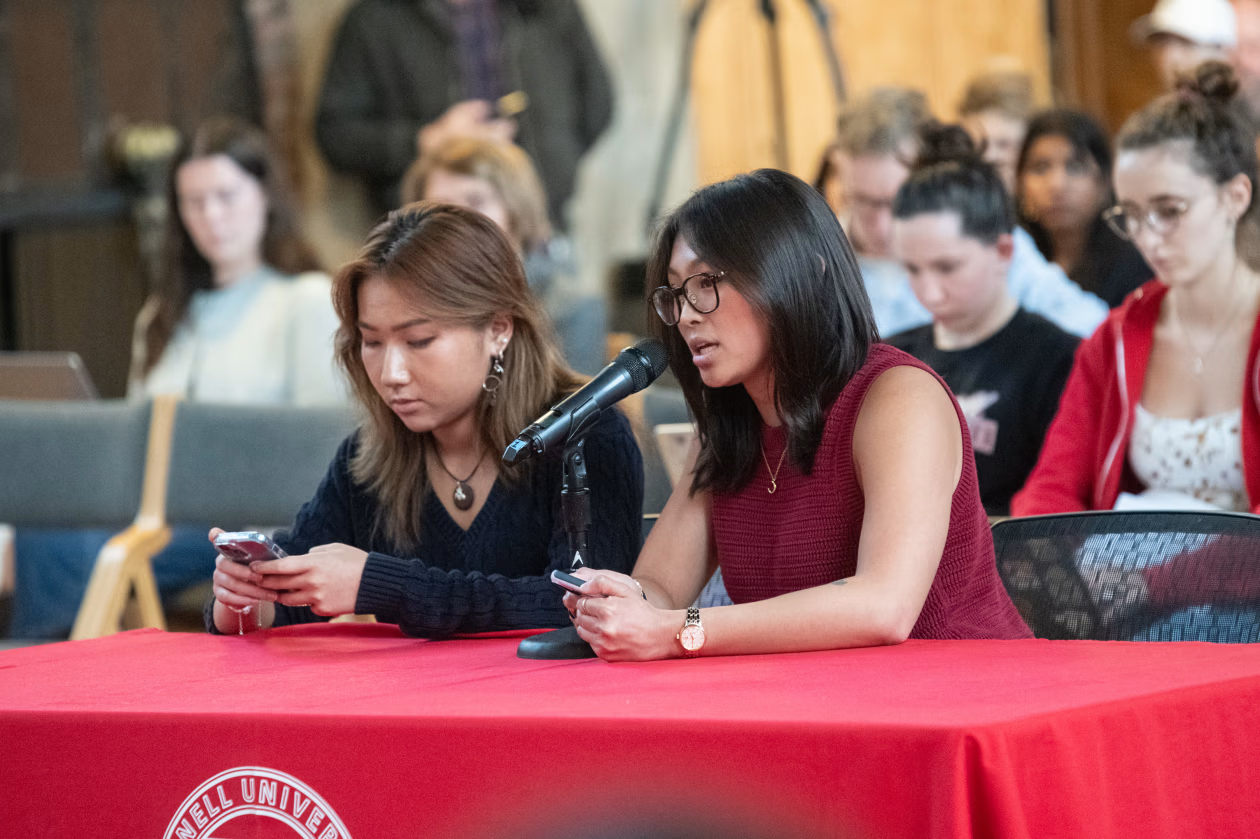
Sophia Riley Sim (right) speaks at a town-hall style meeting on Thursday. PHOTOGRAPHY BY BEN CLEETON FOR WSJ
Dozens of students attended the assembly, at Cornell’s hilly campus in upstate New York, in the wake of a civil lawsuit filed in September by a former student who said she was drugged and raped by seven fraternity brothers in 2024. The Tompkins County district attorney this week said he would reopen the probe—but late Thursday, New York Gov. Kathy Hochul said she had lost faith in him and appointed state Attorney General Letitia James as special prosecutor to investigate the case.
“New information has raised serious questions about how this case was handled,” Hochul said in a post on X.
“The young woman at the center of this case deserves to know that every fact will be examined and justice pursued,” she added.
The student assembly passed a resolution calling on Cornell administrators to provide a complete,“plain-language” explanation of the outcome of its investigation into the woman’s claims, which she first reported to campus police about two years ago. The Tompkins County district attorney declined to bring charges against any of the men, all Chi Phi fraternity members, accused of assaulting the woman, referred to as Jane Doe in the lawsuit. The district attorney couldn’t be reached at his office on Thursday.
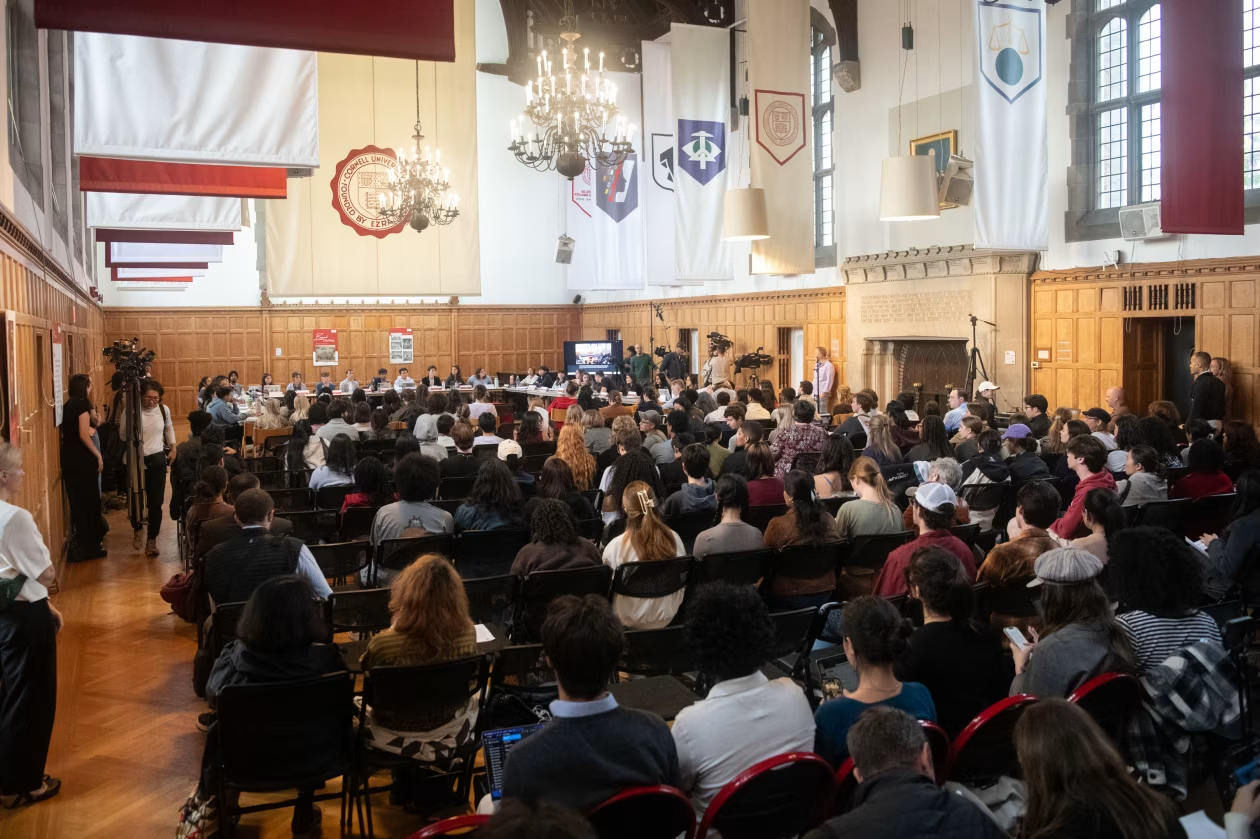
The student assembly holding the meeting. PHOTOGRAPHY BY BEN CLEETON FOR WSJ
“The problem does not end with just one victim getting their day in court,” said Eeshaan Chaudhuri, the student assembly president. “It ends when we’re able to change the culture.”
The uproar has extended beyond campus. In a letter to university leadership, hundreds of graduates have pledged to halt unrestricted donations until Cornell discloses how it handled evidence in its internal investigation.
“There are people in volumes that are reconsidering donations,” said Victoria Alandy, who graduated Cornell in 2020 and organized the pledge with her husband, also an alum.
Many of the students on campus now weren’t enrolled at the time of the alleged rape. It was hard to shake the feeling that the world was watching a place they had only just begun to know.
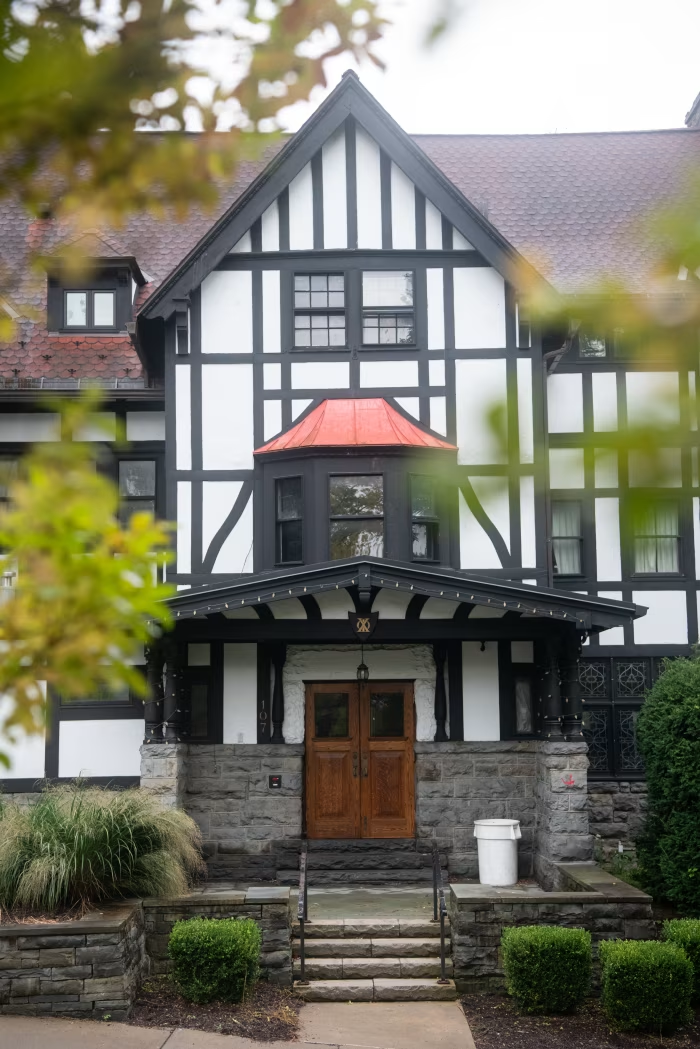
The Chi Phi Fraternity building at Cornell University. PHOTOGRAPHY BY BEN CLEETON FOR WSJ
A number of students said they planned to join a demonstration on Monday at the base of the school’s famous clock tower—including freshman economics major David Gu, who said he was stunned by how the case had become international news just weeks after he completed sexual-violence prevention training during O-week, the school’s orientation.
He and other students are eager for administrators to answer additional questions, not resolved by an FAQ posted online: Why did campus police reportedly omit key parts of the woman’s testimony, including a claim she was raped, in a report to prosecutors? Why are alleged sex crimes on campus not always handled in the criminal justice system? Why are administrators citing rigid rules, rather than giving a clear explanation to the student body about how it investigated the woman’s claims—and why it can or can’t share specific information?
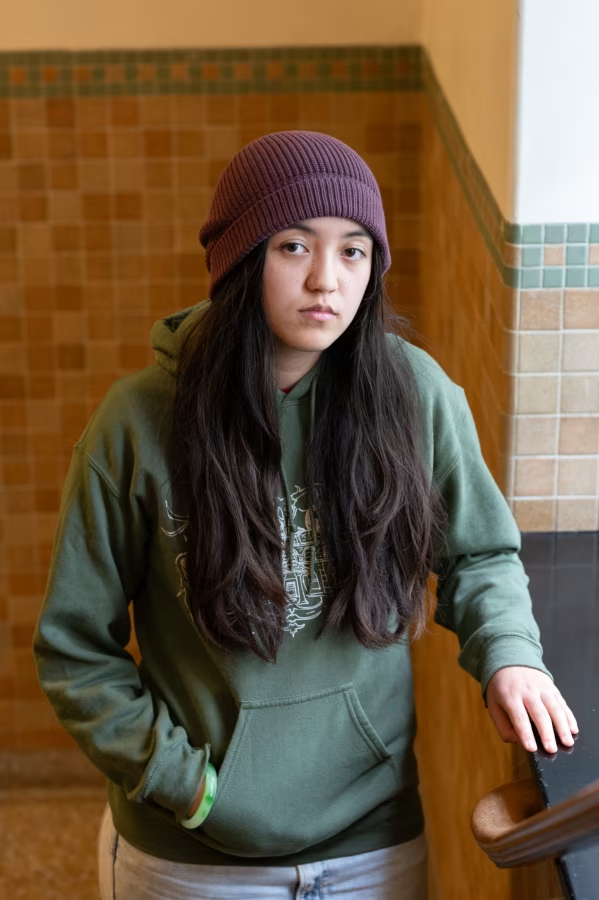
Lani Lin-Kissick. PHOTOGRAPHY BY BEN CLEETON FOR WSJ
For Lani Lin-Kissick, now a junior, the sinking feeling reminds her of two years ago, when she learned of the incident via a campus text message alert that informed students of a reported sexual assault where ketamine was used.
“Everyone was like, ‘oh yeah, that’s terrible. I hope something’s done about it—but we don’t expect Cornell to do anything,’” said Lin-Kissick, an information science and biology major, who was in the Anabel Taylor Hall meditation room, where she’d gone to decompress from the week’s heaviness.
Tompkins County District Attorney Matthew Van Houten said this week that his office decided not to press charges in 2024 because the woman’s initial sworn statement “did not allege that she was drugged against her will or gang raped.”
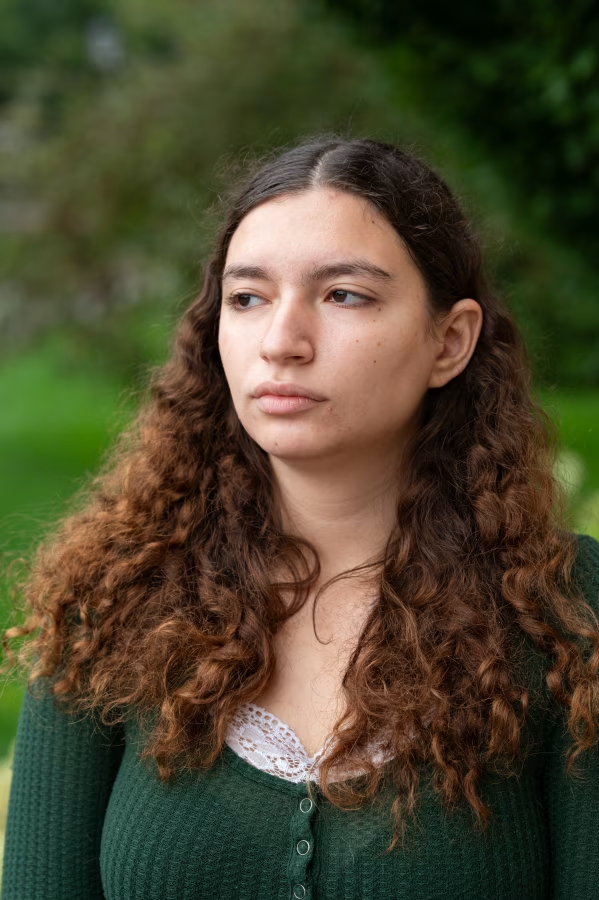
Hannah Shvets. PHOTOGRAPHY BY BEN CLEETON FOR WSJ
Hannah Shvets, who serves on the common council in Ithaca, the home of Cornell, said she would like to see the university transfer all violent crime reporting to Ithaca’s police department. The senior labor relations major supports a moratorium on student-event permits, proposed due to what the mayor called the school’s “appalling response” to the allegations. The common council will vote to codify the moratorium on Wednesday.
In interviews Thursday, students were wrestling with how to regulate a Greek-life culture linked with drug use at parties and whispers about which frats to avoid, but which also underpins the school’s work-hard, play-hard culture.
“We need to take a big step back and reassess how we’re looking at our social scene here on campus,” said Chaudhuri, the student assembly president. He said fraternity and sorority leaders had signed onto a task force that has begun to discuss what those changes might look like.
Write to Jared Mitovich at jared.mitovich@wsj.com