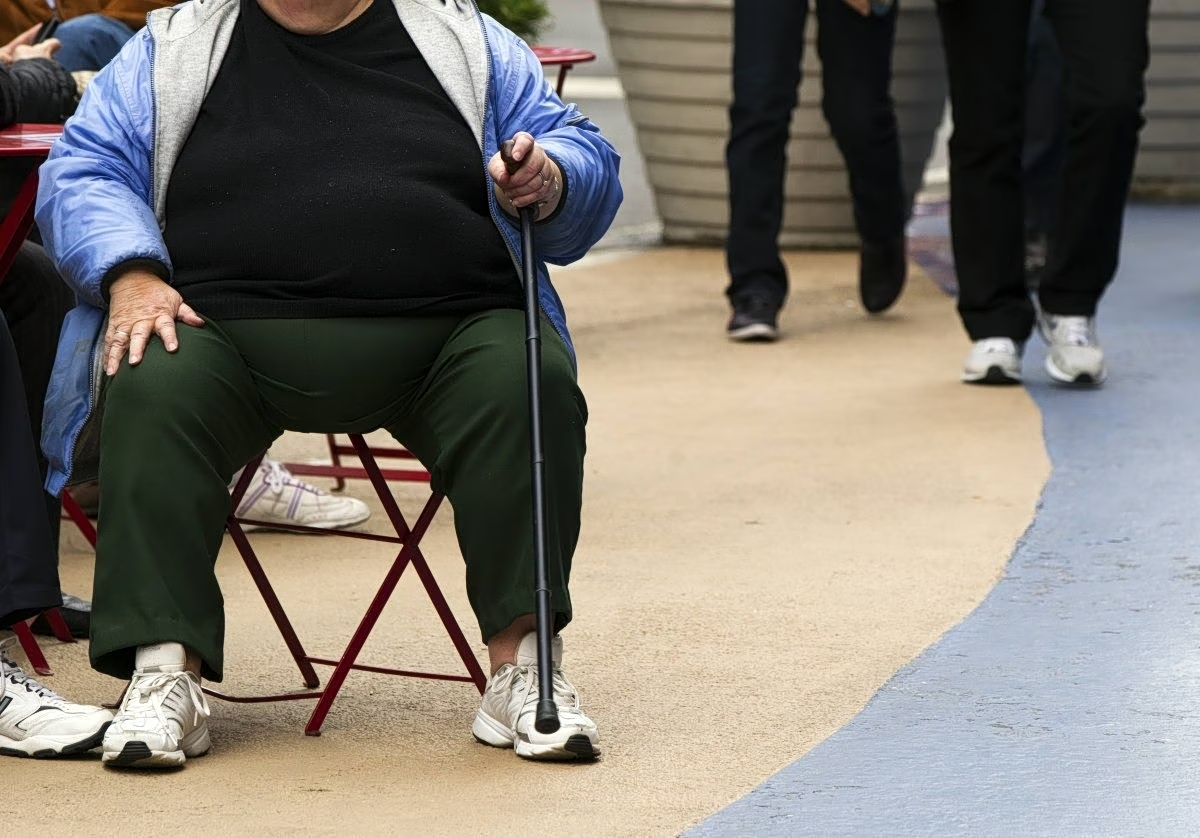
More than half of Europe’s population, 56%, is either overweight or living with obesity, according to 2024 figures, and the same applies to one in three children. Children and adolescents with obesity are five times more likely than their healthy-weight peers to remain obese as adults.
Obesity is linked to more than 200 diseases, from type 2 diabetes, cardiovascular disease and several cancers to neurological disorders, fatty liver disease, chronic respiratory conditions, osteoarthritis and digestive disorders.
Obesity rates in Europe are now 75% higher than in 1990, according to a new study by the Office of Health Economics, commissioned by the European Federation of Pharmaceutical Industries and Associations (EFPIA). The study examined the health and economic toll of excess weight in eight countries: Germany, France, Italy, Spain, Ireland, Greece, Romania and Britain.
It found that excess weight accounts for 278,000 deaths and 8 million years of healthy life lost each year. Its economic cost ranges from 0.6% of GDP in Romania and 0.8% in France to 1.3% in Germany and 1.4% in both Greece and Britain.
In every country studied, the costs exceed public spending on housing. In Greece, they amount to more than half of defense spending.
Lost productivity, including premature death, economic inactivity, work absences, reduced output and time spent caring for sick relatives, accounts for between 18% and 58% of the total cost across the eight countries.
Overweight and obesity cost Greece 3.4 billion euros a year, or 328 euros per resident, according to a new study.
Across Europe, per-capita costs are highest in Germany, at 662 euros, and Britain, at 625 euros, and lowest in Romania, at 131 euros.
In Greece, 2.3 billion euros, or 68% of the total, goes to direct healthcare spending, driven mainly by type 2 diabetes, musculoskeletal disorders and cardiovascular disease. The remaining 1.1 billion euros comes from indirect losses, with work absences and reduced productivity costing 300 million euros each.
Greece’s relatively high rate of work absences pushes indirect costs up, while low employment among older people, the age group in which high body mass index is most common, limits productivity losses.
As the EU moves ahead with its Safe Hearts Plan, the study called for a coordinated response to obesity, diabetes and cardiovascular disease. It also urged that obesity be formally recognized as a chronic disease, with greater focus on prevention, treatment and tackling stigma.