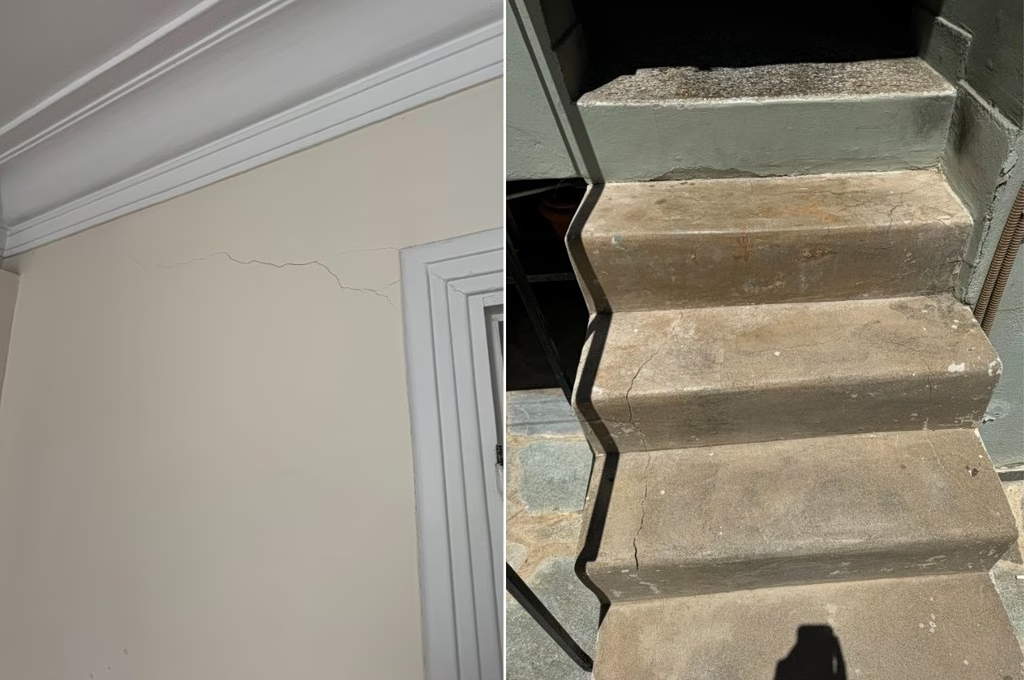
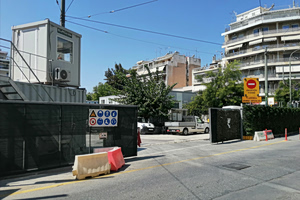
Three more buildings in Kypseli, a densely populated neighborhood in Athens, have been identified as having been affected by construction of Metro Line 4, according to new data submitted to the Municipality of Athens by Elliniko Metro, the state company overseeing the project.
The information has been provided to engineers appointed by the municipality to represent residents and is now being reviewed as part of the necessary technical assessment of the buildings.
Residents of Kypseli are demanding immediate answers over cracks and other damage that have appeared in apartment buildings following the passage of the tunnel-boring machine, while also calling for the release of all available technical data.
They have announced a protest for Saturday, October 3, at 6 p.m., at Kypseli Square and Fokionos Negri Street, under the slogan: “We will not pay for the Metro with our lives.”
Buildings moved from green to yellow and red categories
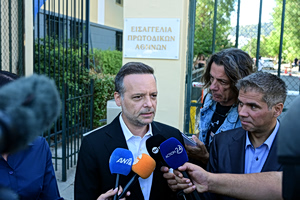
Athens Mayor Haris Doukas, who attended the residents’ press conference, focused on apartment buildings located above the point where the tunnel-boring machine has stopped.
“The problem with the apartment buildings in the area remains, especially on Spetses Street, above the point where the tunnel-boring machine has stopped,” Doukas said.
He said inspections carried out before the machine passed through had classified the buildings as being at a low level of risk, in the “green” category.
Their classifications subsequently changed, however, with some buildings moving into the “yellow” category and others into the “red” category.
“In some cases,” Doukas added, “the same result remains even after secondary inspections, making structural assessments and the implementation of measures necessary.”
Calls for structural checks and safety measures
Doukas said uncertainty would continue as long as it remained unclear whether the buildings had structural problems.
He called for temporary accommodation to be provided to residents where necessary and for structural reinforcement work to begin immediately on buildings found to have problems.
The issue of access to technical information from the Metro project was also raised by Dimitrios Kaliampakos, a professor at the National Technical University of Athens and one of the engineers examining the data on behalf of residents.
Kaliampakos argued that technical information concerning a public works project should not be treated as the “property” of any particular institution. He said the data should be available to interested residents and independent experts who are being asked to assess the situation.
Residents warn other neighborhoods could be affected
Alexandros Koutroularis, a Kypseli resident and representative of the residents’ initiative, said safety could not be compromised.
“We will not allow anyone to play with people’s lives. Safety is not negotiable,” he said.
“When we have phenomena so extensive, with damage and subsidence exceeding the limits by four times, the issue is not aesthetic. It is a matter of safety and protection of human life.”
Koutroularis warned that the concerns could extend beyond Kypseli as Metro construction continues through densely built parts of Athens.
“Today it is Kypseli. Tomorrow it will be Exarchia, Kolonaki, Goudi,” he said, adding that measures were needed to prevent the same phenomenon from being repeated as the Metro network expands.