 Μake us preferred on Google
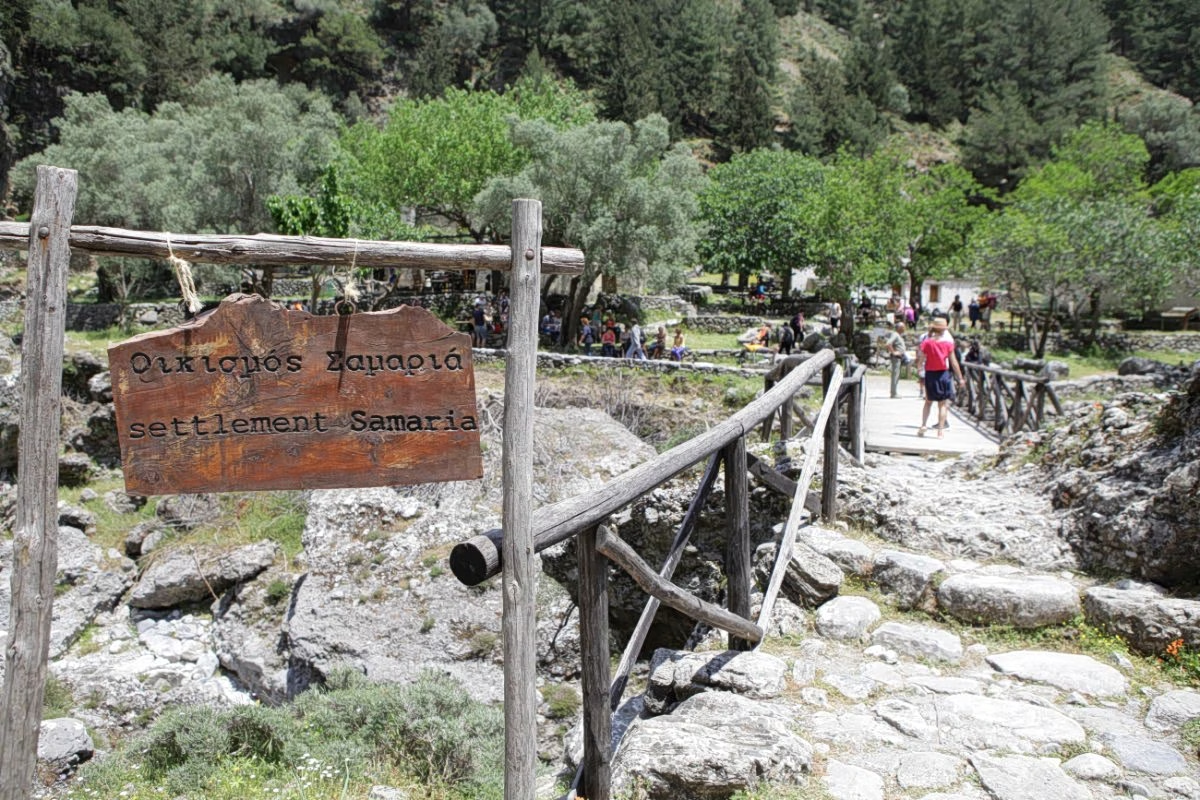
 A growing dispute has emerged over the management and reopening of the Samaria Gorge, one of Greece’s most visited natural attractions, located on the island of Crete. The disagreement has intensified between local communities, scientists, and the organisation responsible for managing protected areas.
The gorge has remained closed from both entrances following severe winter weather that caused extensive damage to its trails and increased water levels along the river, particularly near a narrow passage known locally as “Portes.”
The gorge, a major tourist attraction in southern Greece, did not open on May 1 as usual this year. Local residents, particularly in nearby coastal villages that depend heavily on tourism, have expressed strong frustration, accusing authorities of delaying restoration work and reopening procedures.
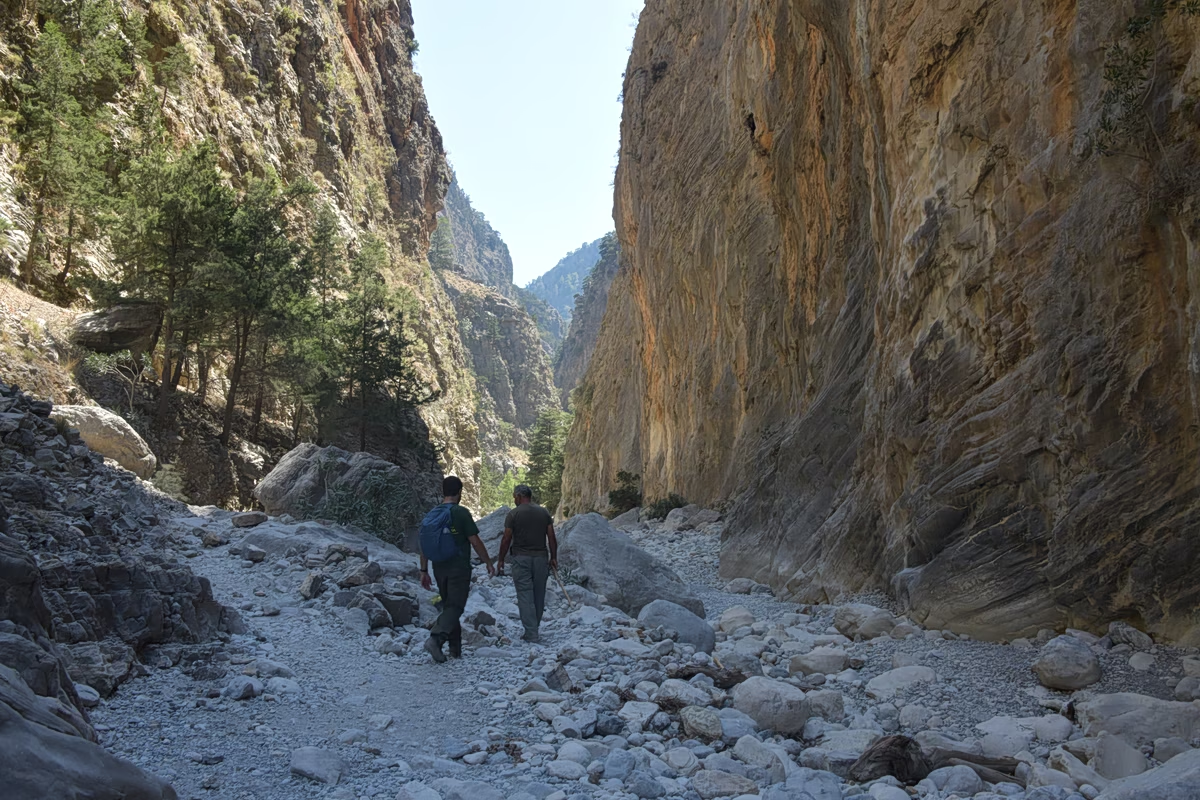
The closure is linked to extensive damage caused by heavy winter rainfall. Rising water levels and landslides near critical sections of the gorge have made access unsafe in several areas.
The organization responsible for managing the national park, known as the Natural Environment and Climate Change Agency (OFYPEKA), has stated that reopening will only take place after repair works are completed and safety inspections are carried out.
These inspections include assessments by professor of natural disasters Efthymios Lekkas, as well as the Greek Geological and Mineral Research Authority. According to OFYPEKA, only after these evaluations will the gorge be declared safe for visitors. Reopening has been postponed to mid-May at the earliest, pending repairs and a series of safety inspections by experts.
Lekkas and other experts have stressed that these steps are necessary due to the unstable conditions inside the gorge following extreme rainfall and flooding. Reports indicate that water levels in some areas reached depths of up to two meters.
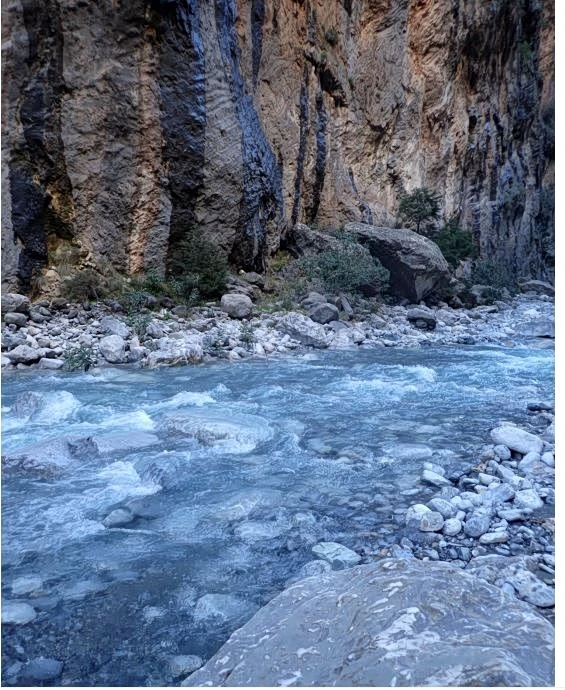
The river swelled following this year’s heavy rainfall, a fact already highlighted by the Natural Environment and Climate Change Agency (OFYPEKA) in letters sent to local authorities in early April.
Local Communities Push Back
Local authorities and residents, particularly in the village of Agia Roumeli, argue that the reopening is being unnecessarily delayed. They claim that restoration works began too late, slowing down the process. Others suggest that the region should reduce its dependence on a single attraction and promote alternative tourism sites.
However, OFYPEKA officials say contractors were already working in the area in mid-April, but further severe weather events, including storms over the May Day holiday period, caused additional delays.
A Gorge Marked by Recent Tragedies
The debate comes after a series of serious accidents in recent years that have shaped safety policies in the area.
In August 2023, a Spanish visitor suffered severe injuries, including amputations, after being struck by falling rocks triggered by an earthquake. In September 2024, a 35-year-old German tourist was killed after a rock fell following heavy rainfall.
These incidents led to a scientific study led by Efthymios Lekkas’ team at the National and Kapodistrian University of Athens, which identified hazardous zones within the gorge and recommended protective measures.
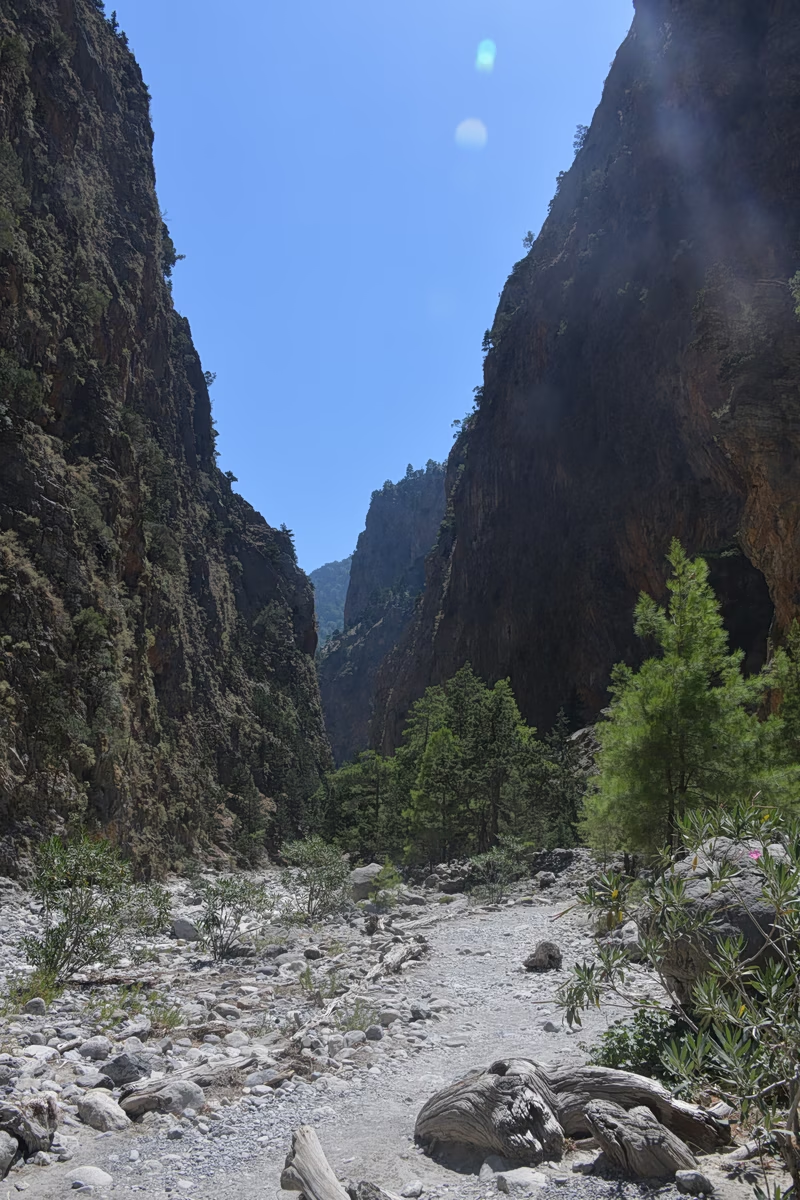
Mr. Lekkas attempted to carry out an on-site inspection of the Samaria Gorge during the three-day May Day holiday, but weather conditions did not allow it.
Ongoing Tension Over Opening Dates
Despite improvements such as better weather forecasting systems, protective works, and safety equipment including thousands of helmets provided for visitors, tensions remain high.
Local officials, including municipal leaders from Sfakia and surrounding areas, acknowledge the importance of safety but stress the economic dependence of local communities on the gorge’s seasonal opening.
A pilot model used in another nearby natural site has shown increased visitor numbers and improved infrastructure investment, encouraging some local stakeholders to consider similar arrangements for Samaria Gorge. However, officials say the gorge’s scale and complexity make any change more difficult.
At the same time, scientists and OFYPEKA officials maintain that the gorge’s steep terrain and natural instability make continuous reassessment essential.
As Lekkas has stated, the gorge’s condition is “dynamic,” meaning that opening dates cannot be fixed and must depend entirely on weather and ground conditions.
The result is an ongoing standoff between economic pressure and scientific caution, as one of Greece’s most iconic natural landmarks remains closed pending further safety clearance.