 Μake us preferred on Google
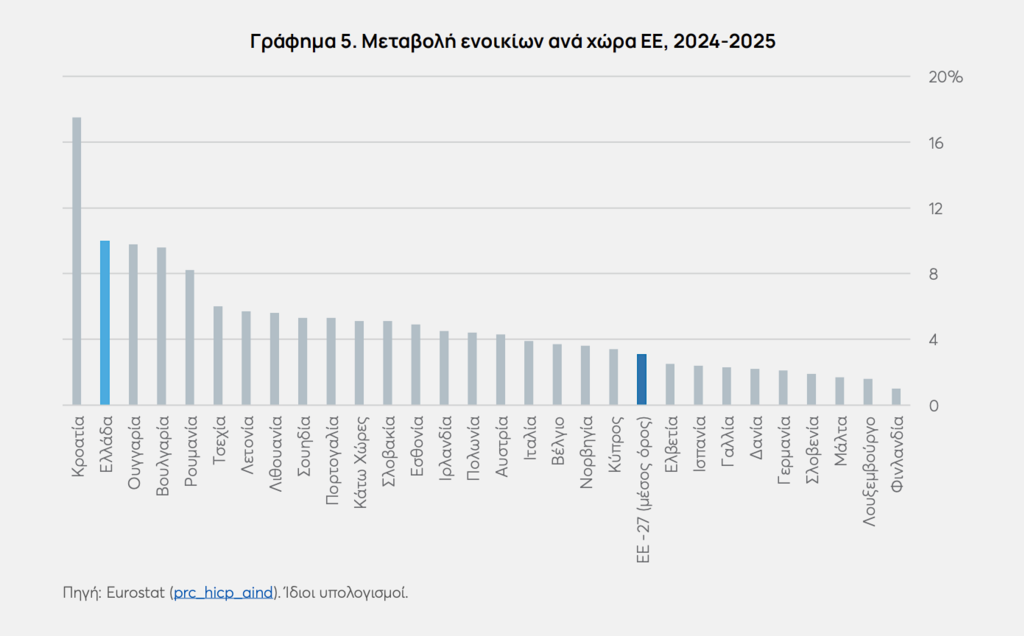
 Greece recorded the second-highest annual rent increase in the European Union in 2025, rising by 10.1%, behind only Croatia (17.6%), according to a study released this week by the Center for Liberal Studies – Markos Dragoumis (KEFiM).
Drawing on data from Eurostat and the Bank of Greece, the report highlights the severe burden facing renters in Athens. The average rent for a one-bedroom apartment now absorbs 70.2% of the average monthly salary, while a two-bedroom apartment reaches 93.6% – more than double the EU-27 average of 45.6%.
By comparison, rent-to-income ratios across the EU average between 31-34% for one-bedroom homes and around 46% for two-bedroom units, demonstrating the disproportionate strain on Greek households.
Analysts note that rents in Greece have effectively converged with European levels, while wages remain significantly lower, amplifying affordability pressures.
Other key takeaways of the report include:
– across the EU-27, house prices rose by 5.5% in 2025, while rents increased by a more moderate 3.2%
– rents rose sharply in Greece between 2000 and 2011 (+53%), declined during the crisis years from 2011 to 2018 (-26%), remained largely stagnant until 2021, and have surged again since 2022, surpassing 2010 levels in 2025
– house prices followed an even more volatile path: nearly doubling between 2000 and 2008, dropping steeply during the financial crisis (-43% in Athens between 2008 and 2017), and rebounding strongly since then, with prices in Athens up 86% between 2017 and 2025, now exceeding pre-crisis levels
– the five countries recording the highest rent increases in 2025 were Croatia, followed by Greece in second place, Hungary, Bulgaria and Romania.
“The housing crisis extends beyond the real estate market; it affects the daily lives, prospects, and quality of life of thousands of households,” said KEFiM President Nicos Rompapas. He emphasized that addressing the issue requires policies that boost housing supply, correct market distortions, and support vulnerable groups, while avoiding “ineffective measures such as rent caps”.
With rents consuming more than two-thirds of average salaries, independent living is increasingly out of reach for young workers, couples, and new families. The rising cost of housing is eroding disposable income, limiting savings and consumption, and deepening social and generational inequalities.