 Μake us preferred on Google
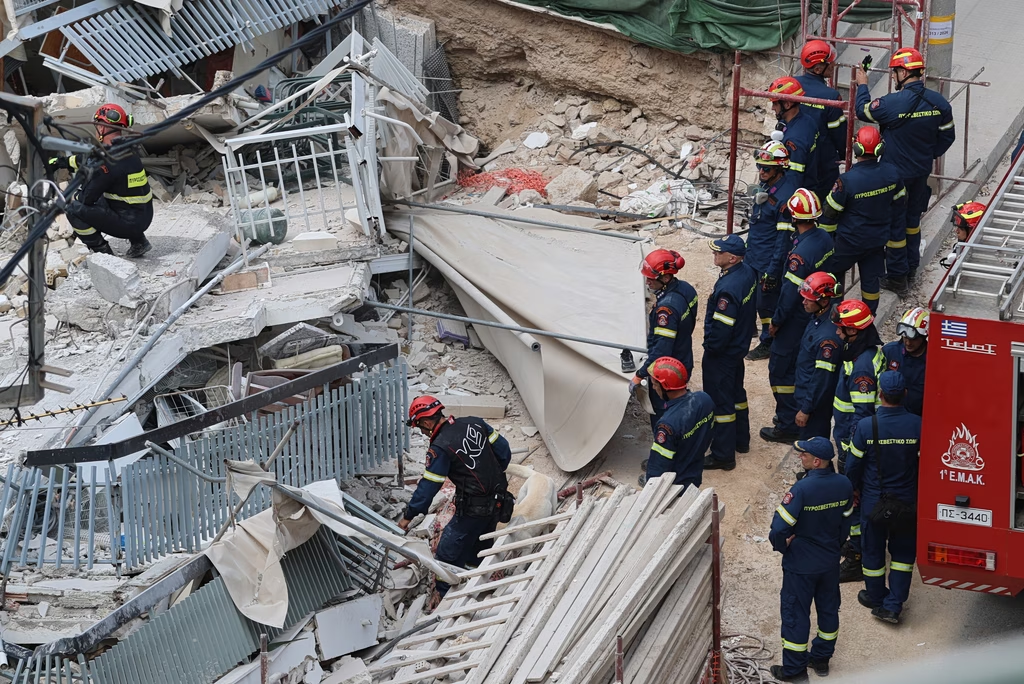
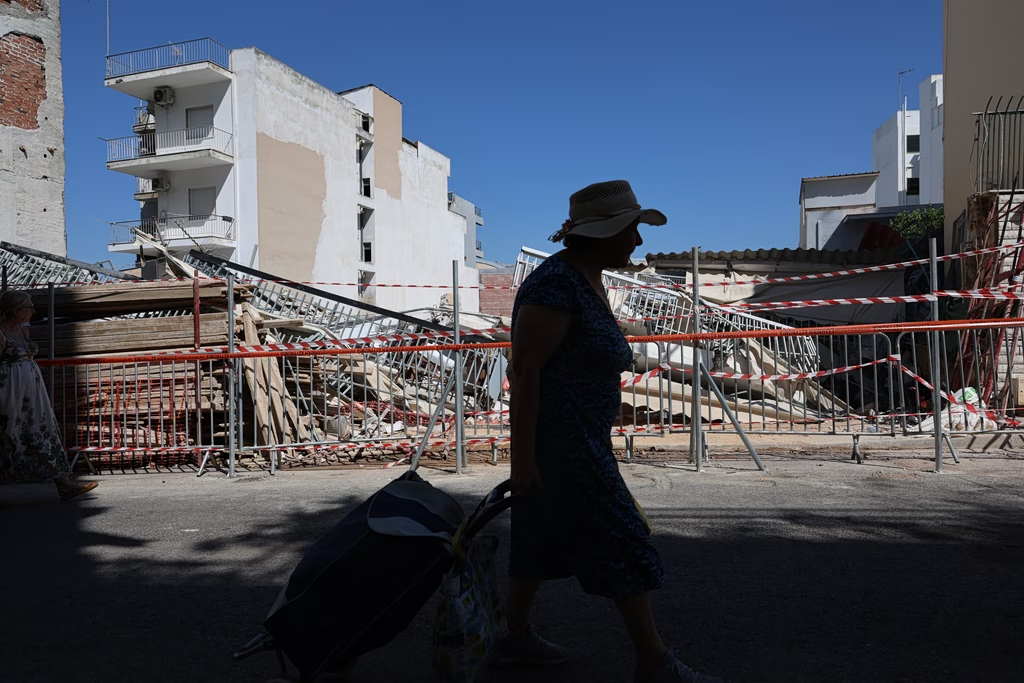
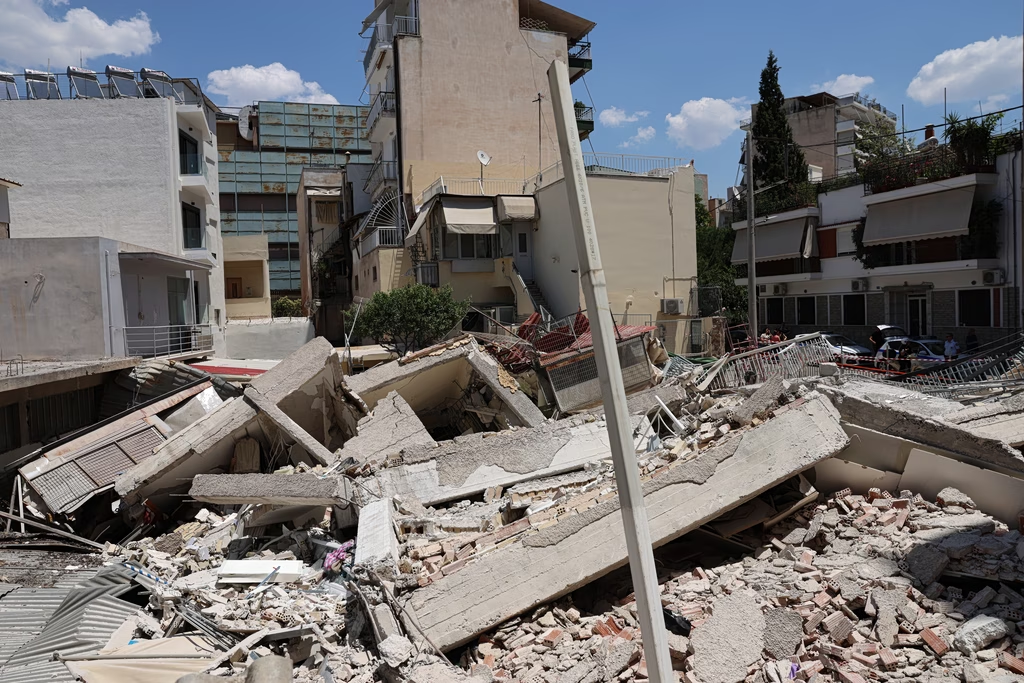
 Tuesday’s collapse of the four-story apartment building in Petralona put a spotlight, in the most dramatic way possible, on the risks tied to construction work carried out next to existing buildings, particularly when it isn’t preceded by proper studies and preparation. For context, the demolition of the neighboring building had reportedly wrapped up about a month earlier, and foundation work had begun for a new five-story building on the site.
That raises an obvious first question: could residents of the building that collapsed have done anything to prevent it? “Absolutely nothing,” civil engineer Vangelis Matragos, a member of the Technical Chamber of Greece’s central council, told Ta Nea.
The second question is harder: what actually went wrong? A clear answer isn’t possible yet, since the official investigation hasn’t concluded. According to Matragos, demolishing a building next to other structures, combined with excavation work below the neighboring building’s foundation level to create basement space for the new construction, creates an inherently difficult and risky situation.
The key issue
That, he says, is where the investigation needs to focus. Specifically, on the shoring measures, whether temporary or permanent. That leads to a third question: were the shoring works built correctly, and on time, or was time lost along the way? For now, that question also remains unanswered.
The collapse also underscores the critical role of the supervising engineer, whose responsibilities can include modifying the existing plans and construction method if site conditions demand it, Matragos explained.
What is certain is that foundation work seriously disrupts a building’s structural balance, and that disturbing the ground around a neighboring structure can lead, as it apparently did here, to loss of support, tilting, and ultimately structural collapse. Matragos argued that the state should place more weight on safety when issuing building permits for new construction, rather than focusing mainly on appearance. He noted that a photorealistic rendering of a new building is currently a mandatory part of the permit process, while a geotechnical study is not.
Aging buildings
Tuesday’s collapse also raises safety questions about the thousands of aging buildings across Greece. Experts note that reinforced concrete typically has a service life of around 50 years, which naturally raises the question of how much longer many of these buildings can hold up.
Matragos said the incident also puts another, related issue on the table: renovations like energy-efficiency upgrades that are carried out without any requirement for a structural review. He noted that thermal facades, heavy glazing and new window frames add real weight to a building, loads that were never factored into structures designed 60 or 70 years ago.