 Μake us preferred on Google
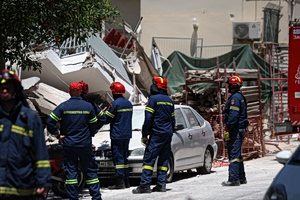
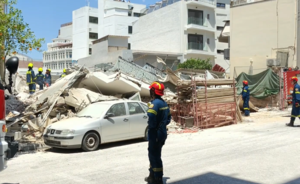
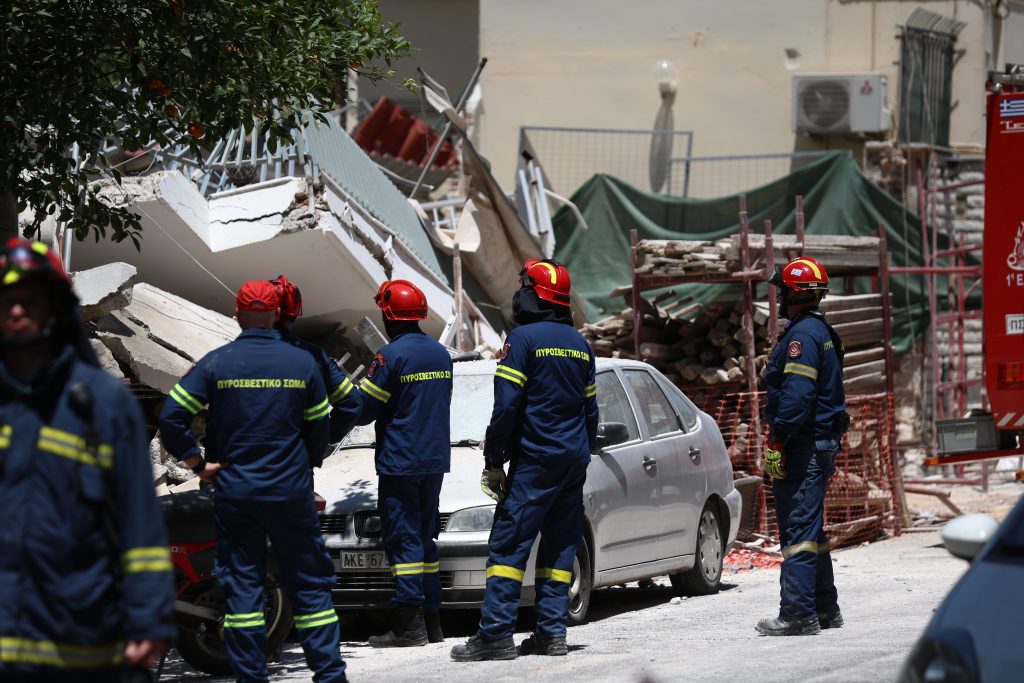
 Panic swept through Athens’ Petralona neighborhood on Tuesday afternoon when a four-storey apartment building collapsed within seconds while construction work was underway on an adjacent lot. As part of the investigation, authorities have arrested five people: three engineers—one of whom prepared the building’s structural study for the new development—the contractor, and the owner of the neighboring property.
The five suspects are due to appear before prosecutors at the former Evelpidon court complex on Wednesday (July 1) and are expected to request additional time before giving formal statements.
According to reports, the Municipality of Athens has already provided financial assistance to the residents of the collapsed building to cover their immediate expenses. Temporary accommodation was also arranged, although the displaced residents chose to stay with relatives and friends.
How the Building Collapsed
According to eyewitnesses, shortly after 1:00 p.m., a loud cracking noise was heard before the building began to lean sharply and then collapsed completely.
Initial reports raised fears that people had been trapped beneath the rubble, with early information suggesting that four individuals were missing. However, it was later confirmed that they had managed to leave the building in time and contacted relatives to reassure them they were safe.
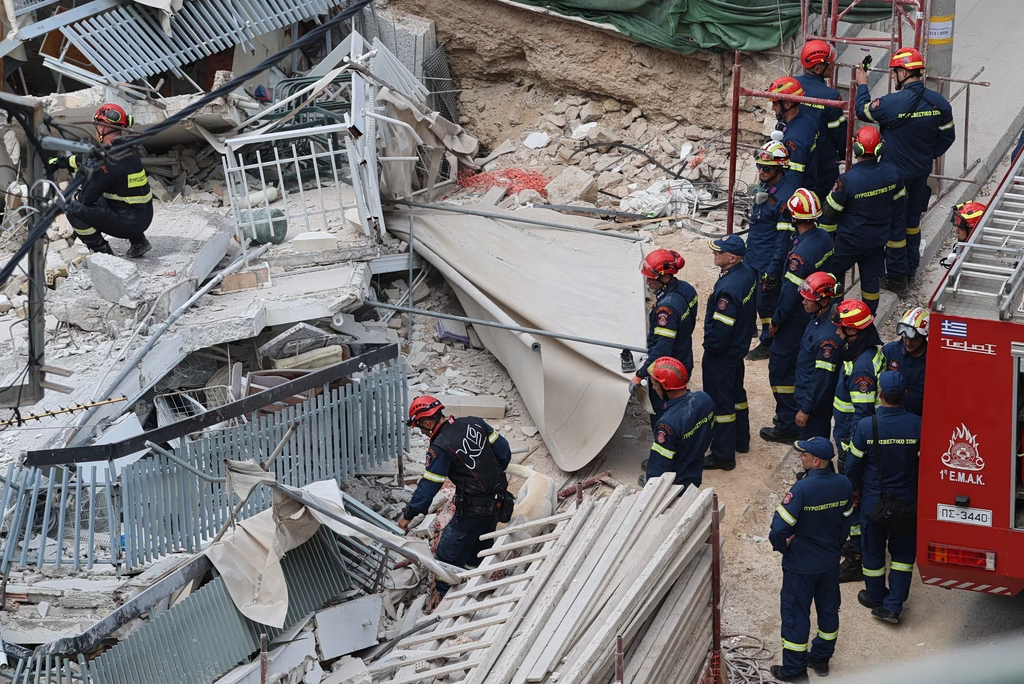
Firefighters and members of Greece’s Special Disaster Response Unit (EMAK), assisted by specially trained search-and-rescue dogs, conducted extensive searches through the debris but found no one trapped.
The apartment building, which had been constructed in the 1970s, collapsed while excavation and foundation work for a new building was taking place next door.
Authorities are investigating the cause of the collapse, with initial assessments focusing on the construction work carried out on the adjacent property.
“What we have seen and learned since yesterday, along with the documents submitted to the city’s urban planning department, is that there are essentially two neighboring properties: Alkminis Street 20 and Alkminis Street 22,” Paris Charlavtis, Athens Deputy Mayor for Technical Services, Municipal Property, and Digital Governance, told MEGA TV.
“At Alkminis 22 stood the existing apartment building that collapsed. At number 20 there had been an older structure that received a demolition permit, followed by a permit for new construction. Once the demolition was completed and the excavation for the first basement level had been finished, workers began pouring concrete for the foundations. That was when the collapse occurred.”
“Early that morning, one building had started separating from the neighboring structure and was visibly leaning. After monitoring the situation for about two hours, there was nothing anyone could do. It had become irreversible,” Charlavtis added.
“In general, deep excavations in this area are avoided because of archaeological considerations. Therefore, I am certain the excavation had not reached five meters. The first basement was approximately three meters deep.”
New Details on the Collapse
Additional information about the Petralona building collapse was revealed on Live News by crime reporter Vassilis Lambropoulos of the Greek newspapers To Vima and Ta Nea.
According to Lambropoulos, the apartment building that collapsed had been built around 1970. Buildings of that era typically did not include basements and were instead supported by foundations only about one to 1.3 meters deep. Civil engineers describe the soil in the Petralona area as relatively loose, meaning a geotechnical study should have been carried out before excavation. Such studies cost approximately €4,000 to €5,000, and many developers reportedly avoid them because of the expense.
The new apartment building, by contrast, required significantly deeper foundations under modern construction standards. Excavation had reportedly reached a depth of approximately five to six meters to accommodate underground storage areas.
The older apartment building had also been supported by a retaining wall that had since been excavated directly beneath its foundations.
Live News reported that, about 15 days before the collapse, technical experts had been called to inspect the site. According to witness accounts, they recommended that the engineers responsible for the new building apply sprayed concrete (shotcrete) to stabilize the adjacent soil because there was a risk that the neighboring building’s ground support could collapse. That recommendation was reportedly carried out.
However, there are also reports suggesting that sprayed concrete was considered too expensive and was ultimately not fully implemented because of the cost. According to the report, the engineers allegedly decided to leave the excavation temporarily unsupported, planning to stabilize it later when the reinforced concrete foundations of the new building were completed.
According to information that remains under investigation, the engineers have also told police that a leak from an underground utility line may have weakened the soil beneath the older apartment building, contributing to the collapse.