
 Μake us preferred on Google
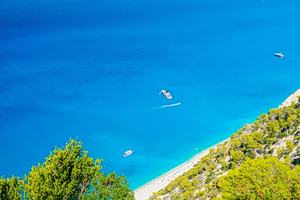
 Spyros watches the stormy Aegean Sea from his vacation home. He went to bed late, and the heaviness in his eyes, combined with the glare of the sun and a lack of caffeine, is gradually lulling him into a stupor. But he has to concentrate. In the next few minutes, his colleague, who woke him around nine, will call again, and together they will try to solve a problem that has arisen with the software. Spyros is on Tinos, while his colleague is in Athens. Spyros has taken a few days off; his colleague has not. By the end of the day, regardless of each other’s workload, they both will have worked. “It’s always the same thing,” Spyros says, as the sound of the coffee machine can finally be heard in the background.
The image of a sunbed by the water is now accompanied by notifications from a device. For a large number of workers, summer vacation is little more than a change of scenery, with the pressure of work simply transferred outside the office and placed in front of the sea. The idea of fully disconnecting is increasingly becoming a luxury, adding the burden of invisible work to vacations, even when that work lasts only a few minutes, as in Spyros’ case.
The ‘urgent’ message follows you everywhere
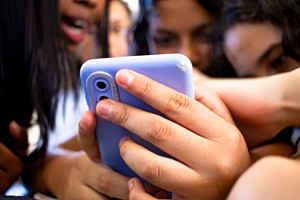
This shift is being driven directly by the technological trap of constant connectivity. Apps and company emails remain open year-round, with the smartphone serving as a digital channel that carries outstanding work tasks in an employee’s pocket. As a result, every notification becomes a potential emergency. At the same time, the widespread adoption of remote work has further blurred the boundaries, fostering the expectation that if someone can work from anywhere, they should be available at any time.
“I usually know whether I need to keep an eye on my phone even when I’m on vacation. Of course, it’s not always up to me,” says Fanis Chr., 32. “Even if I know I need to keep an eye on it, the sound of emails distracts me. It doesn’t upset me, but it puts me in a mindset of having to think about work, just as I would when I’m at the office, while I’m on vacation. If I know I don’t need to do anything, I’ll put my phone on silent for a few days and check it only once a day. Unfortunately, I always respond to urgent messages, and if for some reason I don’t see one in time, I’ll feel a little guilty,” he says.
The cost of this situation is primarily psychological. The inability to disconnect creates what is known as workplace FOMO (Fear of Missing Out) the constant fear that being absent from what is happening within the company will lead to a loss of control, misunderstandings or being sidelined. At the same time, the guilt associated with doing nothing can make an employee feel that failing to respond to an email outside working hours amounts to a lack of professionalism.
The rest that never comes
Marina M., 30, experiences this pressure as a constant internal deadlock. “When I’m going through a stressful period or I’m on vacation during a particularly busy time at the office, I usually feel like I’m sinking, but at the same time I feel that I need to stay alert, it’s a very dangerous duality. When I choose to check my phone, I’m clearly doing it by choice, which is also problematic. I don’t feel guilty if someone messages me because I respond 99% of the time. I respond as briefly, directly and informatively as I can so that I don’t get additional questions, and usually they don’t message me again,” she says.
The result of all this is what is known as vacation burnout: the brain remains on alert, rest is never fully achieved, and returning to everyday life is accompanied by physical and mental exhaustion.
Psychologist Nasia Fanti explains the deeper roots of this behavior and how modern culture shapes our psychological makeup: “The constant need to prove and reinforce our professional value and self-image through unlimited availability to our jobs creates what is known as ‘hustle culture.’ This is something that has been embedded and continually reinforced by workplace culture, both in large corporate environments and in small businesses: the idea that in order to be worth your salary, get a raise, advance and be recognized, you have to constantly give more than what is asked of you. More hours, availability even outside working hours, minimal vacation days,” the psychologist says.
The guilt starts in childhood
According to Fanti, however, the problem begins much earlier. “During childhood and adolescence, many people felt guilt or even shame when they were doing nothing. Inactivity and rest were often labeled as ‘laziness’ and required immediate action. When taking a break is given a negative connotation, that is reflected in vacations. So-called ‘vacation burnout’ occurs when time off causes further exhaustion instead of rest, as limited time puts pressure on us to disconnect and see everything, meaning our pace never actually slows down. In the long term, this creates a vicious cycle of burnout and anxiety disorders that affects performance, interpersonal relationships and a person’s ability to function,” she stresses.
The trend is particularly pronounced in Greece, where the working environment is characterized by high intensity. According to official Eurostat data, Greece consistently ranks first in the European Union in terms of actual hours worked, with the average reaching 39.6 hours per week, compared with the EU average of 35.9 hours. More than 12% of workers report that they regularly work more than 49 hours a week.
When a team manages to provide a safety net, disconnecting becomes possible, Fanis notes. “I feel that I’ve rested when the team covers for one another. There have been times when I haven’t needed to deal with anything at all during my entire vacation. But when I have to get involved, even a little, it affects my rest,” he says emphatically.
Within this context, the legally established “Right to Disconnect,” which guarantees employees the ability to refrain from digital communication outside working hours and during their vacations, remains, in practice, without any meaningful effect. Spyros, who went to Tinos to celebrate his friend’s wedding and ended up remotely solving a software problem, is proof of that. And he hadn’t even had his coffee.