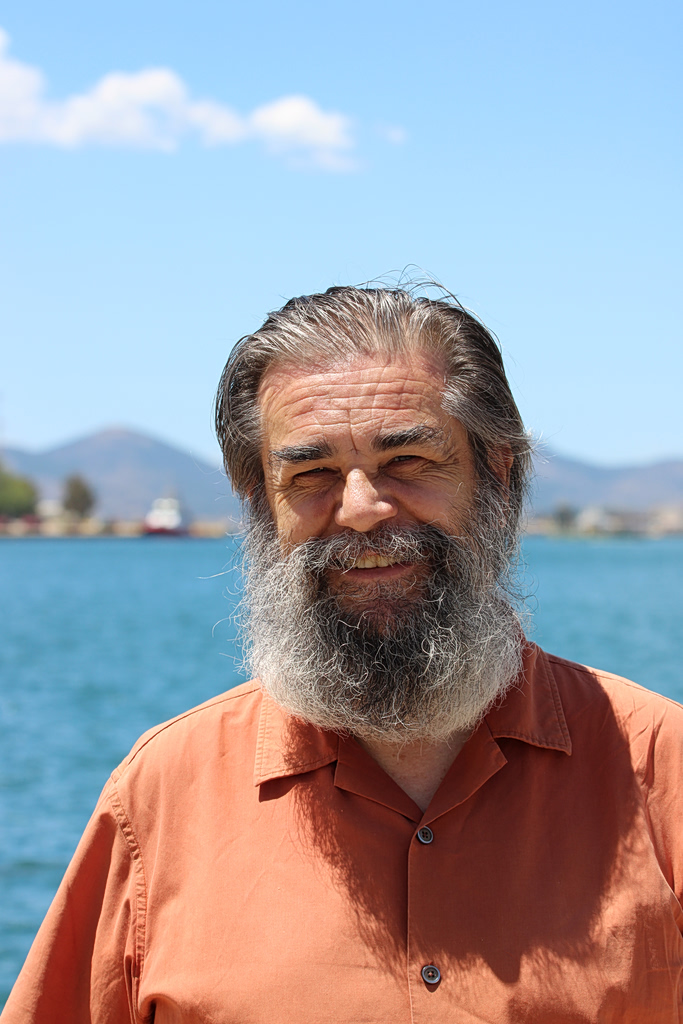
Vasilis Adrahtas belongs to that rare category of scholars who move with equal ease between St. John of Damascus and the Dreaming of Indigenous Australian people. He studied Theology at the National and Kapodistrian University of Athens, specialized in Byzantine philosophy, earned a Ph.D. in the Sociology of Religion at Panteion University, and subsequently a second Ph.D. in Australia, focusing on Indigenous Australian religions. For ten years he served as president —and is currently secretary— of the Sydney Branch of the International Society of Friends of Nikos Kazantzakis, while his latest work is a collection that imagines a dialogue between Kazantzakis and the Indian mystical philosopher Sri Aurobindo. His “Land and Landscape” series of events, under the auspices of the Australian Embassy, brought original works by Indigenous Australian artists to Greece. He was recently honored with an award from the Writers Capital International Foundation —the award was presented to him by the Australian Ambassador to Greece, Ms. Alison Duncan.
You often say that Kazantzakis is our preeminent religious writer. Doesn’t that sound paradoxical for an author who found himself in the crosshairs of the Church?
And yet, I consider him the most religious writer we have—even more so than Papadiamantis. He is one of the major “hidden theological” figures of modern Greece, a truly great theologian who simply did not write in a theological idiom. Kazantzakis was fascinated by religiosity: he was interested in the interconnections, the interactions, the hybrid forms — how religions intersect and how one influences the other. In Europe, he followed well-known schools of thought —existentialism, Bergson, Whitehead. For Greece of his time, however, he was standing out — as we say in Greek — “like a fly in the milk” (like a sore thumb). And he paid dearly for it.
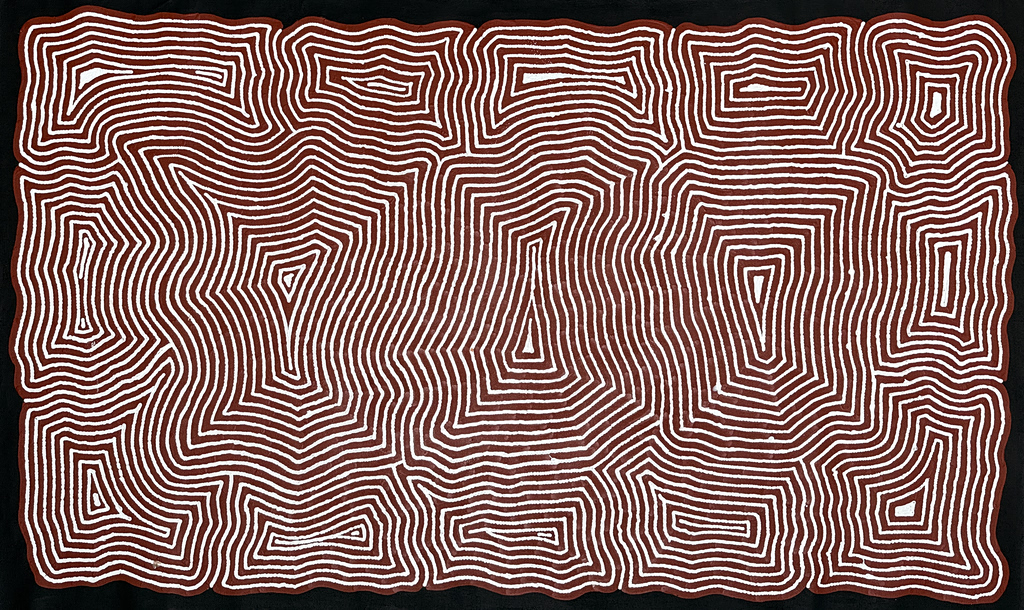
Walter Jangala Brown, Tingari Cycle
Many, however, view him today as outdated.
Now we may view in a more critical-minded way the specific content he gave to his answers. But the ideas themselves—transcendence, the search for redemption, the essence of truth, and immortality— are never outdated. His work retains its value precisely because it poses these questions. And let’s not forget that he is a writer of a stunning prose and a unique style
—something that, unfortunately, is lost in translation.
If one reads him today through the lens of the crisis of climate change and sustainability, one discovers an almost “ecological” Kazantzakis. The idea that “everything is one” —nature, humanity, the great cycle of the Earth and the universe— seems to foreshadow what we now summarize under the acronym ESG: environment, society, and ethical governance.
Certainly! He was a keen observer of nature. The way he describes flowers, birds, grass, and the wind —the subtlety of his descriptions— reveals a man of extraordinary sensitivity and insight, with great attention to detail —something like “the God of small things.” Perhaps because he believed that the Divine is everywhere: he was interested in the great things, but
he was also interested in the smallest details. The idea that nature and humanity form a unified totality, that we owe respect to the Whole, runs through his work decades before we even began discussing it as “sustainability.”
He lived, however, in an era that demanded strictly defined boundaries. This fluidity between categories—matter and spirit, good and evil—frightened the world and frightened the Church. His work flirted with this fluidity and embodied it personally. How many times did it cost him the Nobel Prize? Recall Albert Camus’ remarkable statement: that Nikos Kazantzakis should have won the prize!
This year marks the 80th anniversary of the publication of “Zorba the Greek”.
A book written during WWII Occupation, on the island of Aegina, and published in 1946. And it was his first novel —up until then he had been writing other things: plays, travelogues, the “Odyssey,” his philosophical essays, such as “Saviours of God” and “Symposium,” that very short text with its strong religious character. People focus on his well-known novels, which are essentially the application of his theories, but they don’t read his philosophical writings —and so they miss the ideological and religious underpinnings behind the bestsellers.
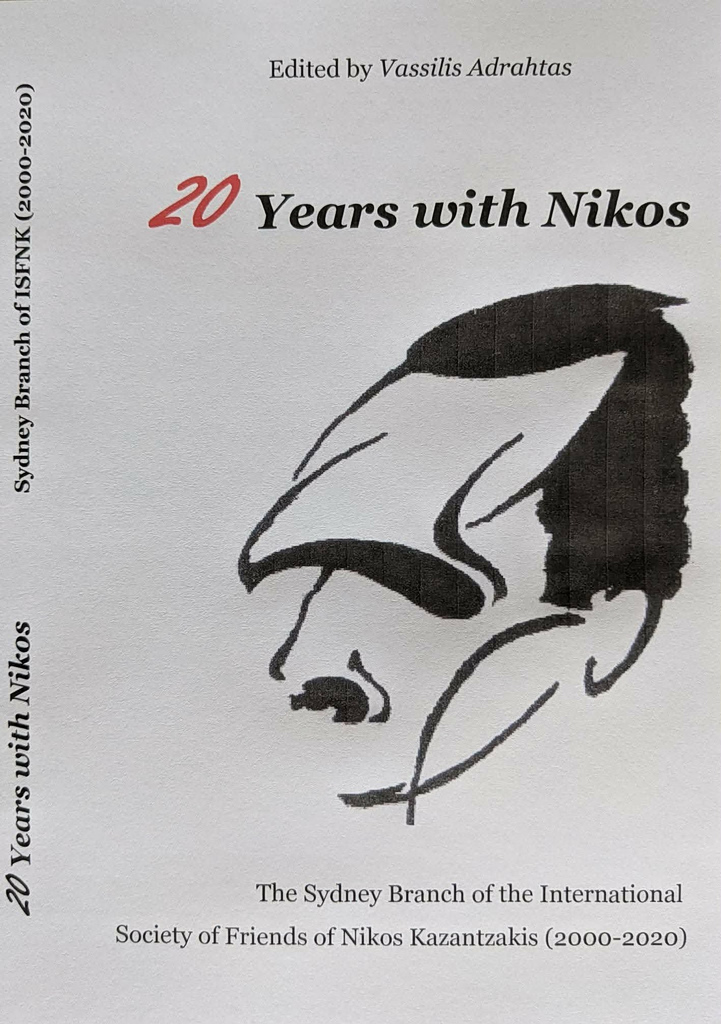
The Nikos Kazantzakis Society in Sydney has been active for 26 years now. What are its future plans?
The Sydney Branch of the International Society of Friends of Nikos Kazantzakis was founded in 2000: publications, film screenings, and lectures every year at the Sydney Greek Festival. It is an oasis, a truly literary society within the broader Greek Australian community.
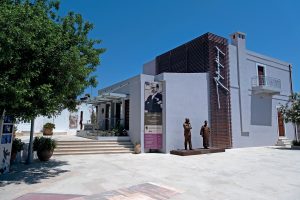
One of the programs we’ve been dreaming about —and we’ve already discussed it at our board meetings and it’s among our immediate plans— is cultural tourism: bringing people from Australia, not just Greeks, to Crete and read Kazantzakis’ work on site, with the Kazantzakis Museum in Myrtia as a focal point. There, workshops, seminars, and lectures could be held, along with activities at specific beaches, mountains, and gorges. There are descriptions in “The Odyssey” that you can only truly experience in Crete —and is it even possible to understand “Captain Michalis” without visiting Heraklion? The text itself demands it. Imagine a fifteen-day program centered on the “Cretan Gaze”: where else could one appreciate it more than in Crete? I believe it would be a wonderful experience for both the participants and the Museum, to which it would lend new dimensions of outreach. Next year marks the 70th anniversary of his death; it would be nice for the first trip to take place then.
The Museum, which houses the author’s archive, has digitized his letters, which are now accessible online. What do they add to the study of his work?
A great deal. I’ve always found his letters fascinating, including those we were already familiar with, such as those published by Eleni Kazantzakis in her book on Nikos. One can see how he communicated with people of different nationalities and ideologies —and this in itself attests to the intercultural breadth of his horizons.
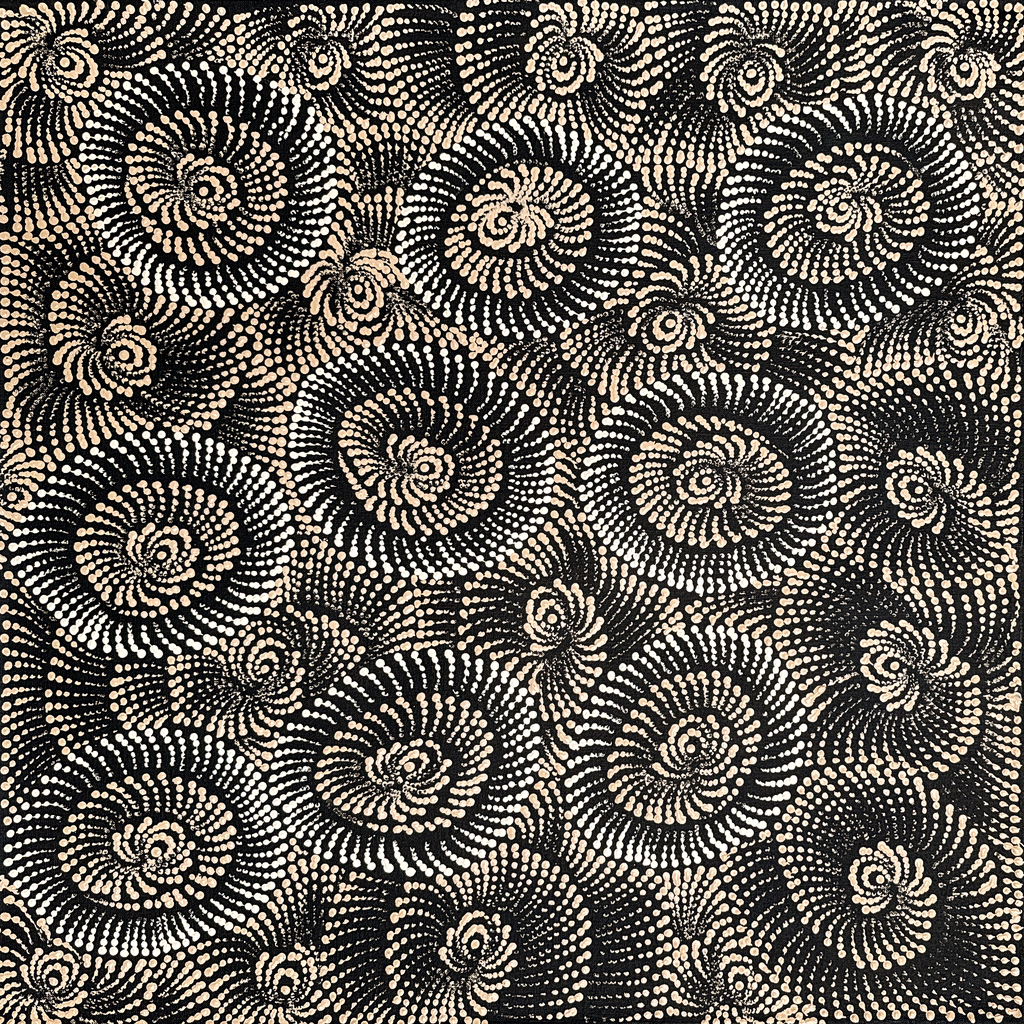
Maria Nampijinpa Brown Flying Ant Dreaming
The letters, however, are also valuable in addressing a much-misunderstood issue: the accusation of misogyny. In Eleni’s book, most of the recipients are women; and the way he speaks to them, communicates with them, and shares things with them reveals a completely different Kazantzakis —by no means a misogynist. Many confuse the voice of a literary character —which the author employs to convey the social climate of the era— with Kazantzakis’s own voice. Undoubtedly, he went through a lonely period, seeking balance in his relationship with women. But a misogynist? His correspondence clearly shows that he adored Eleni.
The correspondence also sheds light on his political career, which remains largely unknown.
Of course! And here, too, he himself may be partly to blame: in his search, he never felt comfortable staying in one place for long and shifted between political and ideological camps. Right-wing, left-wing, centrist: which was he? On the one hand, this shows vitality. On the other hand, it’s confusing. But it was also a time when everything was in a flux.
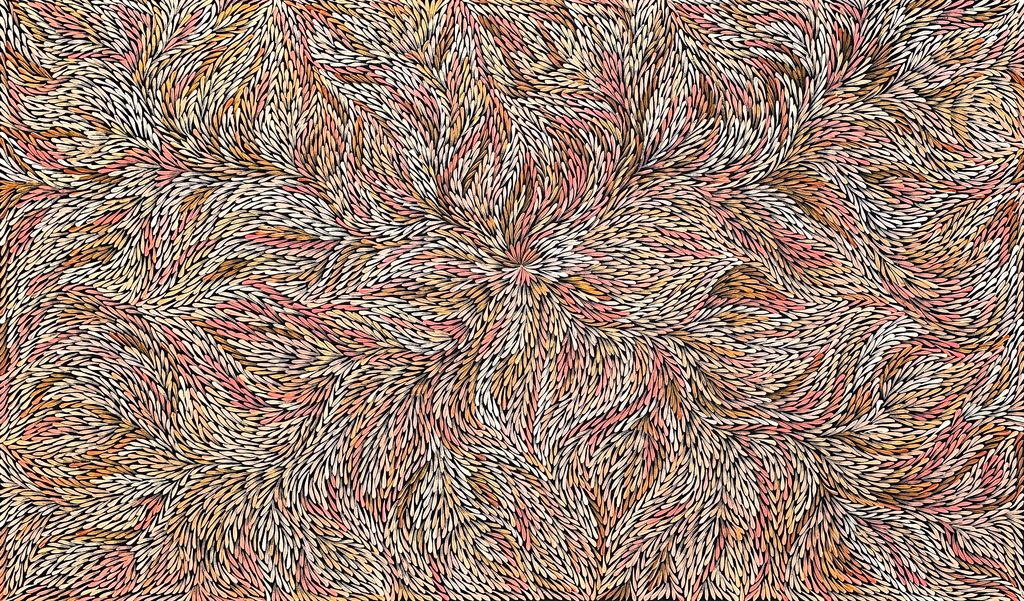
Dulcie, Bush Yam
Do you see this resonating with young people today?
Absolutely! My generation grew up without being taught about Kazantzakis —in the ’80s, we were not taught his books at school; we read him in secret. Even today, he’s barely present in school curricula. And yet, young people have discovered him, and they’re literally devouring his work. And alas: if you aren’t captivated by ideas like transcending yourself when you’re young, when will you ever be?
I am optimistic about his work. They say that the most famous Greek author internationally is Cavafy. But let’s be realistic: Cavafy has 154 poems, a self-contained world of Late Antiquity. Kazantzakis has a vast body of work —entire volumes— almost all of which have been translated into countless languages; no one comes close to him in terms of international impact. I call him a “Cosmo-Hellene”: a Greek who internalized the Modern Greek condition so profoundly that he transcended it —a Greek of the world. While he is so Greek, he is at the same time beyond being-Greek. That is why he appeals to foreigners who have no connection to Greece.
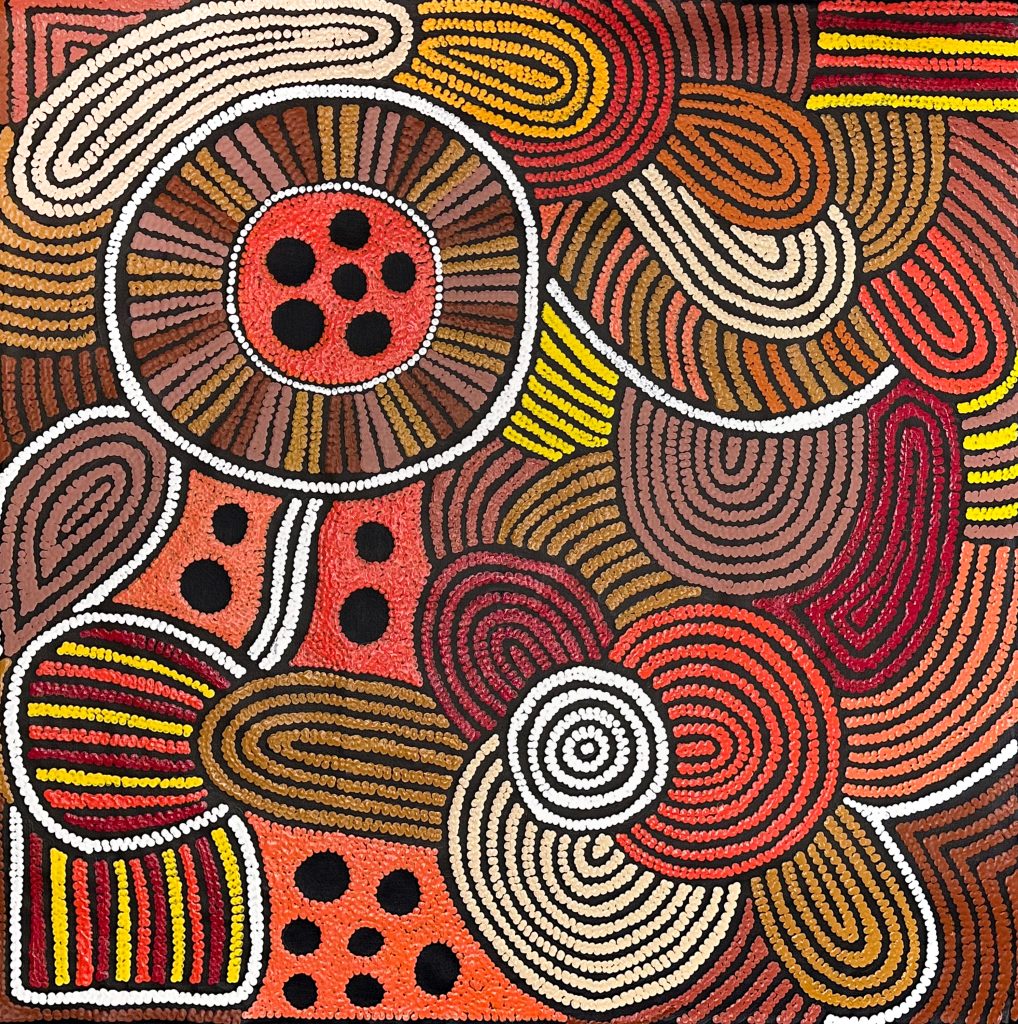
Debra McDonald, Nangala
From Crete to the Aborigines
Your second doctoral dissertation focuses on Indigenous Australian religions. What exactly is your current research?
For the past five years, I’ve been working extensively on the relationship between Australian Indigeneity and Hellenicity, primarily focusing on ancient Greece: similarities, differences, elective affinities, convergences, and divergences. The ancient Greeks, in order to understand the world, essentially invented a methodology we call philosophy. Indigenous peoples do not have philosophy —they have initiation. What kind of knowledge is the one, and what kind is the other? They also have their dreaming’s and origin stories, which function as a mythology. There are many areas where comparisons can be made to highlight similarities and differences.
The famous “songlines’, which were introduced to Western audiences by the travel writer Bruce Chatwin?
A “songline” is, let’s say, a Western way of understanding how Indigenous peoples move in relation to their land. Within a place, they ritually trace a circle, moving from point to point; they sing, they dance, they close the circle, and they come full circle. It’s an adventure —in our own terms, a pilgrimage, a sacred journey.
Where, ultimately, do these two worlds meet?
I’ll mention two points. The first: both place great emphasis on the “here.” They are worldviews of immanence, not of flight toward a “beyond”—the ‘here’, which may be nature, place, the earth, and how one becomes one with it. The second is myth. In ancient Greece, we have myths that recount the transformation of a landscape: the river Acheloos, personified, falls in love with a nymph who does not yield to him, and he punishes her by transforming her into a flower on his banks. We see exactly the same thing in the origin stories of indigenous peoples: an “ancestor” —the water of a spring— creates a river; the river becomes an entire ecosystem; and at some point, in the desert, it dries up —as if the “ancestor” were returning to the earth and falling asleep. Everywhere we see transformation, the change that Heraclitus also observed.
Of course, let’s be honest, the Greeks also developed certain distinctive traits: abstraction, logical thought, concepts, transcendence. The Indigenous peoples have always been captivated by immanence, by the “here-and-now”. Perhaps because the Greeks were seafarers, in constant dialogue with the cultures of a closed, navigable sea, while Australia was on the other side of the world…
With the exhibition “Land and Landscape,” you brought original works by Indigenous artists to Greece for the first time.
We brought 15 original Indigenous artworks from Australia —some of which are featured in this article— on loan from Sydney’s largest gallery, the Wentworth Galleries, and presented them in Ioannina, in collaboration with the local School of Fine Arts, alongside an equal number of works by Greek female visual artists who have been influenced by Indigenous cultures. You can see how the land is transformed into landscapes in these artists’ works. The exhibition was part of a broader series, under the auspices of the Australian Embassy in Greece, and included lectures and an international symposium with the Department of Philosophy at the National and Kapodistrian University of Athens, focusing on variations of space-time: how Indigenous Australians and the ancient Greeks perceived and experienced space and time.
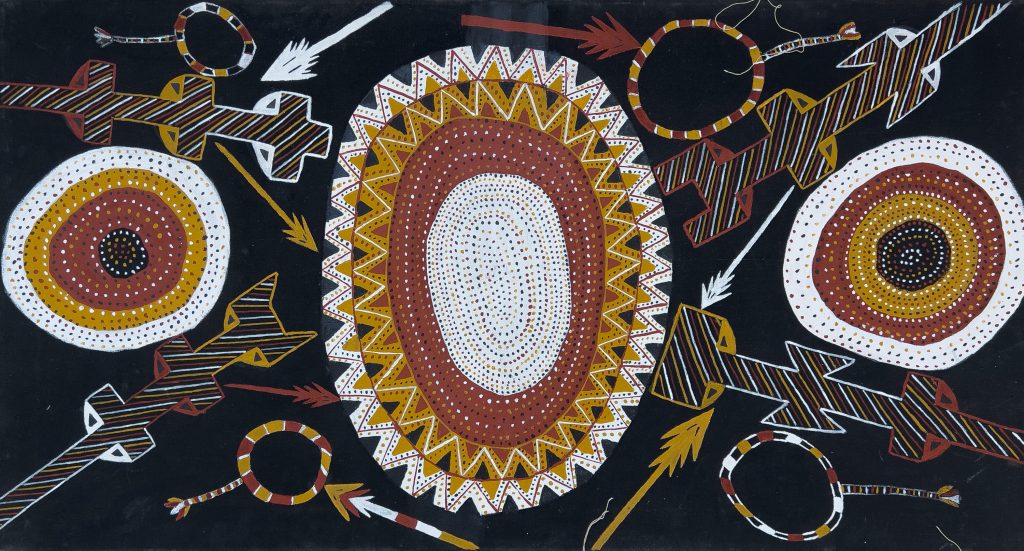
Carol Puruntatameri, Tutini (Pukamani Pole) and Pamajini (Arm Band)
Whenever I present this topic, in Greece and in Australia, the interest is tremendous —and at the same time a surprise, in a positive sense, because it is something completely outside the comparisons we are used to. The Greeks, after all, have only come into contact with the Indigenous peoples of Australia in the last hundred or so years, through immigration. At the University of New South Wales, I organized a symposium, titled “Encounters of Transformation,” specifically on this topic: how Indigenous Australians have been influenced by Greek immigrants and how Greeks have been influenced by Indigenous peoples —in literature, the visual arts, and sociopolitical movements. Of course, not everything is rosy: there are also instances of disparagement that warrant criticism.
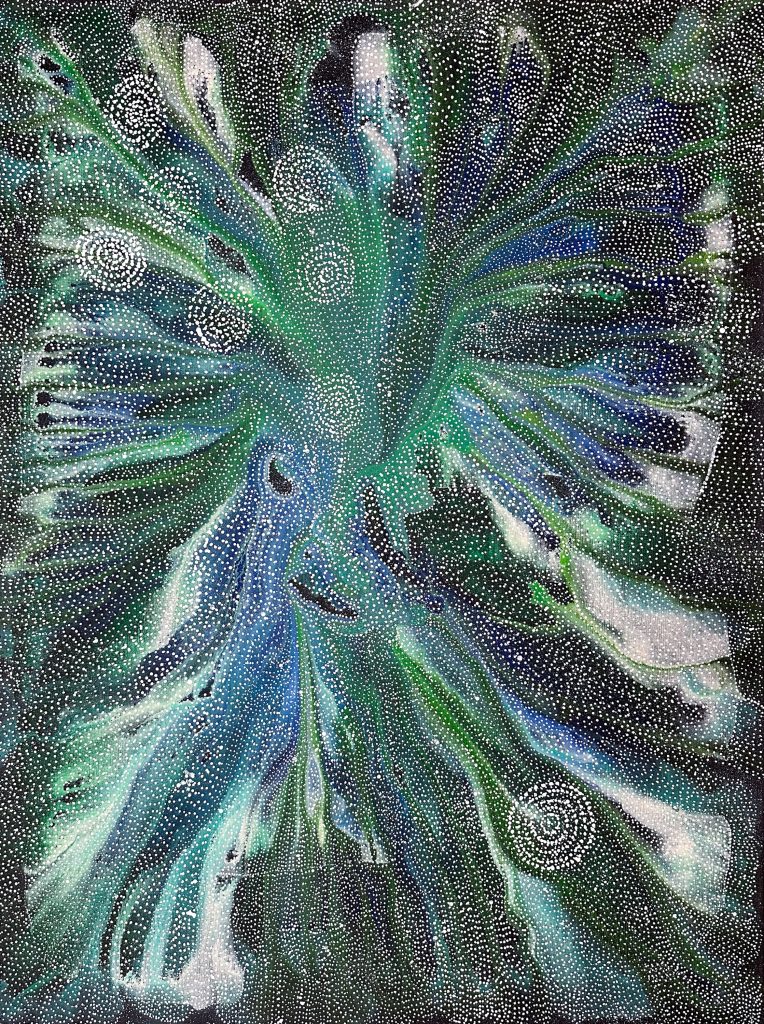
Athena, Seven Sister Dreaming
Crete, Sydney, Seoul: the sea seems to tie all your research together.
In recent years, the sea has come to be studied as a space for the exchange of ideas, cultures, and perspectives —beyond mere commodities. The Greeks were seafarers, like Odysseus; if it weren’t for the colonies as a form of contact, philosophy wouldn’t exist. Trade isn’t just trade. In 2025, we organized through Unity in Philia, a nonprofit organization of which I am a co founder, a major conference in Seoul on how the sea served as a vehicle for culture —and on the fact that, to truly serve the maritime industry today, one must understand culture. A ship nowadays is the entire world: people from all corners of the globe, from different cultures and religions. I believe in a model of cooperation based on good faith and getting to know one another, first and foremost through culture; this friendship strengthens cooperation and gives it depth and sustainability.