 Μake us preferred on Google
The departure of Kimberly Guilfoyle as US ambassador to Greece has reverberated beyond diplomatic circles in Athens, becoming a talking point among American expatriates in the east Mediterranean country whose political affiliations reflect the increasingly polarized climate back home.
For Democrats Abroad Greece, the controversy surrounding President Donald Trump’s personal pick to serve as ambassador has reinforced concerns about ethics, accountability and the relationship between public office and private interests. For Republicans Overseas, the organization representing Republican expatriates in the country, the episode has brought renewed attention to its Greek chapter and its chairman, Athens-based attorney Jonathan Constantine.
The two organizations serve US citizens living outside the United States in Greece, helping them remain engaged in American politics and, in some cases, providing practical assistance with voting, taxation and other issues. Yet their responses to the controversy surrounding Guilfoyle illustrate the sharply different interpretations of American political developments that persist even among expatriates living in the same country.
The dispute comes as the United States approaches its Nov. 3 midterm elections.
Corruption and the midterm elections
Alkman Granitsas, chairman of Democrats Abroad Greece, sees the Guilfoyle affair as part of a broader problem of accountability under the Trump administration.
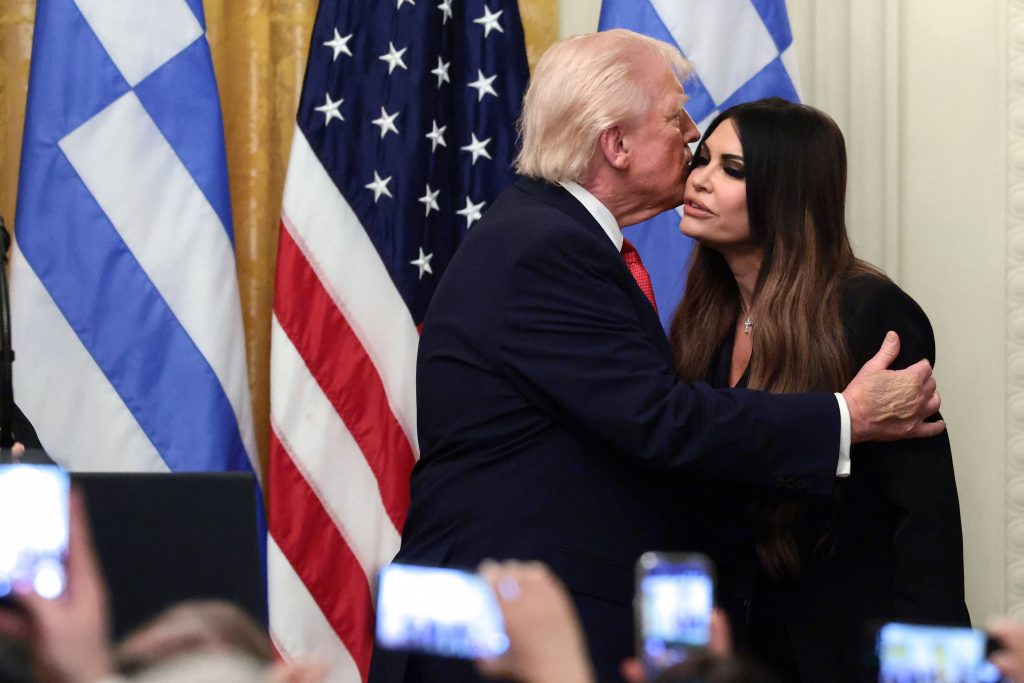
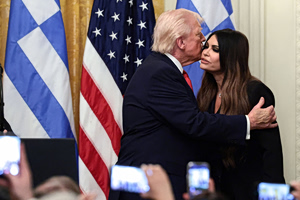
U.S. President Donald Trump greets the former U.S. Ambassador to Greece Kimberly Ann Guilfoyle at a celebration in honor of Greek Independence Day in the East Room at the White House in Washington, D.C., U.S., March 26, 2026. REUTERS/Kylie Cooper
Granitsas points to a Gallup survey published on Sept. 2 that found 89% of respondents believed corruption was widespread in the US federal government, the highest proportion recorded in two decades. The figure represented a 10-percentage-point increase from the previous year.
The findings suggest that concern about government integrity extends beyond a single political constituency. According to Gallup, 91% of Democrats, 90% of independents and 83% of Republicans said corruption was widespread.
For Granitsas, however, the Trump administration’s conduct is central to the problem.
He argues that Democratic victories in November would provide an opportunity to restore congressional oversight and strengthen accountability. He also believes that Democrats have a realistic chance of winning control of the House of Representatives and a possibility of taking the Senate.
Political forecasts are not guarantees, and the outcome will depend on individual races, turnout and other factors. Nevertheless, the elections have become an important focus for American expatriates, who can participate in federal elections through absentee voting under the applicable rules of their home states.
Granitsas is also concerned about the integrity of the electoral process. He argues that efforts to change voting rules and congressional district boundaries in Republican-led states could disadvantage Democratic voters.
Such concerns are part of a wider American debate over election administration, redistricting and access to the ballot.
For Democrats Abroad Greece, encouraging expatriates to register, request ballots and vote is therefore a central priority in the run-up to the midterms.
The question is not simply which party will prevail, but whether voters retain confidence in the institutions responsible for administering elections and holding elected officials accountable.
Foreign policy and Greece’s interests
The political debate also has implications for US relations with Greece, particularly as Athens seeks to maintain close ties with Washington while defending its positions on international law and regional security.
A foreign policy specialist associated with Democrats Abroad Greece argues that the Trump administration’s emphasis on national sovereignty and the exercise of American power has created tensions with the international agreements and institutions traditionally supported by US allies.
The United Nations Convention on the Law of the Sea (UNCLOS) is particularly relevant to Greece, which has ratified the convention and regards it as a central framework for resolving maritime-related issues. By comparison, Turkey has not ratified UNCLOS and maintains its own unilateral positions on aspects of maritime delimitation.
For Athens, international law is a key component of its approach to disputes in the Aegean and the eastern Mediterranean. The US position on multilateral agreements and the role of international institutions can therefore have consequences for Greek diplomatic priorities.
The same expert argues that the war involving Iran and its economic repercussions could influence American voters, particularly through energy prices and concerns about the strategic objectives of US military action.
Support for Israel and the conduct of the war in Gaza have also become divisive issues within American politics. Younger and more progressive voters have expressed concern about the humanitarian consequences of Israeli military operations and the extent of Washington’s support for the Israeli government.
These debates are relevant to expatriates as well, particularly those who follow US foreign policy from a country situated at the crossroads of Europe, the Middle East and the eastern Mediterranean.

Supporters attend a campaign rally hosted by US President Donald Trump for US Senator Jon Husted (R-OH) and gubernatorial candidate Vivek Ramaswamy, in Chillicothe, Ohio, US, October 28, 2026. REUTERS/Kevin Lamarque
A Republican organization under scrutiny
Republicans Overseas, established in 2013, provides a political network for Republicans living abroad. Its Greek chapter is chaired by Jonathan Constantine, an Athens-based criminal trial attorney who was appointed to the position in 2019.
According to the chapter’s official website, its activities include helping American citizens with voting and providing information on issues such as taxation, Social Security and legal matters in Greece and the United States.
Constantine has said that he sought to revive a chapter that had become inactive and expand its reach among the US expatriate community in Greece.
He has also claimed that approximately 10,000 people have registered as affiliate members without voting rights or financial obligations. If accurate, the figure would indicate a substantial network.
Constantine has further said that the chapter established a telephone help desk in 2020, operated by a local telecoms company, to assist Americans living in Greece. Moreover, he boasted that the company handled a whopping figure of roughly 60,000 inquiries over six years, covering subjects ranging from taxation and social security to passports and legal assistance.
The specific chapter’s structure and public presentation have nevertheless attracted questions about transparency and internal accountability.
Constantine exercises substantial authority over the Greek organization’s board, according to his own description of its operating structure. He has the power to fire at will any of the Board members at any time. The chapter’s website identifies him as chairman but does not provide a comprehensive public list of board members.
Asked whether such a concentration of authority is compatible with democratic and transparent management, Constantine defended the arrangement, saying that funding comes from the chairman.
The issue raises a broader question about the governance of expatriate political organizations: how they balance the autonomy of local chapters with the accountability expected of organizations operating under an international name.
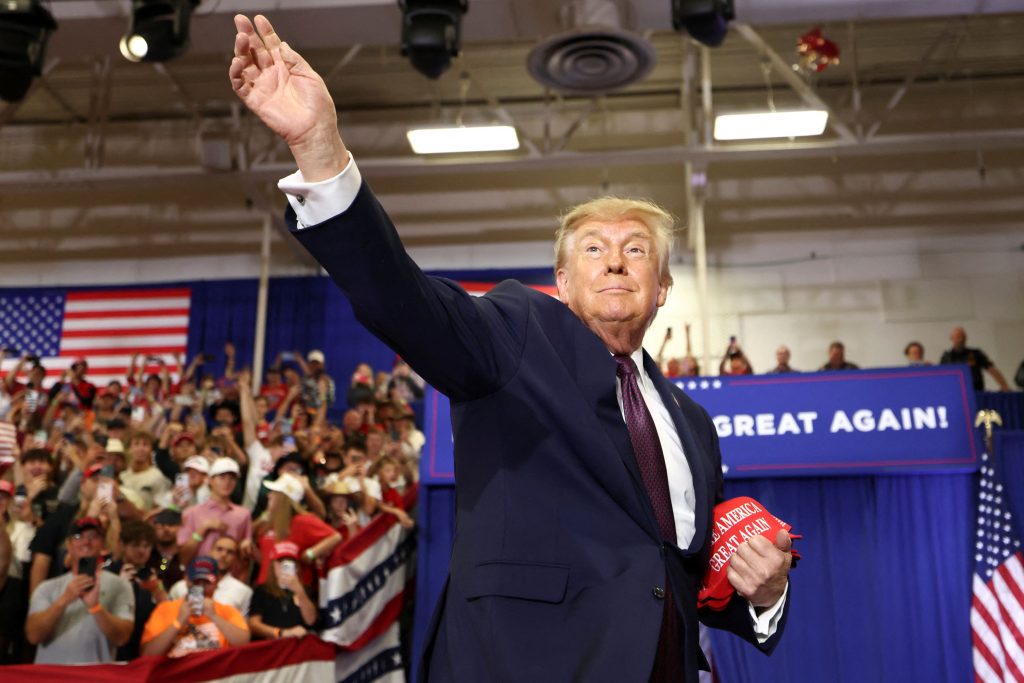
US President Donald Trump holds a cap during a campaign rally for US Senator Jon Husted (R-OH) and gubernatorial candidate Vivek Ramaswamy, in Chillicothe, Ohio, US, October 28, 2026. REUTERS/Kevin Lamarque
A public distancing by the international organization
In a statement issued following renewed media attention surrounding the Greek chapter, Republicans Overseas reiterated its mission and clarified that country chapters cannot use the organization’s name, titles, logos or other resources to advance personal projects, pursue individual political grievances or conduct media campaigns unrelated to its objectives.
The statement also said that the organization was undertaking restructuring intended to strengthen accountability.
Although the statement did not explicitly name Constantine, its timing prompted questions about whether it was intended to address activities in Greece. Constantine said he initially thought the announcement concerned him but later understood it to relate to another chapter.
The organization’s international leadership did not publicly clarify the matter in the material available for this report.
The Guilfoyle controversy
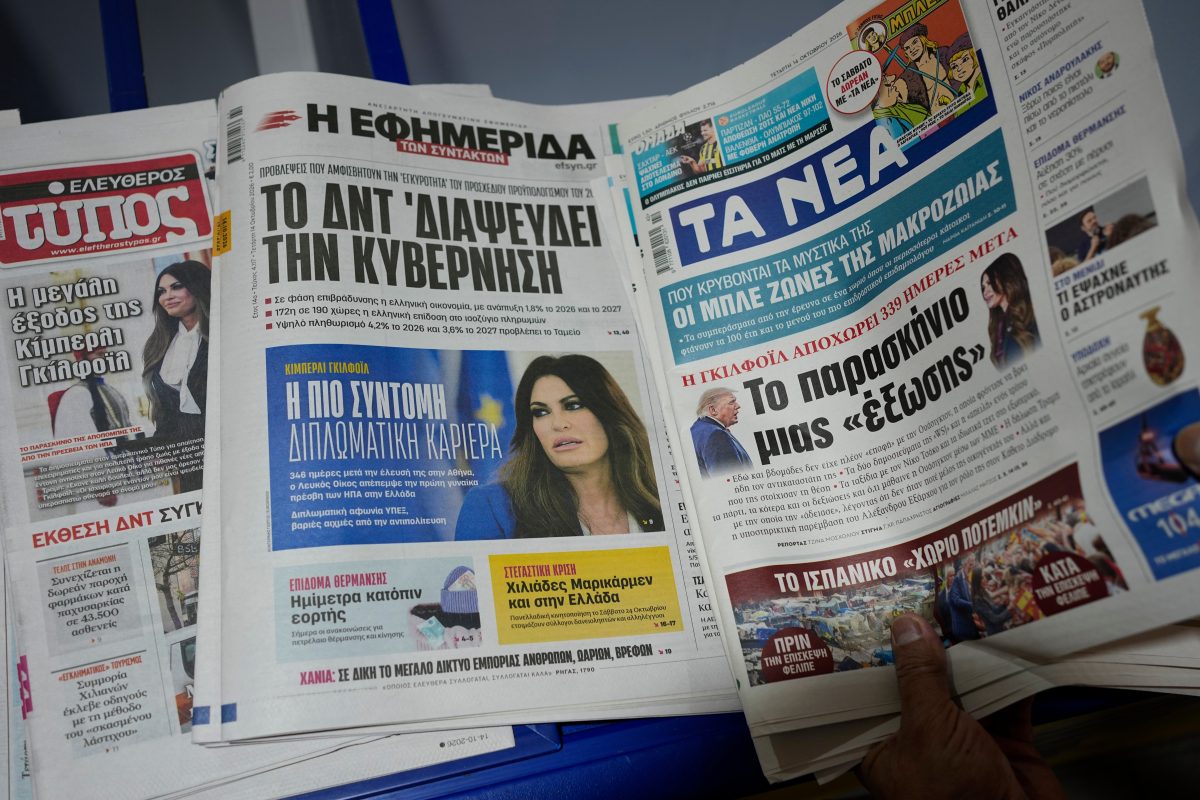
The immediate backdrop to the divisions within the expatriate community is the departure of Guilfoyle, whose tenure in Athens became the subject of extensive international scrutiny following a series of investigative reports by The Wall Street Journal.
The reports raised questions about her dealings with a Greek construction and energy company, her relationship with a lobbyist, alleged hospitality provided by a local shipping executive and messages to an acquaintance and GOP donor framed as requests for paying off a credit card debt.
The reporting also examined her efforts to promote US natural gas exports to European countries through Greece, a policy objective that formed part of the Trump administration’s wider effort to reduce European dependence on Russian energy.
Guilfoyle’s lawyers disputed aspects of the allegations, and she denied wrongdoing.
On Oct. 13, the White House announced that Guilfoyle had been asked to resign. Her departure came after President Trump publicly expressed dissatisfaction with the reports and as questions about her conduct were drawing attention from US lawmakers and the media.
For Democrats Abroad Greece, the episode has reinforced concerns about ethics and accountability within the administration. Within Republican circles, it has prompted a different debate over the handling of the case and the political consequences of the ambassador’s departure.
The dispute illustrates how a diplomatic controversy can become a domestic political issue for expatriates, whose engagement with American politics often continues well beyond the electoral process.
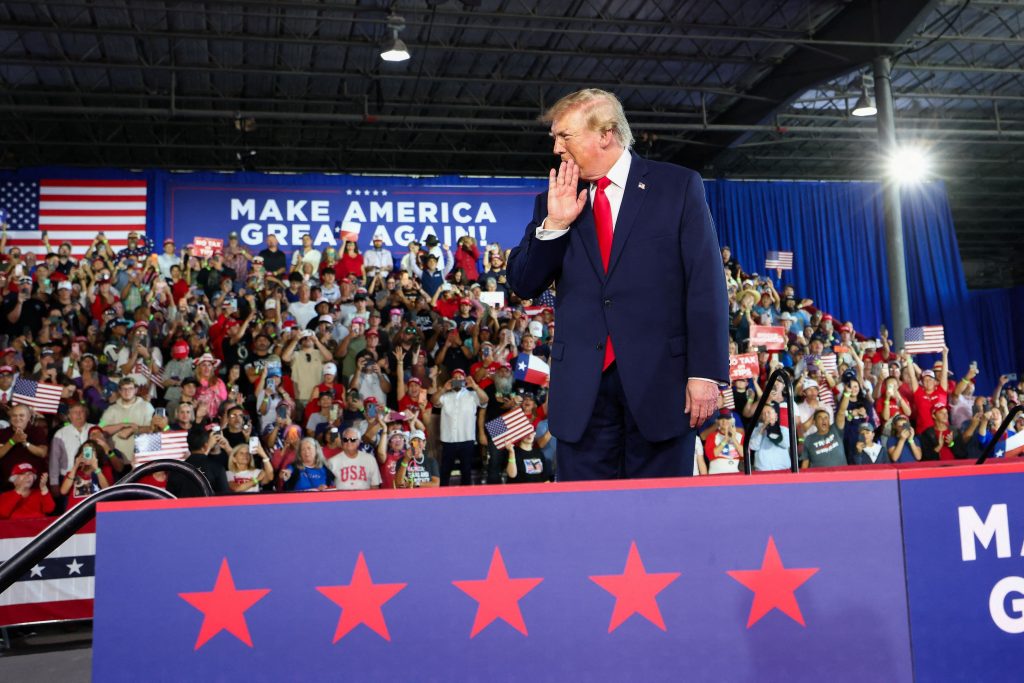
US President Donald Trump attends a midterm election campaign rally to support Republican US Senate candidate Ken Paxton, in Corpus Christi, Texas, US, October 27, 2026. REUTERS/Kevin Lamarque