 Μake us preferred on Google
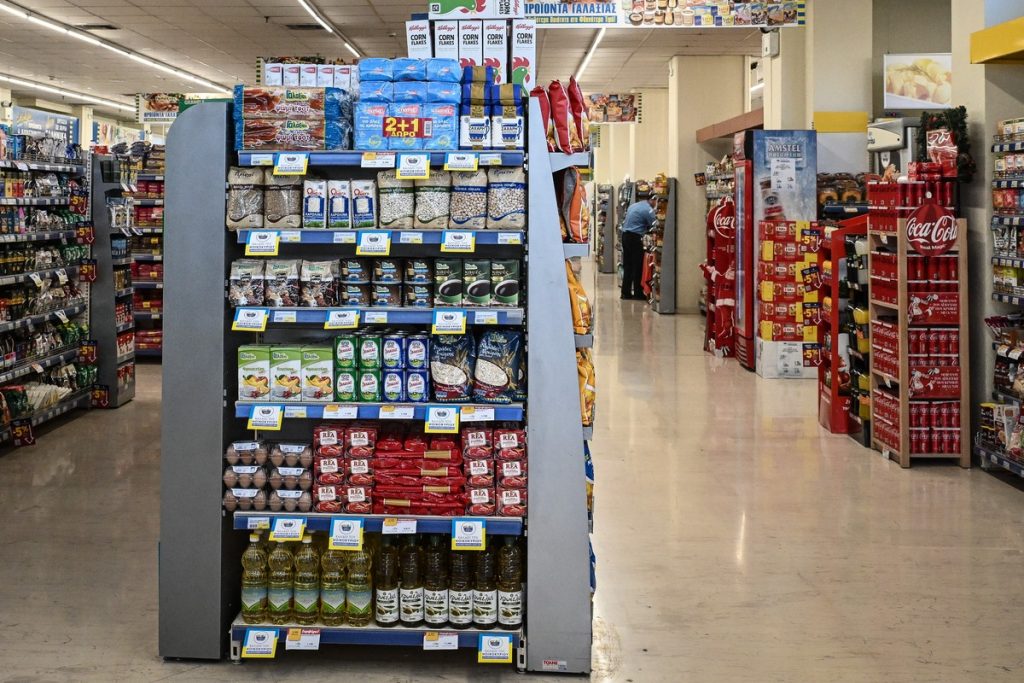
 Prime Minister Kyriakos Mitsotakis is expected to convene a meeting Monday, June 29, at the Maximos Mansion, to discuss one of the issues weighing most heavily on Greek households: the high cost of everyday goods. The talks will focus on whether the government should scrap or extend the cap it has placed on the gross profit margins that companies selling consumer goods are allowed to make. The measure expires Tuesday, June 30, and what replaces it will shape grocery prices in the months ahead.
Development Minister Takis Theodorikakos, Spyros Theodoropoulos, chairman of the Hellenic Federation of Enterprises, Ioannis Yiots, president of the Federation of Hellenic Food Industries, and Yiannis Masoutis, who leads the Greek supermarkets union, are expected to attend.
Price cuts or a profit cap
The government has framed the choice as a binary one. In recent remarks to TV channel MEGA, Theodorikakos said that without an agreement on price cuts after the summer, the cap on food would remain. Either manufacturers and supermarkets reach a deal that delivers noticeable price cuts on basic goods, the argument runs, or the state keeps intervening in their profit margins.
Mitsotakis’s decision to chair the meeting himself is, by the government’s own account, largely symbolic, intended to signal that he treats the problem as a priority and is taking ownership of it. Theodoropoulos’s presence cuts two ways. He attends as head of the country’s main business federation, but also, unofficially, as an industrialist in the food sector. It is a field where raw material costs can swing sharply. Cocoa prices, for instance, have risen and fallen on international markets, rattling makers of chocolate and other confectionery.
Two scenarios on the table
Two options are expected to be weighed, according to the reporting.
Under the first, the margin cap would be lifted on July 1, with a pledge that price cuts on a range of basic consumer goods would reach shelves from Sept. 1. The reductions, the government says, would be visible to shoppers and would cover several hundred essential product codes.
Under the second scenario, the cap would be extended by two months, until Aug. 30. The government’s argument is that the period that matters for consumers only begins on Sept. 1.
Policing the market
In both cases, the job of identifying which products are covered would fall to Despina Tsagari, who heads the independent authority for market oversight and consumer protection. Drawing on retail data from the research firms Nielsen and Circana, she would compile a list of several hundred essential items and then push manufacturers, Greek and multinational alike, to lower their prices from Sept. 1.
Supermarkets would be expected to go a step further, shaving an additional margin off the cuts passed down by their suppliers. By their own account, they have no objection.
The companies for their part, are expected to highlight the effects of the US-Iran war. Since the Middle East conflict broke out, they say, they have swallowed higher shipping and packaging costs rather than pass them to shoppers, squeezing their own margins in the process.
Source: OT.gr