 Μake us preferred on Google
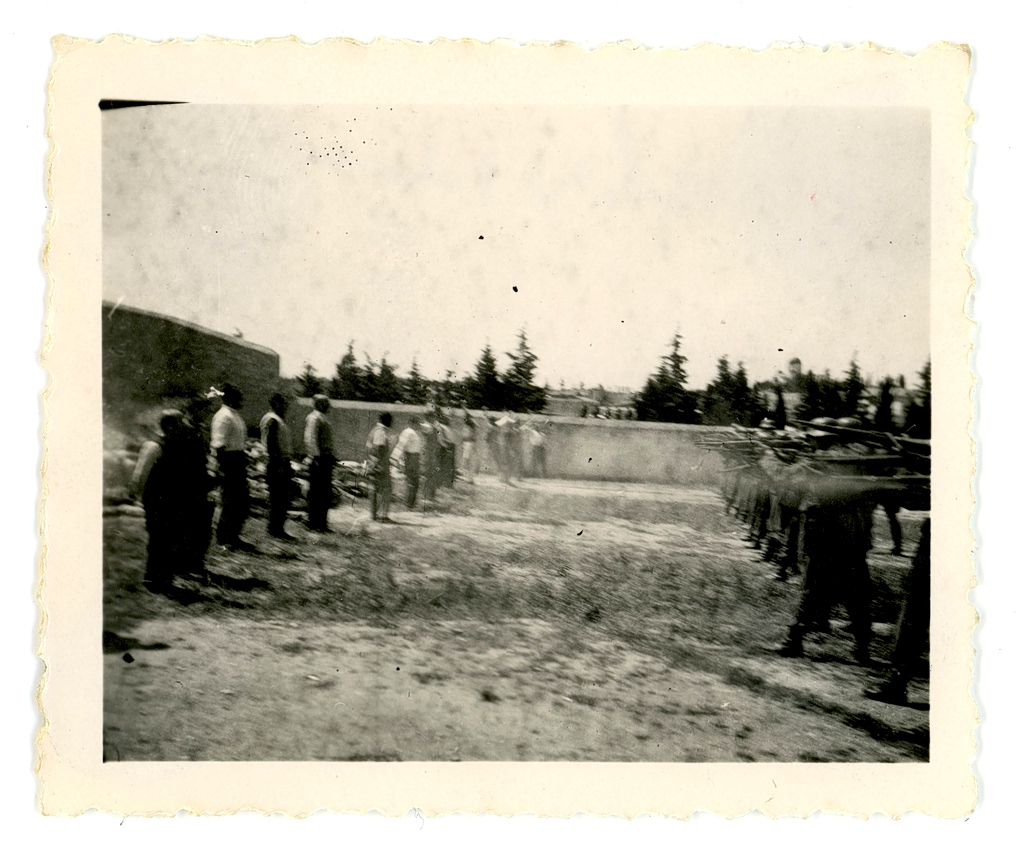
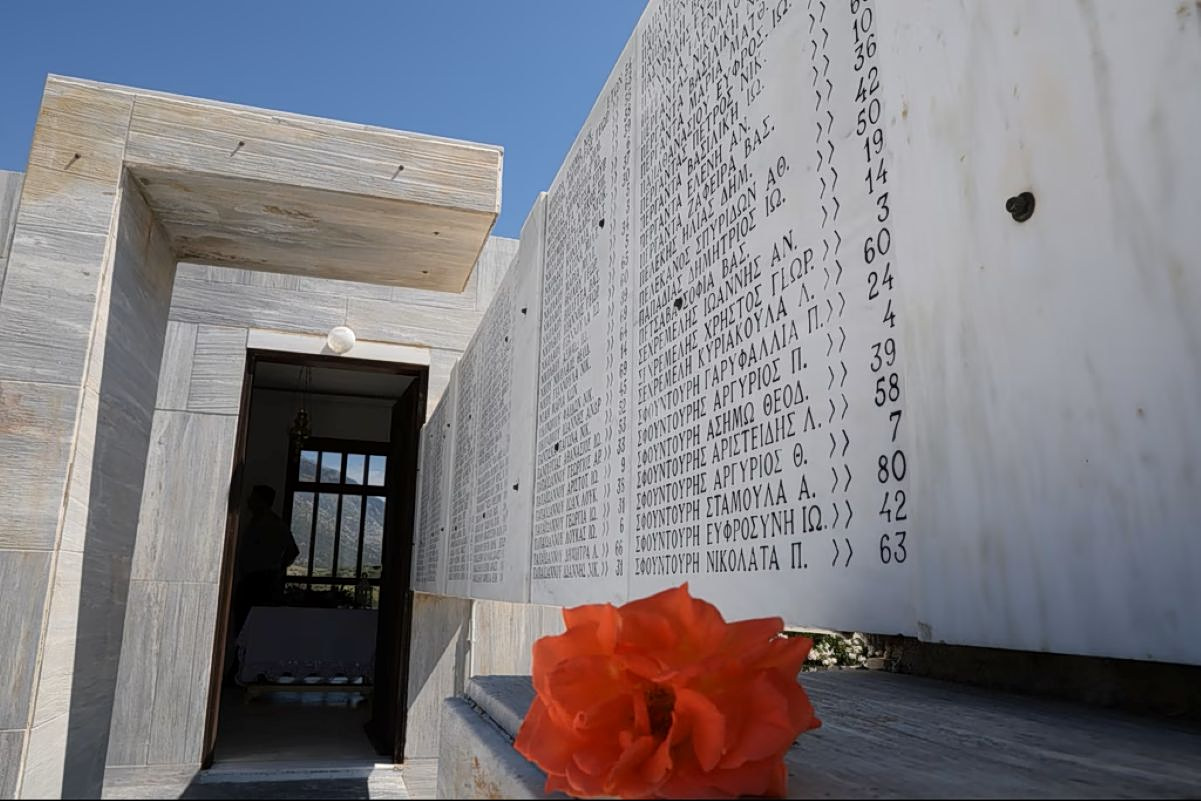
 The issue of German reparations for the families of victims of Nazi atrocities—particularly the massacre of Distomo, in Greece, on June 10, 1944—is the focus of a report by Germany’s Tagesspiegel.
A Family Marked by Tragedy
“My mother’s family was almost completely wiped out. The Germans murdered her father, her mother, and her two sisters,” Miltiadis Sfountouris, an Athens-based lawyer, told the newspaper. “The memory of that story lived with us at home.”
His mother was just 12 years old when the massacre took place. “She heard a German soldier rushing up the stairs and smashing the door open. In panic, she jumped out of a window. That saved her life. Together with other children, she hid in the cellar of another house. Afterward, she lived with nightmares. Sometimes she would say, ‘It would have been better if the Germans had killed me too.’”
One of the Worst Nazi Atrocities in Greece
According to Tagesspiegel, the Distomo massacre ranks among the most brutal war crimes committed by German forces during the occupation of Greece. The tragedy continues to raise a question that many in Germany would rather avoid: what responsibility remains today?
The newspaper notes that the issue is still alive 82 years later largely because of people such as Sfountouris, who has continued a legal and moral struggle begun decades ago by survivors and relatives, many of whom have since passed away.
The report also cites the testimony of Swedish diplomat Sture Linnér, who was working for the Red Cross in occupied Greece and visited Distomo the day after the massacre.
Linnér recalled an unbearable stench, fires still smouldering in the ruins of homes, and hundreds of victims of all ages lying dead. His account painted a harrowing picture of the extreme brutality inflicted on the village’s residents.
A Battle About Principle, Not Money
Sfountouris argues that the decades-long dispute over compensation is not really about money, but about Germany’s determination to avoid setting a legal precedent. He maintains that Berlin could easily afford any payments, but fears that a successful claim would trigger a wave of lawsuits from communities across Europe that suffered under Nazi occupation.
Germany’s Position
Germany’s Foreign Office acknowledges what it describes as the country’s “historical and moral responsibility” and supports reconciliation initiatives, including cooperation on the construction of the Holocaust Museum of Greece in Thessaloniki.
Berlin maintains that reparations claims have been settled. According to Tagesspiegel, Germany supports remembrance and reconciliation initiatives but rejects formal reparations, fearing that acknowledging legal liability could trigger a flood of further claims.
Greece alone has formally asserted reparations claims estimated at nearly 300 billion euros.
Germany did pay Greece 115 million Deutsche Marks in 1960, but the payment was voluntary and intended for victims of Nazi persecution on the grounds of race, religion, or ideology. Residents of Distomo did not fall within those categories.
“We received none of that money,” Sfountouris said.
A New Legal Strategy
With little expectation that Germany will change its position, the descendants of Distomo’s victims have pursued a new and unconventional legal strategy. Since they have been unable to seize German state assets directly, they have sought to target assets held abroad by the state-owned railway company Deutsche Bahn.
The legal battle remains ongoing, and its outcome is uncertain.
Asked by Tagesspiegel to comment, Deutsche Bahn stated that it is a legal entity separate from the German federal government and therefore cannot, in principle, be held liable for the state’s debts.
Sfountouris dismisses such arguments as evasions. For him, the entire process has been a lesson in the unequal application of justice.
“There is an old Greek proverb,” he said. “The law is like a spider’s web: the small get caught in it, while the powerful tear through it and escape.”
Yet giving up, he insists, is not an option.
Justice Deferred
The legal proceedings are expected to continue for years. Sfountouris hopes to see them through to the end.
For his mother, however, any victory would come too late. The woman who survived the horrors of Distomo at the age of 12 died four years ago, before seeing the outcome of the struggle that defined so much of her life.