
 Μake us preferred on Google
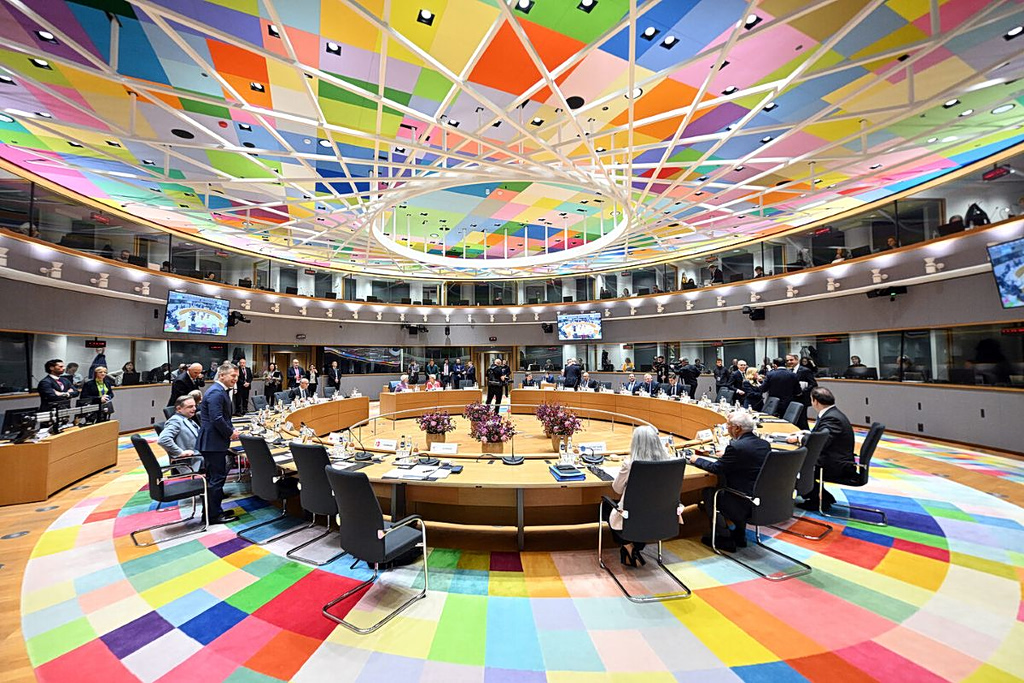
European Union leaders were set on Thursday to nominate Spain’s Pablo Hernández de Cos as the next president of the European Central Bank, succeeding Christine Lagarde, after the Netherlands decided to back him.
EU officials said Dutch Prime Minister Rob Jetten agreed on Thursday to support the Spaniard, despite having earlier backed the Dutch candidate, Klaas Knot.
A Historic First
Hernández de Cos, 55, who heads the Bank for International Settlements, secured more support than former Dutch central bank governor Klaas Knot. If formally appointed, he would become the first Spaniard to lead the ECB since its creation in 1998. He previously served as governor of the Bank of Spain from 2018 to 2024, which gave him direct experience on the ECB’s Governing Council.
He will take charge of an institution that sets interest rates for the 21 countries that use the euro. Lagarde steps down as ECB president on February 7, 2027, before her term was due to end.
Three Top Jobs
According to EU officials, EU ambassadors were due to meet at 1400 GMT to launch what is known as a written procedure. Under this process, capitals sign off on a recommendation to the leaders naming candidates for three ECB posts that will become vacant over the next six months.
The recommendation names Hernández de Cos as ECB president, Laurence Boone as head of the ECB’s market operations and Markus Brunnermeier as the bank’s chief economist, the officials said.
The package follows weeks of bargaining between Berlin and Paris. Isabel Schnabel will leave the ECB in January, while Lagarde is scheduled to step down as President on 7 February, before the end of her term. France aims to fill the vacancy left by Schnabel and take charge of market operations. Boone is a former French minister for European affairs and former chief economist of the OECD.
Germany secured the chief economist post. German Finance Minister Lars Klingbeil proposed Brunnermeier, a Princeton University economist, for the position last week. Brunnermeier would replace Philip Lane, whose term as chief economist ends in May. The chief economist prepares the ECB Governing Council’s interest rate and policy decisions and thus plays a central role in monetary policy.
What Comes Next
The leaders’ decision is not the final step. The nomination is a political decision that still needs formal opinions from the European Parliament and the current ECB Governing Council before it can be finalized.
The ECB executive board is appointed by the European Council in euro area composition by reinforced qualified majority, and members serve a term of eight years that cannot be renewed.
Analysts expect little change in direction at first. Saltmarsh Economics European economist Marchel Alexandrovich said de Cos is likely to offer a continuation of Lagarde’s policies during his initial tenure.