
 Μake us preferred on Google
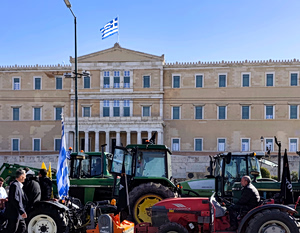
Greek farmers, livestock breeders, fishers and beekeepers are preparing to step up protests over mounting financial pressures, delayed subsidy payments and what they describe as the government’s failure to address longstanding problems in the primary production sector.
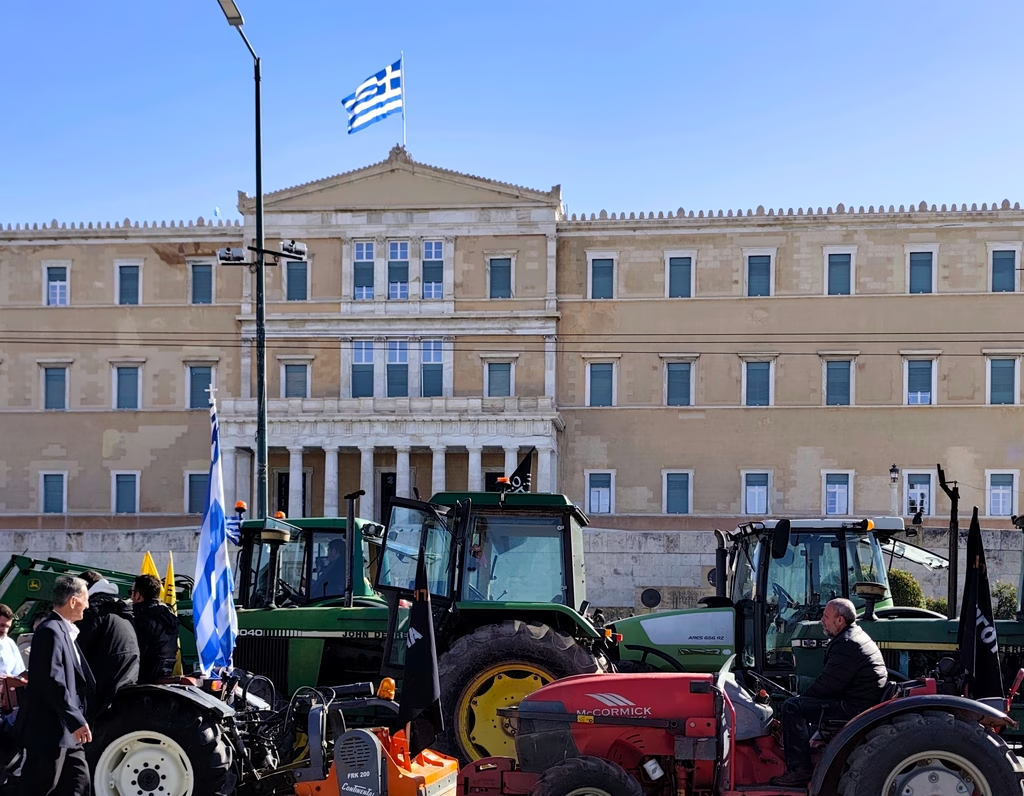
With tractors returning to the roads and fishing boats displaying black flags, agricultural representatives say they are facing an even more difficult situation than last year, leaving them with little choice but to resume demonstrations.
“We are coming out with exactly the same demands. None of our problems has been resolved. On the contrary, we are in a much worse position than last year, and we have no other option but to protest again,” representatives of the primary production sector told To Vima.
They argue that several government commitments made last year were never fulfilled, while others amounted to limited corrective measures that failed to address the underlying problems.
Seven major issues are driving the renewed mobilization.
1. Rising production costs and low prices
At the center of farmers’ anger is the widening gap between the cost of producing agricultural goods and the prices they receive when selling them.
Electricity, fuel, fertilizers and animal feed have all become significantly more expensive, while producer prices remain too low to cover production costs. As a result, some farmers are barely breaking even, while others are operating at a loss.
“The problems remain the same as last year: high production costs combined with very low prices for the products we produce,” farmers said.
They describe an increasingly difficult situation in which they are constantly trying to minimize their losses, taking on tasks they previously did not have to perform themselves and selling their products at reduced prices to avoid being left with unsold stock.
As an example, they point to soft wheat, which they say has been selling for €0.16 per kilogram for the past decade, even as the price of bread continues to rise.
“We are losing money at this price for wheat,” they said.
The gap between the prices producers receive and the prices consumers pay has widened considerably. Farmers and livestock breeders are struggling to remain in business, with some considering leaving rural areas altogether. Meanwhile, consumers continue to face high supermarket prices, making certain products increasingly unaffordable.
2. OPEKEPE and OSDE payment delays
The OPEKEPE subsidy scandal and allegations of illegal agricultural payments dominated farmers’ protests in 2025. This year, producers are facing another major problem: a severe shortage of liquidity caused by delays in subsidy payments.
The transfer of the agricultural payments agency’s auditing responsibilities to the Independent Authority for Public Revenue (AADE), presented as a major step toward greater transparency and reform, has instead created what farmers describe as a cumbersome bureaucratic system.
The changes have disrupted the agricultural declaration process and delayed payments.
Farmers say they have yet to receive payments linked to their OSDE declarations, the annual applications through which agricultural land and farming activity are registered for subsidy purposes.
“We have not been paid for our OSDE declarations. We should have received the money in October, but we still haven’t. OSDE declarations used to be completed normally by May, but so far only half have been processed,” they said.
They also report additional administrative errors. “My fields are registered under my neighbor’s name, while his own fields are nowhere to be found,” they said.
Without advance payments, liquidity in rural communities has dried up, leaving farmers struggling to purchase seeds and fertilizers for the next growing season.
3. Government promises of a new payment schedule
Facing mounting pressure from agricultural producers, the government has presented a new timetable for outstanding subsidy payments.
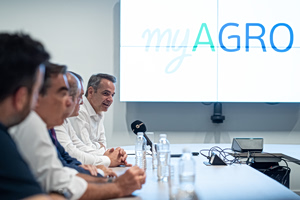
Agriculture and Food Minister Margaritis Schinas briefed the Cabinet on the progress of agricultural support payments, saying the payment platform is now under state control for the first time.
He assured farmers that “every beneficiary will receive what they are entitled to.”
Under the government’s schedule, the advance payment of the basic agricultural subsidy is set for November 30.
Schinas has also pledged that the remaining basic subsidy will be paid by the end of December, alongside the redistributive and compensatory payments.
A broader series of payments is planned through 2027, including settlements for young farmers, agri-environmental measures, public works, private investments and LEADER programs, which support local development initiatives in rural areas.
The minister also announced additional emergency support from national funds by the end of December.
The measures include financial assistance for livestock breeders who have been required to keep their animals indoors because of sheep and goat pox and foot-and-mouth disease, as well as compensation through ELGA, the state agricultural insurance organization, for frost damage that occurred before flowering in 2025.
The package also includes targeted assistance for milk destroyed on the island of Lesbos, fuel support for fishers and compensation for producers affected in the Philippi wetlands in northern Greece.
Despite the announcements, agricultural representatives remain skeptical, saying they have heard “only promises that will never become reality.”
4. Livestock diseases and the loss of herds
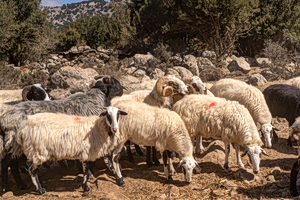
Livestock farming is facing particularly severe difficulties, with thousands of breeders having lost their animals to disease outbreaks.
Last year’s promises of rapid herd restocking following the first cases of peste des petits ruminants, also known as sheep and goat plague, were never fulfilled, according to industry representatives.
In 2026, sheep and goat pox and foot-and-mouth disease further devastated livestock populations.
Farms and grazing areas have been left empty, while compensation payments have fallen short of the actual cost of replacing lost animals.
Many livestock breeders have effectively been left without work, while the production of iconic Greek products with Protected Designation of Origin (PDO) status, including feta cheese, faces growing pressure.
5. Competition from Mercosur imports
The provisional application of the European Union’s free trade agreement with the Mercosur bloc, which began in May 2026, has added to producers’ concerns.
Farmers and beekeepers say cheaper imports of meat and honey from Latin American countries are putting additional pressure on domestic prices.
They argue that these products are produced without having to meet the same strict European animal welfare and environmental standards, creating what they consider unfair competition for Greek producers.
6. Demands for permanent measures instead of temporary support
Agricultural representatives say last year’s partial measures and temporary financial assistance are no longer sufficient.
They are demanding permanent solutions to reduce production costs and provide greater financial security, including:
- Tax-free agricultural diesel at the pump.
- A cap on agricultural electricity prices.
- Full compensation for losses through ELGA.
- Immediate reform of the agricultural subsidy payment system.
They insist that temporary support packages cannot replace lasting changes that would make agricultural production financially sustainable.
7. The December 6 meeting and the prospect of prolonged blockades
The protest schedule is gradually escalating, although the scale and duration of further mobilizations have yet to be determined.
Farmers began demonstrations in Volos on November 24 and took part in a nationwide general strike on November 25.
Their next major step will be a nationwide meeting of the Panhellenic Committee of Roadblocks on December 6 in Nikaia, near Larissa, central Greece. Representatives will decide collectively on the next phase of their mobilization.
Farmers have warned the government that the meeting could mark the beginning of prolonged road blockades if the announced payments and emergency support measures fail to provide immediate and tangible relief.
Their message to the Prime Minister’s Office is that they expect concrete results rather than further promises. With the agricultural sector facing mounting financial pressures, the December 6 meeting is expected to determine how the protests will develop in the weeks ahead.