 Μake us preferred on Google
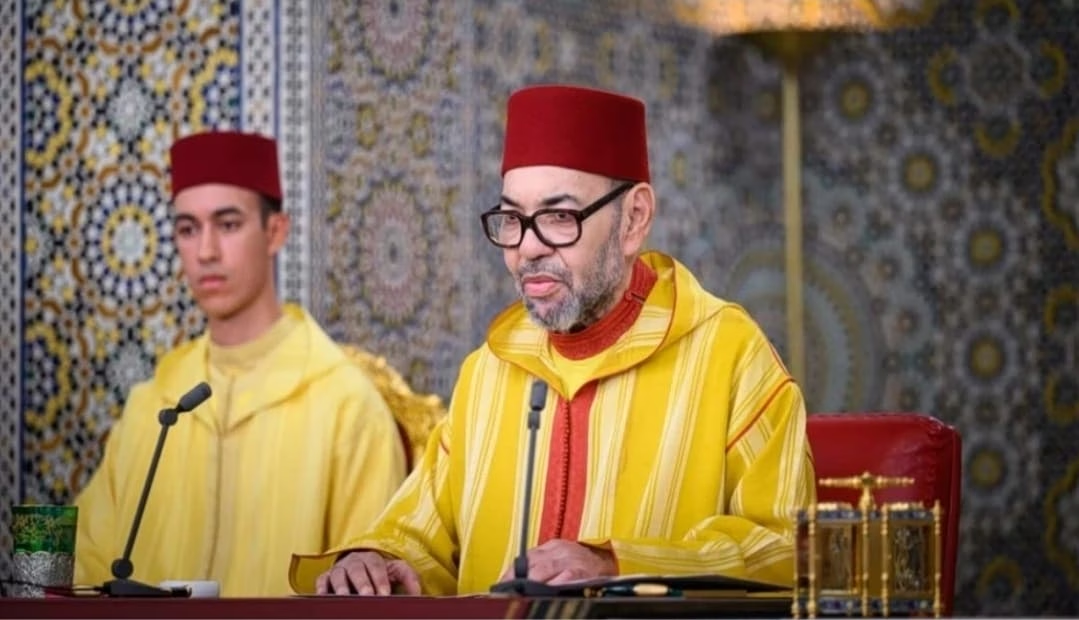
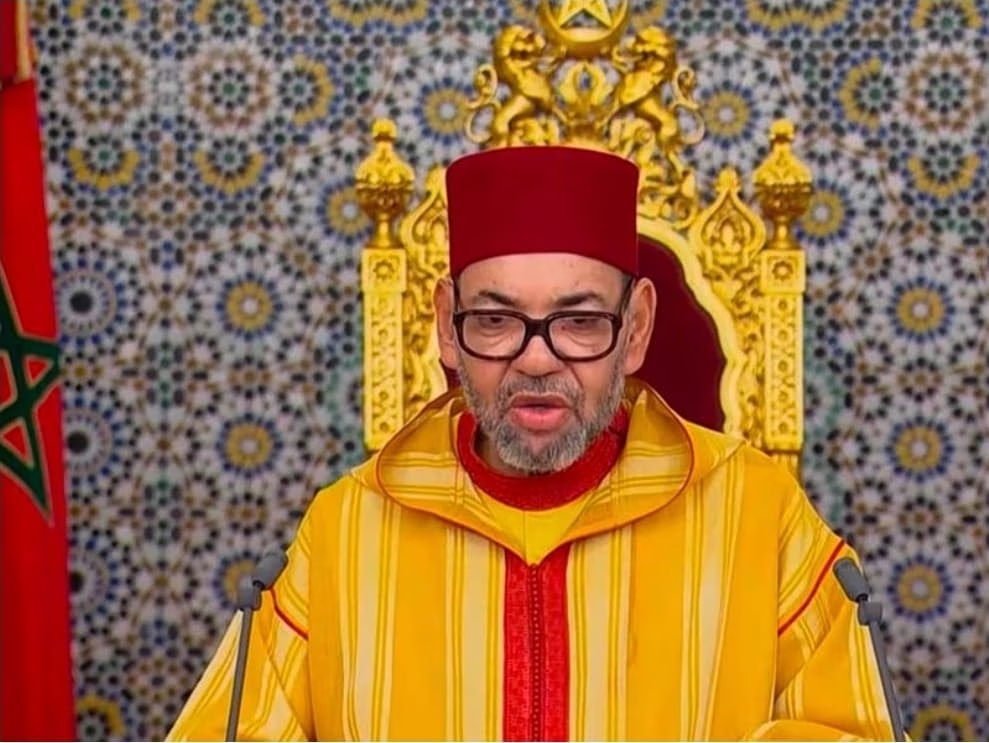
 In a speech to the Moroccan Parliament, King Mohammed VI marked 27 years since he took the throne from his father, Hassan II, by reviewing the economic and social reforms that have reshaped the country and calling for their continuation.
He described the results as stemming from deliberate governance choices built on initiative, monitoring progress, self-criticism, and foresight, rather than chance.
The king pointed to political and institutional stability as central to Morocco’s development, crediting it, along with effective institutions, for the country’s ability to complete major projects and host significant international events despite global instability. On the economy, he cited 4.9 percent growth in 2025, expected to hold steady or rise in 2026, and noted the positive effects of rainfall and efforts to secure food and water supplies.
He described Morocco’s economy as having become an established industrial, tourism, and economic hub, driven by its automotive, aerospace, renewable energy, and agrifood sectors. New industrial plants coming online, he said, will place Morocco among a small group of countries with major facilities specializing in aircraft engines and landing systems, while the country’s electric battery industry reflects its capacity to anticipate technological shifts.
Energy transition remains central to this strategy, with renewables positioned as a pillar of energy security, and the king highlighted the rollout of Morocco’s Green Hydrogen Offer through a first set of major projects.
Amid a global return to protectionism, Morocco is reinforcing its self-sufficiency: food and pharmaceutical industries now cover nearly 80 percent of domestic needs, while growth in defense and cybersecurity industries is strengthening the kingdom’s sovereignty and regional standing. Tourism also featured prominently, with the king citing a record 20 million visitors in 2025.
He said economic momentum must be matched by tangible improvements in living standards, reaffirming his commitment to human development programs and social protection, and calling on authorities to implement integrated territorial development plans benefiting all regions. On the international stage, he welcomed Morocco’s growing role as a reliable economic partner.
He closed by framing these achievements as outlasting any single government or parliamentary term, and said that after upcoming parliamentary elections and the formation of a new government, Morocco should enter a new phase built on consolidating these gains and continuing major reforms.