 Μake us preferred on Google
 Iran appears to be allowing select ships through the Strait of Hormuz, freeing a trickle of oil and gas that has helped to keep a lid on global energy prices.
Karachi, a crude-oil tanker flying under the Pakistan flag, sailed through the strait on Sunday while broadcasting its location, becoming the first non-Iranian vessel to have done so, according to ship-tracker MarineTraffic.
The vessel, a midsize tanker carrying Abu Dhabi crude, departed from Das Island, a major hub for offshore oil-and-gas processing and exports in the Persian Gulf, 100 miles northwest of the United Arab Emirates mainland.
Karachi’s passage might indicate that Iran is waving through some non-Iranian oil cargoes in negotiated safe voyages, maritime analysts say.
“It transited along Iranian waters rather than in international waters, signaling that it could have received approval to transit from the Iranian regime. This is a pattern to look out for going forward,” said Jemima Shelley, a senior research analyst at United Against Nuclear Iran.
So far, most of the ships that have passed have primarily been Iran’s dark fleet, said Shelley. However, it does look like the regime is beginning to let other tankers pass, but it isn’t yet clear what ships could receive approval to transit, she said.
The more oil that heads out of the Persian Gulf to India and China, the less competition there is for barrels from the U.S. and other producers, which should ease prices for everyone. On Monday, benchmark oil prices fell, with Brent crude trading around $100 a barrel.
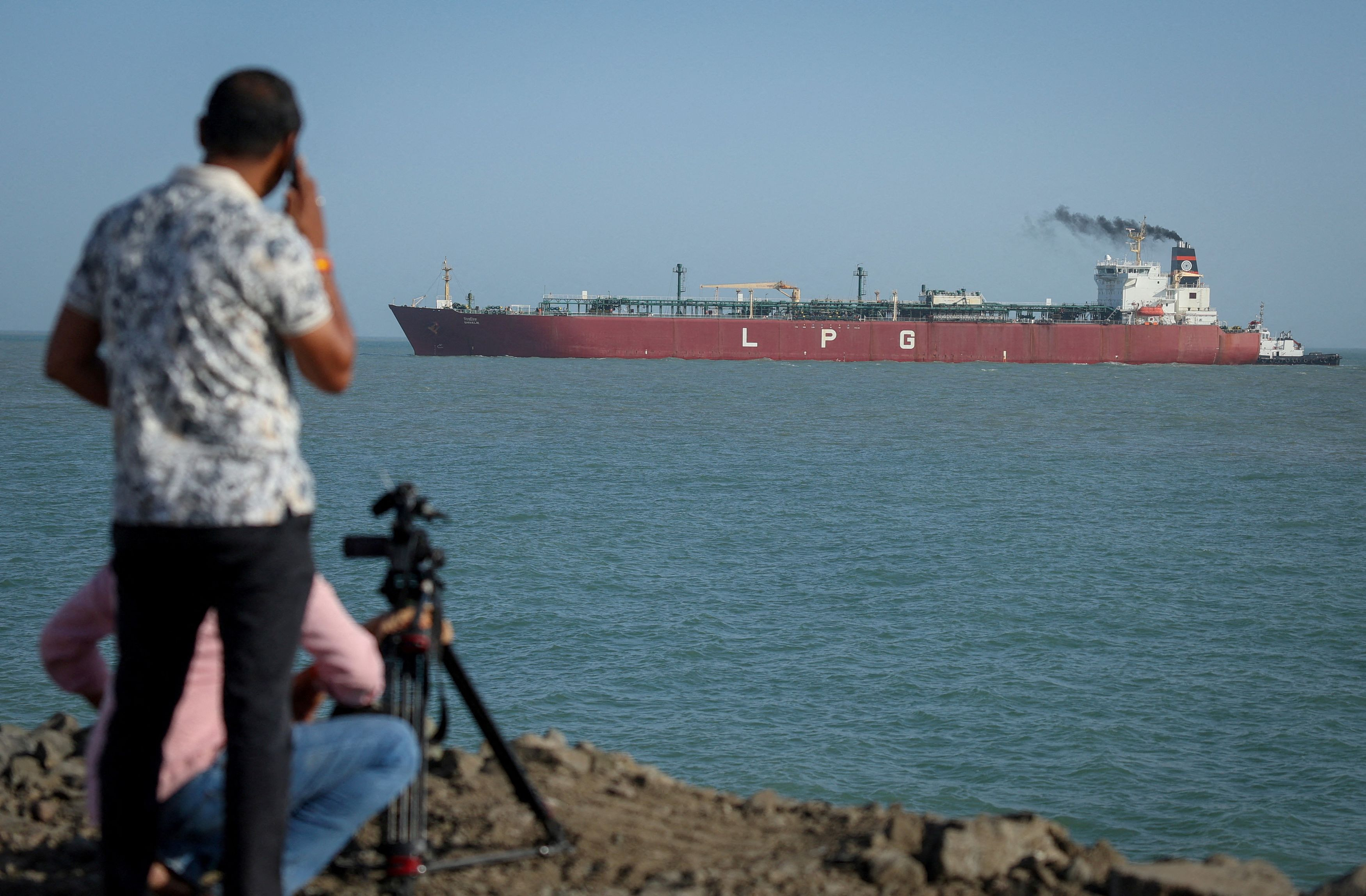
Over the weekend, Indian ministers cheered the passage of two tankers bearing liquefied petroleum gas through the passage after talks with Tehran about the shipments. One of the tankers, Shivalik, reached Mundra Port in Gujarat, India, on Monday, according to MarineTraffic data. The other, Nanda Devi, is set to reach the Indian coast on Tuesday.
India’s government has been racing to prevent shortages of LPG after the effective closure of the strait cut off the country’s main source of the widely used cooking fuel.
The safe passage of the two Indian LPG tankers followed a phone call last week between Indian Prime Minister Narendra Modi and Iranian President Masoud Pezeshkian, after India helped repatriate more than 140 Iranian nationals on a charter flight arranged by Iran.
In the crude market, 17 oil-bearing tankers have sailed through the strait from the second day of the war through Sunday, according to ship-tracking firm Kpler. Seven of them flew the Iranian flag, suggesting they carried Tehran’s crude. It wasn’t clear where they were sailing, but China buys most of Iran’s sanctioned oil. Just one of the 17 tankers, managed by Associated Maritime in Hong Kong, is sailing toward Europe.
Some vessels broadcasting their destinations as Chinese affiliates, such as “China owner” or “All China crew,” have been allowed to pass, maritime analysts said.
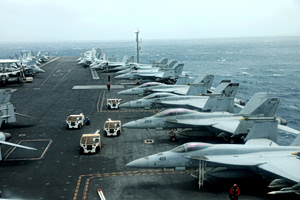
President Trump has promised a navy escort to unblock the strait. Trump said that the administration planned to announce a coalition to escort ships as soon as this week. However, countries including Australia and Japan have said that they weren’t planning to send warships to the strait.
European shipping executives said the negotiated transit of ships without ties to the U.S. or Israel, and sailing toward countries that haven’t picked a side in the war, was a possible way to keep some Middle Eastern fossil fuels heading to world markets.
Traffic through Hormuz is still well below prewar levels. On average, five ships went through the strait each day last week compared with 125 before the war, estimates Stephen Gordon, head of research at shipbroker Clarksons. Three oil tankers made the voyage over the weekend, versus 40 over a normal two-day period, he added.
Around 1,100 ships, including 250 petroleum tankers, are stuck in the Gulf, according to Gordon.
Holding most ships back is a sense of mortal danger. There have been more than two dozen attacks on commercial vessels in the Middle East Gulf so far this month, most of which are concentrated on tankers as opposed to bulk carriers and containerships, according to S&P Global Market Intelligence.
“The perception of risk for vessels is very high at this point,” said Jack Kennedy, head of Middle East country risk at S&P Global Market Intelligence. Even with potential U.S. and allies’ escort support, the protection is unlikely to be sufficient to escort all of those hundreds of commercial ships waiting to transit the strait, he said. “And again, it requires one sea mine, one unmanned aerial vehicle to spook all those operators.”
Working through that backlog would take weeks even after the waterway is safe to pass, said Saleem Khan, chief data and analytics officer at maritime-intelligence firm Pole Star Global.
Although the strait is 21 miles wide at its narrowest point, there are only two 1.86-mile stretches where water is deep enough for large oil tankers to pass, given how low these ships sit in the water. “This creates a two-lane highway for large vessels, one lane in and one out. The bottleneck here could last a few weeks at the very least,” he said.
It is still too early to say whether there will be a more formal system for ships to seek guidance on whether they can cross the Strait of Hormuz, maritime analysts said. However, how the Iran-backed Houthis in Yemen handled the Red Sea passage last year could set a precedent, maritime analysts said.
In late 2023, the Houthis began targeting vessels in the Red Sea and established an application system allowing selective ship passage. Ships would send an email to the Houthi forces requesting permission several days in advance of crossing, according to a crew member and maritime analysts.
Write to Rebecca Feng at rebecca.feng@wsj.com and Joe Wallace at joe.wallace@wsj.com