
 Μake us preferred on Google
 “USA250: The Story of the World’s Greatest Economy” is a yearlong WSJ series examining America’s first 250 years. Read more about it from Editor in Chief Emma Tucker.
Before splashy Silicon Valley product launches and the annual Consumer Electronics Show, the world showcased its latest innovations at high-profile World’s Fairs.
These exhibitions, held every few years beginning in London in 1851, gave countries a public platform to showcase new technologies, products and ideas that were going to reshape daily life. For host countries and cities, the World’s Fairs—or Expositions—were an opportunity to own the world stage and project national confidence.
“Many of the big Expos were commemorative,” says Paul Greenhalgh , a British historian and author of two books on World’s Fairs and Expositions. “But all of them ended up doing something else. They changed the shape of cities.”
Much like the Olympics today, World’s Fairs were large-scale planning efforts and economic investments as much as cultural events. Cities competed for the right to host them. Chicago was able to redefine its image from a gritty second city to a cultural and architectural hub after defeating New York’s bid for the 1893 exposition.
Here’s a look at the U.S.-hosted World’s Fairs that left the deepest marks, and the innovations they unveiled.
Philadelphia, 1876: telephones and ketchup
America’s first officially sanctioned World’s Fair, the Centennial International Exhibition, arrived when the country was still defining its place among industrial nations. Unlike earlier European fairs built around single monumental halls, the Philadelphia event spread across a vast park with hundreds of structures, a layout that influenced later World Expos.
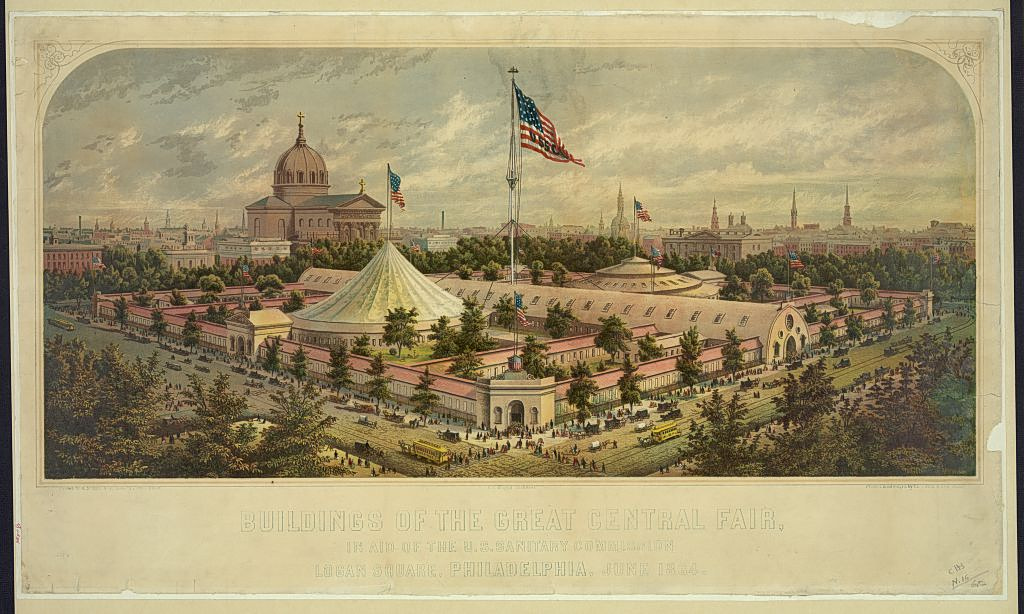
The Great Sanitary Fair in 1864 was the model for the Centennial Exposition; it raised $1,046,859 for medicine and bandages during the American Civil War.
Among the most notable exhibits was Alexander Graham Bell’s telephone. It was initially greeted with skepticism, but the potential of the cool contraption quickly drew attention. “Once people realized what had been invented, it became clear how important it was,” Greenhalgh says.
The fair also showcased Thomas Edison’s automatic telegraph, as well as machinery such as the typewriter and calculator and consumer-packaged goods such as Heinz tomato ketchup. It normalized the idea that private companies, inventors and even governments could present their work side by side, a model that amplified the country’s entrepreneurial culture.
The impact on Philadelphia’s legacy was tangible. Buildings and institutions developed for the exhibition contributed to the city’s enviable park system and museum culture, signaling that the U.S. was prepared to host international exhibitions of science, industry and the arts that held up to European cultural standards.
Chicago, 1893: Ferris wheel and popcorn
Chicago’s World’s Columbian Exposition permanently altered how the city was perceived, both domestically and abroad. Designed under the direction of architect and urban planner Daniel Burnham, the fair’s neoclassical “White City”—where the main buildings were reinforced with white plaster and illuminated at night—presented a vision of order and grandeur that contrasted sharply with Chicago’s rough industrial reputation.
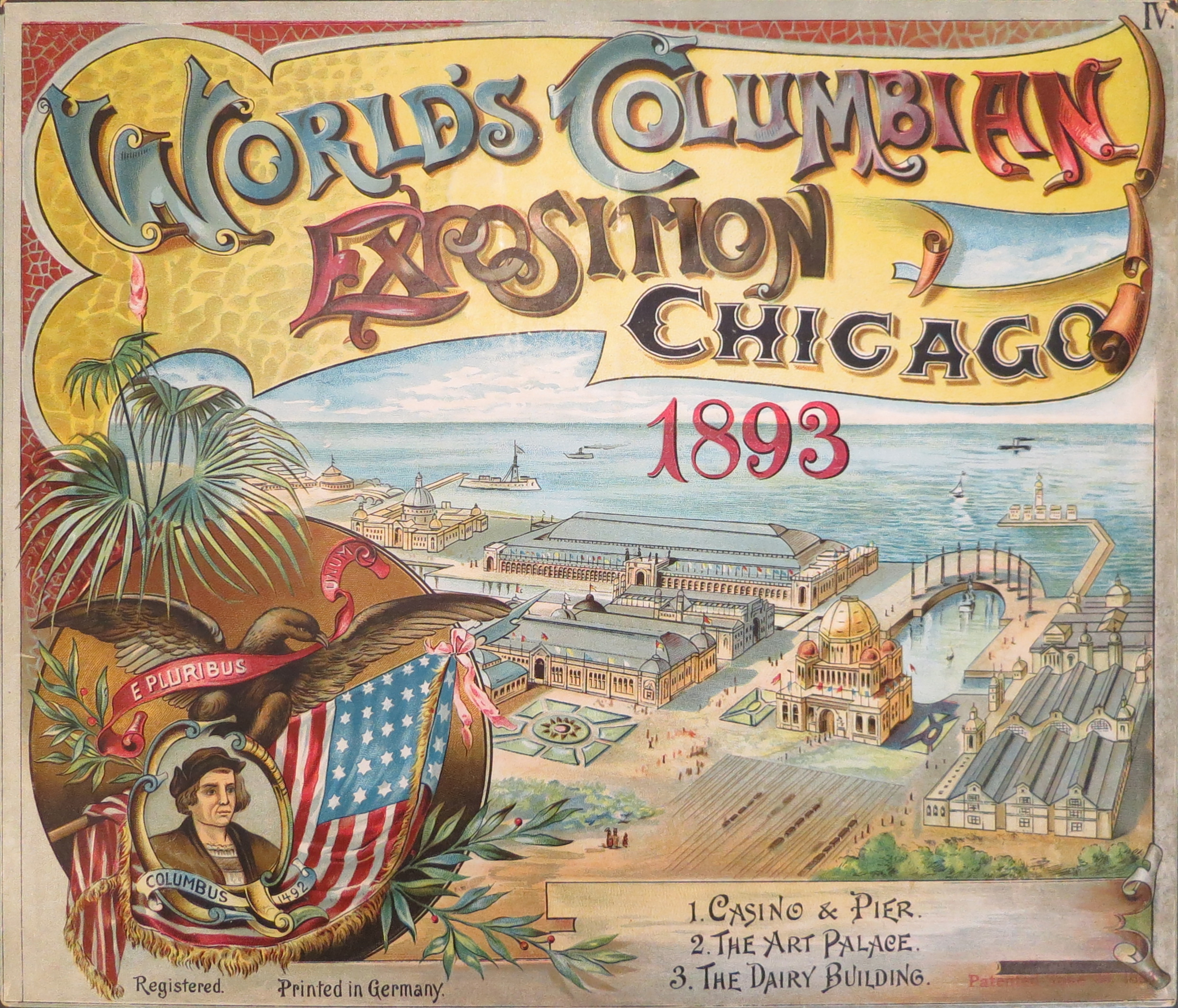
An advertisement for the Exposition, depicting a portrait of Christopher Columbus
The fair’s most famous structure was the Ferris wheel, engineered as a response to the Eiffel Tower, which made its debut at the 1889 World’s Fair in Paris. Its 45-ton axle was largest piece of steel ever forged until that time, demonstrating new advances in steel construction and mechanical engineering. “After that, everyone wanted a Ferris wheel,” says Greenhalgh.

The original Ferris Wheel
The fairgrounds were illuminated using incandescent electric lighting at a scale that showed how entire urban districts could be electrified. Visitors also encountered the phonograph and early mechanical fastening devices that foreshadowed later developments in clothing closures. (Looking at you, zipper!) Popcorn also was introduced here, an enduring, portable American snack.
Buffalo, N.Y., 1901: an electric city
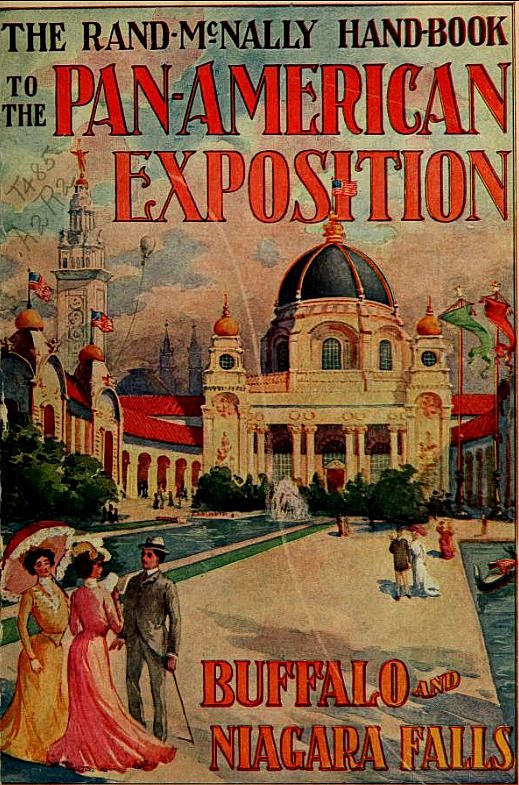
Rand McNally Pan American Exposition Handbook
Though remembered mostly as the location where President William McKinley was shot (he died a week later), Buffalo’s Pan-American Exposition was meant to showcase America’s dominance and innovation in electrical power and infrastructure.
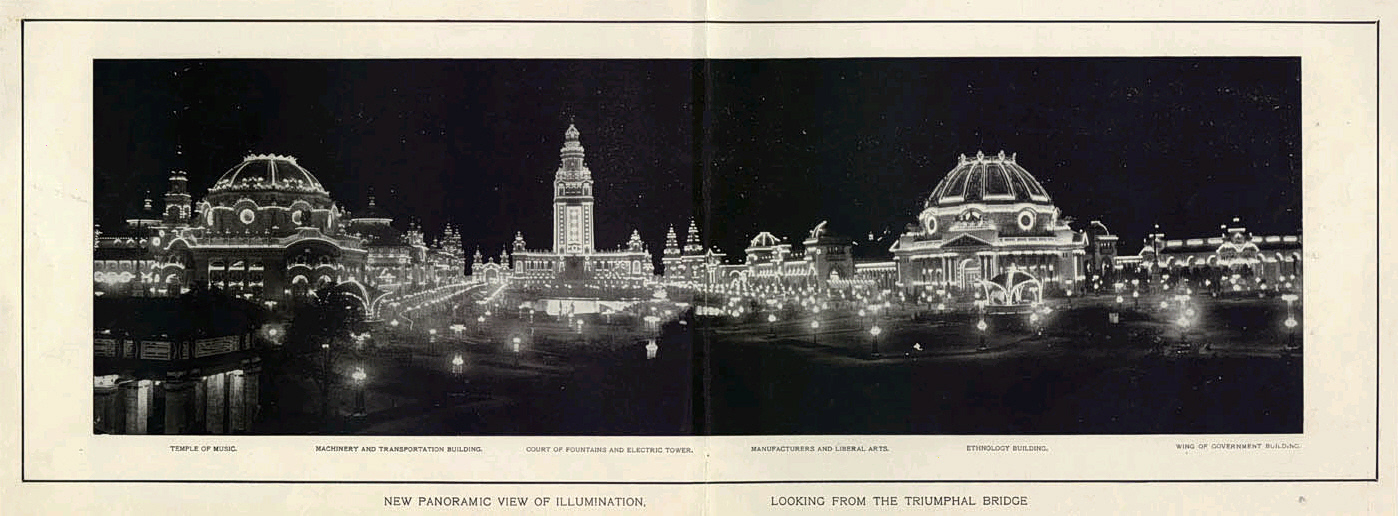
Pan-American Exhibition, panorama view, from The Latest and Best Views of the Pan-American Exposition, Buffalo, N.Y.: Robert Allen Reid, 1901.
The fair featured electric lighting and electric streetcars powered by hydroelectricity generated by Niagara Falls, reflecting a moment when electricity was beginning to move from novelty toward widespread utility.
St. Louis, 1904: snack-food extravaganza
The Louisiana Purchase Exposition was among the largest ever staged and nearly obliterated the city’s finances. Still, its pop-cultural influence endures.
The exposition popularized a host of snack foods that would become staples of American life, including ice-cream cones, peanut butter, hot dogs, hamburgers and cotton candy. While the foods weren’t all invented for the fair, their widespread availability there helped introduce them to a national audience.
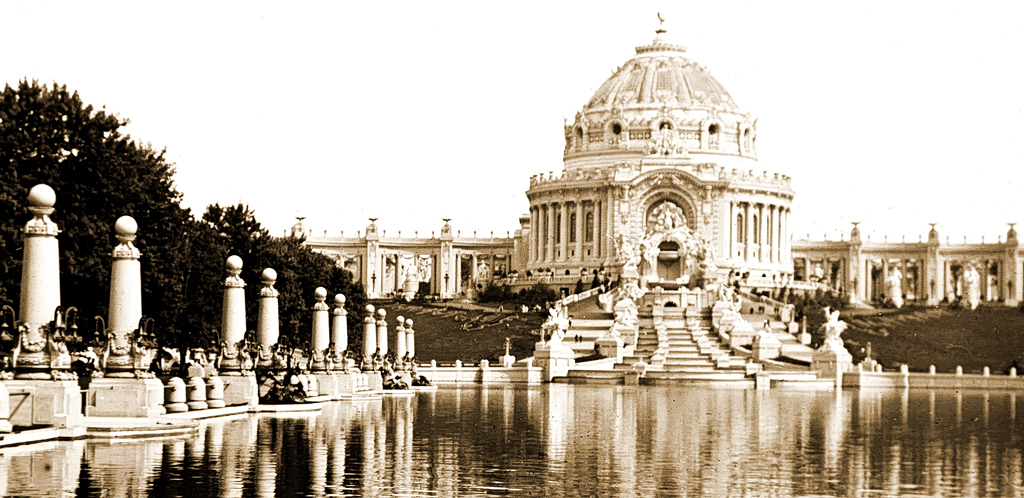
1904 World’s Fair, Grand Basin and Festival Hall, Vintage Photograph.
Visitors also encountered early examples of X-ray machines, infant incubators, automobiles, early “flying machines” and submarine technology. For St. Louis, the exposition functioned as an exercise in city-building and the carving out of civic spaces, including architect Cass Gilbert’s Palace of Fine Arts, which was renamed the St. Louis Art Museum.
Seattle, 1962: the space race
By the mid-20th century, World’s Fairs had become games of one-upmanship and geopolitical rivalry. Seattle’s Century 21 Exposition took place in the shadow of the Cold War, following the Soviet Union’s launch of Sputnik, the world’s first artificial Earth satellite. The Soviets turned down an invitation, while China, Vietnam and North Korea weren’t invited.
“The federal government became deeply involved,” Greenhalgh says. “There was a sense that America needed to demonstrate technological leadership.”
The Space Needle, constructed for the fair, became a lasting symbol of that ambition.
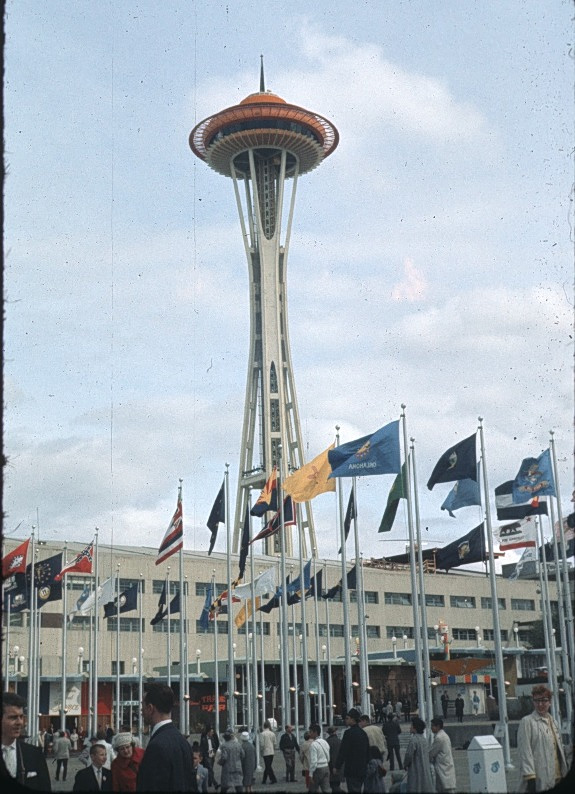
Space Needle and flags (March 29, 1962)
Image 77810, Seattle Municipal Archives
Exhibits focused on space exploration, satellite communications and visions of future urban life. NASA, which had just been launched four years prior under President Dwight Eisenhower, showed off its goods in the Science Pavilion. This fair lifted Seattle, says Greenhalgh, reinforcing it ties to the aerospace, computing and technology industries—an identity that remains to this day.
New York, 1964: Picturephones and punch cards
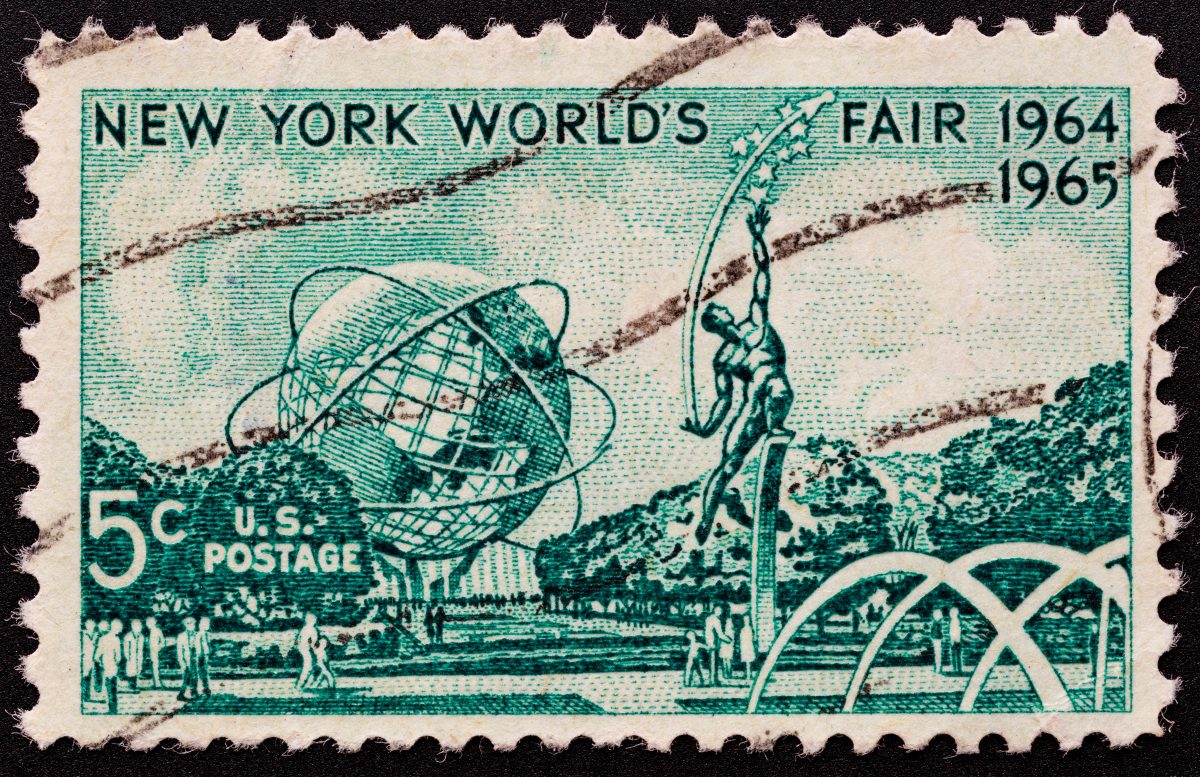
The World’s Fair at Flushing Meadows in New York City emphasized consumer-facing technology and corporate futurism, even though the official theme was “Peace Through Understanding.” Visitors were dazzled by color-television demonstrations and the Picturephone, an early video-calling system that prefaced technologies developed decades later. International Business Machines showed off a computer and gave out commemorative punch cards in its corporate pavilion, created by visionary industrial designers Charles and Ray Eames.
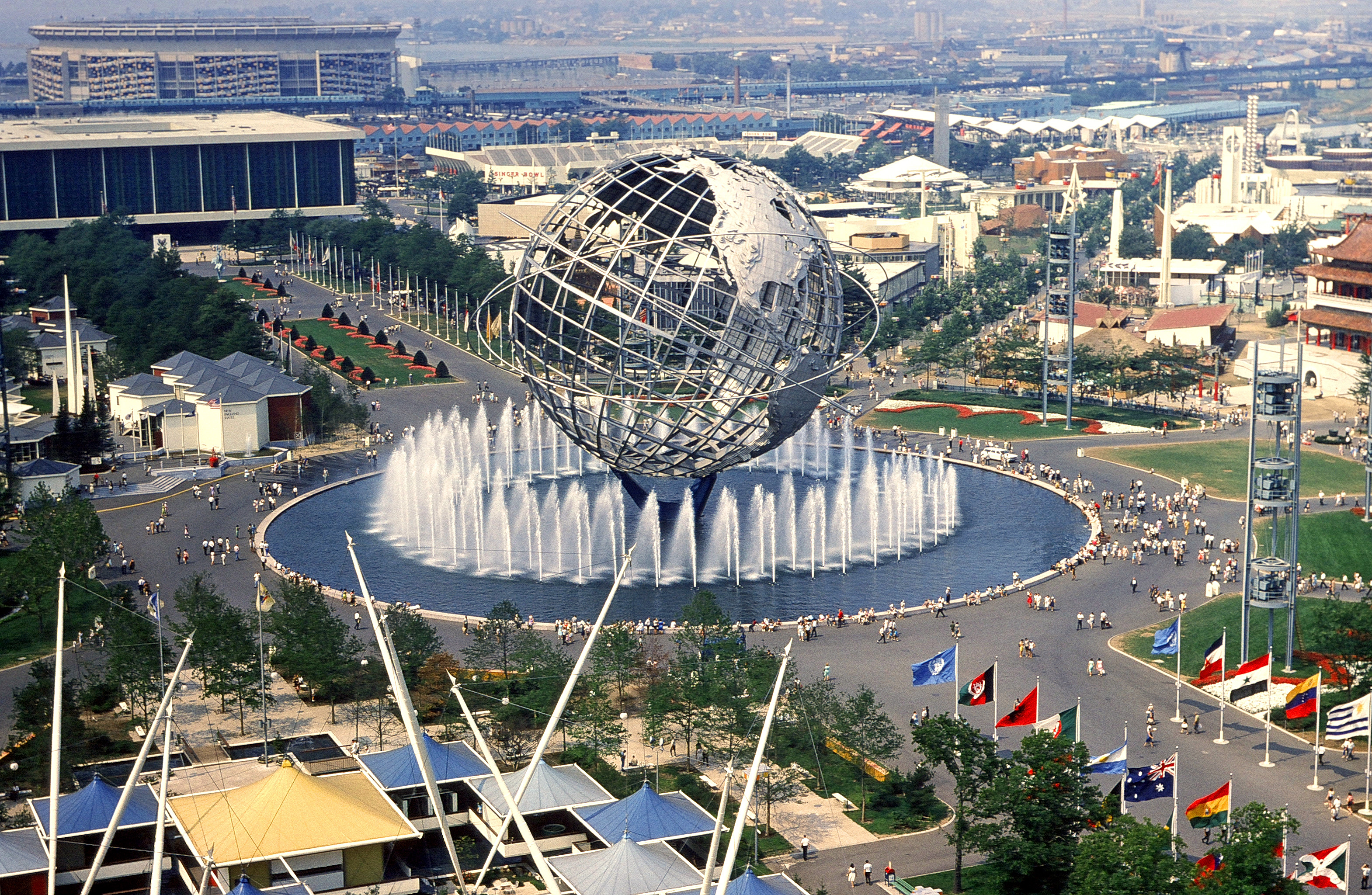
From PLCjr on Flickr.com — Photograph by Anthony Conti of the Unisphere and surroundings at the 1964 New York World’s Fair. This photo is a picture taken of the original Kodachrome slide.
The 1960s were a disruptive and transformative time in America, but the fair hoped to emphasize global connectivity and American optimism. It lost money, but many of its structures remain, including the 12-story steel Unisphere, the New York Hall of Science and the three observation towers (which were shown to be secret alien spaceships in the 1997 science-fiction comedy “Men in Black”). Millions still arrive to this area for the annual U.S. Open tennis tournament.
Spokane, Wash., 1974 and Knoxville, Tenn., 1982: fade-out
These later American fairs were more modest but still influential. Spokane’s environmentally themed 1974 exposition introduced the public to IMAX large-format film technology, expanding how audiences experience visual media. The 1982 Knoxville World’s Fair highlighted emerging interface-driven technologies. Elographics, a company spun out of the government-funded Oak Ridge National Laboratory by physicist George Samuel Hurst, showcased an advanced touch-screen computer system. Other exhibits displayed early cordless phones, Tetra Pak’s shelf-stable milk containers and pay-at-the-pump gas-station transactions.
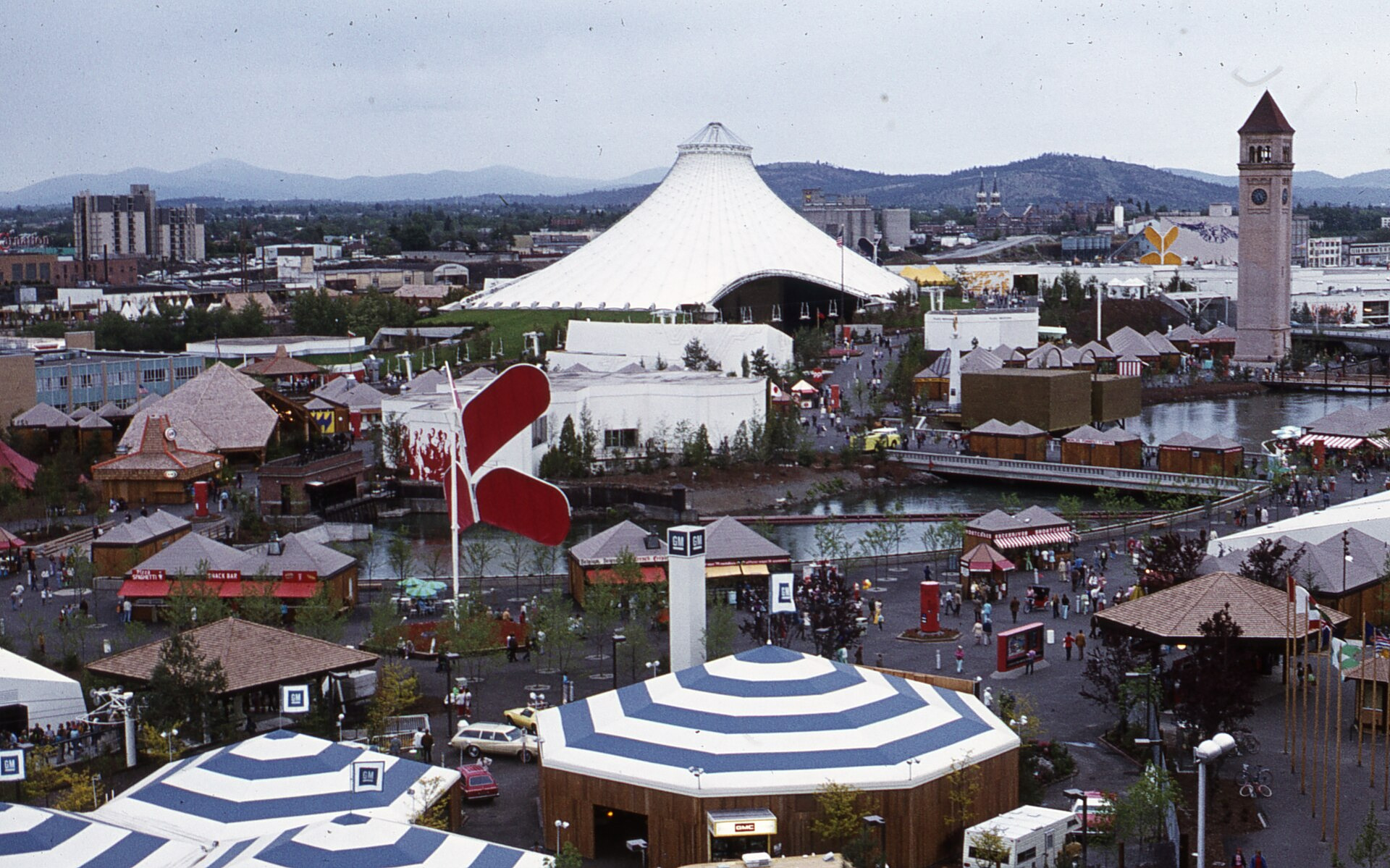
View of the Expo ’74 site during the fair.
The last officially sanctioned World’s Fair in the U.S. was hosted by New Orleans in 1984, and it produced no truly defining technological debut or enduring urban transformation. By that point, the function that World’s Fairs once served had largely migrated elsewhere—to museums, television, theme parks and technology conferences.
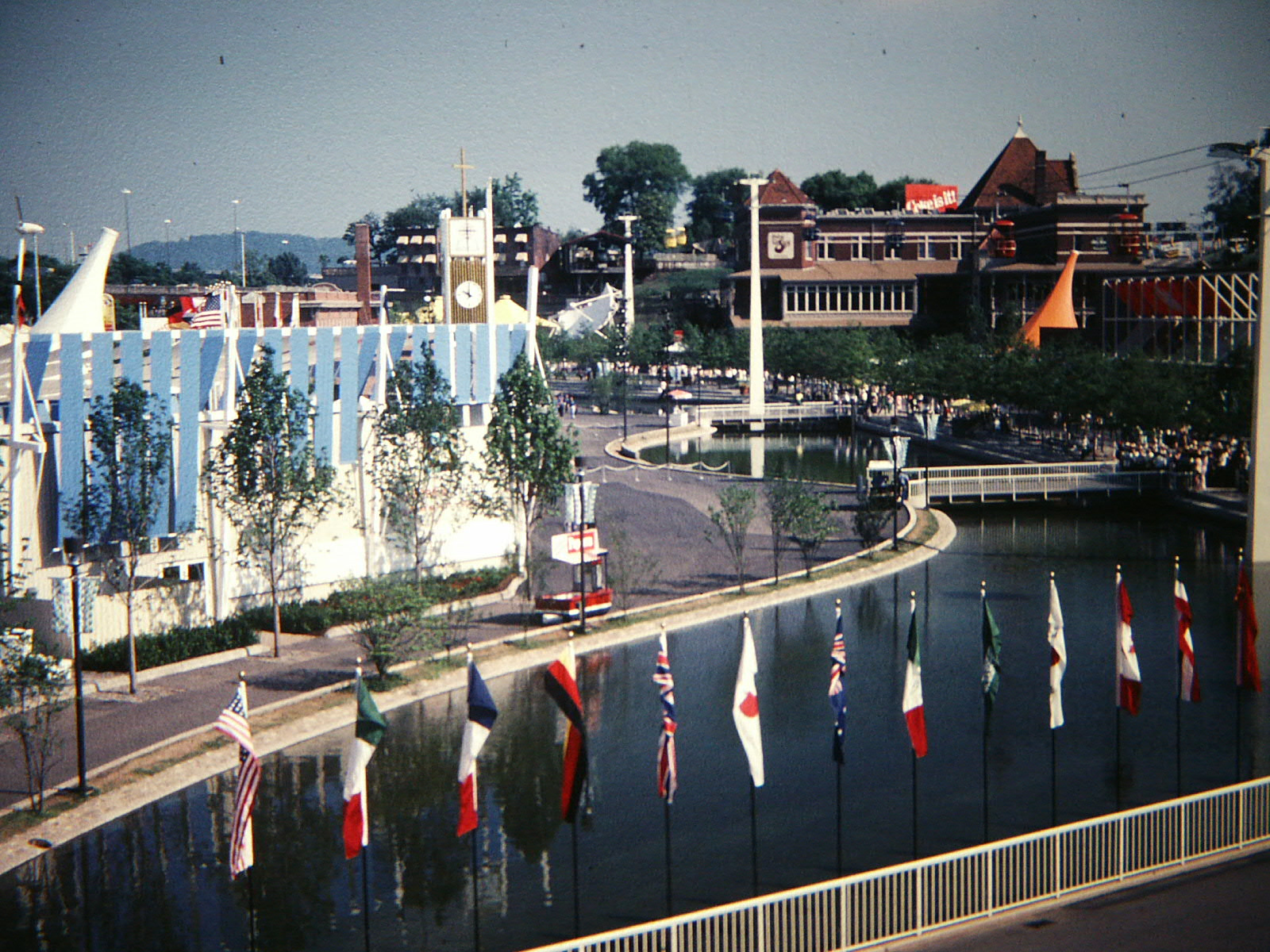
1982 World’s Fair, Knoxville, Tennessee, digital copy of slide. Complete indexed photo collection at WorldHistoryPics.com.
As a result, the World’s Fair concept gradually faded, says Greenhalgh.
“Putting on an Expo is a lost art,” the author says. “But when America needed it, no one did it better.”