 Μake us preferred on Google
The era of horse-drawn carriages clip-clopping through Central Park is coming to an end.
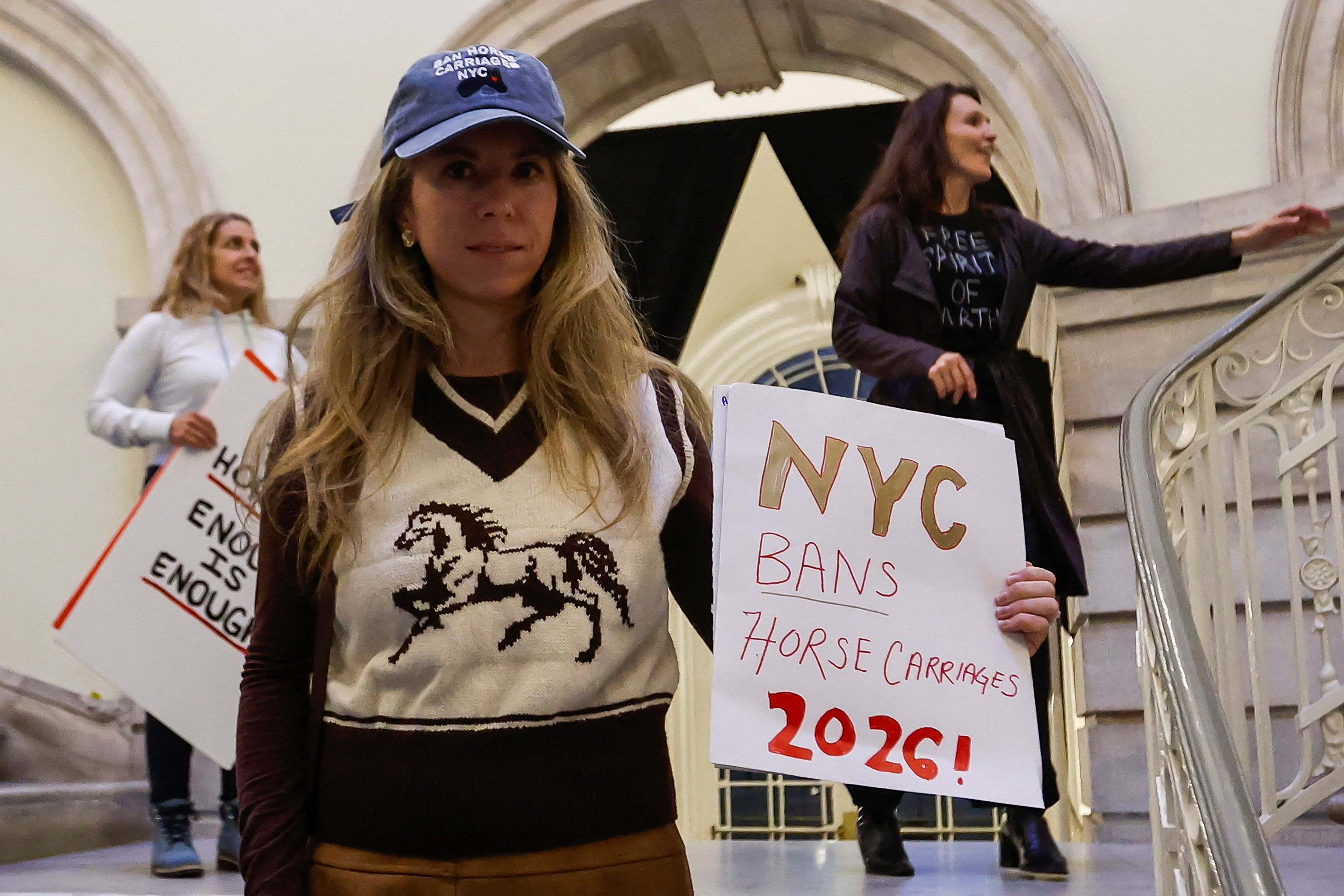
The New York City Council on Thursday voted 40-7 to ban horse carriages after decades of criticism from animal-rights activists. Mayor Zohran Mamdani supports the legislation, championed by New York City Council Speaker Julie Menin, that will shut down the industry in June 2028.
The union that represents horse carriage workers said it would sue in federal court if the ban becomes law. President Trump also weighed in before the ban passed, writing on Truth Social that it was “so sad to see the beloved Central Park Horse-drawn Carriage Industry ending.”
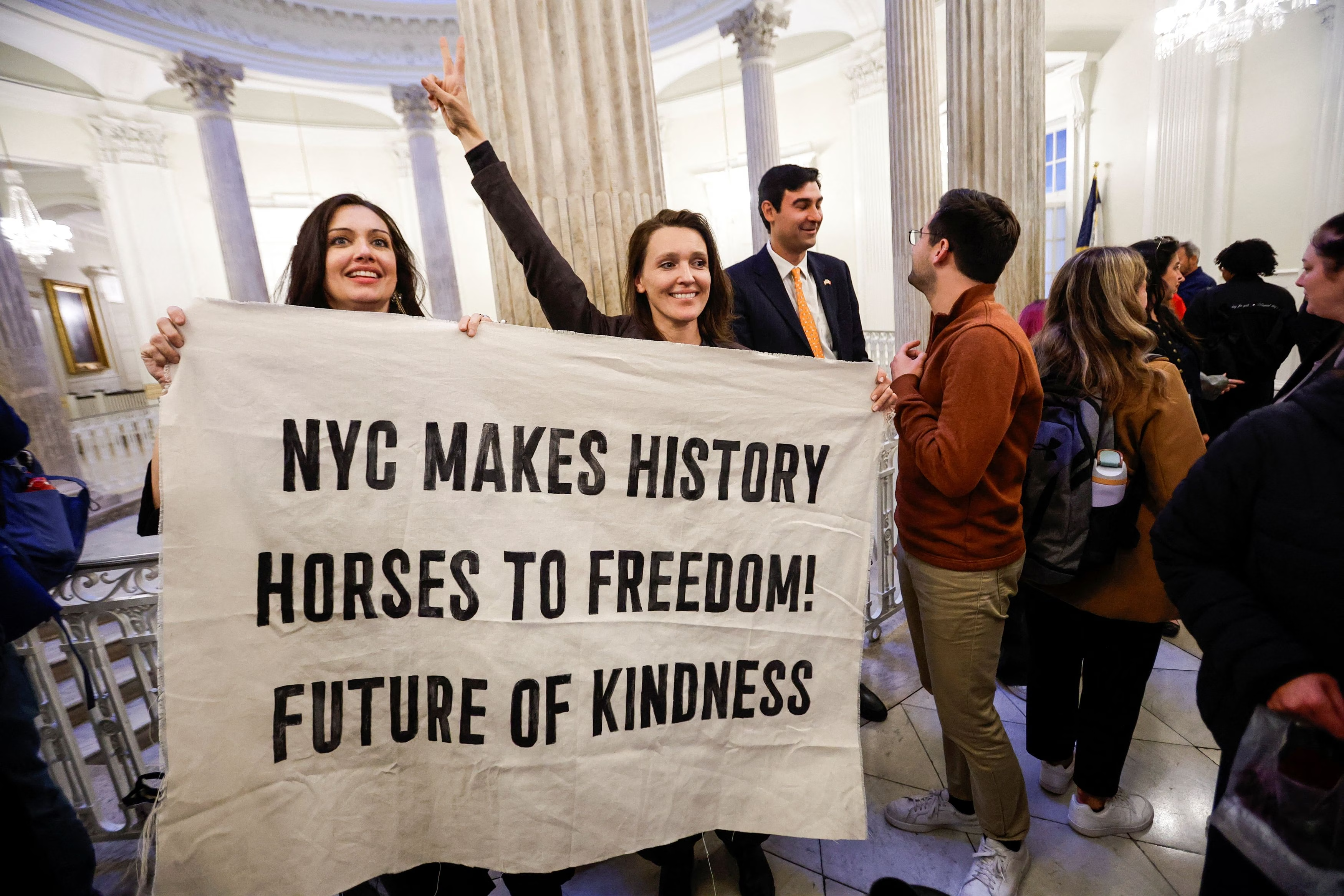
People react after the vote by New York City Council members approving Romanch’s Law, legislation that would phase out horse-drawn carriages in Central Park, at City Hall in New York City, US, October 22, 2026. REUTERS/Eduardo Munoz
The legislation requires the “humane disposition of carriage horses” and prohibits their sale for slaughter or for use in another horse-drawn carriage business. Approximately 100 horses pull the carriages licensed to operate in Central Park.
Mamdani said city officials are considering several proposals, including taking the horses to sanctuaries or farms, although the legislation doesn’t specify who would pay for their upkeep. It also remains unclear whether drivers would be compensated for their horses or receive financial assistance if they retain ownership but need help covering the cost of care.
Menin’s office said the city will have a transition plan developed by agencies designated by the mayor before the June 2028 deadline.
Animal-rights activists have long called for a ban or tighter regulation of horse-drawn carriages in New York City and have called the practice inhumane. Still, the horses have remained part of the city’s fabric.
In June, lawmakers were spurred to action by the death of 18-year-old Romanch Mahajan, a tourist from India who was killed after being thrown from a runaway carriage in Central Park. It was the first human fatality in a horse-carriage accident.
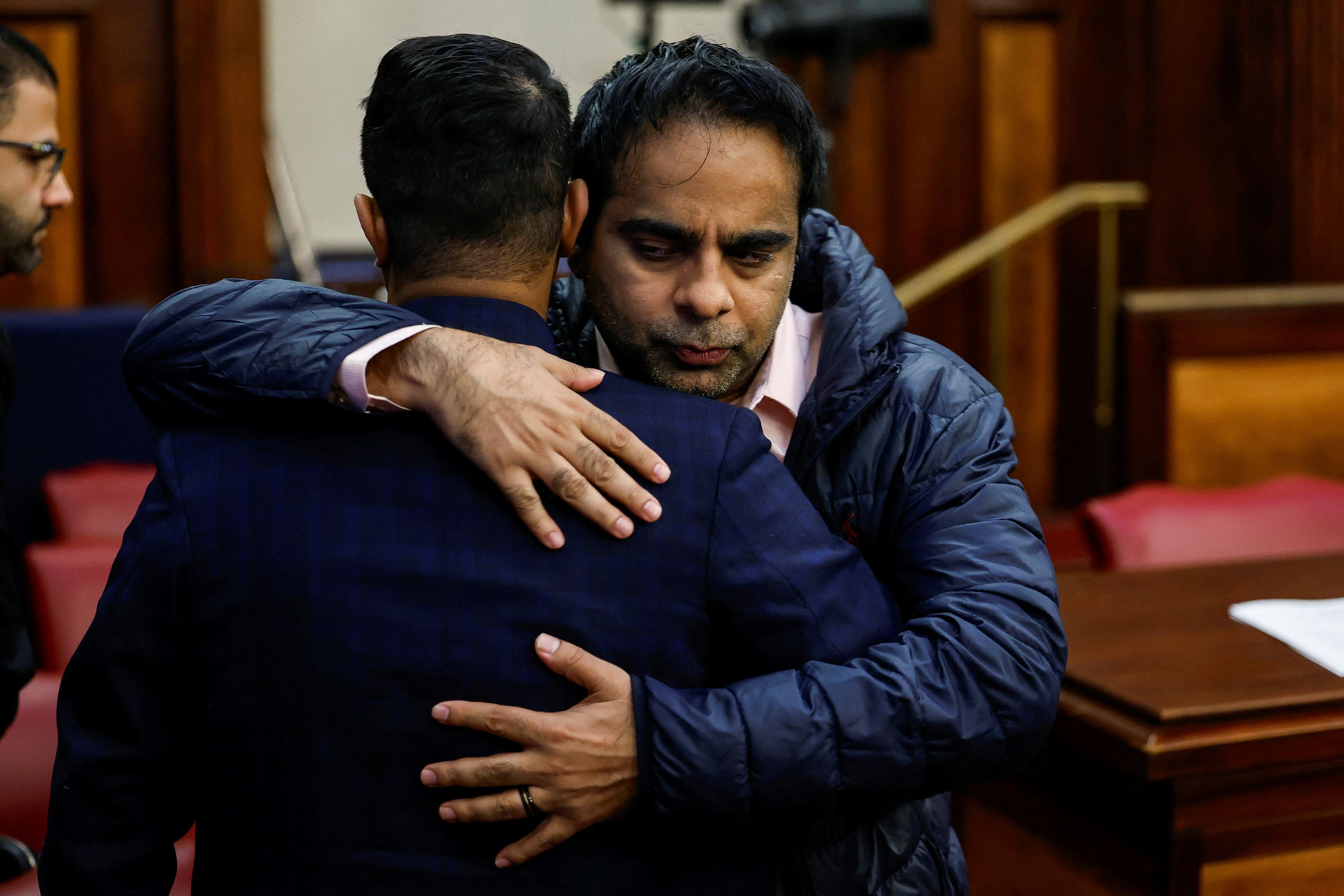
Family members of Romanch Mahajan react after New York City Council members voted on Romanch’s Law, approving legislation that would phase out horse-drawn carriages in Central Park, at City Hall in New York City, US, October 22, 2026. REUTERS/Eduardo Munoz
Carriage opponents have also pointed to other high-profile incidents involving the horses. A week before the tourist’s death, a 16-year-old horse collapsed and died in Central Park, setting off more finger-pointing between activists and Transport Workers Union Local 100, the union that represents about 150 carriage drivers and carriage owners. A preliminary necropsy report found the equine had ingested a common but poisonous plant that is found in the park.
TWU Local 100 and carriage drivers have long denied that the industry mistreats or abuses its horses. The city mandates yearly five-week vacations for the horses, regular veterinary inspections, and limits the number of hours a horse can work daily. It also prohibits driving the horses when it is too hot or too cold.
The ban’s legislation doesn’t provide guarantees to ensure the horses receive the level of care they now receive under city regulations, the union said.
The union said the death of the tourist over the summer was tragic, but noted it was the only human fatality associated with the industry, which has operated for more than 160 years. E-bike and scooter crashes regularly kill riders and pedestrians without lawmakers imposing similar bans, it said.
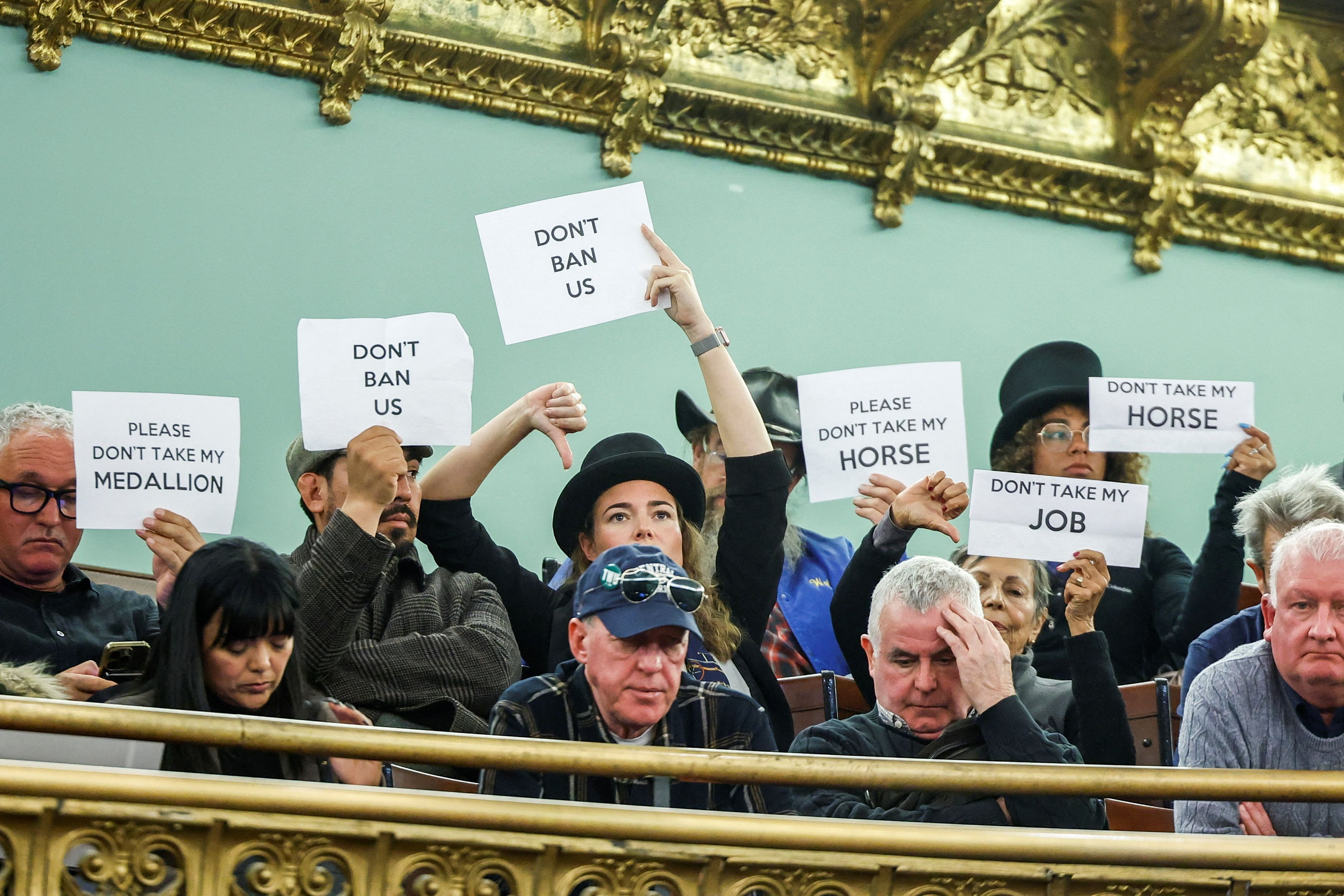
Horse carriage drivers react during a vote by New York City Council members on Romanch’s Law, legislation that would phase out horse-drawn carriages in Central Park, at City Hall in New York City, US, October 22, 2026. REUTERS/Eduardo Munoz
“Council Speaker Menin used the tragic death of a tourist to contrive a public safety crisis,” Transport Workers Union International President John Samuelsen said. “This is disgraceful political opportunism, and Zohran should not simply go along with it, particularly when immigrant families’ livelihoods are being destroyed.”
A spokesperson for Menin said she is committed to meaningful protections for the workers and has invited TWU and the administration to join a joint working group created last week on the transition process.
The drivers, many of whom are immigrants, say the ban will eliminate their livelihoods without offering a viable alternative. The legislation says the city should establish a transition plan for carriage owners, drivers and stable workers, but provides few details.
Mamdani has said the city has a civic responsibility to ensure the drivers and carriage medallion owners are taken into consideration.
“I have always spoken about the importance of taking care of the workers in this industry, because they have earned their livelihoods from this work,” Mamdani said. “They should not be ones that are simply left as an afterthought of what comes after this.”
Write to Joseph De Avila at joseph.deavila@wsj.com