
 Μake us preferred on Google
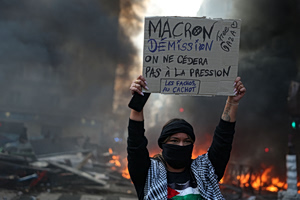
The worst unrest in years has swept France, as rioters have attacked government buildings and stores while hundreds of thousands protest rising living costs.
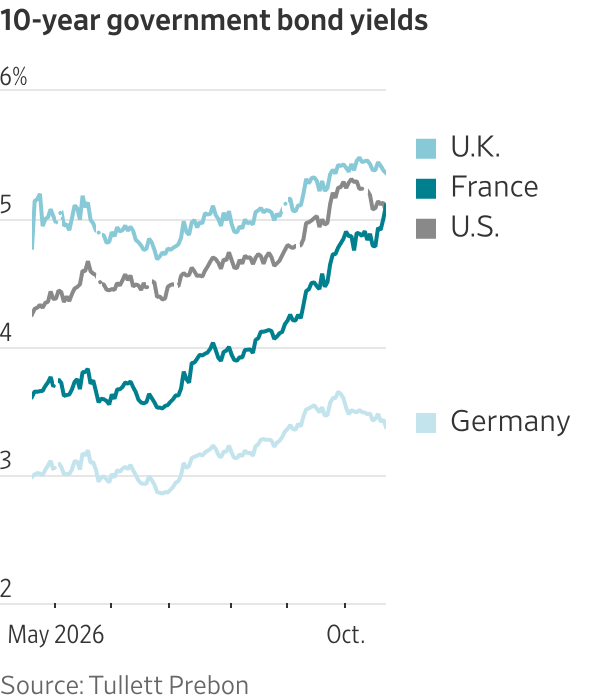
The problem for the government, as it seeks to address the demands of protesters, is that years of spending to protect consumers from price hikes have left the country’s finances in a precarious state. One of the largest budget deficits in Europe and political gridlock have driven investors to sell French bonds, pushing the country’s 10-year borrowing costs above 5%.
With a presidential election looming next year, there are no easy choices for the country’s next leader. Here are eight charts that show the depth of France’s financial distress.
The delayed inflation shock
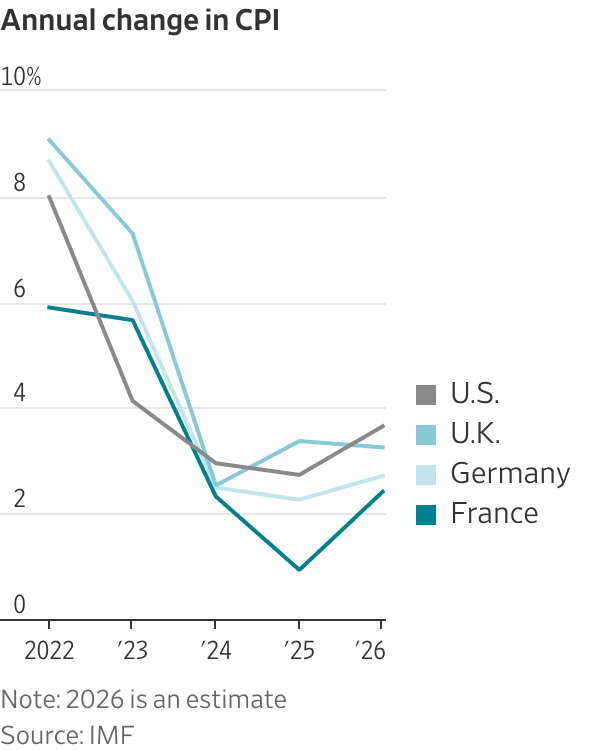
French households are suddenly confronting the bill for past state efforts to soften inflation. Between 2022 and 2024, the government rolled out extensive energy-shield subsidies funded by deficit spending, keeping domestic headline inflation lower than in neighboring states.
A shrinking cushion
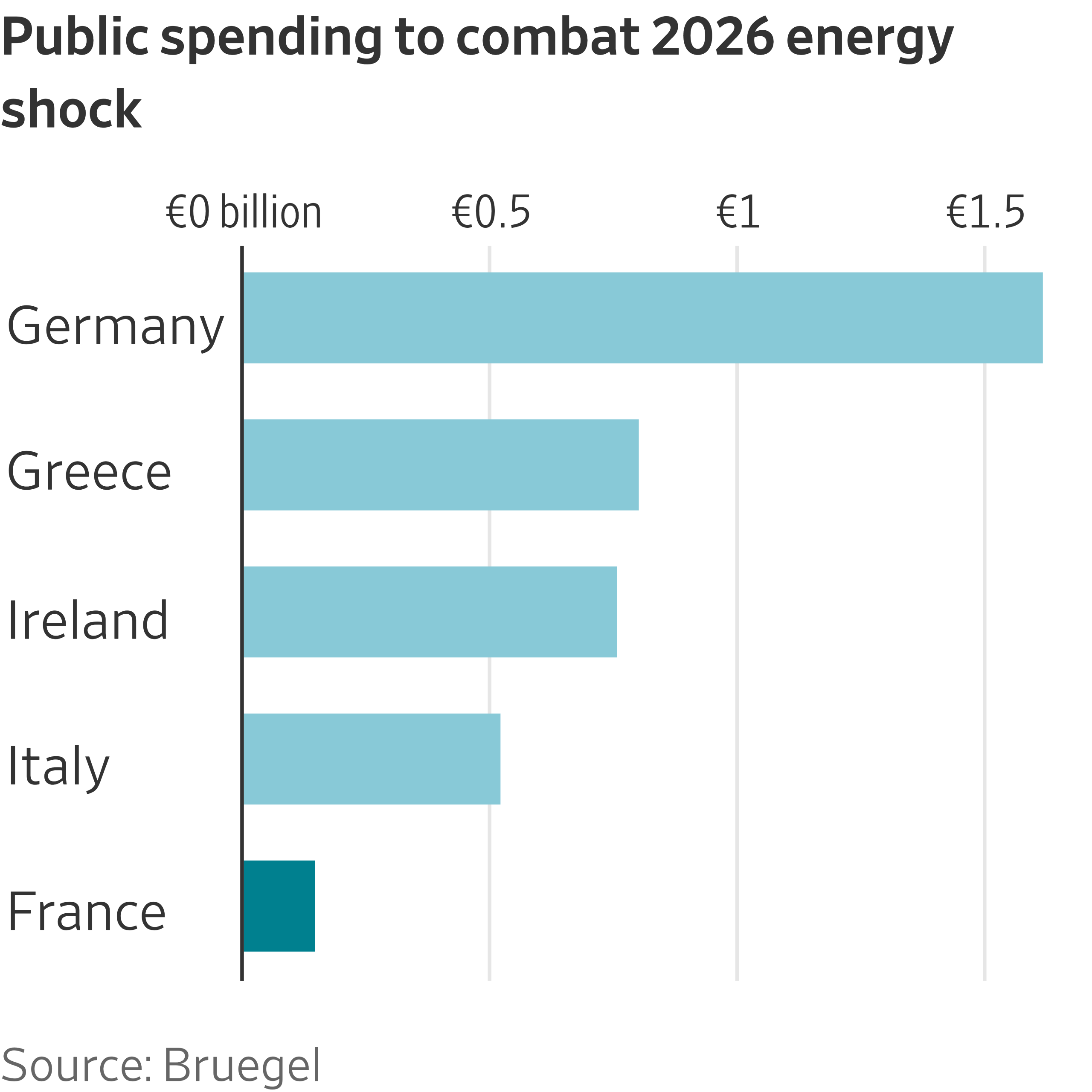
With the French treasury under pressure to reduce the deficit, ministers are increasing levies on electricity and gas. France has allocated less money toward emergency energy relief during this year’s Middle East price spike than far smaller economies like Ireland, according to Bruegel, a Brussels-based think tank. The result is a sharp, late jump in utility bills for households, just as broader European inflation shows signs of cooling.
A fiscal crunch
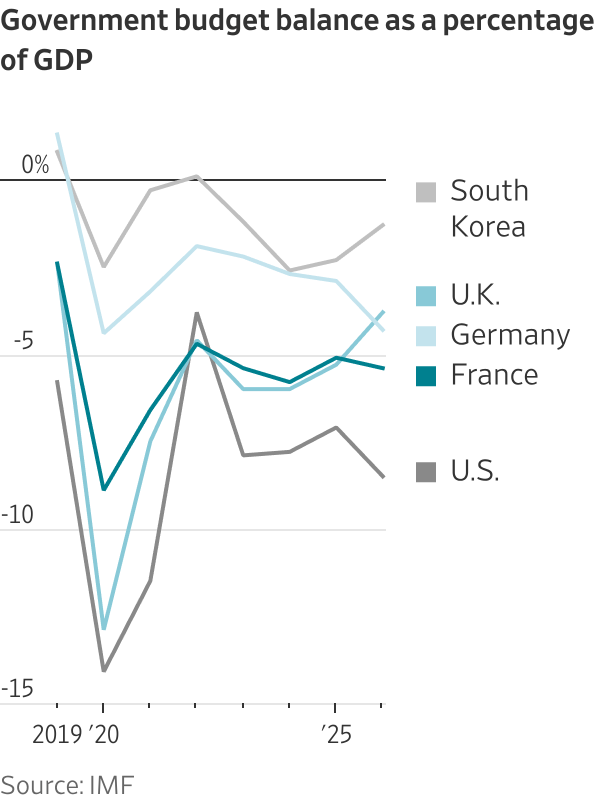
Among major developed economies, only the U.S. is expected to run a higher budget deficit than France this year, according to International Monetary Fund forecasts.
Surging borrowing costs
That budget deficit has driven up bond yields, robbing the French government of the flexibility it once had to spend more on addressing social grievances or borrow its way out of crisis.
Stagnant real earnings
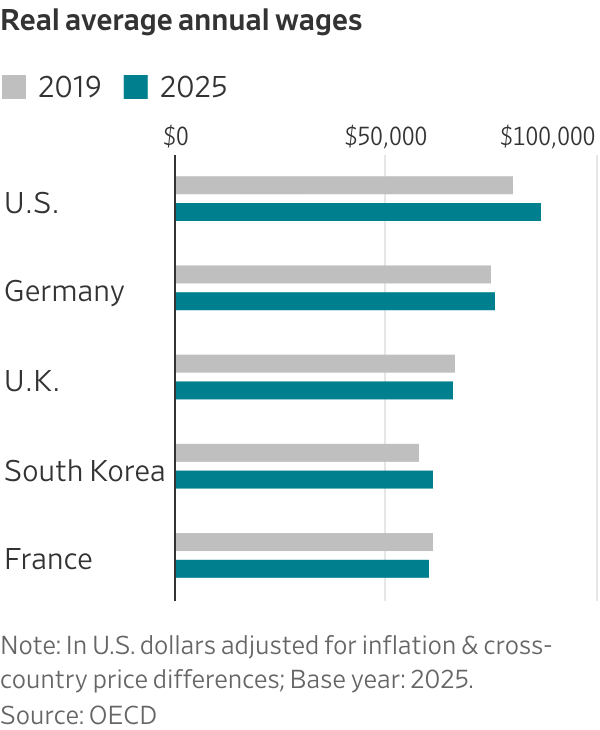
Real disposable incomes in France have largely plateaued. Unlike other countries such as the U.S., where wages have risen with prices, French pay has been eroded.
A heavy tax burden
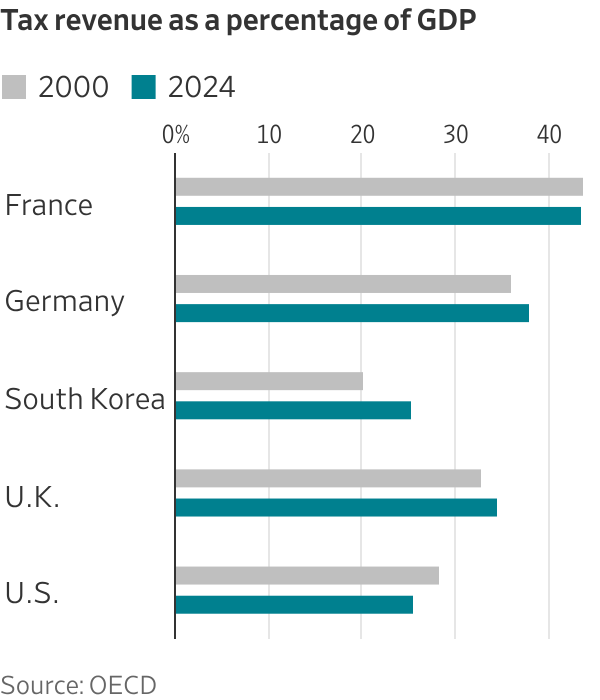
In lower-tax countries, citizens typically accept leaner government support. In France, where total tax receipts are nearly half of total economic output, the public expects generous welfare programs, efficient transit networks and well-developed public institutions. Pushing tax revenue above current levels risks hurting business activity, while cutting public services triggers immediate social blowback.
Pensions are squeezing public services
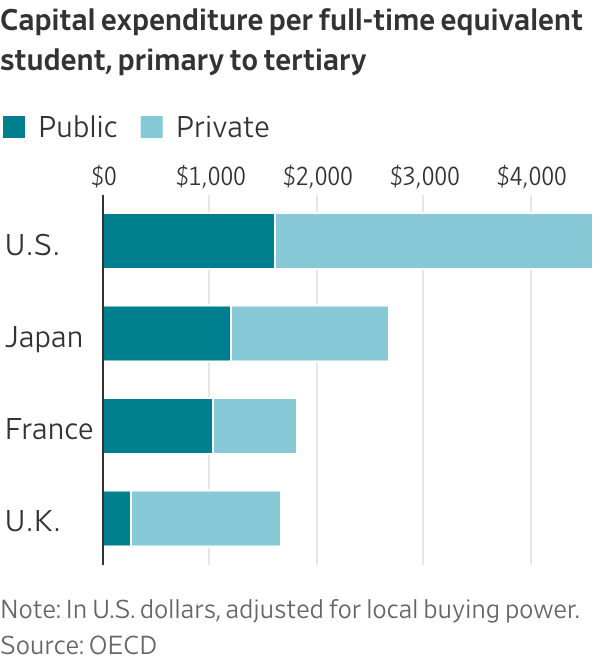
While public spending looks generous, a substantial portion is absorbed by historic liabilities. A government report this month revealed that 32% of the education budget goes directly to civil service pensions for retired staff rather than active classroom resources. Most other countries log such costs as pension spending.
Overall, more than 11% of France’s central government budget, equivalent to around $56 billion annually, is devoted to financing pensions without being recorded as a pension expenditure, according to Maxime Sbaihi, an economist at the Institut Montaigne think tank. Instead they are logged at the relevant government ministries as employer contributions on payroll taxes. These payments leave less funding for schools, equipment and teaching resources.
Falling rankings
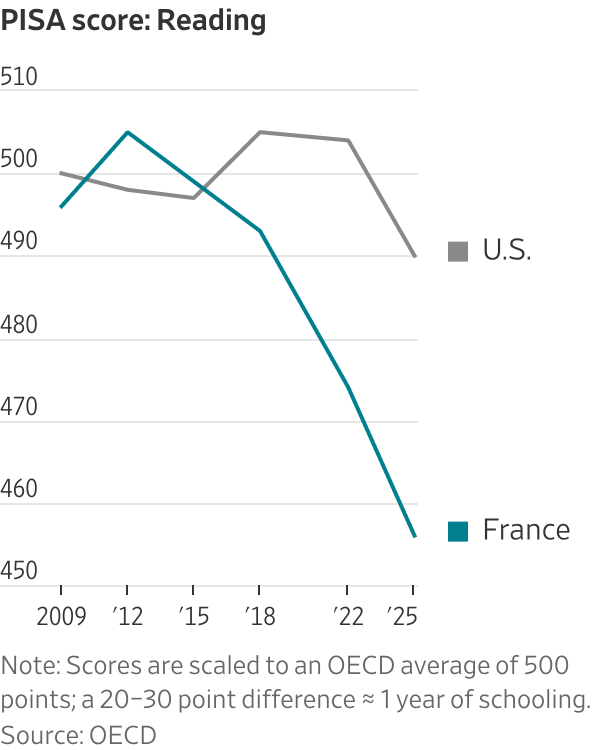
Meanwhile, student performance indicators have drifted downward, as reflected in recent Programme for International Student Assessment evaluations, an Organization for Economic Cooperation and Development measure of students’ abilities.
Write to Tom Fairless at tom.fairless@wsj.com