 Μake us preferred on Google
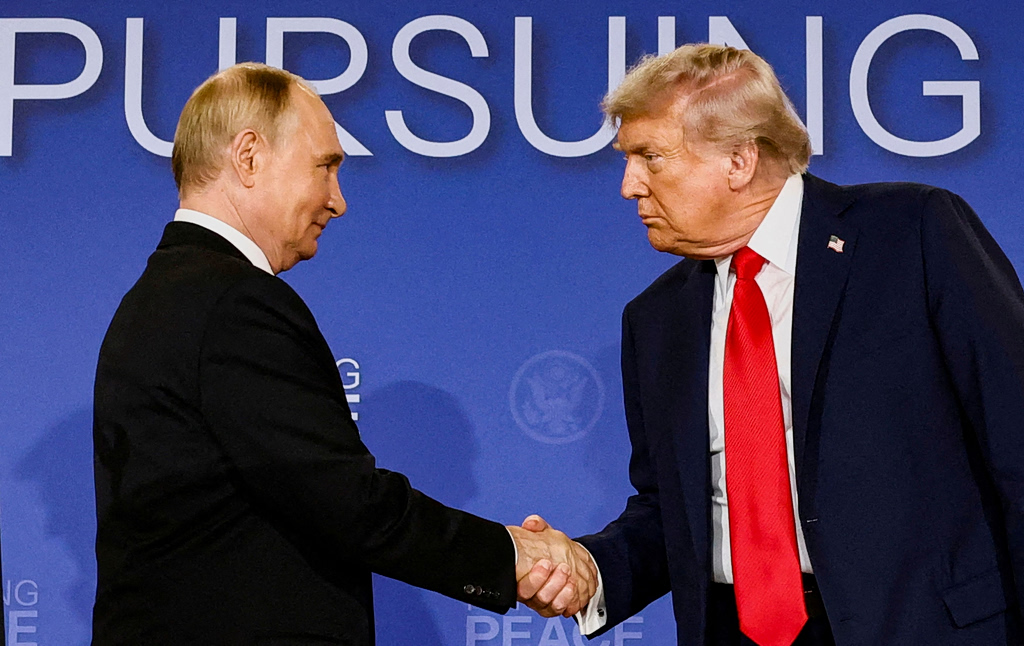
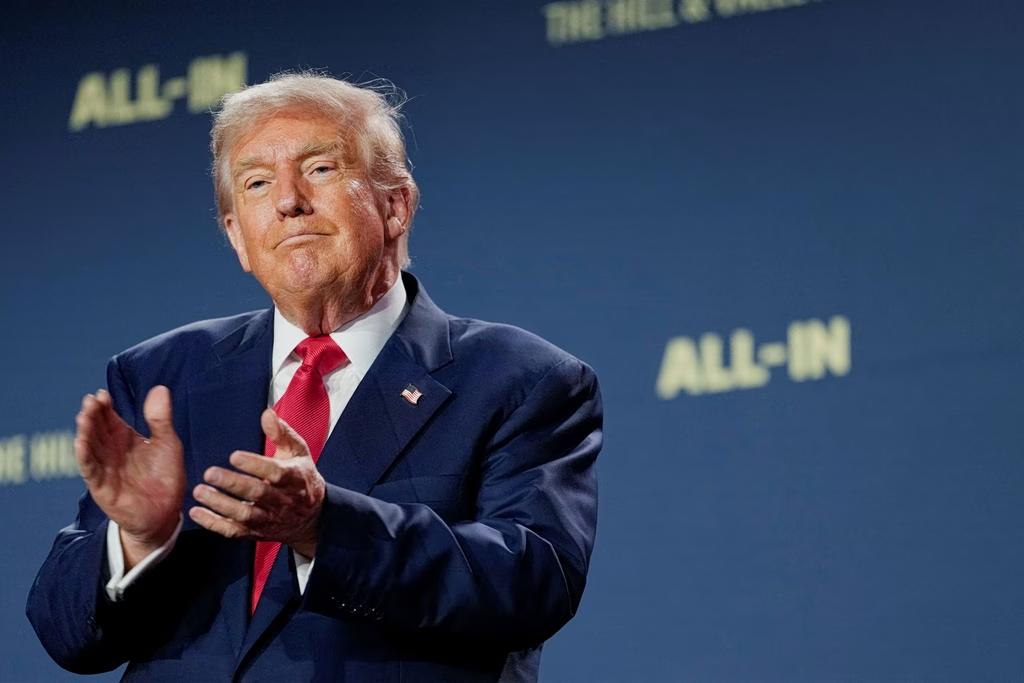
 President Trump said Friday his administration reached an agreement for Russia to supply hundreds of thousands of tons of diesel fuel, marking a major policy shift that eases pressure on Moscow over its war with Ukraine in hopes of lowering domestic fuel prices ahead of the midterm elections.
The move, which included suspending sanctions on Russian diesel exports for about six months, comes as Trump and the Republican Party are struggling to address voter worries over surging diesel and gasoline prices.
In a post on Truth Social, Trump said Russian President Vladimir Putin agreed that his country would supply over 300,000 tons of diesel fuel into the U.S. and global markets, another 500,000 tons in November, and 1 million “immediately thereafter.” He added that Russia would also later deliver an additional 3 million tons of diesel “within a short period of time,” based on the condition of its refineries.
Just last month, Trump signed into law a bipartisan measure intended to squeeze the biggest importers of Russian oil and gas. But the White House is trying to reengage the Kremlin on peace in Ukraine and potentially lay the groundwork for greater business cooperation between the two countries, and Friday’s move signifies what could be their most meaningful coordination during Trump’s second term.
Russia measures diesel quantities in tons; the volumes that Trump said it would provide over time amount to roughly 36 million barrels overall. Some refineries are offline in the Middle East and Russia and the world is short about 1.6 million barrels of diesel a day as a result, the International Energy Agency said last month. The new supplies from Russia, if they were all released simultaneously, would plug the gap for about three weeks.
“Lower prices for Americans, especially our Great Farmers, Ranchers, and Truckers, is my Greatest Priority,” Trump said on Truth Social.
Putin echoed Trump’s statement, saying Moscow “reaffirmed its readiness to supply oil and refined products to the American and global markets.”
After Trump’s announcement, Ukrainian President Volodymyr Zelensky warned that any easing of sanctions on Russia would play into Putin’s hands. “Russia will ‘repay’ the diesel with further terror and perfidy,” he wrote in a social-media post. “Allowing Russia to sell petroleum products is an investment in a war that must be ended, not prolonged. What is needed is real de-escalation with Russia on a reciprocal basis.”
The move also drew concern and criticism on Capitol Hill.
“While I understand the desire to bring down diesel prices, I am concerned the lifting of sanctions on Russian oil will only fund the Kremlin’s war machine,” said Rep. Michael McCaul (R., Texas.).
Wars in the Middle East and Ukraine have sent diesel costs sharply higher, with U.S. prices hitting an average of $6.28 a gallon as of Friday, up from $3.68 a year ago, according to AAA. While surging gasoline prices in the wake of the U.S. war with Iran have hit voters nationwide, rising diesel prices have hurt farm states in particular, helping stoke Republicans’ worries that they will lose both the House and Senate this fall.
Moscow suspended diesel exports earlier this year following Ukraine’s strikes against Russian refineries. The Russian domestic supply crunch was caused in part by dwindling supply while demand picked up during the country’s massive wheat harvesting season.
The White House has been seeking to jump-start peace talks around Russia’s war with Ukraine, which have consistently faltered. Washington’s approach to those talks have centered heavily on business and potential energy deals between U.S. and Russian businesses.
In a statement published on social media after Trump’s post, the Treasury Department said the Office of Foreign Assets Control, at Trump’s direction, issued a temporary license to allow Russian diesel on the global market. In a filing, the office said select U.S. sanctions tied to the sale of Russian diesel would be waived until April.
Clayton Seigle, a nonresident scholar in energy security at the Center for Strategic and International Studies, said the deal benefits Russia by allowing it to sell diesel its domestic market couldn’t otherwise absorb in the winter months. “With this arrangement Russia could export more than 100,000 barrels per day of diesel to world markets,” he said.
Late last month the Russian government extended its suspension of diesel exports until Oct. 31. Putin said at a conference earlier this month that Russia had enough diesel reserves for itself. Irrespective of Moscow’s own suspension measures, however, Putin said that Russian diesel wouldn’t likely reappear on global markets “because sanctions are in force regarding our oil and oil products.”
Before Ukraine’s campaign to strike Moscow’s refineries, Russia produced between 85 million and 90 million tons of diesel a year, with domestic consumption reaching just less than two-thirds of that. Since then, six refineries that produce about half of Russia’s diesel capacity were hit by Ukrainian strikes.
Some analysts are skeptical that Russia can export this much diesel due to the poor state of the refineries and its own export restrictions. “It’s unclear to me how much additional supplies the world is actually going to get,” said Andy Lipow, president of Lipow Oil Associates in Houston.
U.S. and Ukraine officials met on Friday in Miami. Special envoy Steve Witkoff , who was joined by Trump’s son-in-law Jared Kushner, said the exchange was “productive and helped identify areas for further exploration ahead of the United States’ next engagement with Russia.”
Witkoff’s statement didn’t mention any discussion of Russian diesel but described “near-term measures related to winter preparedness (energy resilience, grains exports), security guarantees, as well as longer-term arrangements for Ukraine’s and Europe’s security.”
The Kremlin’s envoy for peace talks, Kirill Dmitriev, who has worked directly with Witkoff and Kushner, praised the deal on X late Friday, saying “Russia-U.S. cooperation on diesel and energy will benefit the world.”
Write to Brian Schwartz at brian.schwartz@wsj.com , Benoît Morenne at benoit.morenne@wsj.com and Thomas Grove at thomas.grove@wsj.com