 Μake us preferred on Google
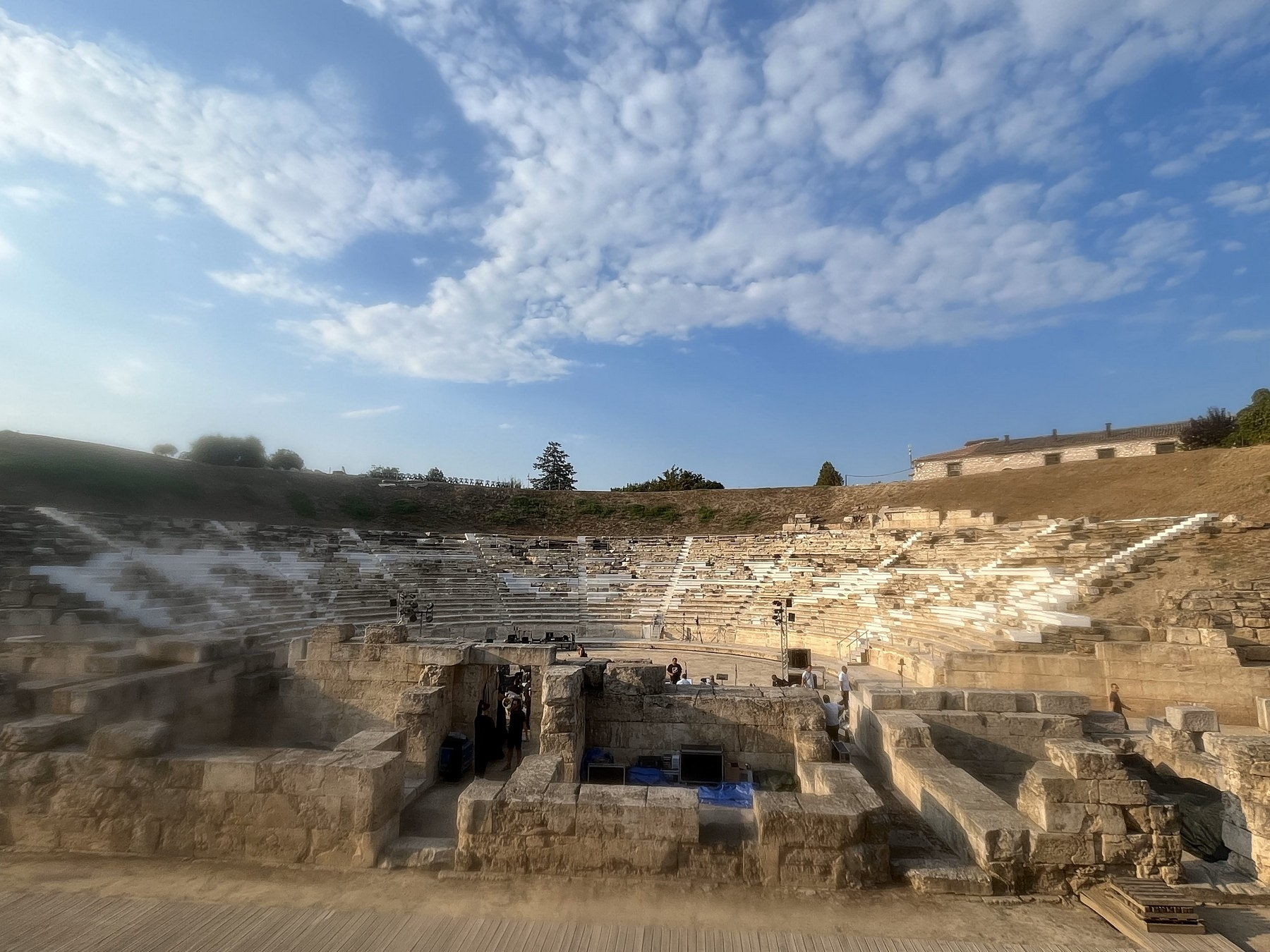
 The latest extensive restoration of an ancient outdoor theater in Greece is slated for the monument in the central Greece city of Larissa, the culture ministry announced on Monday.
According to an official statement, the latest interventions will focus on the marble-built theater’s stage, aiming to improve its structural stability, architectural form and overall functionality. The project also aims to enhance the venue’s suitability for hosting performances, with the restoration of the proskenion (stage front).
The project, already in progress, has a budget of approximately seven million euros and is funded through national and EU structural funds.

Culture Minister Lina Mendoni, center, during the ceremony reopening the ancient theater of Larissa. The Metropolitan of Larissa and Tyrnavos, His Eminence Ieronymos, left, and Thessaly regional governor Costas Agorastos, right, are next to her.
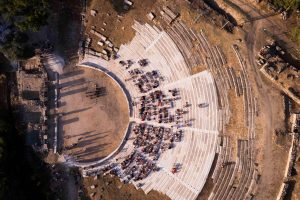
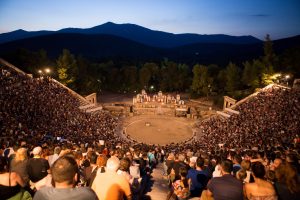
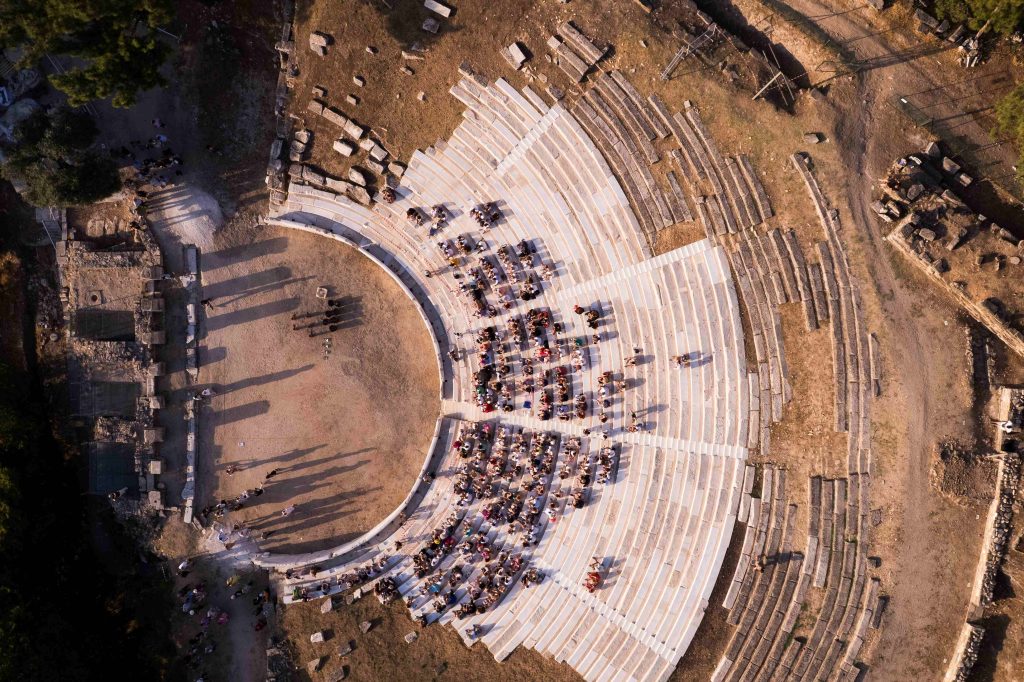
In a statement, Culture Minister Lina Mendoni highlighted the historical and cultural significance of the monument, noting that the 11,000-seat theater A was constructed during the Hellenistic period on the site of the settlement’s fortified acropolis and remained in use until the early 4th century AD. She also pointed out that, following restoration works completed three years ago, the theater hosted performances for the first time in nearly 2,000 years.
The current phase of restoration emphasizes the full reconstruction of the proskenion, installation of new marble elements, reinforcement of structural components such as beams and columns, and conservation of ancient fragments using modern techniques. The goal, according to the ministry, is to ensure structural integrity, to highlight the monument’s architectural value and secure its long-term preservation.
Dating back to the early 3rd century BC, the ancient theater A of Larissa is among the largest Hellenistic monuments in Greece. Built entirely of marble and located on Frourio Hill, it remained in operation for around six centuries. During the Roman era, it was converted into an arena, leading to structural modifications including the removal of the front seating rows and the addition of a protective barrier around the orchestra.