
 Μake us preferred on Google
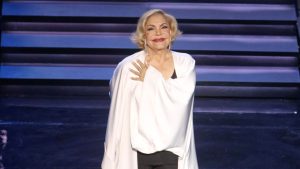
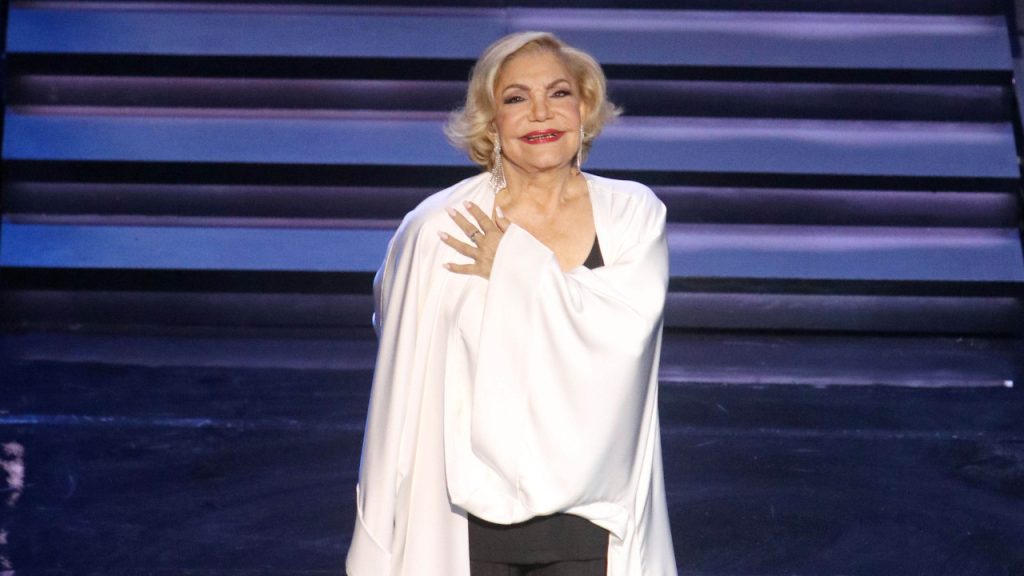
 Greece is mourning the loss of Marinella, one of the country’s most iconic voices, who died Saturday, March 28, 2026, at her home in Athens. She was 87. Her family confirmed the news in a statement: “With deep sadness, we announce the loss of Marinella, our beloved mother and grandmother, who passed away at home today, March 28, 2026, at 6:00 p.m.”
Born Kyriaki Papadopoulou on May 19, 1938, in the northern Greek city of Thessaloniki, Marinella grew up in a modest but musical household. She began singing professionally in 1956 and went on to become the defining voice of greek folk-pop music, otherwise known as Laiko. The genre that Marinella has defined is rooted in the sounds of the working class and the immigrant experience, blending folk elements with Middle Eastern and Western influences.

Nikos Xanthopoulos and Marinella on tour, 1967
She acquired her stage name from a song of the same title, bestowed upon her by songwriter Tolis Charmas at a Thessaloniki nightclub where she performed early in her career. The name stuck — and so did her star.
A Voice Like No Other
What set Marinella apart was not only the extraordinary range and texture of her voice, but her electrifying stage presence. At a time when female performers typically sat passively at the microphone, Marinella transformed the nightclub stage into a theatrical experience. She introduced elaborate lighting, large orchestras, and high-fashion costumes. She danced, acted, and commanded every inch of the room. Frank Sinatra, upon seeing her perform, reportedly remarked that if she had been based in America, she would have been a star within two months.
Over her nearly 70-year career, she released dozens of albums, the majority of which were commercial successes. Her 1976 live triple album Resital, recorded at a small Plaka venue alongside composer Kostas Hatzis, sold some 500,000 copies and remains one of the best-selling Greek records of all time.
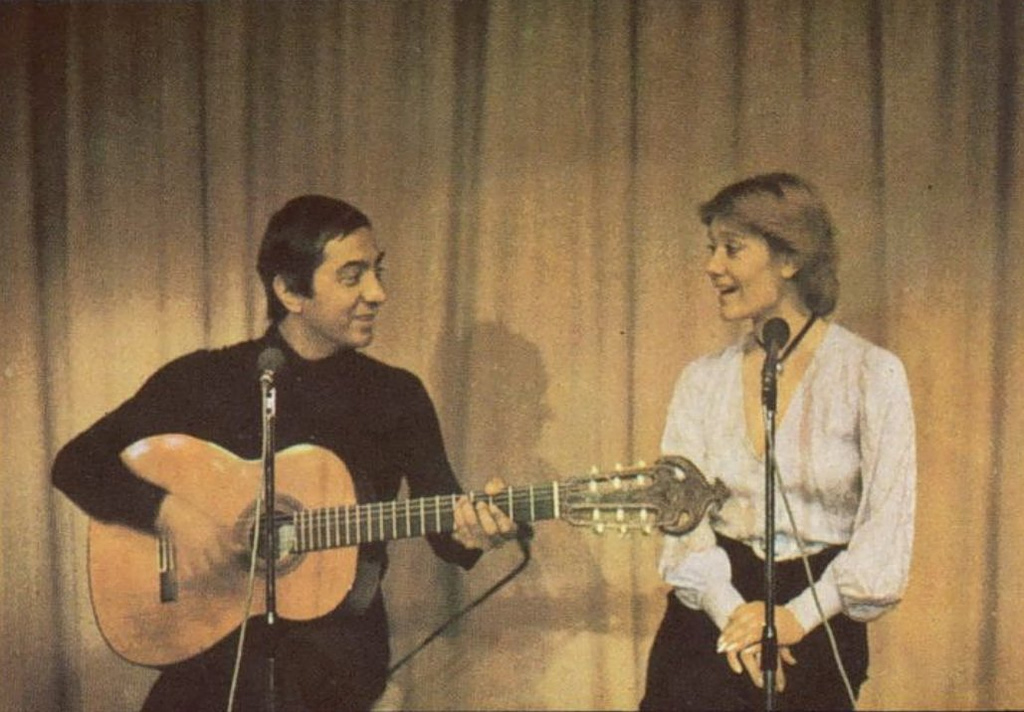
Recital – 1976 – Marinella (singer) – Kostas Hatzis (singer) – collaboration
She was celebrated primarily in Greece and Cyprus, but her fame extended well beyond — she performed in the United States, Australia, Germany, Brazil, and even Albania, becoming the first foreign artist permitted to perform there. In 1968, she won the Best Artistic Presence award at the International Popular Song Festival in Rio de Janeiro. She represented Greece at the Eurovision Song Contest in 1974, performing in Brighton, U.K.
The New York Times, reviewing a 2003 concert in America alongside fellow Greek star George Dalaras, described her voice as “earthy and strong” and praised her with “the presence of an actress.”
From Kazantzidis to the Odeon
Marinella’s early career was intertwined with that of Stelios Kazantzidis, the towering baritone widely considered the greatest male voice in Greek folk-pop music history. The two met in 1957 in Thessaloniki, became artistic and romantic partners, and married in 1964. Their duets remain objects of admiration and study to this day. After their separation in 1966, Marinella built a formidable solo career, collaborating with many of Greece’s most celebrated composers and lyricists — among them Mikis Theodorakis, Manos Hadjidakis, Mimis Plessas, and Stavros Xarchakos. She later married singer Tolis Voskopoulos; both marriages eventually ended.
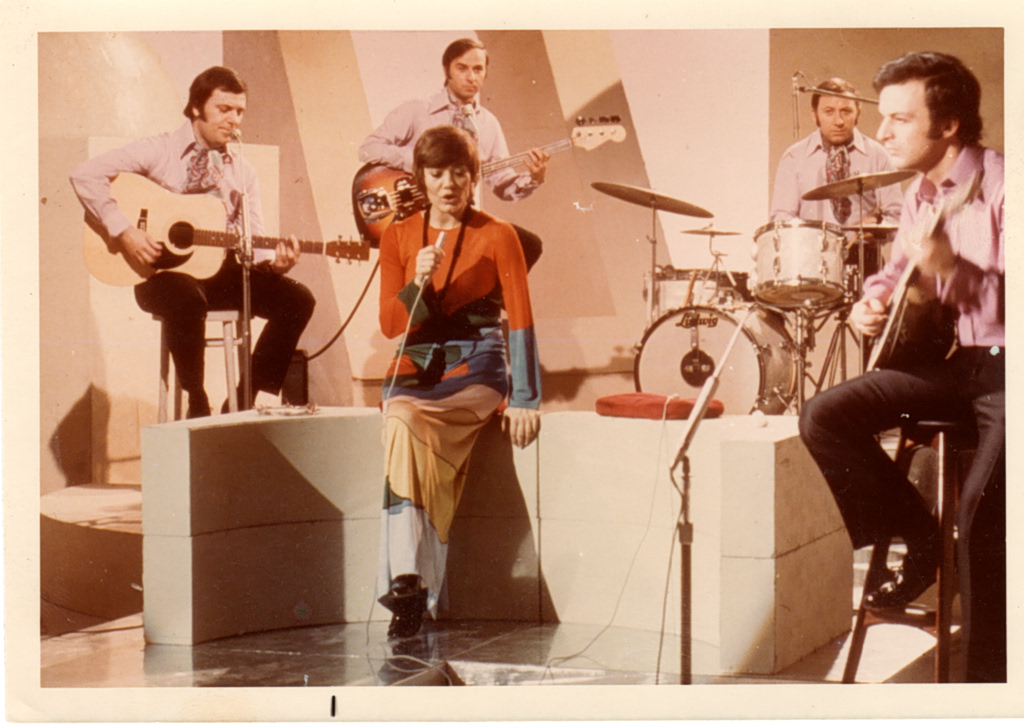
Marinella and Thanasis Polykantriotis at BBC London, 1971
She continued performing well into her eighties. On Sept. 25, 2024, during what was meant to be a triumphant evening at the ancient Odeon of Herodes Atticus — a Roman-era stone theater built into the slopes of the Acropolis and one of Greece’s most prestigious concert venues — Marinella collapsed onstage while singing her third song of the night, having suffered a severe hemorrhagic stroke. She was rushed to Athens’ Hygeia Hospital, where she spent nearly four months in the intensive care unit. She was discharged on Jan. 21, 2025, though her condition remained fragile. She never fully recovered.
She is survived by her daughter, Georgina Serpieri, and her granddaughter, Melina Daskalopoulou, both of whom were by her side throughout her final months.
Greece has lost many great artists, but few have shaped the country’s cultural identity the way Marinella did — not just through her recordings, but through her insistence that popular music deserved the same care, craft, and dignity as any art form. She was, as generations of Greeks knew her, the high priestess of Greek song.