 Μake us preferred on Google
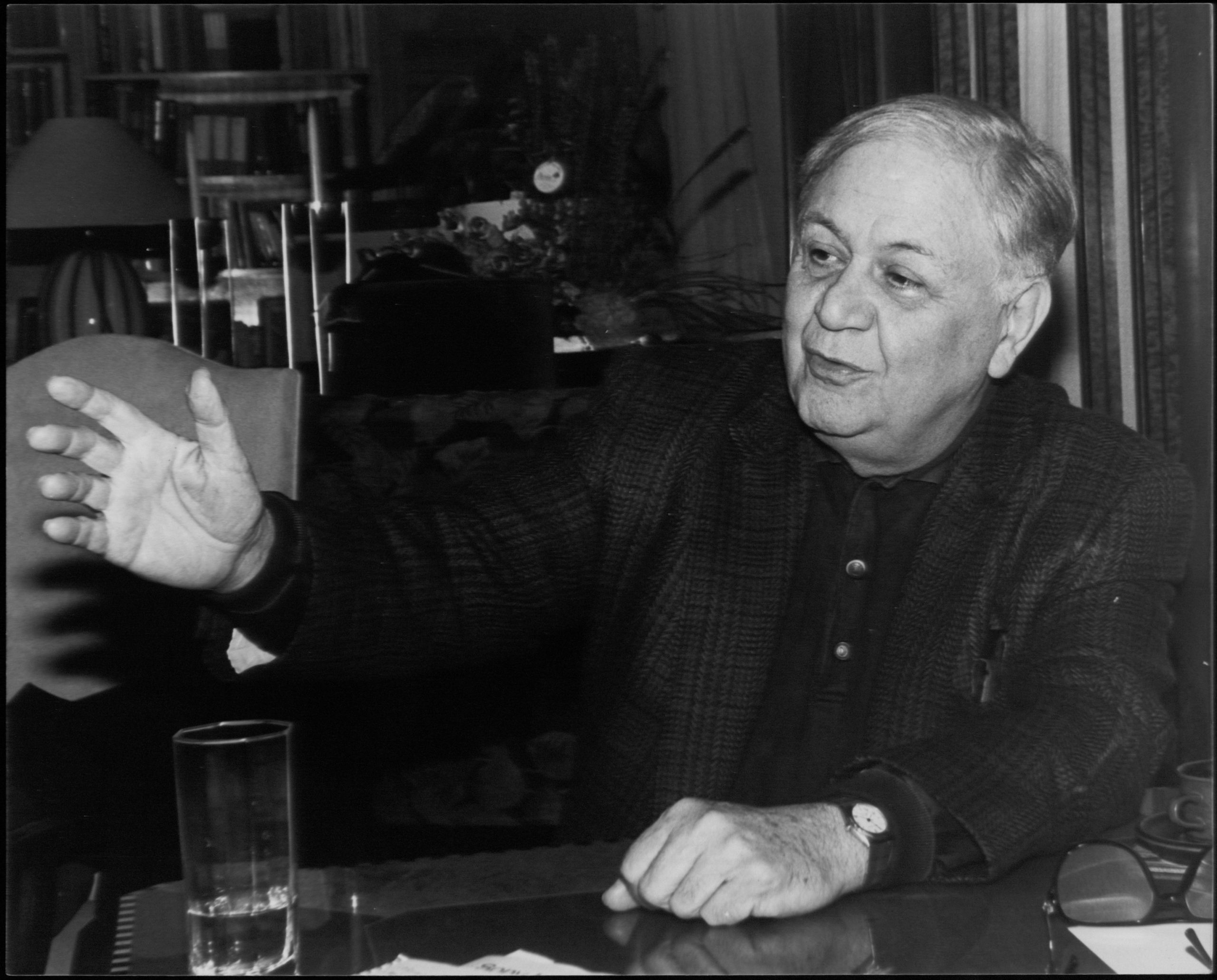
 He was born on October 23, 1925, in Xanthi—a vibrant city in northern Greece known then for its tobacco trade and rich mix of cultures. The son of lawyer Georgios Chatzidakis from Crete and Aliki Arvanitidou from Adrianople (modern Edirne, Turkey), Manos Hadjidakis would go on to reshape Greek music and, in many ways, Greek modern identity itself.
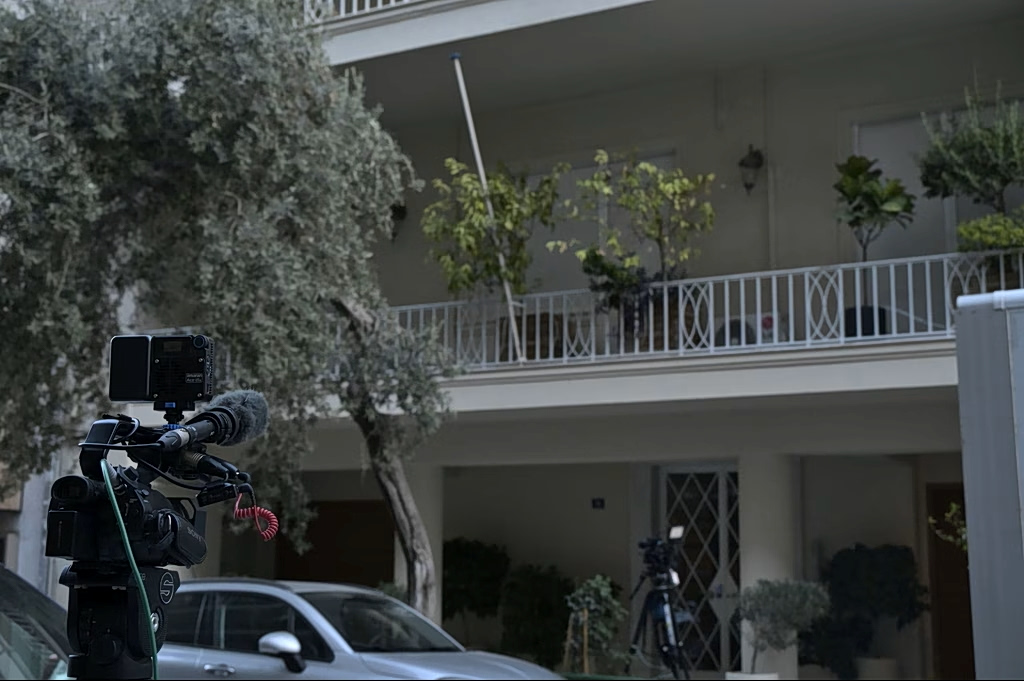
The neoclassical family home where he spent part of his childhood—built in the late 19th century with baroque touches—still stands today as a protected landmark. It was there, at the age of four, that his musical education began under Armenian pianist Anna Altounian. He soon experimented with the violin and accordion, revealing the boundless curiosity for sound that would define his life.
In 1932, after his parents’ separation, he moved to Athens with his mother and sister Miranda. The capital, buzzing with contradictions, became both his school and his battlefield. By 1938, tragedy struck: his father died in a plane crash. Soon after came World War II. Poverty forced young Manos into every odd job imaginable—porter, ice seller at the Fix factory, photo studio clerk, hospital orderly. Like his generation, he survived by resilience.
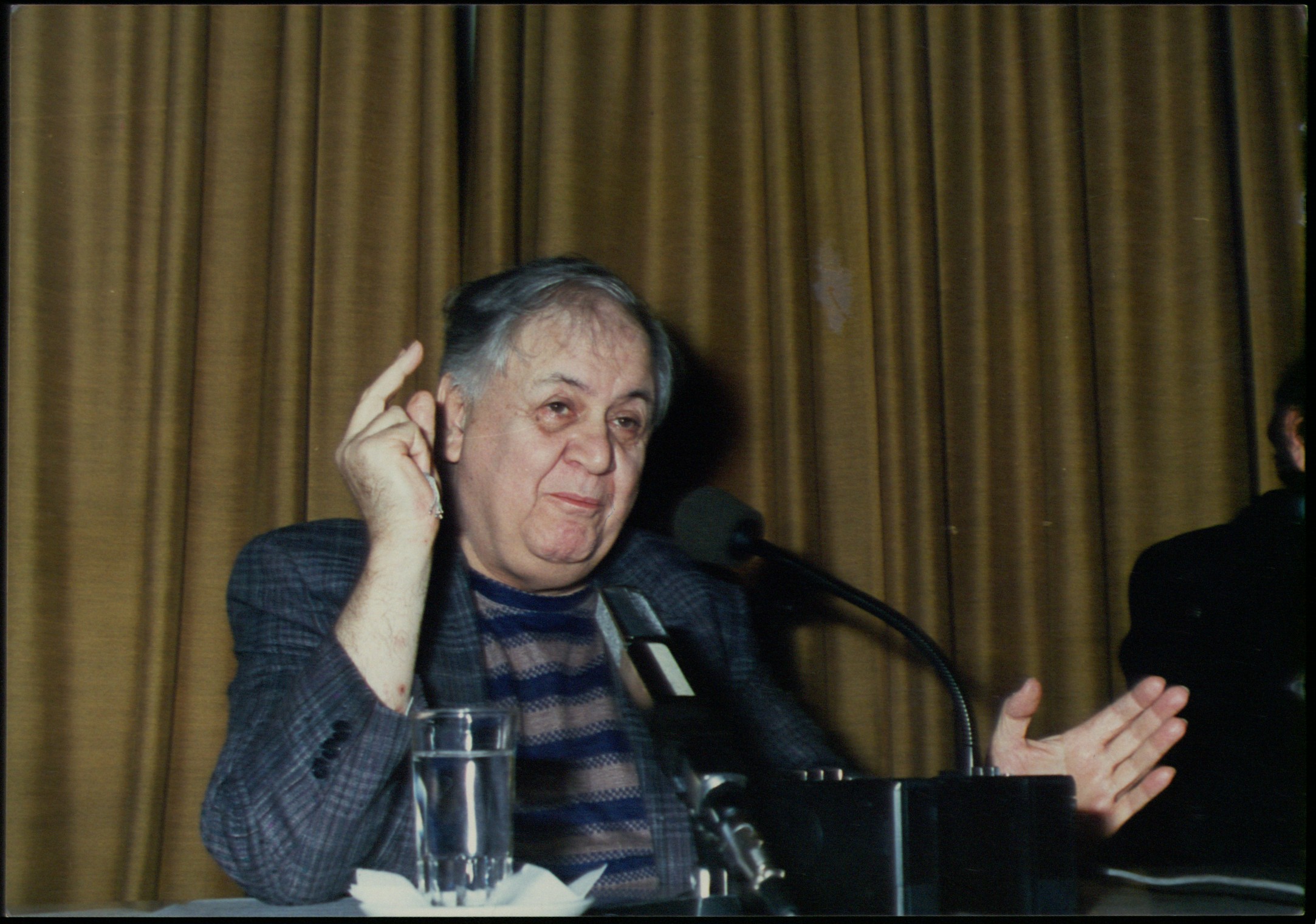
Yet amid occupation and hardship, Hadjidakis deepened his studies in music under Menelaos Pallantios (1940–43) and attended philosophy lectures at the University of Athens as an auditor. Though he never earned a formal degree, he gained something greater: an independent, fearless education. During those turbulent years, he formed bonds with poets and artists who would shape modern Greek thought—Nikos Gatsos, Giorgos Seferis, Odysseas Elytis, Angelos Sikelianos, and painter Yannis Tsarouchis. He also joined the left-wing youth resistance group E.P.O.N., where he met Mikis Theodorakis, beginning a lifelong, creatively charged friendship.
The Historic Lecture on Rebetiko
From early on, Hadjidakis defied artistic hierarchies. On January 31, 1949, at Karolos Koun’s Art Theatre in Athens, he delivered what would become a historic lecture on rebetiko—the urban Greek blues born in the underworld of ports and prisons. At a time when polite society dismissed it as marginal, Hadjidakis boldly argued that rebetiko was a cornerstone of modern Greek culture, rich in emotion and authenticity.
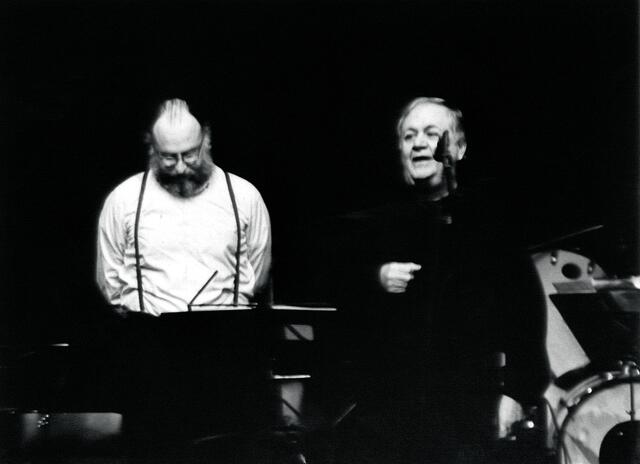
He didn’t stop at words: soon after, he brought legendary rebetiko performers Markos Vamvakaris and Sotiria Bellou to the stage, bridging the gap between the elite and the popular. It was a cultural reconciliation—an embrace of both the folk heart and the intellectual soul of Greece.
That same year marked the beginning of his long collaboration with Koun’s Art Theatre, a partnership that would last fifteen years and define his artistic path. He composed for film and ancient drama alike—music for The Libation Bearers (1950), Medea, The Bacchae, The Cyclops, The Assemblywomen—and in 1950 co-founded the Greek Chorodrama with choreographer Rallou Manou. Together they brought to life ballets and musical works that fused myth, movement, and melody. Early compositions such as For a Little White Seashell, Ionian Suite, and C.N.S. Cycle emerged from this period—fragile yet foundational, revealing the unmistakable voice of a composer finding his identity.
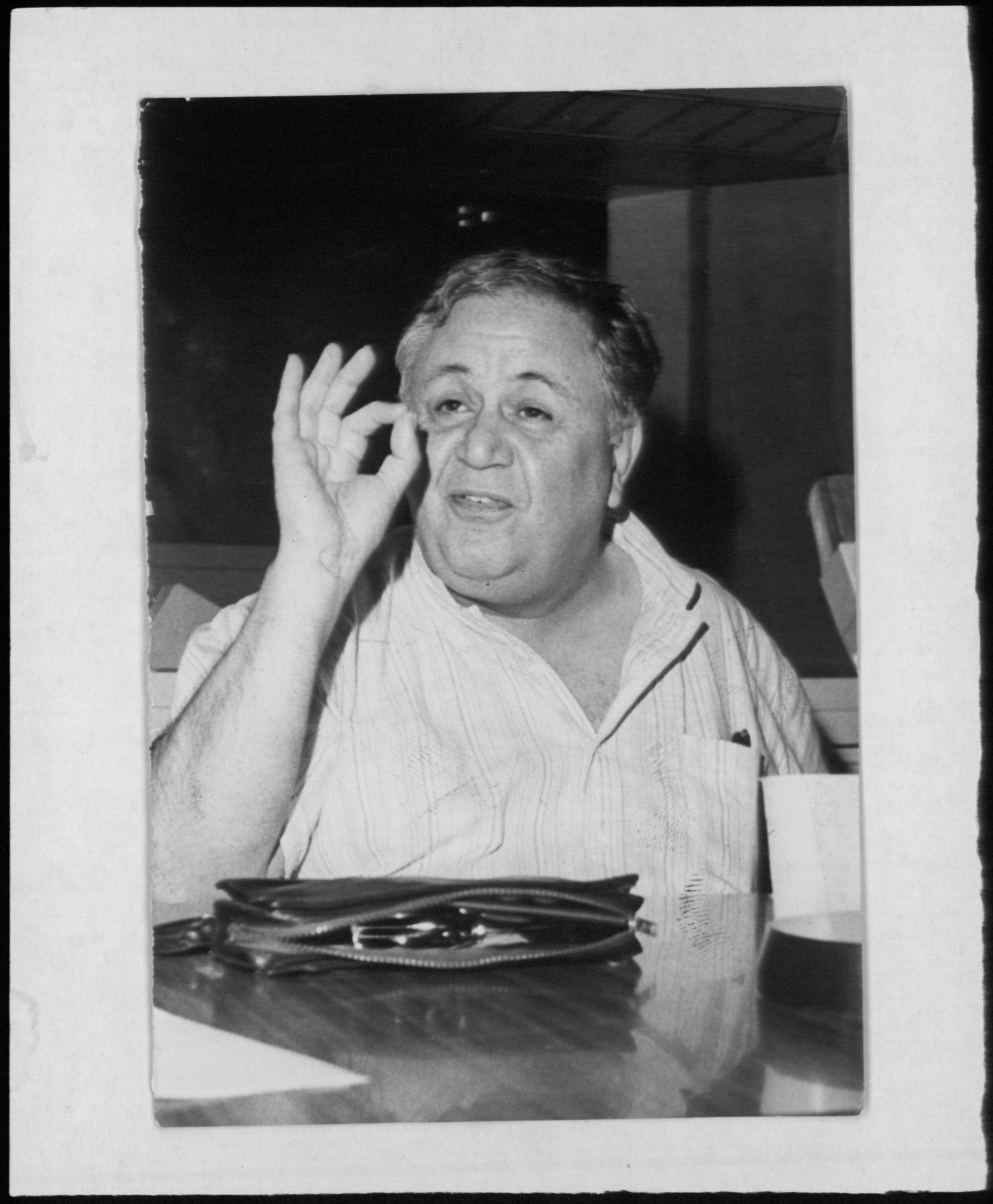
Cinema and the Oscar
By the mid-1950s, Manos Hadjidakis had reached the wider public. His collaborations with leading filmmakers reshaped Greek cinema’s soundscape: Michael Cacoyannis (Stella, 1955), Alekos Sakellarios (Laterna, Ftoheia kai Filotimo, 1955), and Nikos Koundouros (The Ogre of Athens, 1956). His melodies became the heartbeat of Greece’s new urban mythology.
In 1959, he won first prize at the inaugural Greek Song Festival with singer Nana Mouskouri for My Love Must Be Somewhere. A year later, he composed Never on Sunday for director Jules Dassin’s film of the same name—its theme song, The Children of Piraeus, became a global hit. In 1961, it earned him the Academy Award for Best Original Song.
True to his nature, Hadjidakis didn’t attend the Oscars ceremony. The statuette arrived by mail. “For me,” he said, “the Oscar is just the beginning.” Fame, he believed, was never an end but a responsibility. What mattered was artistic freedom—and integrity.
Creative Rebirth in America
In 1964, Hadjidakis founded the Athens Experimental Orchestra, breaking new ground in Greek musical life. Around the same time, he began his enduring collaboration with French choreographer Maurice Béjart, who turned The Birds into a visionary ballet with his Ballets du XXe Siècle.
In 1966, Hadjidakis moved to New York for the musical Illya Darling, a Broadway adaptation of Never on Sunday. Burdened by a tax dispute back home, he decided to stay. Immersed in the city’s cultural energy, he explored pop and rock influences, recording Reflections (1970) with the New York Rock & Roll Ensemble. Earlier, in Los Angeles, he had composed Gioconda’s Smile (1965), produced by Quincy Jones—a luminous orchestral masterpiece.
America refined his independence. Passionate yet detached, he once wrote that “stupidity is not a local product.” He returned permanently to Greece in 1972, carrying with him a cosmopolitan spirit and renewed artistic purpose.
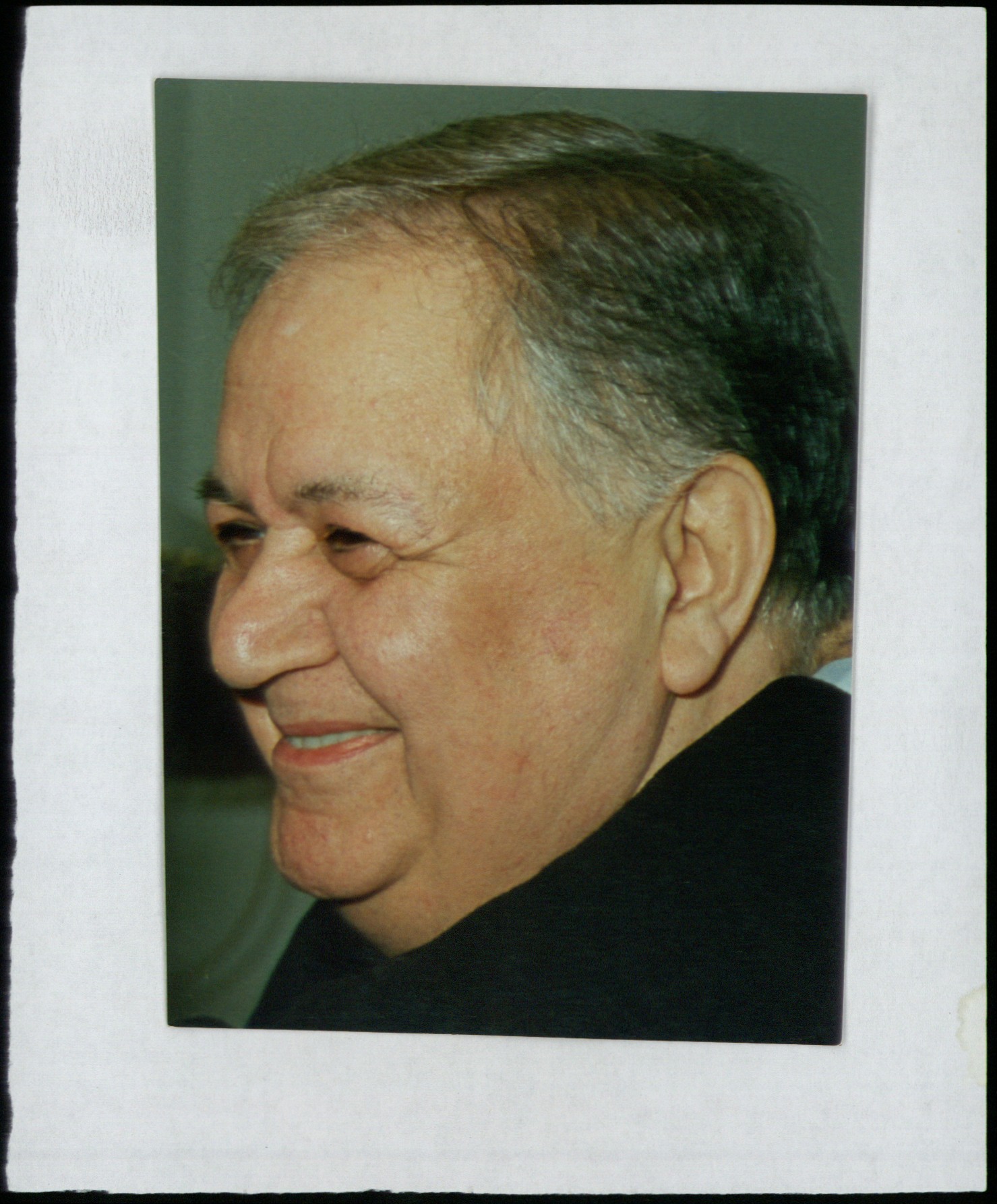
The Great Lover and Beyond
His comeback was marked by Magnus Eroticus (1972), featuring singers Flery Dantonaki and Dimitris Psarianos—a poetic manifesto celebrating love as an act of freedom and defiance. The following year he created Polytron, a musical cabaret blending song, poetry, and theater—an artistic experiment that baffled the mainstream but reaffirmed his commitment to sincerity over success.
The Third Program: A Cultural Revolution
In 1975, he began what he jokingly called his “bureaucratic period”: serving as director of the State Orchestra of Athens, head of the Third Program of Greek Radio, and later deputy director of the National Opera. Though he lamented that these institutions were “corrupted from birth,” his work at the Third Program (1975–82) transformed Greek cultural life.
Under his leadership, the station became a school of taste and ethics. Through radio shows, concerts, and festivals—such as the “Musical August” in Heraklion and “Yakinthis Festival” in Anogeia—he redefined what public culture could mean in a democracy. He also founded the Greek Song Competitions in Corfu (1981–82), nurturing a new generation of composers and lyricists.
During these years, he created works that blended poetry, politics, and philosophy—The Paraloges, The Age of Melissanthi, The Ballads of Athinas Street, and the haunting Pornography. His musical setting of Sappho’s Kélomai Se Gongyla in Magnus Eroticus inspired him to compose Ta Pindarika (1981), premiered in Heraklion with soprano Kiki Morfoniou, baritone Spyros Sakkas, and the Greek Radio Choir.
The Later Years: Defiance and Freedom
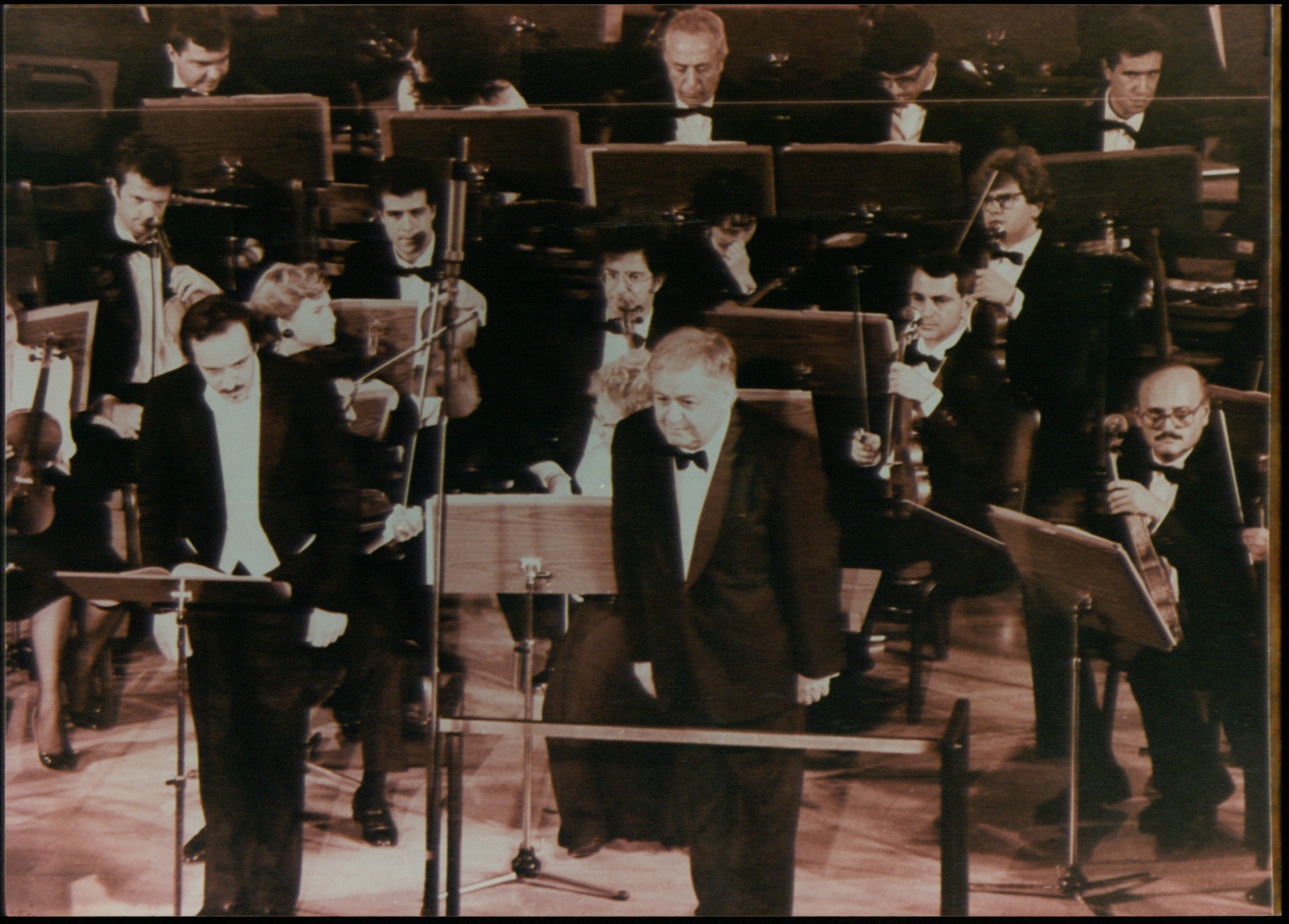
In 1985, Hadjidakis founded his own record label, Seirios, and a small music venue of the same name in Athens’ Plaka district—an artistic haven for musicians who didn’t fit the commercial mold. In 1989, he created the Orchestra of Colors, which he directed until 1993. Their collaborations included a legendary performance with Argentine tango master Astor Piazzolla at the Odeon of Herodes Atticus in 1990—Piazzolla’s final concert. It was symbolic: the Greek who elevated the bouzouki to the status of Bach and Mozart now brought tango to Greece’s ancient stage.
A Free Spirit in Politics and Art
Beyond composing, Hadjidakis was a rare public thinker—lucid, provocative, and unafraid. From his 1949 rebetiko lecture to his writings and broadcasts, he challenged dogma. “I am a democratic bourgeois, a humanist, a revisionist of the Right,” he said. “I was never anti-communist. I contain the left—the left does not contain me.”
His friendship with conservative statesman Konstantinos Karamanlis, his disdain for populism, his sympathy for anarchist youth, and his clashes with celebrity culture all revealed a man allergic to conformity. His magazine To Tetarto (“The Quarter,” 1985) embodied that spirit: aesthetically ambitious, politically sharp, and ahead of its time. Its bold voice provoked fierce attacks—especially from the tabloid Avriani, which targeted his personal life with homophobic slurs. But Hadjidakis never retreated. Freedom, for him, was non-negotiable.
He saw power as “a vain and brainless lady who loves her lovers and persecutes her enemies.” Music, on the other hand, was “a substitute for a companion—and the only way to exorcise barbarity.” In February 1993, his Orchestra of Colours dedicated a concert “Against Neo-Nazism,” warning of the fascism that “lurks within us all.”
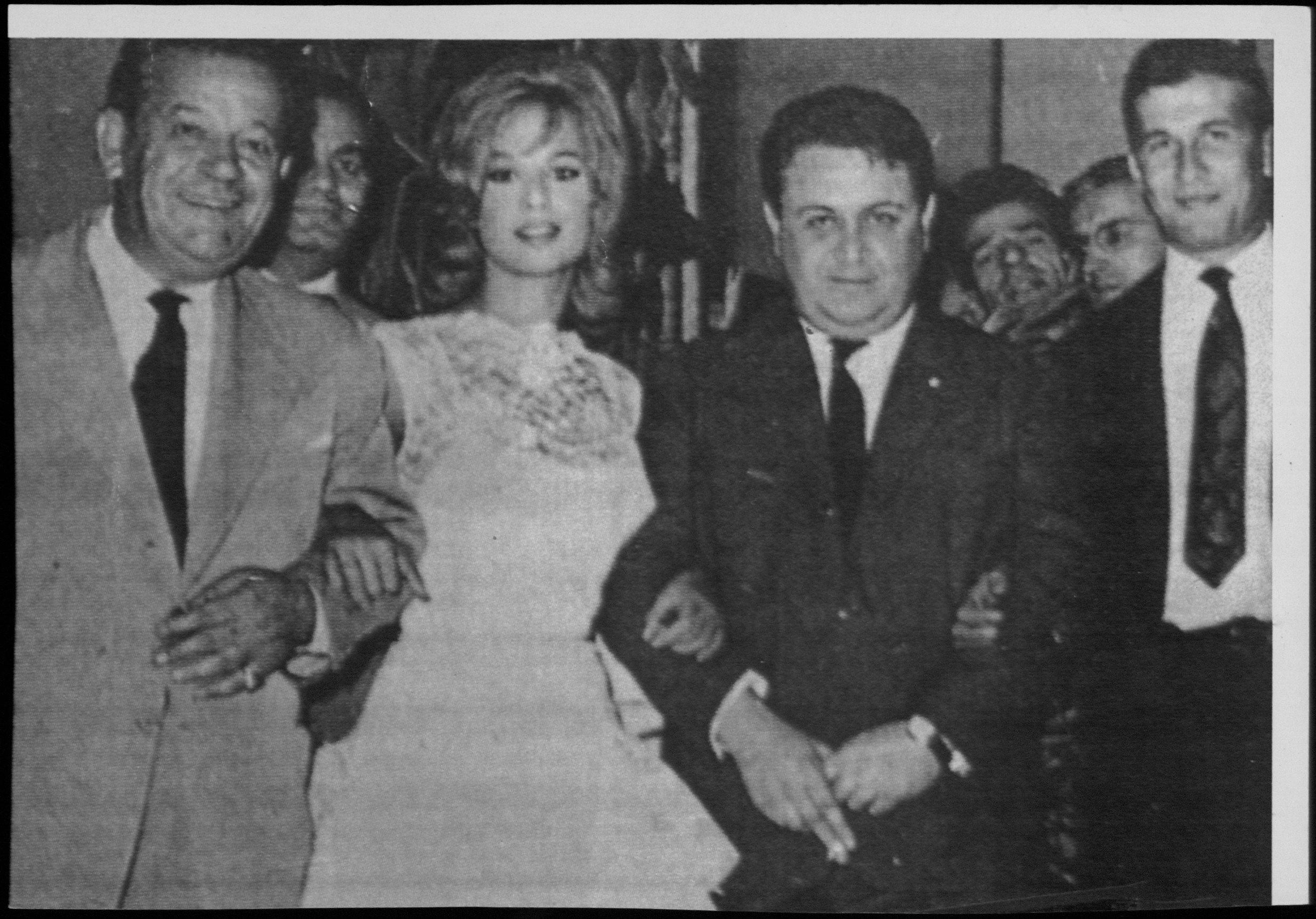
Until the end, he kept creating, writing, and mentoring young artists. “I want enough money,” he once said, “to tell every job that doesn’t respect me to go to hell.” Beneath the irony lay his belief in dignity. He wrote about Athens “dragging its feet at night between car showrooms and funeral offices,” mocking the shallow materialism of a society that confused relief with pleasure.
Legacy of a Restless Spirit
Manos Hadjidakis died in 1994, leaving behind a legacy as demanding as it is luminous. He taught Greece to see itself not only through its wounds but through its capacity for beauty. He turned music into revelation—a mirror of both our depths and our heights.
“The idea of death,” he wrote, “leads the truly free person to realize that existence has an expiration date.” Perhaps that’s why he lived as if every note mattered. His music still speaks today, whispering—as he once did—“I believe in the song that doesn’t entertain us, but reveals us.”
And every time we listen, it reveals us anew.