
 Μake us preferred on Google
 Greece has run out of EU recovery loans ahead of schedule, leaving billions of euros in investment projects across the energy, tourism, real estate and retail sectors without financing. Many now face cancellation. Others will be forced to absorb significantly higher borrowing costs if they are to proceed at all.
The crunch was partly self-inflicted. Toward the end of 2025, the Ministry of National Economy and Finance transferred approximately 2 billion euros from the facility to the Hellenic Development Bank to ensure those funds would not be lost. Loan absorption had been running behind schedule, and a program review was approaching. The move reduced the total loan envelope to 13.5 billion euros.
The ministry simultaneously moved the application deadline three months forward, from the end of August to the end of May. Banks and businesses rushed to lock in low-cost funding before the cutoff. Applications quickly exceeded available capital by a wide margin.
By the end of March, 9.5 billion euros of the 13.5 billion euro envelope had already been disbursed. Orestis Kavalakis, director of the Special Coordination Unit for the Recovery Fund, confirmed that all remaining resources had been allocated to banks. Only formal contractualization remains, to be completed by the end of May. He said 798 contracts had been signed, totaling 27.5 billion euros in investment value: 12.5 billion euros in Recovery Fund loans, 8.8 billion euros in bank capital and 6.2 billion euros in investor equity.
Projects at Risk
The scale of unmet demand was outlined by Fokion Karavias, chief executive of Eurobank, one of Greece’s four systemic banks. He said the fund’s resources had been channeled into critical sectors including energy, tourism and manufacturing. The full picture of excess demand, he added, had become clear only in the past ten days.
Karavias estimated that projects totaling between 6 and 8 billion euros had applied for funding beyond what was available. A portion will be absorbed by commercial banks. Another share may be financed through the Hellenic Development Bank in cooperation with the banking system. But some projects, he warned, may not be built at all. Certain investments could be cancelled outright. Others may proceed only if their backers are willing to absorb the higher cost of conventional financing.
What Comes Next
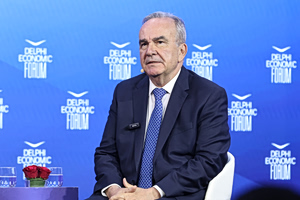
Deputy Minister of National Economy and Finance Nikos Papathanasis said Greece would submit its eighth disbursement request for grant funding from the Recovery Facility, amounting to 1.4 billion euros and linked to the completion of 32 milestones. A seventh request for the loan component, worth 1.2 billion euros, would be submitted simultaneously, bringing the combined package to 2.6 billion euros.
The heavier lift is deferred to autumn. A ninth grant request is expected covering 134 milestones and 3.8 billion euros in funding. An eighth loan tranche request will be filed in the same period, bringing the total autumn package to approximately 4.8 billion euros. Whether Greece can demonstrate to Brussels that all required milestones have been met will be the defining test of its Recovery Fund performance in the months ahead.
Source: ot.gr