
 Μake us preferred on Google
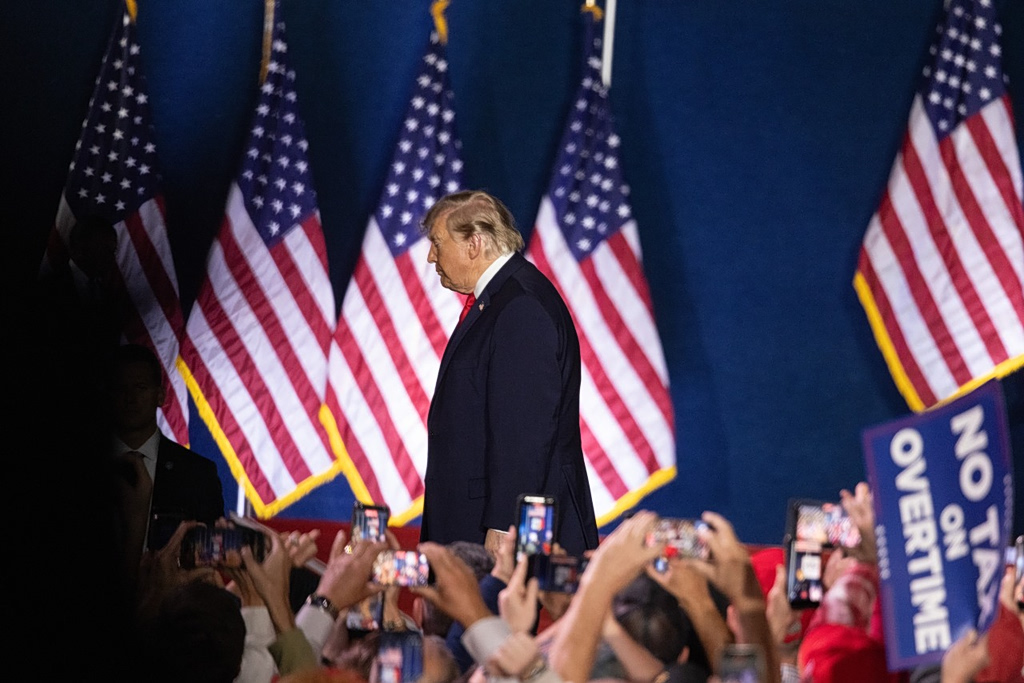
When Donald Trump discusses Russia’s failure to seize Kyiv in February 2022, it is hard to miss the tone of regret. This was the US president musing on the subject last month at the White House: “They had a thousand tanks riding up a concrete highway . . . Nothing to stop them. The war would have been over in one day. And this very stupid general . . . He decided to hang a right on to the farmland . . . rather than staying on the highway . . . He ended up getting stuck in the mud.”
Like a lot of what Trump says, this account of Russia’s failure to conquer Kyiv is a collection of half-truths and fantasy. It was the Ukrainian army that stopped Russia’s advance, by successfully attacking the lead vehicles in the column advancing on Ukraine’s capital and demolishing bridges. Those Russian vehicles that got stuck in the mud were forced off the paved road by Ukrainian counter attacks.
But Trump’s lament for an invasion gone wrong is nonetheless rather telling. In his account, no blame attaches to Vladimir Putin. The failed full-scale invasion of Ukraine was all the fault of an idiotic underling. Perhaps Trump feels sympathetic to the Russian leader because he himself has made a strikingly similar blunder.
On February 28 2026 — almost exactly four years after Putin’s failed dash for Ukraine — the US and Israel launched an attack on Iran. The goal was to bring about rapid regime change. But Trump’s vision of a short, victorious war turned out to be a mirage. And he, like Putin, is now saddled with the consequences of his own misjudgement.
The sequence of events that led the Russian and US leaders to this point also has significant similarities. In both cases, earlier military victories had led to dangerous overconfidence.
Putin’s annexation of Crimea in 2014 encountered no significant resistance from Ukraine or the wider international community. That may have convinced Putin that the Zelenskyy government in Kyiv was a house of cards that would swiftly collapse — and that the outside world would once again accept a fait accompli.
Trump campaigned as an opponent of foreign wars. But he was intoxicated by America’s success in bombing Iran’s nuclear facilities in June 2025 and then toppling Nicolás Maduro, the president of Venezuela, at the beginning of this year. So Trump was in a receptive and hubristic mood when Benjamin Netanyahu, the Israeli leader, urged him to attack Iran again, a few weeks after the Venezuelan operation.
Both Putin and Trump have centralised power and surrounded themselves with yes-men. The systems of government they created were incapable of pushing back against a leader who was about to make a catastrophic error.
These parallels can, of course, go too far. Putin is trying to overthrow a democratic government in Ukraine and to annex large swaths of his neighbour’s territory. The Iranian regime, by contrast, is a brutal dictatorship that has killed many thousands of its own citizens in the streets. And neither the US nor Israel is trying to annex Iranian territory.
The domestic differences between the US and Russian systems are also fundamental — which means that the consequences of a failed war are very different for the two countries.
The Iran war — and its inflationary effect — was fundamental to the Republican Party’s drubbing in last week’s midterm elections. It is still possible that the Trump administration will return to the fray and intensify attacks on the country. But history suggests that the American political system eventually forces presidents to pull out of a failing war. This is a pattern that has held in Vietnam, Afghanistan, Iraq — and now Iran.
Putin’s failed war has inflicted appalling and continuing damage on Ukraine. And it will also cause lasting harm to Russia itself. The country’s armed forces are said to have sustained 1.5mn casualties — killed or wounded.
But the Russian system does not have the democratic checks that could force Putin off his chosen course. Russian elections are rigged. Anti-war parties are banned from running and real opposition politicians like Alexei Navalny or Boris Nemtsov, tend to end up dead. And so the war goes on.
A critical question now hanging over world politics is whether Xi Jinping will learn from the failures of Putin and Trump. The Chinese leader is widely believed to have instructed his country’s armed forces to be ready to invade Taiwan by 2027. (That’s next year, in case you hadn’t noticed.)
Xi will obviously have noticed the difficulties that Russia and the US have encountered in trying to defeat smaller and weaker nations. Will that make him rethink the wisdom of trying to blockade or invade Taiwan? Or will he convince himself that his situation is different — and that the Taiwanese do not have the will or the ability to resist Chinese military might?
So far, China’s president has displayed more caution and strategic vision than the Russian or American leaders. But Xi — like Putin and Trump — is a “strongman leader”, who does not encourage dissent and who wants to go down in the history books. It is a disconcerting reality that with Taiwan — as with Ukraine and Iran — the decision about whether to launch a war may come down to the judgment of a single, flawed individual.
Link To FT.com: https://www.ft.com/content/fa36233a-1ee0-4bd3-9521-c3defe10c173
Copyright The Financial Times Limited 2026
© 2026 The Financial Times Ltd. All rights reserved. Please do not copy and paste FT articles and redistribute by email or post to the web.