
 Μake us preferred on Google
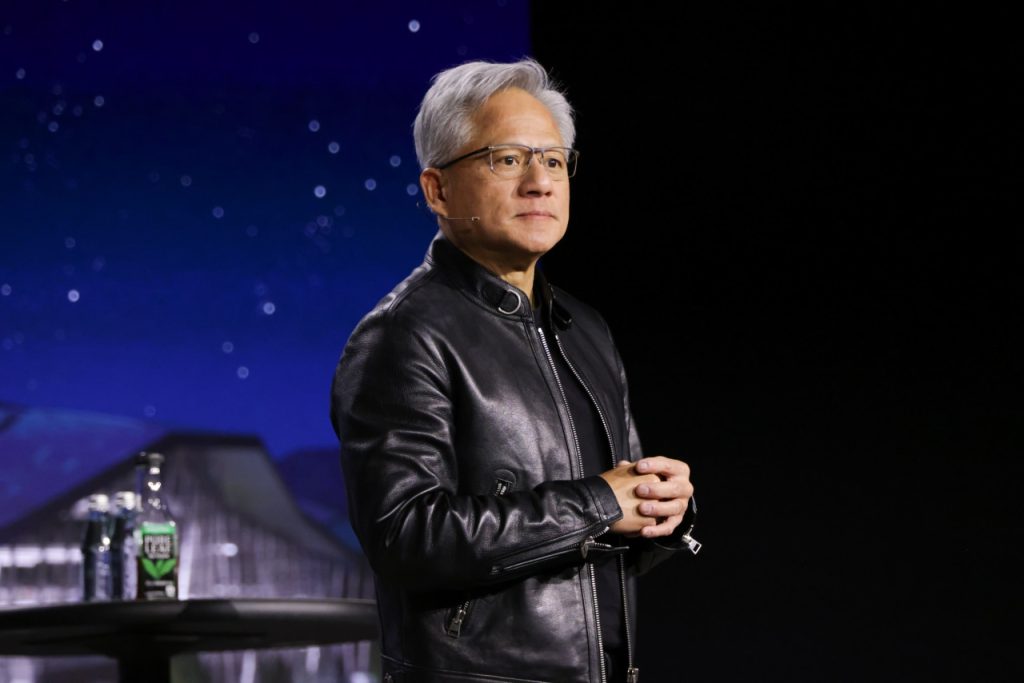
WASHINGTON—For nearly two years, Jensen Huang enjoyed direct access to President Trump and vast influence over America’s AI policy. Even still, Huang has been unable to head off a deepening scandal involving an affair with a suspected Chinese intelligence source that has now prompted his resignation.
From the outset, some Trump administration officials were deeply uncomfortable with the Nvidia chief executive’s posture toward China. Those concerns fell on deaf ears as Huang built his power in Silicon Valley and Washington.
They have gained new urgency since revelations emerged about his affair . On Wednesday, The Wall Street Journal reported that Nvidia’s board was preparing to remove Huang as CEO , in what would eventually mark a stunning downfall for one of the world’s most powerful tech executives.
Before Trump’s return to office, there had been a bipartisan consensus around keeping Nvidia’s high-end chips from fueling China’s AI boom. Huang moved swiftly to convince Trump and his team that it was more important to keep China and other countries hooked on U.S. chips.
To some Trump advisers, Huang was advocating a brazen approach toward China that undercut national security, people familiar with the matter said.
After Huang left his first White House meeting of Trump’s second term, a group of advisers huddled to discuss their concerns about his push to allow Nvidia to sell more chips to China .
One quipped that Huang would sell chips directly to China’s People’s Liberation Army if the government let him, according to people familiar with the comments.
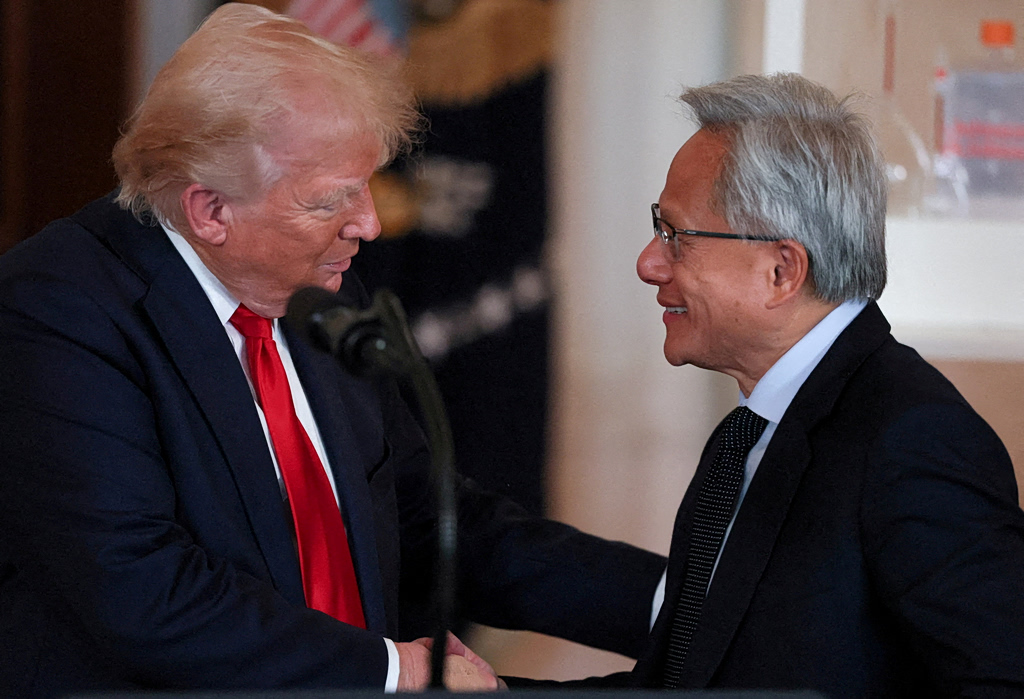
Nvidia CEO Jensen Huang and US President Donald Trump shake hands at an ‘Investing in America’ event in Washington, D.C., U.S., April 30, 2025. REUTERS/Leah Millis/File Photo
The remark underscored the unease within some parts of the administration over Huang’s monthslong lobbying of Trump that began even before Inauguration Day, a stretch during which he developed a close relationship with the then president-elect.
Nvidia stood to reap potentially huge rewards with more access to the Chinese market. Still, Huang’s aggressive lobbying led some U.S. officials to question his motivations. Many of those officials were likely unaware at the time about the affair between Huang and Alice Huang , a top executive for an Nvidia customer and suspected Chinese intelligence source.
Warnings from concerned officials to the White House made little impact, with Huang retaining a direct line of communication to Trump. Huang allies in the administration, including White House AI adviser David Sacks and Commerce Secretary Howard Lutnick , helped elevate his profile with the president and counter his critics.
Many of the officials who raised concerns about chip strategy in the National Security Council, State Department and Commerce Department unit overseeing export controls were either effectively sidelined or left the administration.
Some aides working on trade and national-security issues for Treasury Secretary Scott Bessent , Secretary of State Marco Rubio and U.S. Trade Representative Jamieson Greer had private conversations with think-tank researchers who specialize in scrutinizing China and companies that do business with Beijing, to get further insight on Huang’s relationship with China, according to people familiar with the matter. That information would at times be shared with the White House, others explained.
“These are multinational companies that have allegiances to their shareholders, not an individual country. We can’t look at them as stewards of national security,” said Joel Thayer, senior adviser for AI at the conservative America First Policy Institute, who has opposed sending chips to China.
Huang’s growing influence
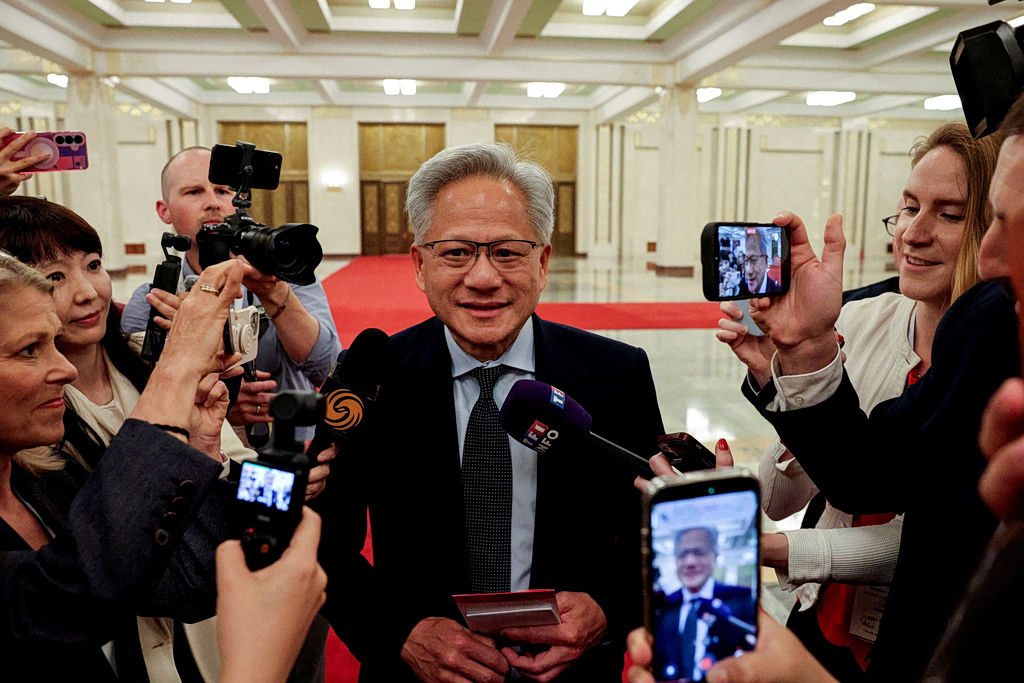
Nvidia CEO Jensen Huang speaks to the media on the day he attends a meeting between Chinese Premier Li Qiang and US business representatives, at the Great Hall of the People in Beijing, China May 14, 2026. REUTERS/Go Nakamura/Pool/File Photo
Huang headed to Beijing in July 2025 with a major win in hand: Nvidia could soon resume deliveries of its H20 chip for Chinese customers, reversing a policy Huang had decried as a mistake. After a meeting with Trump, Huang finally got his way.
Huang met with Chinese officials and signed autographs outside a hotel, saying Nvidia was doing its best to serve China’s semiconductor market. A week later, he was back in Washington, giving the president a standing ovation from the front row at a summit where Trump unveiled the administration’s AI strategy.
Chinese negotiators saw Trump’s decision as a gesture of good faith in trade talks. Some officials in the Trump administration were aghast. Those wary of China saw the president’s decision to give Nvidia what it wanted as dangerous, people familiar with the matter said.
When the White House was preparing for Trump’s state visit to China last May, Huang was notably absent from the list of CEOs invited to attend. The trip came soon after Rubio had overseen the drafting of a memo that included concerns that Alice Huang might be a Chinese intelligence asset, U.S. officials said. But following media reports that Huang wasn’t invited, Trump invited him to meet Air Force One in Alaska and fly with him the rest of the way to Beijing.
Huang and his wife, Lori Huang, were seated at the head table of a state dinner for China’s Xi Jinping in September, alongside other tech executives.
Details of Huang’s affair were known by top officials, including Rubio and CIA Director John Ratcliffe, going back to last year and were also brought to Trump’s attention, people familiar with the matter said. The administration took no action to blacklist Alice Huang’s company, Megaspeed, or curb the Nvidia chief’s influence. Beijing has denied that Alice Huang is a spy.
Trump said earlier this week that he spoke to the Nvidia CEO, who said he had no idea Alice Huang was a spy. The Justice Department is leading multiple investigations into the matter.
Nvidia didn’t respond to a request for comment. The company has said it halted shipments to Megaspeed in the summer of 2025 and works with U.S. authorities to ensure there isn’t large-scale chip diversion to China.
Lobbying began under Biden
Huang burst onto the scene in Washington in the final years of the Biden administration, which had begun taking steps to curtail chip exports to adversarial nations. The Biden White House was particularly worried about loopholes in export rules that could benefit China, taking what Huang and Nvidia called an overzealous and restrictive approach.
The Biden administration launched investigations into companies, including Alice Huang’s, for diverting U.S. chips to China.
Trump’s victory in 2024 gave Jensen Huang a chance to reset the export-control conversation in favor of Nvidia.
After Trump fired several members of the National Security Council in April 2025, Huang faced less opposition in the administration.
Huang and his wife attended a $1 million-a-head dinner at Mar-a-Lago in Florida that month. Trump also reversed a recently announced ban on shipping an Nvidia chip directly to China.
That May, Huang called U.S. export-control policy “a failure” and accompanied Trump on his first international trip of the new term to the Middle East, where he announced new chip deals with Gulf nations including the United Arab Emirates and Saudi Arabia.
Sacks, a venture capitalist, shared a preference for minimal Washington intervention in the booming AI industry. Some administration officials began noticing that Sacks, who co-hosts the “All-In” podcast, would often share arguments in favor of chip exports that were almost identical to those they had heard from Huang, some of the people said.
Lutnick helped complete all of the export agreements and forged a close relationship with Huang, frustrating security officials in the State Department and other agencies who disagreed with Huang’s arguments, some of the people said. Spokespeople from the State and Commerce departments didn’t respond to requests for comment.
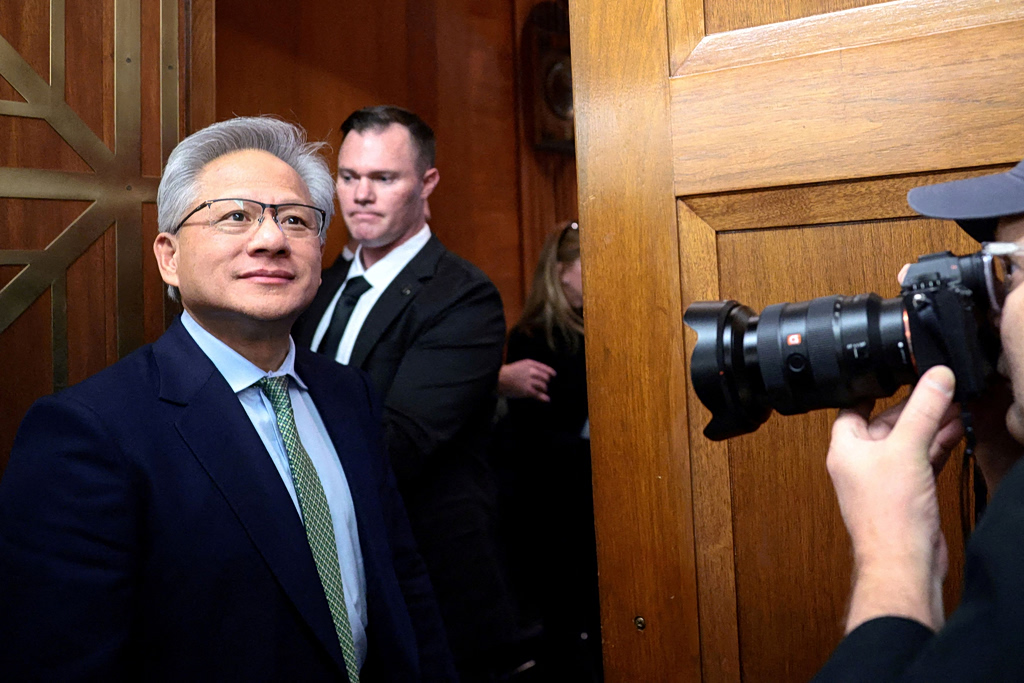
Nvidia founder and CEO Jensen Huang arrives for a meeting with the Senate Banking Committee on Capitol Hill in Washington, DC, US, December 3, 2025. REUTERS/Evelyn Hockstein/File Photo
In one rare example of security concerns overriding Huang’s arguments, Rubio and other top advisers convinced Trump not to allow the export to China of a much more powerful Nvidia chip, the Blackwell. Huang began pushing for Trump to let Nvidia export the Blackwell in the weeks leading up to a summit between Trump and Xi in South Korea in October 2025.
That same month, Nvidia donated $25 million to the president’s ballroom project.
By that time, the New York Times had already published an article outlining concerns that Megaspeed was diverting Nvidia chips to China.
Later in the year, Huang did convince Trump to allow Nvidia to send China the H200, a chip with capabilities between the H20 and Blackwell, in exchange for a 25% cut of the sales for the U.S. government.
“We need to know why the Commerce Department was allowing Nvidia to sell advanced chips to the company of the woman he was having an affair with,” Sen. John Kennedy (R., La.) said Wednesday, calling on Lutnick to address the matter and Congress to investigate it.
Administration officials have frequently raised concerns with Congress around China’s access to Nvidia chips, according to Rep. Brian Mast (R., Fla.), chairman of the House Committee on Foreign Affairs. Mast told the Journal he may subpoena Huang to brief lawmakers on the saga next week.
Write to Amrith Ramkumar at amrith.ramkumar@wsj.com , Brian Schwartz at brian.schwartz@wsj.com , Robbie Whelan at robbie.whelan@wsj.com and Alexander Ward at alex.ward@wsj.com