 Μake us preferred on Google
 Long before climate change, resource depletion, and food waste became global concerns, cooks in Greece’s remote mountain villages and isolated islands had already developed ways to make the most of every ingredient. Necessity, poverty, and geographical isolation taught generations of Greeks how to preserve food, avoid waste, and create nourishing meals from whatever the land and sea could provide.
A cuisine built on respect for ingredients
The core philosophy was simple: nothing should go to waste.
Modern chefs describe it as “nose-to-tail” cooking and “root-to-leaf” eating. Traditional Greek cooks simply called it common sense.
Seasonality, local sourcing, and minimal waste are now considered pillars of fine dining. In Greek kitchens, however, they have always been part of everyday life.
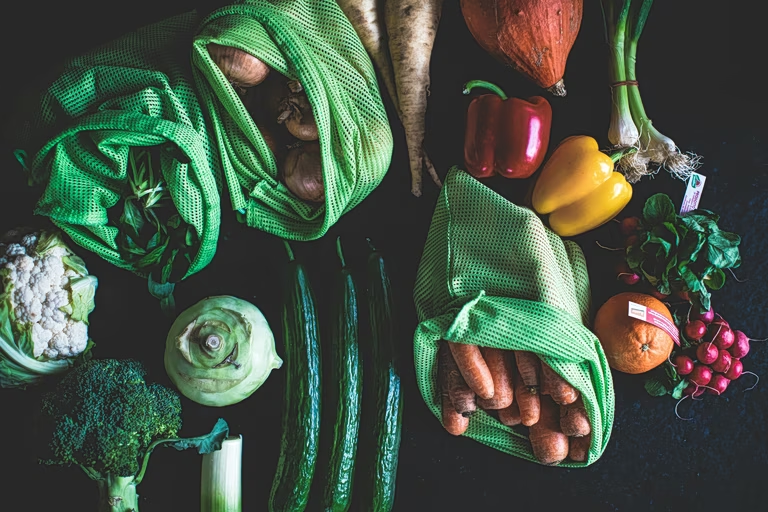
One only needs to look at the country’s vast repertoire of dishes built around legumes, vegetables, and wild greens. Lentils became hearty soups, seasonal greens were transformed into pies and stews, while fresh vegetables provided the basis for olive oil-rich dishes throughout spring and summer.
These meals were simple and inexpensive, relying on what families could grow themselves. Without refrigerators or freezers, cooking followed the rhythms of nature. Seasonal eating was not a trend—it was a necessity.
Preserving food before refrigeration
Unable to store fresh produce year-round, Greeks developed alternative preservation techniques.
Salt-curing, pickling, making jams, and preparing tomato paste allowed families to preserve meat, fish, fruits, and vegetables long after harvest season had ended. Whatever could not be eaten immediately was stored for future use.
It was what might be called the remarkable economy of scarcity—a system that modern sustainability advocates now admire for its wisdom and foresight.
The pig slaughter traditions of Mani
Perhaps nowhere was this philosophy more evident than in the traditional pig-slaughtering customs of Mani, a rugged region in southern Greece’s Peloponnese.
Once or twice a year, typically before Christmas or during Carnival season, families would slaughter pigs they had raised throughout the year. The event was both a celebration and a lesson in resourcefulness.
Chef Stavriani Zervakakou, co-owner of the restaurant Aspasia in Inner Mani, has described how even the animal’s blood was carefully collected.
“The women gathered the blood reverently, allowed it to coagulate, mixed it with flour, and fried it,” she recalled while documenting local traditions.
View this post on Instagram
Organs such as the lungs, kidneys, sweetbreads, and liver were immediately transformed into *paspalas*, a savory porridge made from flour toasted in pork fat and enriched with broth and finely cooked offal.
Even the pig’s head found its way into Mani’s famous *syglino*, a traditional preserved pork delicacy. Meat was first cured in coarse salt, then smoked, boiled with pork fat, and stored in clay vessels, providing food throughout the year until the next slaughter.
This, many would argue, is what true respect for meat looks like.
Soups made From what was left behind
Greek cuisine also developed countless recipes from ingredients that others might have discarded.
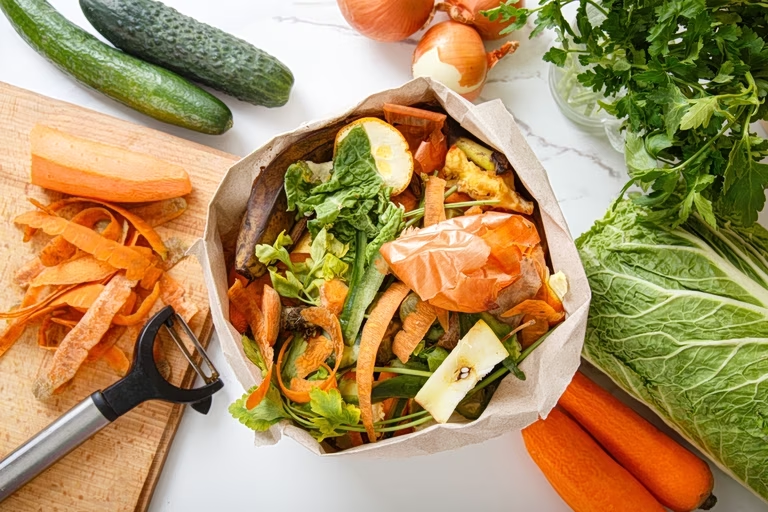
Leek stalks, carrot peels, fish bones, and meat scraps all became flavorful broths and hearty soups.
One of the most representative examples is *kakavia*, the traditional Greek fisherman’s soup.
Originally prepared aboard fishing boats, the dish emerged from necessity. Fishermen needed a meal made from whatever remained unsold or unusable from the day’s catch.
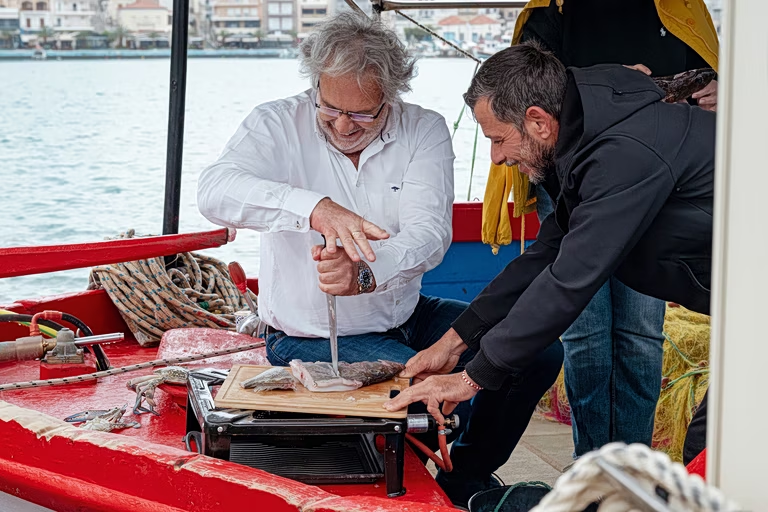
George Zervakis prepares traditional kakavia using the day’s catch from Kostas Katsaros’ fishing boat in the port of Sitia. Photo: Alexandros Alexandris
“Fishermen and sponge divers of earlier generations couldn’t store fresh food during their long journeys,” George Zervakis, mayor of Sitia in Crete, once explained. “Apart from fish, kakavia essentially contained just three ingredients: potatoes, onions, and olive oil. Instead of lemon, they used a souring agent.”
Into the pot went unsold fish, small shrimp, tiny crabs, and whatever else the nets happened to bring in. Together, they created a soup whose simplicity concealed extraordinary depth of flavor.
From wastefulness back to reality
Greek cooks have always found ways to maximize the value of their ingredients. If modern abundance briefly caused some of those habits to fade, economic and environmental realities have brought them back into focus.
Chef Giannis Liokas of Nolita restaurant in Athens noted how once-overlooked cuts of meat have become increasingly valuable.
“Anyone can claim they’re serving Black Angus,” he said. “But that will change. Soon, meat will become too expensive. A beef tongue that people once threw away now costs €9, whereas ten years ago it cost €2.”
He recalled that restaurants once avoided putting items such as beef cheeks on menus because customers considered them undesirable.
“Now everyone asks for cheeks, and a cut that once cost €6 now sells for €20 or €23.”
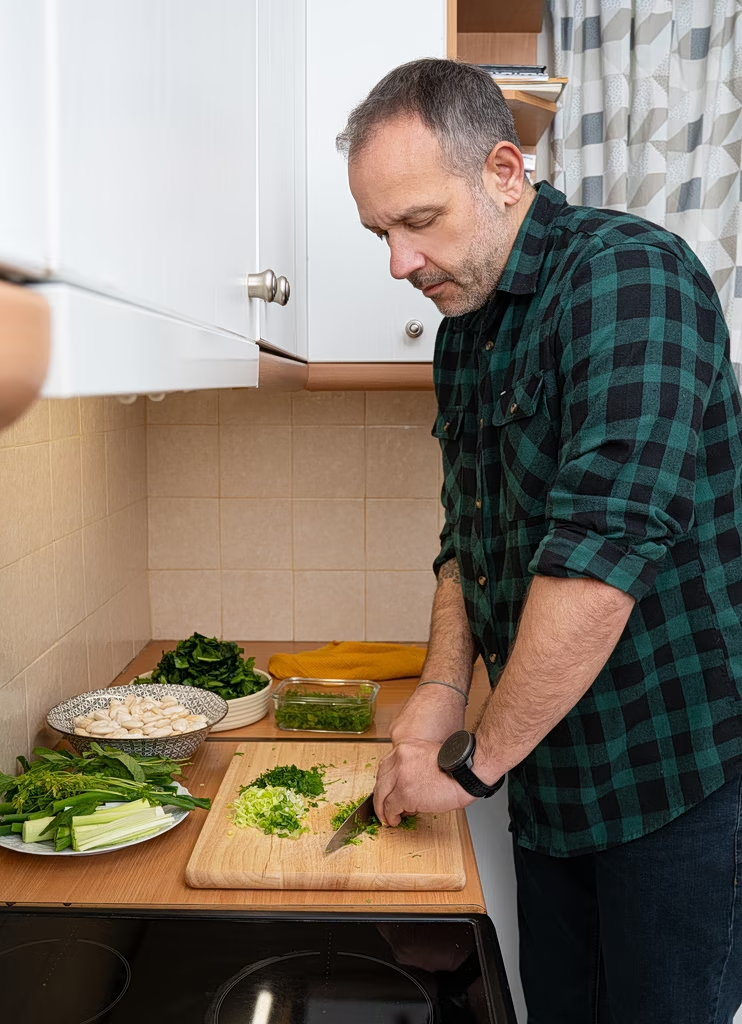
Using wild greens, herbs, and giant beans, Giannis Liokas prepared a traditional dish from his native Epirus. Photo: Christos Kavvouris
According to Liokas, ignoring so-called humble ingredients is no longer an option.
“We increasingly look for more affordable cuts of beef,” he said. “But we could also work more with lamb and goat—meats that are easier to find here in Greece and don’t need to be imported from America or Australia.”
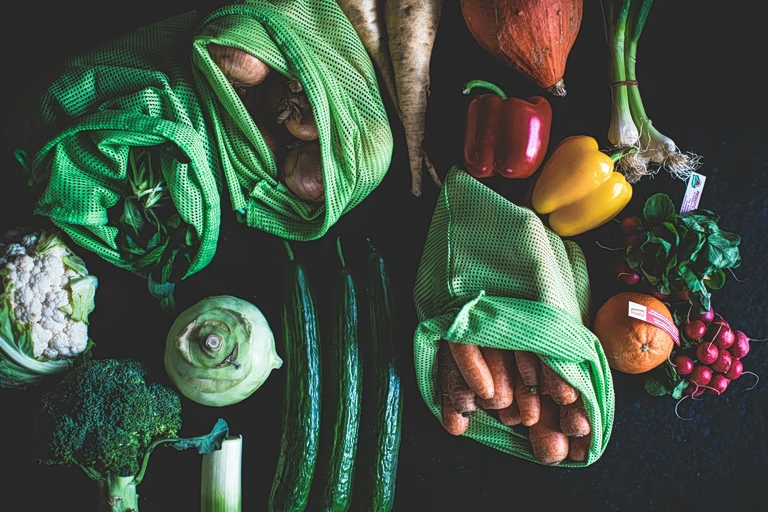
That, too, is part of sustainability: reducing the environmental impact associated with transporting food across the globe when local alternatives are readily available.
The cost of food waste
The environmental stakes are significant.
“It is alarming that 37% to 40% of global carbon emissions come from food production,” said chef Alexandros Tsiotinis, owner of the restaurant CTC. “If one-third of that food ends up in the trash, we begin to understand the scale of the problem.”
View this post on Instagram
Because food production will inevitably continue as populations grow, he argues that reducing waste is one of the industry’s greatest responsibilities.
“We don’t slaughter a cow just to use the rib-eye,” Tsiotinis said. “We find ways to make great food using the leg, shoulder, back, ribs—everything.”
Fermentation and the pursuit of zero waste
Fortunately, Greek culinary tradition also includes fermentation—a practice that has gained global popularity in recent years.
Chef Giorgos Papazacharias of the two-Michelin-starred Delta restaurant believes fermentation is essential to minimizing waste.
View this post on Instagram
“At Delta, we have a dedicated fermentation team,” he explained. “Otherwise, it’s impossible to get close to zero waste. You need ways to preserve ingredients so they can be reused—whether through brining, pickling, miso, or fish sauce.”
The philosophy is simple: use ingredients at the right time, in the right way, and waste as little as possible.
Sustainability the Greek way
Ultimately, what today’s food world describes as sustainability has long existed within Greek culinary culture.
It is a philosophy rooted in seasonality, preservation, resourcefulness, and respect for nature’s limits. It values simple, flavorful cooking and recognizes that every ingredient carries value.
Most importantly, it acknowledges a responsibility to future generations: to enjoy what the land provides today while ensuring it remains available tomorrow.
Tomato Paste by Ioanna Chalmouki
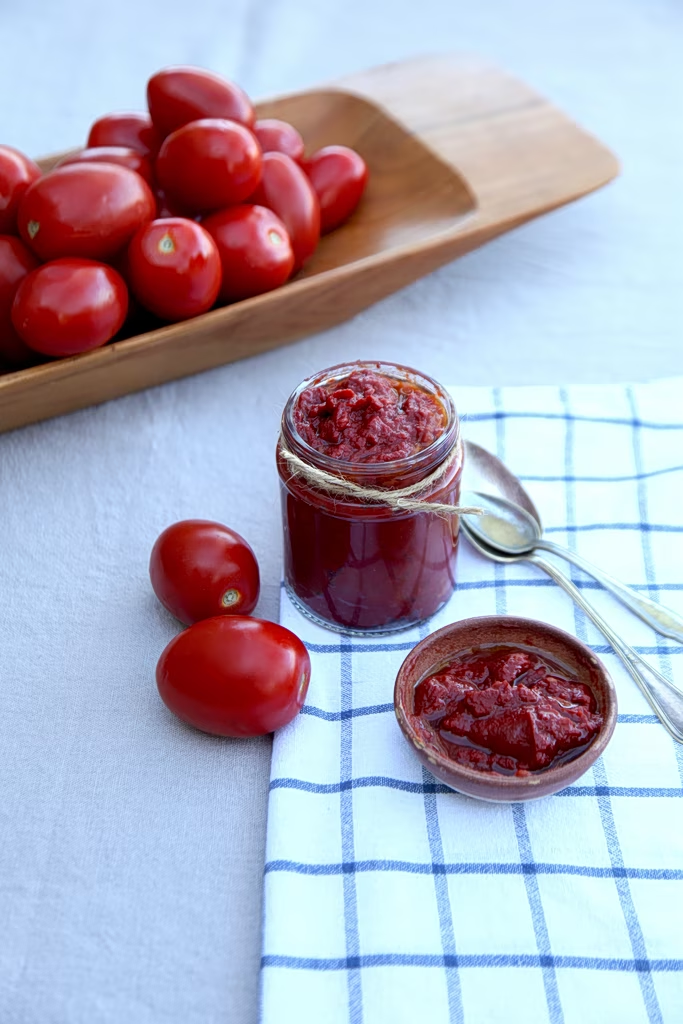
Photo: Ioanna Chalmouki
Preparation time: 30 minutes
Cooking time: 90 minutes
Difficulty: Easy
Ingredients (for 2 small jars)
- 2 kg Roma tomatoes
- 1 tbsp salt
- A little extra virgin olive oil
Method
- Wash the tomatoes thoroughly and score a cross on the bottom of each one.
- Bring a large pot of water to a boil and prepare a bowl filled with ice water.
- Working in batches, blanch the tomatoes in the boiling water for about 30 seconds, then transfer them immediately to the ice bath.
- Once slightly cooled, peel them from the scored area, cut them in half, and remove the seeds. Blend the flesh until smooth.
- Transfer the puree to a pot, add the salt, and cook over high heat for 30 minutes, stirring continuously. Reduce the heat and simmer for about one hour until thickened.
- Spoon the paste into sterilized jars, cover the surface with a little olive oil, and seal. Leave the jars upside down until completely cooled.
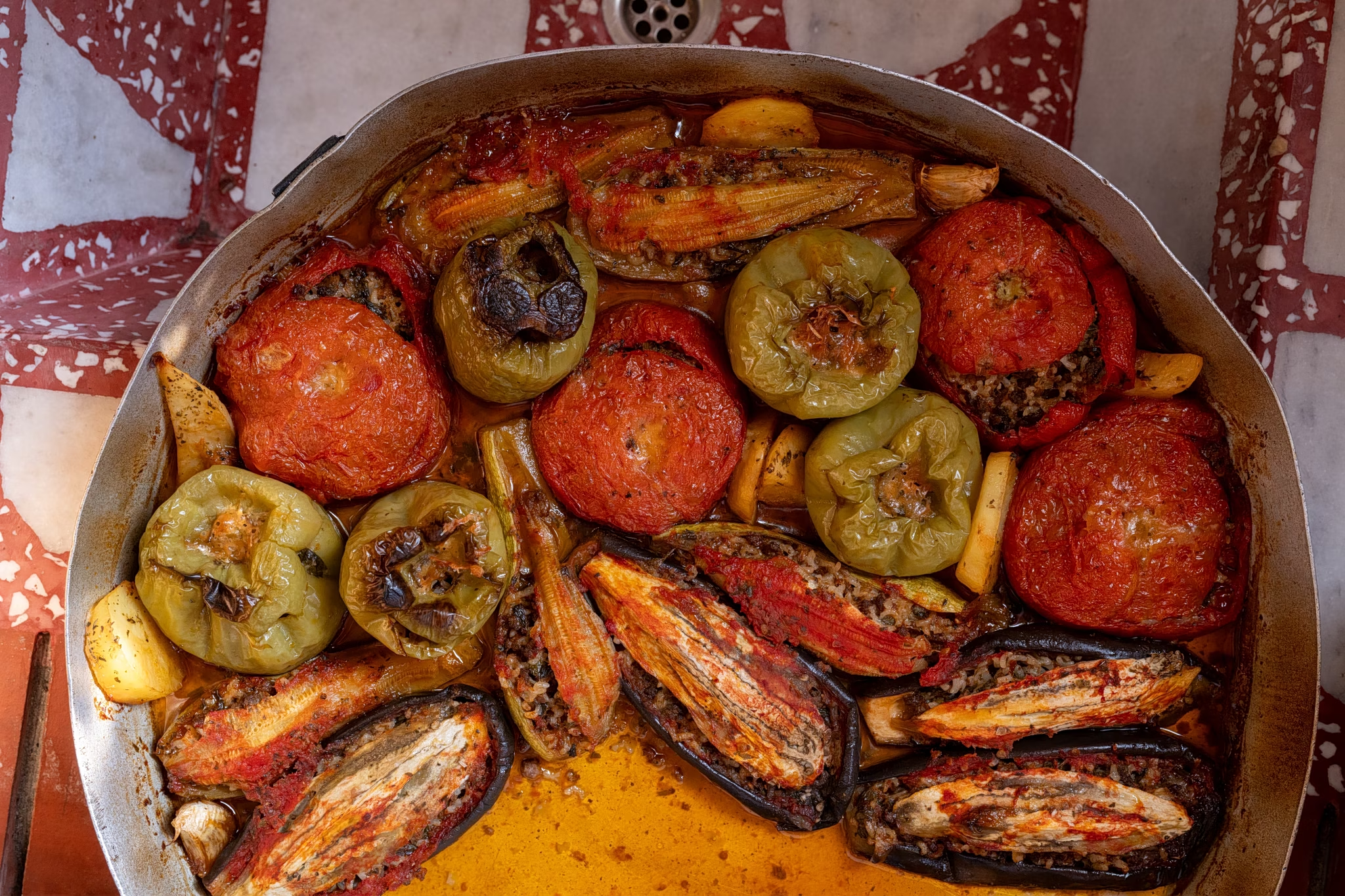
Mount Athos-Style Briam by Alexandros Koskinas
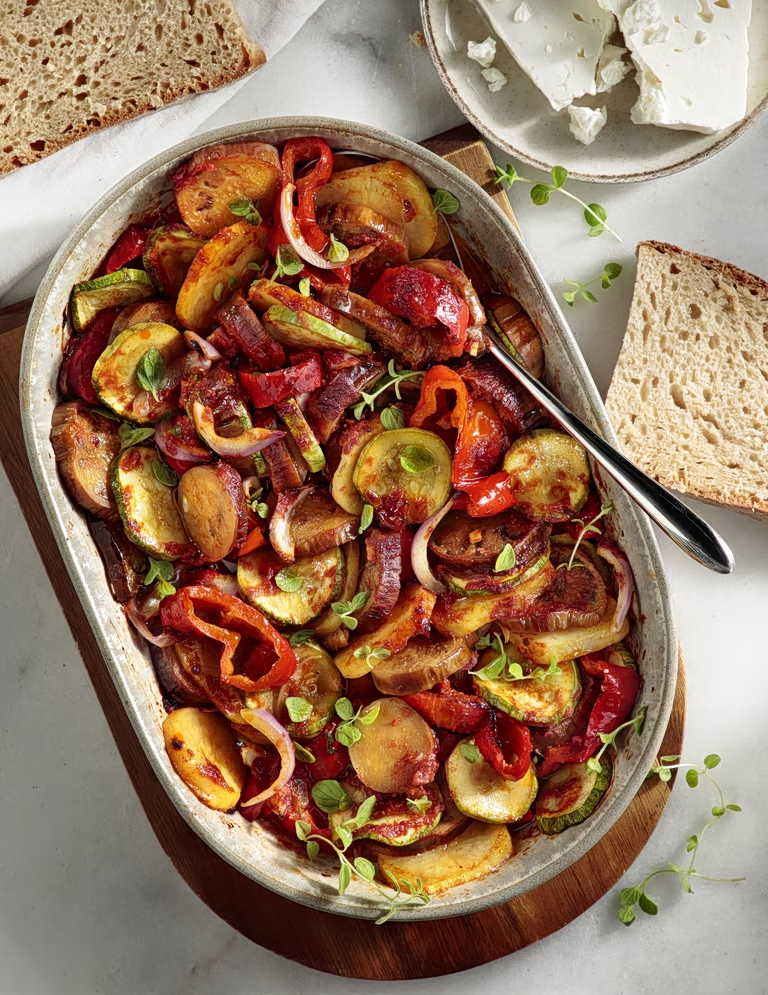
Photo: Giorgos Drakopoulos Food styling: Olivia Artemis Webb
Preparation time: 15 minutes
Cooking time: 40 minutes
Difficulty: Easy
Ingredients (serves 6)
- 500 g zucchini, sliced
- 500 g eggplant, sliced
- 300 g Florina peppers, roughly chopped
- 5 garlic cloves, finely chopped
- 300 g onion, sliced
- 500 g potatoes, sliced
- 5 ripe tomatoes, grated
- 1 bunch parsley, finely chopped
- A pinch of cumin
- A pinch of sweet paprika
- 200 ml extra virgin olive oil
- Salt
- Freshly ground pepper
Method
- Place all vegetables in a baking dish. Season with salt, spices, and parsley. Pour over the grated tomatoes and olive oil, then mix well.
- Bake in a preheated oven at 390°F (200°C) for 20 minutes. Reduce the temperature to 355°F (180°C) and continue baking for another 20 minutes.
- Serve with barrel-aged feta or strained yogurt and crusty sourdough bread.
Seafood Giouvetsi With Kaffir Lime and Mandarin by Dimitris Arsenidis
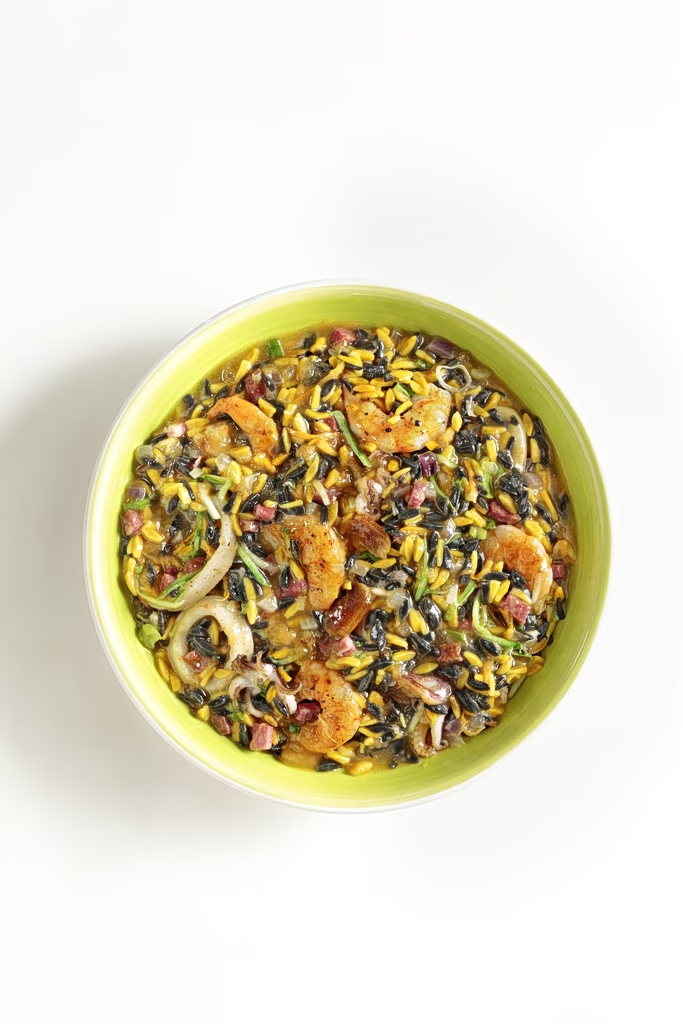
Photo: Giorgos Drakopoulos Food styling: Olivia Artemis Webb
Preparation time: 20 minutes
Cooking time: 45 minutes
Difficulty: Easy
Ingredients (serves 4)
- 14 shrimp
- 500–700 g cleaned squid, sliced into rings
- 500 g medium-sized orzo (preferably squid-ink orzo)
- 1 Lefkada salami, diced
- Bottarga, for garnish
- 1 tbsp tomato paste
- 6 spring onions, finely chopped
- 1 onion
- 2 carrots
- 1/3 ginger root
- 2 zucchini
- 1 fennel bulb
- 1 garlic clove
- 1 ripe tomato, diced
- Juice of 1 lemon
- Zest of 1 kaffir lime
- Zest of 1 mandarin
- 120 ml extra virgin olive oil
- 100 ml white wine
- 100 ml ouzo
- 1 star anise
- 4 bay leaves
- 5–6 sprigs fresh thyme
- 5–6 sprigs fresh oregano
- 1/4 bunch parsley
- Salt
- Freshly ground white pepper
Method
- Peel and clean the shrimp, reserving the heads. Sauté the garlic and shrimp heads in olive oil until the liquids evaporate.
- Add the ouzo and allow the alcohol to evaporate. Add one carrot, one zucchini, the onion, ginger, and the outer layers of the fennel. Cover generously with water.
- Bring to a boil, skim the surface, then add two bay leaves, parsley stems, thyme, and star anise. Simmer for about 20 minutes. Strain and keep the stock warm.
- In another pot, sauté the shrimp, squid, and salami in olive oil for 2–3 minutes. Remove and keep warm.
- In the same pot, sauté the chopped fennel, grated carrot, grated zucchini, and spring onions for 4–5 minutes. Deglaze with white wine.
- Add the orzo and cook for 2–3 minutes. Add the remaining bay leaves, oregano, and some warm stock. Stir over medium heat, gradually adding more stock as needed.
- When the stock is nearly absorbed and the orzo is cooked, return the squid, shrimp, and salami to the pot. Add the tomato, chopped parsley leaves, lemon juice, and a little more olive oil. Stir gently until the dish comes together.
- Adjust seasoning.
- Serve in deep bowls, finishing with kaffir lime zest, mandarin zest, and grated bottarga.